Chloramine vs Chlorine: Why Boiling Is Not Enough

Chlorine and chloramine are both disinfectants in tap water, but chlorine off-gasses in about 24 hours while chloramine stays stable for weeks. Boiling drives off free chlorine in 20 minutes yet removes almost no chloramine, because the chlorine is bonded to ammonia. That single difference is why so many “dechlorinated” ferments still stall.
If you have ever done everything right, boiled your water, let it sit, used a trusted recipe, and still watched a batch go nowhere, chloramine is the most likely culprit. This is the piece of my water for fermentation guide that clears up the most confusion, because the fix depends entirely on knowing which of the two you are dealing with.
The Chemical Difference That Changes Everything
Free chlorine is dissolved chlorine gas, volatile and eager to escape into the air. Chloramine is chlorine chemically bonded to ammonia, and that bond makes it stable, non-volatile, and far longer lasting in the pipes. Both kill microbes, but only chlorine leaves on its own, which is the entire practical distinction for a fermenter. The EPA notes utilities add chloramine specifically for its lasting residual, which is precisely what makes it stubborn in your fermenting water.
Here is the comparison that matters when you are deciding how to treat your water.
| Property | Free chlorine | Chloramine |
|---|---|---|
| Chemical form | Dissolved chlorine | Chlorine bonded to ammonia |
| Off-gasses on its own | Yes, ~24 hours | No, stable for weeks |
| Removed by boiling | Yes, ~20 minutes | No, barely touched |
| Removed by carbon filter | Yes, instantly | Mostly, with contact time |
| Needs Campden or vitamin C | No | Yes, for full removal |
| Why utilities use it | Cheap, fast-acting | Longer-lasting residual |
Read that table once and the whole confusion resolves: every easy trick that works on chlorine, time and boiling, fails on chloramine, and the methods that beat chloramine, carbon, Campden, and vitamin C, also handle chlorine. So the safe move if you are unsure is to treat as though you have chloramine.
Why So Many Utilities Switched to Chloramine
Many municipal water systems moved from chlorine to chloramine over the past two decades because chloramine’s stability is a feature for them: it holds a disinfectant residual all the way to the far end of the distribution network without dissipating, and it produces fewer of the regulated disinfection byproducts that straight chlorine forms. For public health that is a genuine improvement.
For fermenters and home brewers it was a quiet complication. The switch is exactly why techniques that worked for decades, leave the water out overnight, give it a boil, suddenly stopped working for people whose city changed its treatment. Nothing about their method changed; the water did. Because the change happened city by city on different timelines, you cannot assume anything from what worked for a friend in another town. The only reliable source is your own utility’s annual water-quality report, which states plainly whether they use chlorine or chloramine.
Why Boiling and Sitting Do Not Work on Chloramine
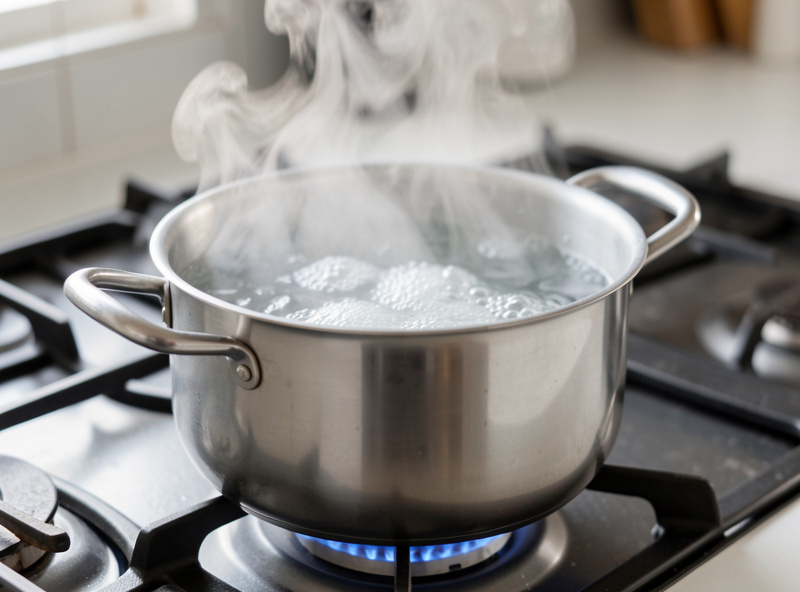
Both counter-sitting and boiling rely on the disinfectant physically leaving the water as a gas. Free chlorine obliges because it is volatile. Chloramine does not, because the ammonia bond keeps it dissolved, so no amount of waiting and only a trivial amount of boiling removes it.
This is worth dwelling on because it is the single most common water mistake I see. Someone reads that you should dechlorinate, boils their water diligently, and cannot understand why their kombucha crawls and their water kefir grains sulk. They did dechlorinate, in the sense of removing chlorine, but they never had free chlorine; they had chloramine, and boiling left it fully intact. The effort felt like a fix and accomplished nothing. If your utility uses chloramine, cross boiling and sitting off your list entirely and go straight to a method that actually breaks the bond.
The Ammonia Wrinkle Worth Knowing
When you break chloramine apart, whether with carbon, Campden, or vitamin C, you release the ammonia that was bonded to the chlorine. The amounts are tiny at the concentrations in tap water, and for nearly every home ferment the released ammonia is negligible and harmless. It is worth understanding, though, because it explains why chloramine removal is a chemical reaction rather than a simple evaporation.
Free chlorine can just float away as a gas. Chloramine has to be chemically taken apart, and the products of that reaction, chloride and a little ammonia, stay in the water. This is not a reason for concern in home fermenting; the ammonia load is far below anything that would affect flavor or safety, and yeast in particular can actually use trace ammonia as a nitrogen source. It is simply the reason the removal methods differ. If you have ever wondered why you cannot just wait out chloramine the way you wait out chlorine, this is the mechanism: there is a bond to break, not just a gas to lose.
How to Know Which One You Have
The definitive answer is your municipal utility’s annual water-quality report, sometimes called a Consumer Confidence Report, which is published free and names the disinfectant used. That report is the single most useful ten minutes you can spend on your water. A test strip can also distinguish free chlorine from total chlorine, and the gap between the two readings points to chloramine.
If you are on a private well, you have neither, because wells are not chlorinated, which is one of the few genuine advantages of well water for fermenting. If you are on municipal supply and cannot find the report, assume chloramine and treat accordingly; you lose nothing by using a carbon filter or a Campden tablet on water that only had chlorine, whereas assuming chlorine when you have chloramine leaves you stalled and puzzled. When in doubt, over-treat, it is free of downside.
Removing Chloramine the Right Way
Three methods reliably break chloramine: activated-carbon filtration with enough contact time, a Campden tablet (potassium or sodium metabisulfite, one tablet per roughly 20 gallons), and vitamin C (ascorbic acid). All three are fast, cheap, and food-safe, and the full walkthrough of each is in how to dechlorinate water for brewing and fermenting.
My everyday approach is the carbon filter for normal batches and a pinch of crushed Campden tablet for large volumes like filling a continuous-brew vessel. Both take a minute and both handle chloramine and chlorine at once, so I never have to know in the moment which my water carries that day, the method covers both. Across the brines I have run, moving to a proper chloramine method is the change that most reliably turns a chronic slow-starter into a batch that takes off within a day. If you have been fighting mystery stalls, this is very often the missing piece, and it connects directly to what chlorine and chloramine actually do to a culture in does chlorinated water kill your ferment.
One practical note on carbon filters and chloramine: contact time is everything. A carbon filter removes free chlorine on the first fast pass because chlorine is easy, but chloramine needs the water to linger against the carbon so the reaction can complete. A cheap, fast-flowing pour-through pitcher removes less chloramine than a dense, slow cartridge or a plumbed-in under-sink unit. If you are on chloramine and rely on a pitcher, run the water through twice, or use a Campden pinch as backup for the batches you care most about. This is exactly the kind of detail that separates water that reads clean on a strip from water that actually lets a culture roar to life, and it is why I treat contact time, not just the presence of a filter, as the variable that matters.
Once you have matched the method to your disinfectant, the whole question leaves your fermenting for good. You stop guessing, stop blaming your starter or your salt, and stop the maddening cycle of a batch that should work but does not. Chloramine is not mysterious; it is just chemically tougher than chlorine, and it yields completely to the right method. Get that one fact straight and everything downstream, from a kombucha brew to a jar of pickles, gets easier.
Frequently Asked Questions
Does boiling water remove chloramine?
No. Boiling removes free chlorine in about 20 minutes but barely touches chloramine, because chloramine is chlorine bonded to ammonia and stays dissolved rather than escaping as gas. Use a carbon filter, a Campden tablet, or vitamin C to remove chloramine.
How is chloramine different from chlorine in tap water?
Free chlorine is volatile and off-gasses on its own within a day. Chloramine is chlorine bonded to ammonia, making it stable for weeks and resistant to boiling and sitting. Both disinfect, but only chloramine survives the easy removal tricks.
How do I know if my water has chloramine?
Check your municipal utility’s annual water-quality report, which names the disinfectant used. A test strip comparing free and total chlorine also hints at chloramine when the two readings differ. Private wells are not chlorinated at all.
Why did my ferment stall even after I boiled the water?
Almost certainly chloramine. Boiling removes free chlorine but leaves chloramine intact, so if your utility switched to chloramine, boiling feels like a fix but does nothing. Switch to carbon filtration, a Campden tablet, or vitamin C.
Is chloramine dangerous to drink?
No, chloramine is used specifically because it is safe to drink and holds a disinfectant residual longer than chlorine. The issue for fermenters is not human safety but that the same disinfectant suppresses the beneficial cultures a ferment depends on.
Related Guides
- Best Water for Fermentation: A Complete Guide
- How to Dechlorinate Water for Brewing and Fermenting
- Does Chlorinated Tap Water Kill Your Ferment?
- Hard Water vs Soft Water for Kombucha and Kefir
- Why Is My Kombucha Not Fizzy?

About Kenny Nyhus Fadil
A home fermenter documenting brines, bubbles, and the occasional moldy tragedy.
Keep Bubbling
Does Chlorinated Tap Water Kill Your Ferment? What Actually Happens
Spring, Filtered, or Distilled: Which Water for Water Kefir