Vinegar Brewing at Home: Mother Cultures, Acetobacter, Curing-Brine Crossover

Home vinegar brewing turns leftover wine, finished kombucha, or hard cider into 5-7% acetic acid vinegar within 4-8 weeks using a single Acetobacter mother culture. The same vinegar that finishes a salad dressing also functions as the acid backbone of curing brine for charcuterie and lacto-fermented vegetables.
Curing-brine crossover is one specific angle; the full six-vinegar method, mother sources, and timeline by substrate are in my home vinegar making guide.
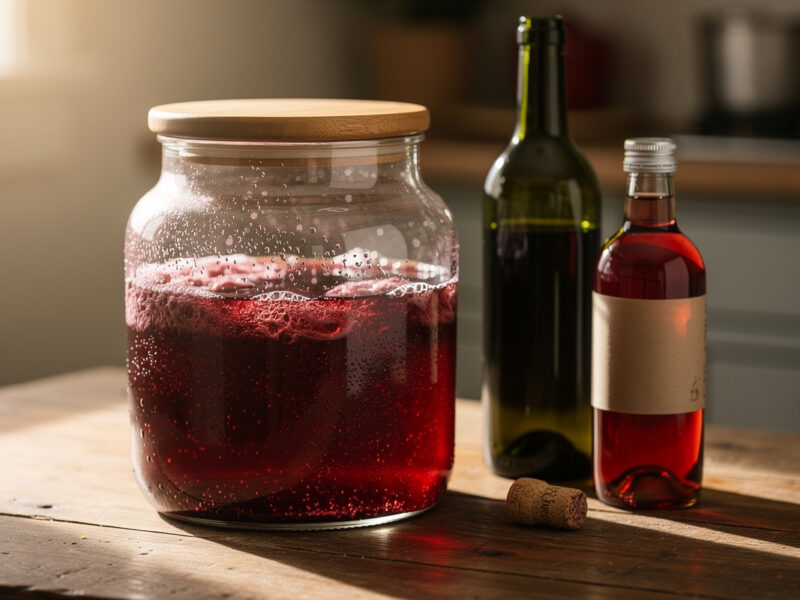
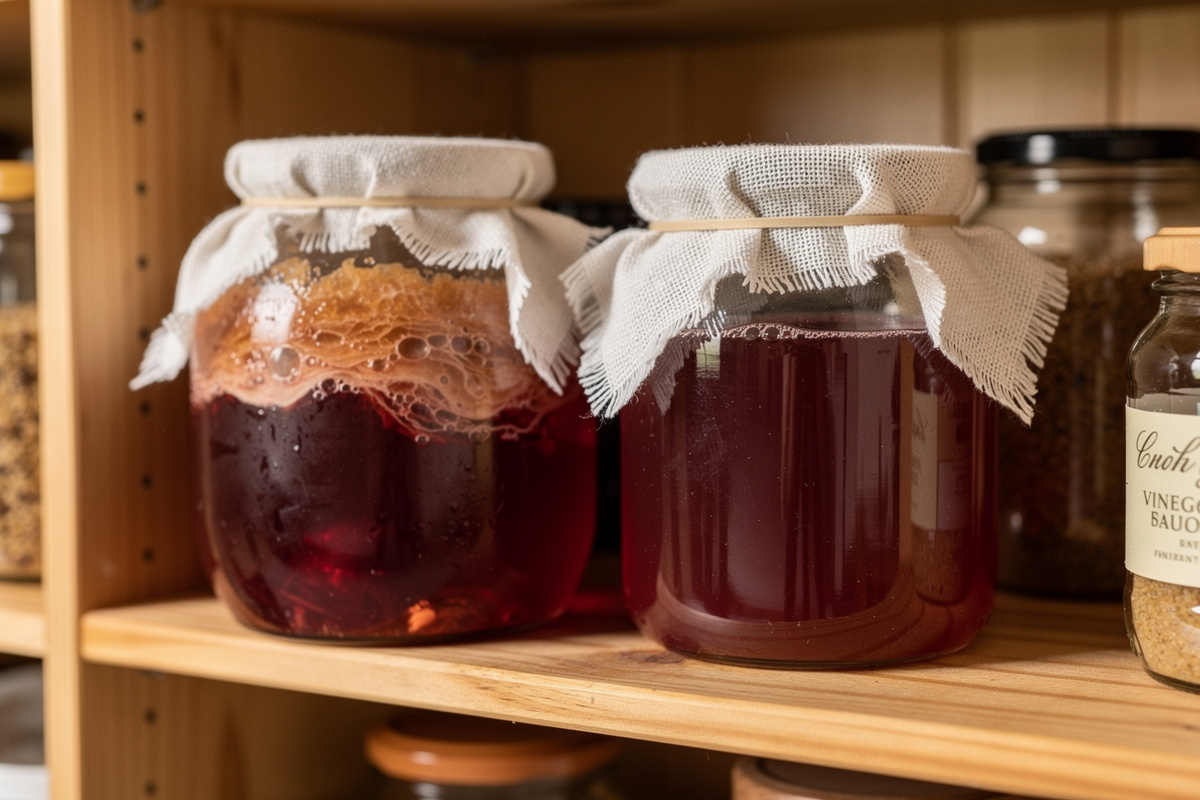
I keep a vinegar mother alive in a 2-gallon glass crock on my pantry shelf, fed with the last half-bottle of whatever red wine didn’t get finished at dinner. The mother is three years old now, has outlived two crocks I cracked from temperature shock, and produces roughly 1 gallon of 5-6% red wine vinegar every 6 weeks — enough for my kitchen, my curing brine, and the occasional gift bottle for neighbors who know what unpasteurized vinegar tastes like.
This guide covers the practical setup for producing house vinegar, the mother culture biology, the safe acidity targets for both consumption and curing-brine use, and the cross-application from kitchen to charcuterie chamber. Hardware target is two glass crocks (1-2 gallons each), a digital pH meter, an inexpensive refractometer, and breathable cloth covers. Total cost runs 80-120 USD for a working two-batch rotation.
As an Amazon Associate I earn from qualifying purchases.
What Vinegar Actually Is (and Why Mother Cultures Matter)
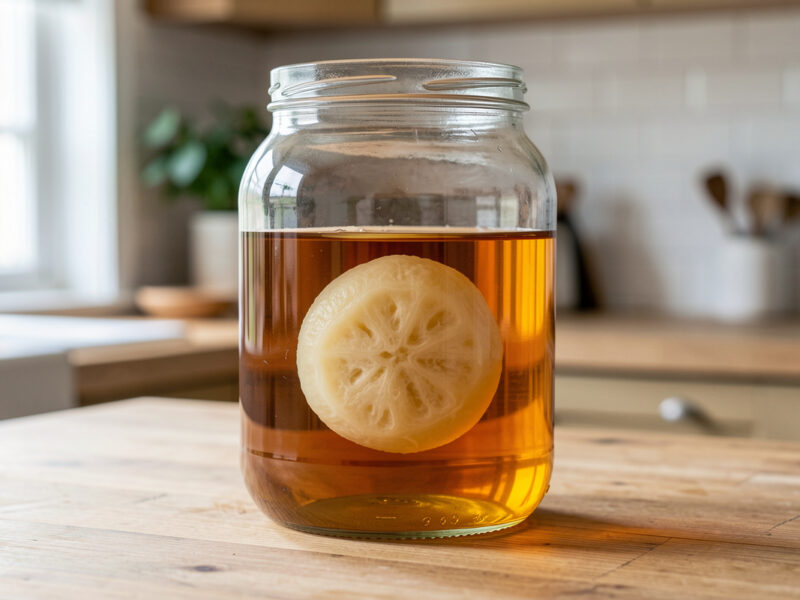
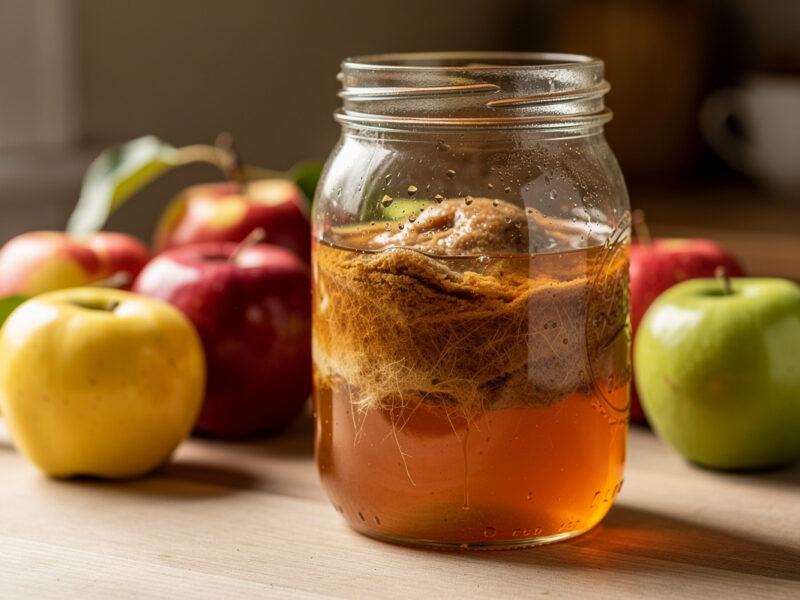
Vinegar is dilute acetic acid produced when Acetobacter bacteria oxidize ethanol in alcohol-containing liquids. The two-step process: yeast ferments sugar into alcohol, then Acetobacter oxidizes that alcohol into acetic acid in the presence of oxygen. The mother (a gelatinous cellulose pellicle) is the visible biofilm where Acetobacter lives during the conversion. Without a mother, you have alcohol that slowly turns into vinegar over months; with one, the conversion happens in 4-6 weeks reliably.
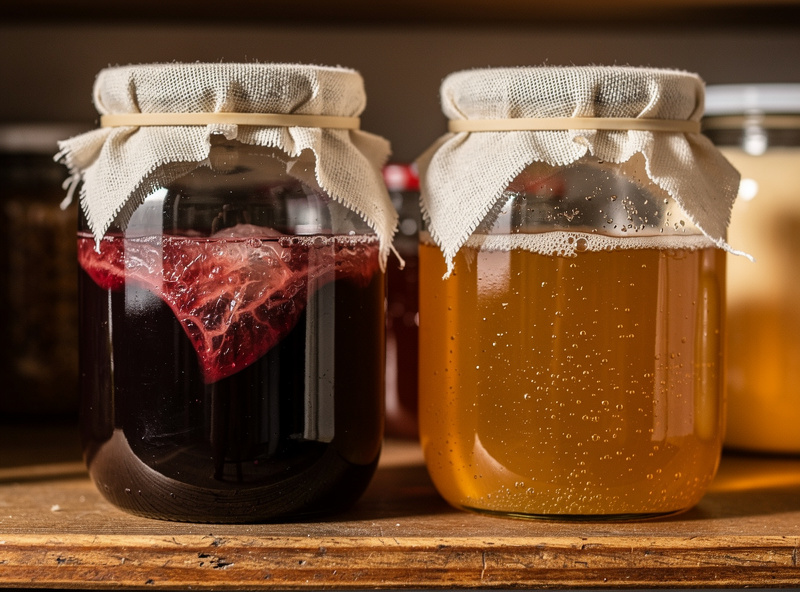
The mother culture replicates each batch. After your first 4-6 week run, the mother grows to fill 5-15% of the crock volume; remove half and use it to start the next batch with fresh wine or hard cider. Excess mother is also useful as a starter for friends, as a salad-bar topping in some cuisines, or composted into the vegetable garden where it adds beneficial microbes to the soil.
The genus Acetobacter includes over 20 recognized species, and in practice A. aceti and A. pasteurianus are the two you’ll actually meet in home vinegar production — they’re the workhorses that show up again and again in wine, cider, and kombucha mothers. Each has a slightly different comfort zone: A. aceti tends to run best in the mid-20s Celsius, while A. pasteurianus tolerates warmer swings better, which lines up with what I see on my own pantry shelf — room temperature in the mid-20s consistently produces the best-tasting homemade vinegar.
The biology connects directly to the same lactic-acid bacteria that drive sauerkraut and salami. Acetobacter is a different genus (acetic acid bacteria, not lactic) but the underlying logic is identical: a specialized bacterial population converts a substrate to acid, the acid lowers pH, low pH preserves the food and prevents pathogen growth. The cross-applications make sense once you see the parent pattern. The lactic-acid biology in detail is on the salami fermentation pH guide.
Substrate Selection: Wine, Cider, or Kombucha
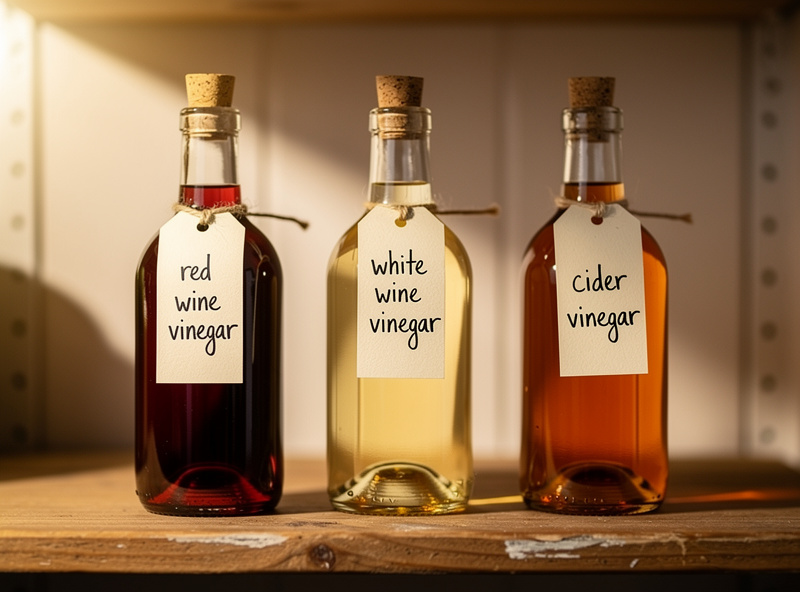
Three starting liquids cover most vinegar styles. Red wine vinegar uses any decent table wine (under 12.5% alcohol; higher alcohol kills Acetobacter) — for the full step-by-step workflow, see our red wine vinegar guide. White wine vinegar uses dry whites or lightly fruity whites — chardonnay, sauvignon blanc, pinot grigio. Apple cider vinegar uses unfiltered hard cider — for the complete process from scratch, follow our apple cider vinegar guide. Finished kombucha works similarly because both already contain Acetobacter naturally.
| Starting Liquid | Alcohol | Time to Vinegar | Final Acidity | Best Use |
|---|---|---|---|---|
| Red wine | 10-12% | 5-7 weeks | 5-6% | Salad, pickles |
| White wine | 10-12% | 5-7 weeks | 5-6% | Salad, marinades |
| Hard cider | 5-7% | 4-5 weeks | 4-5% | Curing brine, slaw |
| Beer | 4-6% | 4-5 weeks | 4-5% | Malt vinegar style |
| Kombucha (mature) | 0.5-1% | 3-4 weeks | 3-4% | Drink, light dressings |
Avoid sulfite-heavy commercial wines for vinegar. Sulfites slow or stop Acetobacter activity, leaving you with stalled mother cultures and unconverted alcohol. Buy organic or low-sulfite wines specifically for vinegar; the cost difference is small, and in my own batches low-sulfite wine starts reliably within the normal 4-6 week window while sulfite-heavy commercial wine is the single most common reason a mother stalls or never forms at all. Bulk wine from a producer cooperative usually works well — the lower-end commercial blends from supermarkets are the riskiest.
The Setup: Two Crocks, Breathable Covers, Mother Source
Use 1-2 gallon glass or food-grade ceramic crocks with wide mouths. Acetobacter needs surface contact with oxygen, so the wider the surface area, the faster the conversion. Avoid narrow-mouthed bottles; the mother forms slowly and the conversion stalls. Cover with cheesecloth or a clean linen tea towel held with a rubber band — the cover keeps fruit flies and dust out while letting oxygen in.
I killed my first mother by pouring hot vinegar back over it — I had heated a finished batch to pasteurize it and poured the still-warm vinegar back into the crock on top of the mother pellicle. The heat denatured the Acetobacter proteins and the mother dissolved into a brown sludge within an hour. Always decant finished vinegar into a separate vessel first, then return the mother to fresh wine or cider at room temperature. Mother cultures are tough against time but fragile against heat above 120°F.
Source a mother culture from one of three places: an active Acetobacter culture from a homebrew supplier (5-10 USD), a small bottle of unpasteurized commercial vinegar with visible sediment (Bragg’s, Spectrum, Eden), or a thriving home culture from a friend. Pasteurized commercial vinegars do not contain live Acetobacter — they will not start a new culture. Read the label for “raw” or “unpasteurized” before relying on a store vinegar as starter.
Temperature matters: Acetobacter prefers 20-30°C with active conversion peaking at 25-27°C. A pantry, a garage, or a basement room that holds room temperature year-round works well. Avoid kitchens with regular temperature swings (oven heat, refrigerator opening) because the temperature variation slows the conversion noticeably.
Acidity Targets and pH Testing
Consumption-grade vinegar targets 4-7% acetic acid. Below 4%, the flavor is flat and the vinegar lacks the preservative power that the same recipes assume. Above 7%, the vinegar tastes sharp and one-dimensional. Most homemade red wine vinegar finishes at 5-6%, white wine at 5%, cider at 4-5%, and kombucha-derived at 3-4%.
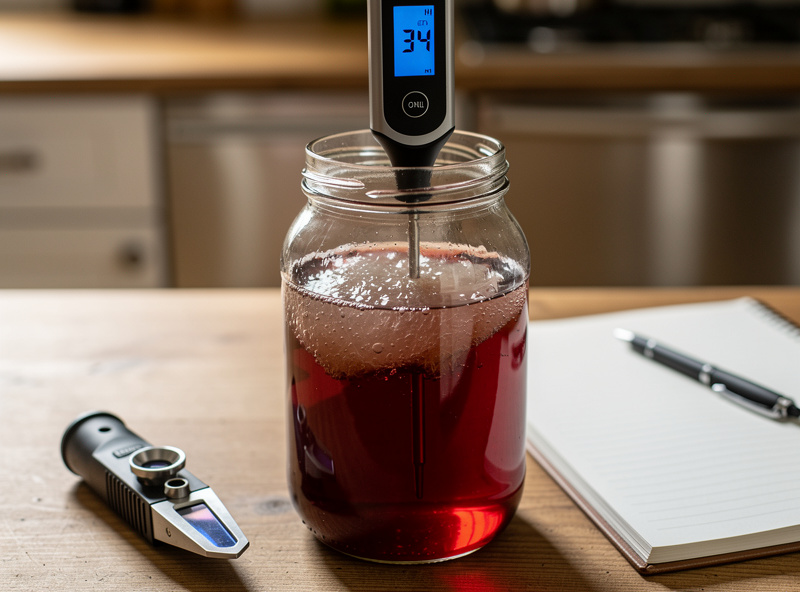
For beginners who don’t want to invest in titration gear immediately, broad-range pH test strips (pH 0-6) from Hydrion or Macherey-Nagel cost $8-12 and give a fast visual reading that confirms your vinegar is below pH 3.0 — safe and sour enough for kitchen use.
Test acidity with a refractometer (cheap, fast, ballpark) or by titration (precise, slow). For most home use, a 0.1 mL precision titration with sodium hydroxide and phenolphthalein indicator gives accurate acidity to 0.1% — total cost is 25 USD for the kit. The pH reading will be 2.4-2.6 for 5% acetic acid; that is the molar pH of acetic acid solutions and is independent of substrate.
Curing-Brine Crossover: Vinegar in Charcuterie
Acetic acid brings flavor and a pH assist to short-cure whole-muscle charcuterie, but it is not a standalone pathogen-kill step, and I don’t treat it as one. Extension food-safety guidance on acid marinades is explicit here: vinegar, lemon juice, and other acids should never be relied on to kill Listeria, Salmonella, or other bacteria by themselves (Illinois Extension, “Will marinating meat kill all the bacteria?” — content-verified: “do not rely on marinades to kill bacteria and other microorganisms”), and published log-reduction numbers for vinegar-based treatments on meat typically run under 1.5 log CFU/g — far short of what a real lethality step needs to deliver. The acid lowers surface pH and slows some spoilage organisms, which is genuinely useful, but the safety work in a whole-muscle cure comes from refrigeration temperature, the full salt cure, and time — never from the vinegar brine alone.
For a typical 5kg pork loin going into a coppa cure, a working ratio is 1 L of 6% sea-salt brine mixed with 0.5 L cider vinegar (roughly 1.7% acetic acid once diluted across the full 1.5 L, not the full strength of the vinegar itself). Inject the brine into the loin at 3-4 points and refrigerate at 4°C for the full 7-day brining phase — the refrigeration is doing the real safety work, with the acid brine adding flavor and a modest pH assist on top of it. The full whole-muscle workflow, including the curing-chamber steps that actually deliver the pathogen-control math, is on the whole muscle charcuterie complete guide.
Vinegar also extends fresh-cure refrigerator shelf life. A small splash (1 tablespoon per kg of meat) added to the salt-and-spice rub for refrigerator-cured pancetta or coppa lowers surface pH enough to suppress mold growth during the slow cure. The technique is centuries old and reads as obvious once you see the connection — most southern European charcuterie traditions used vinegar for this exact purpose long before refrigeration existed. The mold-management context is on the penicillium cultures for salami casings guide.
Storage and Long-Term Operation
Once a batch is finished, decant into clean wine bottles with cork or glass stoppers. Vinegar continues to develop in the bottle for 3-6 months, deepening flavor and slightly increasing acidity. After 6 months, the flavor stabilizes; expect 18-24 months total shelf life at room temperature in dark cabinets. Refrigeration is unnecessary and slightly hurts flavor over time.
Run two crocks in rotation. Crock A is in active conversion (4-6 weeks), Crock B was finished and decanted, and the mother from Crock B starts the next round in Crock A as soon as you decant. This rhythm produces 2-4 gallons of house vinegar per year per crock — far more than most households use, with the surplus making excellent gifts or sales-table inventory at farmers markets.
If I were starting home vinegar brewing tomorrow with zero equipment, I would buy a 1-gallon wide-mouth glass jar with a spigot ($25), a small bottle of Bragg’s raw apple cider vinegar for the mother ($6), two bottles of inexpensive organic red wine ($20), and a pack of pH test strips ($10). Pour the wine and the Bragg’s into the jar, cover with cheesecloth, and wait. Six weeks later you have a gallon of 5% red wine vinegar that tastes better than $30 of boutique vinegar — and the mother slime that forms on top is the starter for every batch you make for the rest of your life.
For commercial-grade or competition-grade vinegars, a third aging step in oak barrels for 6-12 months adds tannin complexity and rounds the harsh edge. This is the optional polish step; most home cooks stop at the bottled stage. The vinegar-as-pantry-staple workflow connects naturally to other shelf-stable home preserves and to the broader food-safety logic that runs through every fermentation craft.
Frequently Asked Questions
How long does it take to make vinegar at home?
4-8 weeks from starting wine or cider to finished vinegar with a healthy mother culture. Wine vinegars take 5-7 weeks; cider and beer vinegars take 4-5 weeks; kombucha-derived vinegars finish in 3-4 weeks because they already contain active Acetobacter.
What is a vinegar mother and where do I get one?
A mother is a gelatinous cellulose pellicle where Acetobacter bacteria live during alcohol-to-acid conversion. Source from a homebrew supplier (5-10 USD), a small bottle of unpasteurized vinegar like Braggs, or a thriving culture from a friend. Pasteurized vinegars cannot start a new culture.
What temperature for home vinegar fermentation?
20-30 degrees Celsius with peak conversion at 25-27 degrees Celsius. A pantry, garage, or basement room that holds room temperature year-round works well. Avoid kitchens with daily temperature swings because the variation slows the conversion noticeably.
Can homemade vinegar be used for curing meat?
Yes, as a flavor and pH-assist ingredient, but not as a standalone pathogen-control step. Extension food-safety guidance is clear that vinegar and other acid marinades should never be relied on to kill Listeria, Salmonella, or other bacteria by themselves. Use 0.5 L cider vinegar per 1 L of 6 percent salt brine for a typical pork loin cure, refrigerate at 4 degrees Celsius throughout, and rely on the full salt cure and curing-chamber process for the actual pathogen-control math.
Why is my vinegar not turning sour?
Common causes are too-high alcohol (above 12.5 percent kills Acetobacter), excessive sulfites in the wine (slows the bacteria), insufficient oxygen (cover too tight or crock too narrow), or temperature outside 20-30 degrees Celsius. Test alcohol content first; it is the most common issue.
Does vinegar need to be refrigerated?
No. Finished vinegar is shelf-stable at room temperature for 18-24 months in cork-stoppered wine bottles in a dark cabinet. Refrigeration is unnecessary and slightly hurts flavor development. Vinegar continues to deepen for 3-6 months after bottling.
Related Articles
- How to Make Apple Cider Vinegar From Scratch
- How to Make Red Wine Vinegar at Home
- Kahm Yeast: What It Is, How to Prevent It
- Fermentation Weights: Glass vs Ceramic vs Ziplock
- How to Make Fermented Hot Sauce at Home

About Kenny Nyhus Fadil
A home fermenter documenting brines, bubbles, and the occasional moldy tragedy.
Keep Bubbling
The Mother of Vinegar, Explained: What It Is and How to Keep One
How to Make Apple Cider Vinegar From Scratch (With Mother)