The Mother of Vinegar, Explained: What It Is and How to Keep One

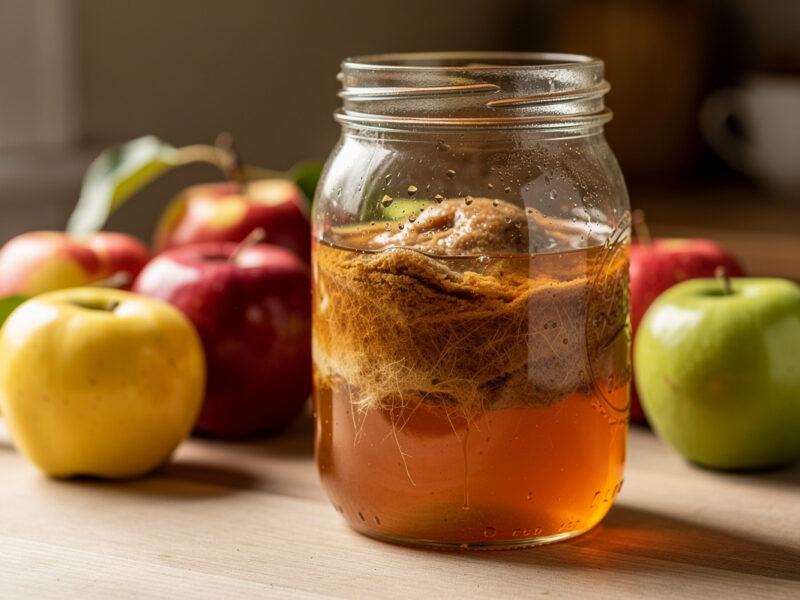
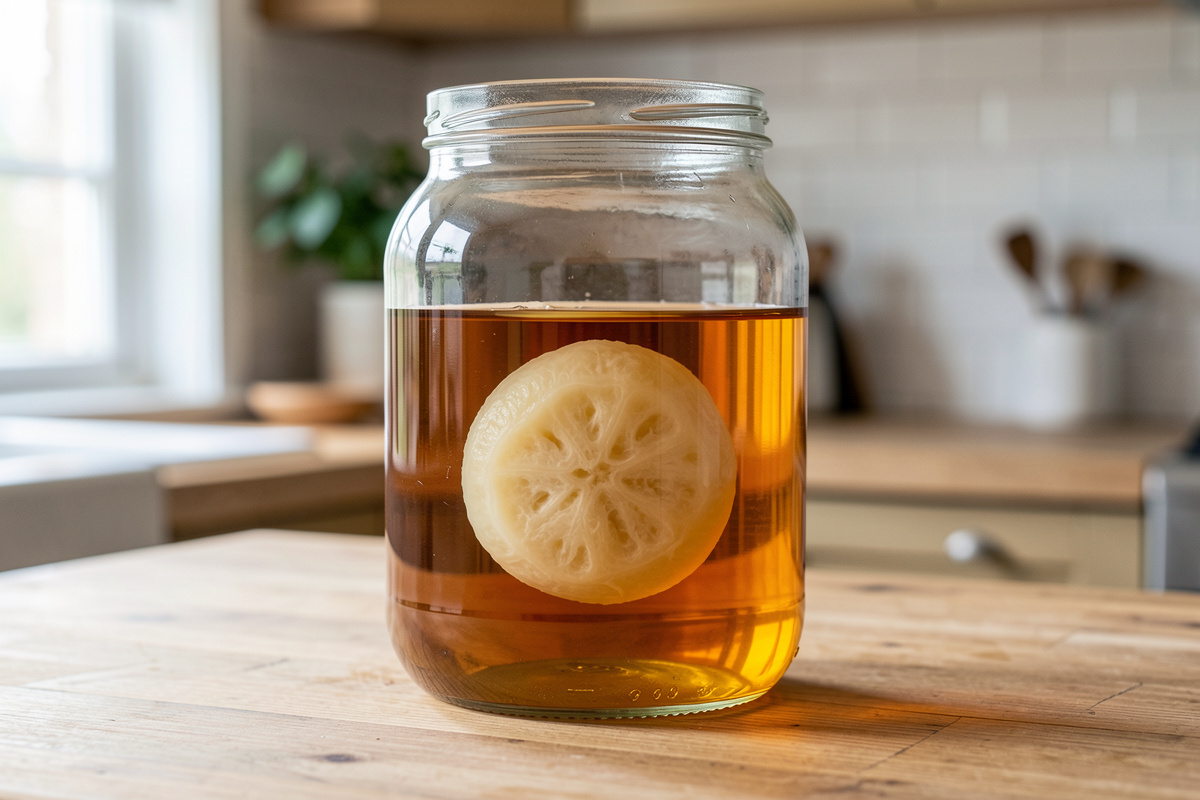
A mother of vinegar is a floating mat of bacterial cellulose that Acetobacter builds at the surface of an alcoholic liquid. It is not the bacteria themselves — it is the scaffold they secrete. A healthy mother will turn a 4-litre batch of wine into finished vinegar in about six weeks on my bench.
That distinction trips up almost everyone who starts brewing vinegar, and it matters because nearly every “is my mother dead?” panic comes from misreading what the mat actually does. After running a live vinegar mother continuously for years — splitting it, drowning it, drying a piece and reviving it — I have a clear picture of what this thing is, what it wants, and when it is genuinely finished. This guide goes deeper than the overview in my complete home vinegar making guide: here we stay on the mother itself.
What a Mother Actually Is: Bacterial Cellulose, Not a Creature
The mother is a biofilm of cellulose nanofibrils that acetic acid bacteria — species in the Acetobacter and Komagataeibacter groups, including the classic Komagataeibacter xylinus (long known as Acetobacter xylinum) — extrude as they work. The bacteria themselves are microscopic and live throughout the liquid; the visible rubbery mat is the apartment block they build to hold themselves at the air-liquid interface.
Why the surface? Because the reaction these bacteria run — ethanol plus oxygen to acetic acid plus water — is strictly aerobic. Oxygen is only available where the liquid meets the air, so the colony invests in cellulose to anchor a maximum number of cells exactly there. That is the single fact that explains every piece of mother behaviour you will ever see: it forms on top, it thickens where the air is, and it stalls the moment you cut off oxygen. A mother in a sealed jar suffocates; the bacteria do not.
Mother vs SCOBY vs Kahm vs Mold: Telling Them Apart on Sight
Four surface films get confused constantly, and the consequences range from harmless to throw-the-batch-out. A vinegar mother is smooth, translucent-to-cream, gelatinous and even, and it smells sharply of vinegar. It is structurally similar to a kombucha SCOBY but typically thinner and more rubbery, because a SCOBY is built by a yeast-and-bacteria partnership while a pure vinegar mother is acetic bacteria alone.
Here is how I sort them when a reader sends me a photo:
| Film | Looks like | Smell | Verdict |
|---|---|---|---|
| Vinegar mother | Smooth, even, translucent-to-cream gel mat, 1–8 mm thick | Sharp, clean vinegar | Healthy — this is the goal |
| Kombucha SCOBY | Thicker, often layered, more opaque and leathery | Sweet-tart, yeasty | Healthy, but a different culture |
| Kahm yeast | Thin, wrinkled or powdery white skin, no body to it | Musty, slightly solvent-like | Harmless — skim and carry on |
| Mold | Fuzzy, raised, coloured (green, black, pink, blue) | Stale, off, musty-bad | Toss the whole batch |
The reliable tells: a mother and a SCOBY have body — you can lift them out in one piece. Kahm yeast is a film with no structure that breaks up when you touch it; it is a cosmetic nuisance, not a danger. Mold is the only one that is fuzzy and three-dimensional with colour, and it is the only one that ends the batch. I cover the kahm-versus-mold call in more detail across my lacto work, but for vinegar the same rule holds: flat and white is fine, fuzzy and coloured is finished.
How to Grow a Mother From Scratch
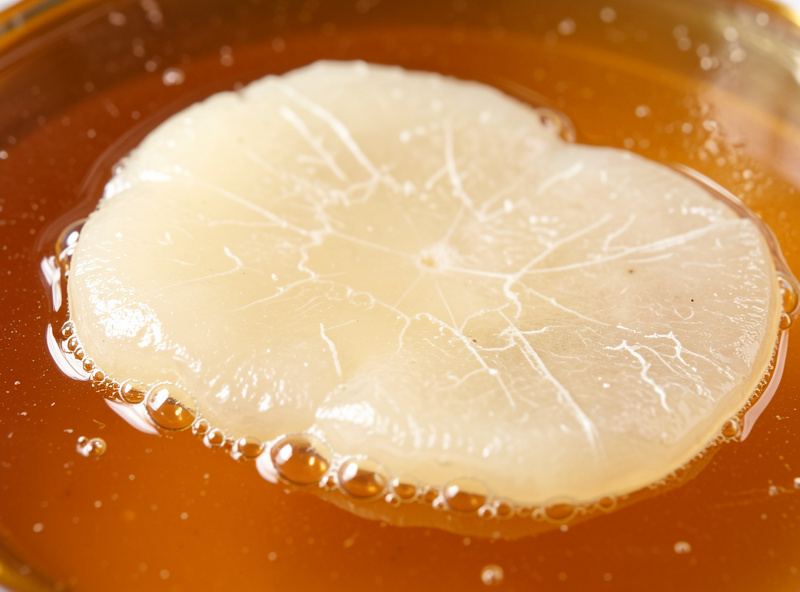
You do not have to buy a mother. There are three dependable routes, and I have used all three. The fastest is to pour the cloudy, stringy sediment from a bottle of unpasteurised raw apple cider vinegar into your starting alcohol — that sediment is loaded with live Acetobacter, and a surface film usually appears within two weeks. The second route is a gifted piece from anyone who already brews; a working vinegar maker always has more mother than they need, because it keeps growing. The third is spontaneous: leave unpasteurised wine open under a cloth and airborne acetic bacteria typically colonise it in four to eight weeks.
Whichever route you take, the growing conditions are identical and non-negotiable: a wide-mouth vessel for surface area, a breathable cloth cover held with a band, and a temperature window of 21–29 °C with the sweet spot around 26 °C. Below 18 °C the colony barely lays down cellulose. If you want a reliable head start, a bottle of unfiltered raw apple cider vinegar with the mother is the cheapest insurance you can buy. As an Amazon Associate I earn from qualifying purchases.
Why a Mother Sinks, Floats, or Goes Cloudy
A sunk mother is the number-one false alarm. When you move a jar, bump the shelf, or pour in fresh substrate, the existing mat often drops to the bottom and a reader assumes it died. It did not. A submerged mother simply loses its oxygen supply and goes dormant; meanwhile the bacteria still suspended in the liquid build a fresh film on the new surface. It is normal to end up with a stack of two or three old mothers on the bottom and one active mat up top.
Cloudiness and fine strands drifting through the liquid are also healthy signs, not contamination — that haze is bacterial activity and loose cellulose. The mat thickening from a translucent skin in week one to a 3–5 mm rubbery sheet by week three is exactly the trajectory you want. The only surface change that should worry you is the fuzzy-and-coloured mold pattern above. Everything else — sinking, layering, stringy haze, a slightly bumpy top — is a mother doing its job.
Keeping a Mother Alive Between Batches
A mother does not need babysitting, but it does need food and air. Between vinegar runs I keep mine in what I think of as a mother hotel: a jar holding the mat under a few centimetres of finished vinegar topped up with a splash of wine or hard cider, covered with cloth, parked at room temperature. Room temperature, not the fridge — cold drops the bacteria into deep dormancy and, worse, encourages the mat to dry and crack at the waterline. I run my SCOBY hotel the same way for the same reason.
If I need to store one long-term or post a piece to a friend, drying works well: lay a thin slice of mother on parchment somewhere airy and out of direct sun until it goes leathery and stiff, then keep it in a sealed bag. To revive it, drop the dried piece into warm unpasteurised vinegar cut with a little wine and give it a week or two of warmth; the dormant bacteria wake up and rebuild a fresh surface film. A mother is remarkably hard to kill outright — starvation and suffocation slow it down, but rarely finish it.
When a Mother Is Actually Spent
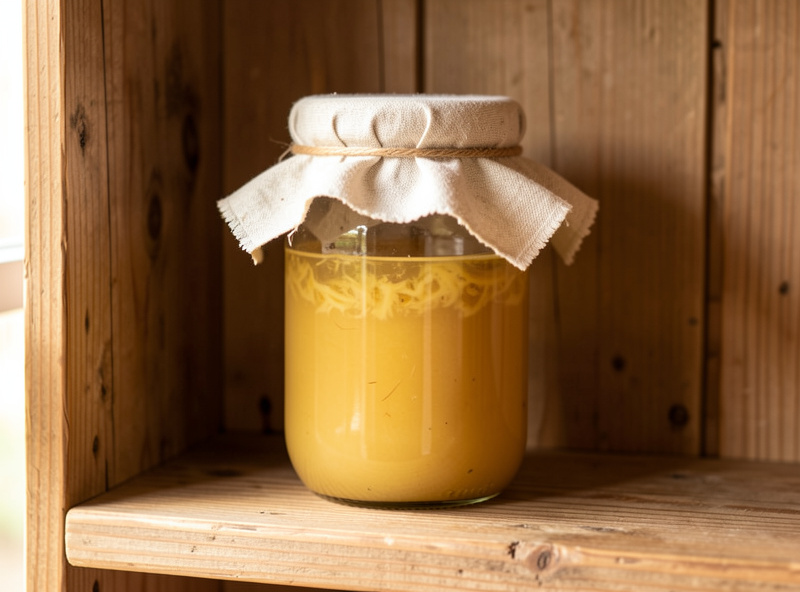
Mothers do eventually wear out, but far less often than beginners fear. The genuine end-of-life signs are an old mat that has grown thick, dense and leathery while no longer producing a fresh young film on top of new substrate; a batch that stops gaining acidity over several weeks; or a sharp solvent note of acetone, which usually means the ferment ran too warm and overshot rather than that the mother is dead. On my pH meter a finished, well-run vinegar lands somewhere around 2.4 to 3.4; if a batch with a supposedly active mother refuses to drop below pH 4 after a month at the right temperature, the culture — not the recipe — is the problem.
When I retire a mother, I peel off the youngest, thinnest layer to seed the next batch and compost the dense old slabs underneath. There is no virtue in keeping a five-layer brick; the working part is always the newest film with the most active bacteria. The one hard line is contamination: if mold ever takes hold on the mat or the liquid smells putrid rather than sharp, the mother goes in the bin with the batch. Acetic bacteria are vigorous, but they are not immortal, and a contaminated mother is not worth rescuing.
How I Run My Mothers
My system is deliberately low-effort. One continuous mother lives in my main vinegar vessel doing the actual production; a backup lives in the hotel jar; and a dried slice sits in a labelled bag in a drawer as insurance. Every time I bottle a finished batch I lift the youngest film, start the next substrate, and let the cycle roll. The same patience that watches a sourdough starter rise and a salami lose weight in the curing chamber watches a mother thicken — Lactobacillus, Acetobacter, the same slow microbial labour at different addresses.
If you treat the mother as a tool rather than a pet, it stops being mysterious. It is bacterial cellulose, it wants oxygen and food and a steady 26 °C, and it tells you it is healthy by laying down a clean new film. Read it that way and you will keep one alive for years, as I have.
Frequently Asked Questions
Is the mother of vinegar alive?
The mat itself is bacterial cellulose, which is not alive, but it is densely populated with living Acetobacter bacteria that secreted it. The bacteria are the living culture; the mother is the scaffold they build to stay at the oxygen-rich surface.
Can you eat the mother of vinegar?
Yes, it is harmless to eat, though it is rubbery and not pleasant. Most people leave the mother in the jar to keep working or move it to a new batch. There is no food-safety reason to remove it from finished vinegar.
Why did my mother sink to the bottom?
A sunk mother is normal and not a sign of death. Moving the jar or adding fresh liquid drops the old mat, which then goes dormant without surface oxygen while the bacteria in the liquid build a new film on top within a week or two.
How do I know if my vinegar mother is bad?
A healthy mother is smooth, even and smells sharply of vinegar. Throw it out only if fuzzy coloured mold grows on it or the liquid smells putrid rather than sharp. Thickness, sinking, and stringy haze are all normal and harmless.
Mother of vinegar versus a SCOBY: what is the difference?
Both are cellulose mats, but a vinegar mother is built by acetic acid bacteria alone and is thinner and more rubbery, while a kombucha SCOBY is built by a yeast-and-bacteria partnership and is thicker and more leathery. They are not interchangeable between brews.
Do I need a mother to make vinegar?
No. Acetobacter exists in the air and on fruit skins, so vinegar can form without a starter, but a mother dramatically speeds things up and lowers failure risk by giving you a known active culture. Batches with a mother ferment within days instead of weeks.
Related Guides
- Home Vinegar Making: The Complete Guide from Mother to Bottle
- How to Make Apple Cider Vinegar From Scratch (With Mother)
- How to Make Red Wine Vinegar at Home
- Crock vs Jar vs Vacuum Bag: Which Fermentation Vessel Wins
- Vinegar Fermentation Stages: From Sugar to Acetic Acid
- The Best Vessels for Brewing Vinegar at Home

About Kenny Nyhus Fadil
A home fermenter documenting brines, bubbles, and the occasional moldy tragedy.
Keep Bubbling
How to Make Red Wine Vinegar at Home (From Bottle to Bottle)
Home Vinegar Making: The Complete Guide from Mother to Bottle