Crock vs Jar vs Vacuum Bag: Which Fermentation Vessel Wins

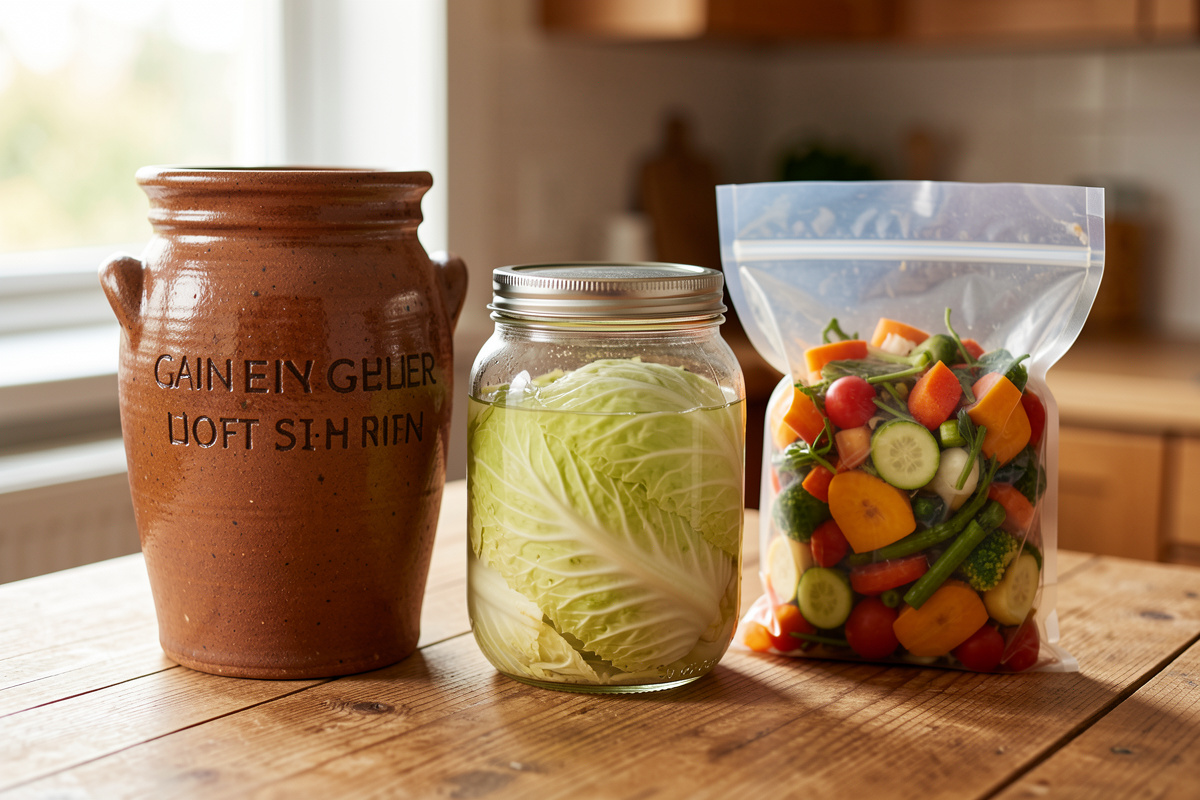
For most home batches the honest answer is this: a water-sealed stoneware crock wins big cabbage runs, a wide-mouth jar with a weight wins everything small, and a vacuum bag is a clever shortcut that trades control for convenience. I have run all three side by side for years, and the differences come down to headspace, oxygen exclusion, and how much brine you are willing to babysit. Pick by batch size and how anaerobic you need the ferment to stay.
This is a fermentation vessel comparison written from the bench, not the catalogue. I keep a German-style water-sealed crock, a smaller open-top crock, a working shelf of quart and half-gallon Mason jars, and I have fermented in vacuum bags often enough to know exactly where each one shines and where each one bites you. Below is how I actually choose, with the salt math and headspace logic that decides it.
The Three Vessels, Honestly Compared
Every fermentation vessel is solving one problem: keep the vegetables under brine and oxygen away from the surface while CO2 escapes. A water-sealed crock does this passively with a moat channel, a jar needs a weight plus an airlock or a daily burp, and a vacuum bag does it by mechanically pulling the air out. They all reach a safe ferment; they differ in scale, kahm-yeast risk, and how much attention each batch demands.
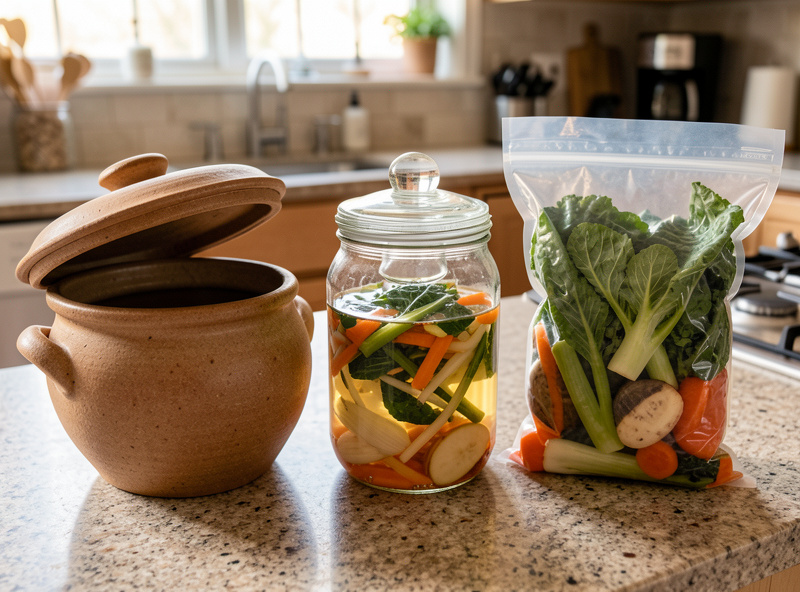
The crock is the large-batch workhorse. Mine holds several kilos of cabbage, the moat channel seals out air with water alone, and once the weights go in I barely touch it for three weeks. The jar is the most flexible vessel I own — a glass weight, a silicone airlock lid, done. The vacuum bag is the surprise: it pulls the brine into intimate contact with the vegetables and removes nearly all the headspace oxygen, which suppresses kahm beautifully, but you cannot watch the ferment and you cannot top up brine once it is sealed.
Water-Sealed Crock: When Volume Is the Point
A water-sealed crock is the right call the moment you are fermenting more than about two kilos of cabbage at once. The moat channel holds a ring of water that the escaping CO2 bubbles through, so the chamber stays anaerobic without any daily attention. I have left a full kraut crock for four weeks at 18–20°C and pulled clean, sour cabbage with no surface yeast at all.
The trade-offs are weight, price, and opacity. A stoneware crock is heavy, it is the most expensive vessel here, and you cannot see inside — you trust the smell and the bubble rhythm rather than your eyes. Keep the moat topped up; if it dries out the seal is gone and air creeps back in. For a household doing one big seasonal kraut or kimchi run, the crock pays for itself in years of service. For small experimental batches it is overkill.
Wide-Mouth Jar: The Vessel I Reach For Most
A wide-mouth Mason jar with a glass weight and a silicone airlock lid is the most versatile fermentation vessel in any home kitchen. A quart jar handles a single cabbage’s worth of kraut, a batch of lacto-fermented pickles, or a hot-sauce mash; a half-gallon scales that up without committing to a crock. The glass lets me watch the brine line, the bubbles, and the very first hint of kahm so I can skim before it spreads.
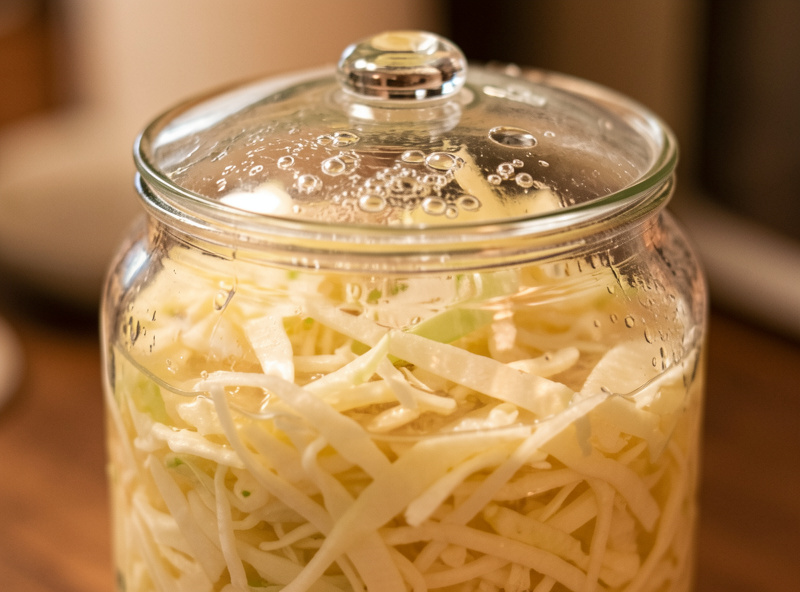
The one rule that makes jars work: leave real headspace and manage the gas. A sealed jar with no airlock will build pressure as CO2 forms and either leak or, worse, pop. I run a silicone waterless airlock lid on a wide-mouth jar with a glass fermentation weight holding the vegetables under brine, and that combination has handled the overwhelming majority of my batches. If you only buy one setup, this is it. The dedicated comparison of glass, ceramic, and ziplock weights covers which weight to pair with it.
Vacuum Bag: The Clever Shortcut
A vacuum-sealed bag ferments by removing the headspace mechanically: you salt the vegetables, seal them in a bag with a vacuum sealer, and the pulled vacuum presses the brine into the vegetables while excluding oxygen. The kahm-yeast suppression is the best of the three vessels because there is almost no air-brine interface for surface yeast to colonise. For small, salt-by-weight batches it is genuinely excellent.
The catches are real, though. The bag will balloon with CO2 as the ferment runs, so you either use a bag with a one-way valve or you burp it by snipping and re-sealing — and every re-seal reintroduces a little air. You cannot top up brine, you cannot taste without opening, and a sharp stalk can puncture the bag and let air flood in. I use vacuum bags for short lacto experiments and single-portion batches, not for anything I want to watch or run for a month. Salt still goes in by weight at the same 2–2.5% I use for kraut anywhere else.
Headspace and Oxygen: The Logic Behind the Choice
All three vessels succeed or fail on one variable — how well they keep oxygen off the brine surface while letting CO2 leave. Lactobacillus works anaerobically and drops the pH; kahm yeast and mold need oxygen at the surface. The crock excludes air with a water moat, the jar excludes it with a weight plus a one-way airlock, and the bag excludes it by having essentially no surface at all. Match the vessel to how long the ferment runs and how much surface you are willing to manage.
| Factor | Water-Sealed Crock | Wide-Mouth Jar | Vacuum Bag |
|---|---|---|---|
| Best batch size | Large (2–10+ kg) | Small to medium (0.5–2 kg) | Small (single portions) |
| Oxygen exclusion | Excellent (water moat) | Good (weight + airlock) | Excellent (mechanical) |
| Can you see inside? | No | Yes | Partly |
| Top up brine mid-ferment? | Yes | Yes | No |
| Daily attention | Minimal (top up moat) | Minimal (airlock self-burps) | Burp as it balloons |
| Kahm-yeast risk | Low | Low to moderate | Very low |
| Cost | Highest | Lowest | Moderate (sealer) |
How I Actually Choose
My rule is simple. Big seasonal cabbage run, set-and-forget for a month: the crock. Anything small, anything I want to watch, any new recipe I am dialing in: a wide-mouth jar with a weight and an airlock lid — that is the default for most of what I ferment. A short single-portion experiment where I want maximum kahm suppression and do not mind that I cannot peek: the vacuum bag. None of them changes the salt math; I still weigh the vegetables and salt to the same percentage regardless of which vessel holds the batch.
If you are buying your first real setup, skip the crock until you know you need the volume. A couple of wide-mouth jars, a few weights, and silicone airlock lids will ferment everything in this comparison and let you learn by watching. The crock and the vacuum sealer are upgrades you add once you know which direction your fermenting actually goes.
Some links above are Amazon affiliate links; if you buy through them I may earn a small commission at no extra cost to you. I only point to gear I actually use or would buy again.
Frequently Asked Questions
Can I ferment in a regular sealed Mason jar without an airlock?
You can, but you must burp it daily to release CO2 or it will build pressure and leak or pop. A silicone airlock lid removes the chore by venting gas one way while keeping air out, which is why I run them on nearly every jar.
Is a crock actually better than a jar for sauerkraut?
Only for volume. A water-sealed crock excludes oxygen passively and handles several kilos at once, but for batches under two kilos a wide-mouth jar with a weight and airlock lid ferments just as cleanly and lets you watch the brine line.
Is fermenting in a vacuum bag safe?
Yes, when you salt by weight at the same percentage you would use in a jar. The vacuum excludes oxygen and suppresses kahm yeast well. The limits are practical: you cannot top up brine, cannot taste without opening, and must burp the bag as it balloons with CO2.
What salt percentage do I use regardless of vessel?
The vessel does not change the salt math. For sauerkraut I weigh the cabbage and add 2 to 2.5 percent salt by weight whether it goes in a crock, a jar, or a vacuum bag. Pickles and mashes run higher, around 3.5 to 5 percent.
Which vessel has the lowest kahm-yeast risk?
The vacuum bag, because there is almost no air-brine surface for surface yeast to colonise. A water-sealed crock is close behind thanks to its moat seal. An open jar without a weight is the most kahm-prone of the three.
Do I need to see inside the vessel while it ferments?
It helps for learning. A glass jar lets you catch the first wisp of kahm and skim before it spreads. A crock and a vacuum bag are both opaque, so you judge by smell, bubble rhythm, and pH rather than sight once you trust the process.
Related Guides
- Fermentation Equipment: The Complete Home Brewer Toolkit
- Fermentation Weights: Glass vs Ceramic vs Ziplock Bag Compared
- Homemade Sauerkraut: The Complete Guide from Cabbage to Crock
- Kahm Yeast: What It Is, How to Prevent It, When It Is Safe

About Kenny Nyhus Fadil
A home fermenter documenting brines, bubbles, and the occasional moldy tragedy.
Keep Bubbling
Fermentation Equipment: The Complete Home Brewer Toolkit
Fermentation Weights: Glass vs Ceramic vs Ziplock Bag Compared