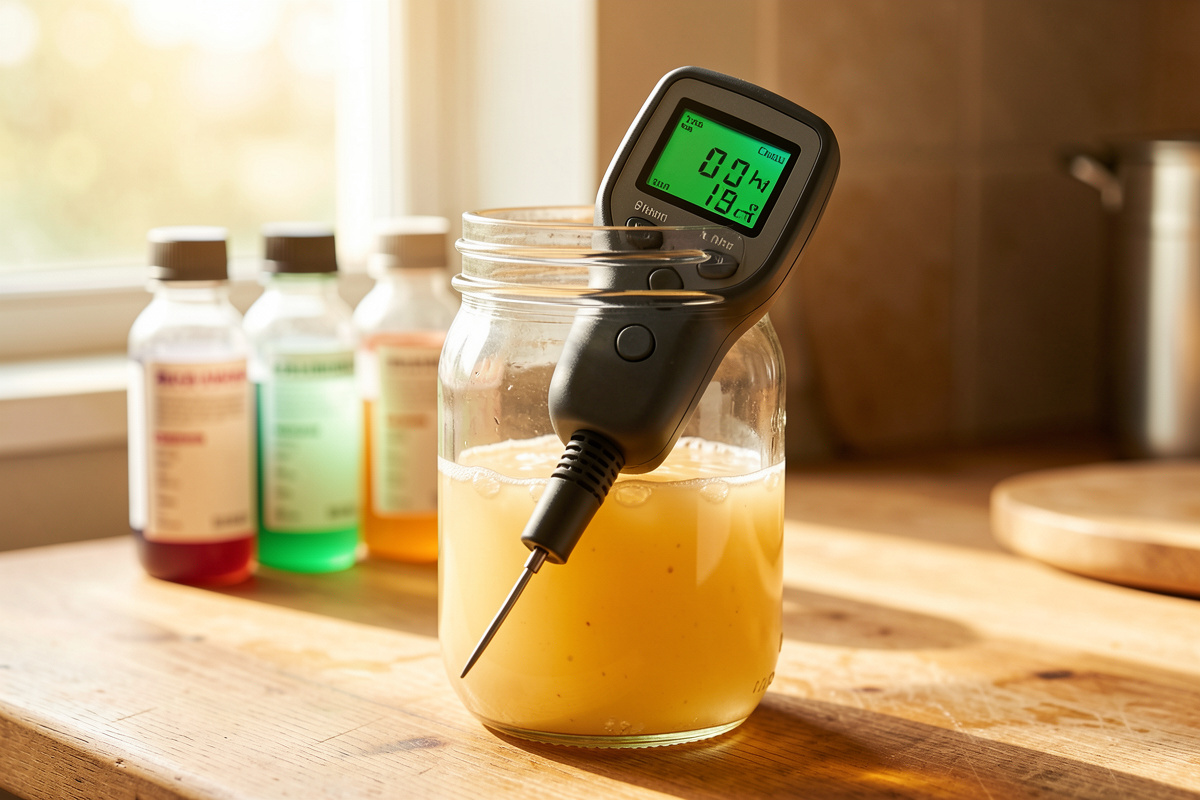
Best pH Meter for Fermentation: What Actually Matters

The best pH meter for fermentation is an inexpensive digital pocket meter with automatic temperature compensation, a replaceable or refillable probe, and two-point calibration — not a lab-grade instrument and not a box of paper strips. For home kraut, kombucha, hot sauce, and vinegar you need to reliably read between pH 3 and 5, and a calibrated pocket meter does that to within about 0.1 pH, which is all the precision food safety actually requires.
I keep a calibrated pocket pH meter on the fermentation bench and a tube of pH strips as a sanity-check backup, and the meter earns its place on every batch that matters. This guide is the buying logic I would give a friend starting out: what actually matters in a fermentation pH meter, why strips are not enough on their own, and how to calibrate and care for the probe so the reading you trust is real.
Why pH Is the Number That Decides Safety
pH is the single measurement that separates a safe ferment from a risky one. The botulism floor sits at pH 4.6 — below that, Clostridium botulinum cannot produce toxin — and a healthy lacto ferment drops well past it, reaching pH 3.2 to 3.8 as Lactobacillus works. A meter lets you confirm you have crossed into the safe zone instead of guessing from smell and time.
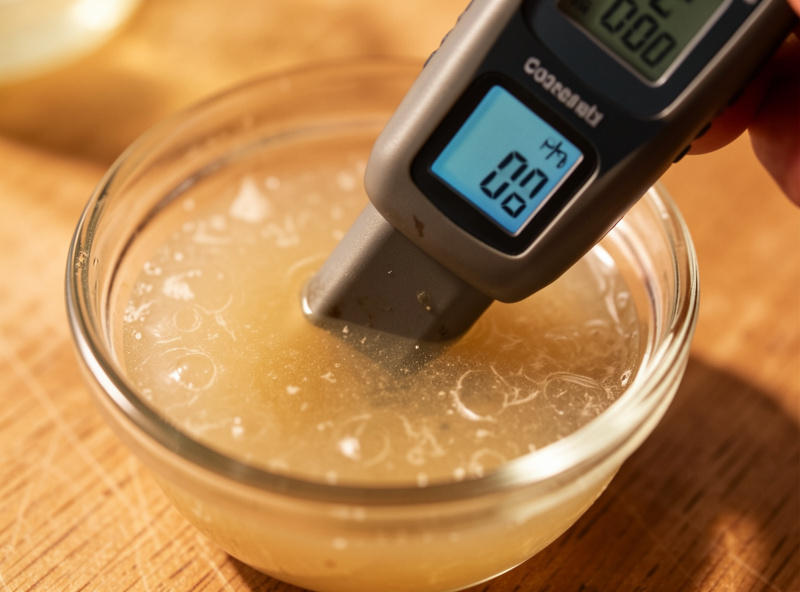
This matters most for the ferments that aim for shelf stability. A fermented hot sauce I want to keep on the counter needs to read below pH 4.0, and I will not bottle one without checking; the hot sauce pH guide walks through the exact targets. Kombucha has its own working window, covered in the kombucha pH guide. In every case the meter turns a vague rule into a number you can act on.
What Actually Matters in a Fermentation pH Meter
Four features separate a meter worth owning from a frustrating toy. Automatic temperature compensation (ATC) corrects the reading for the sample temperature, which matters because pH shifts with temperature and your brine is rarely at the calibration temperature. Two-point calibration against pH 4.0 and 7.0 buffers is non-negotiable — a meter you cannot calibrate drifts into nonsense within weeks.
The other two are resolution and probe quality. For food safety you want 0.1 pH resolution or finer; the cheapest meters that read only to 0.1 are fine, but avoid the ones that wander 0.3 between dips. A replaceable or refillable probe is what makes a meter last — the glass electrode is a consumable, and a sealed-probe meter becomes e-waste the day its sensor dies. I keep a bottle of pH 4.0 and 7.0 calibration solution on hand because calibration is the difference between a number and a guess.
Pocket Meter vs Strips vs Lab Meter
For home fermentation, a pocket meter is the sweet spot. Lab-grade benchtop meters read to 0.01 pH and cost many times more, but that precision buys you nothing when the safety threshold is a whole 0.6 pH away from where a healthy ferment lands. Paper strips are useful as a cheap cross-check and as a backup when a probe fails, but they resolve in coarse colour bands and your eyes read them differently under kitchen light versus daylight.
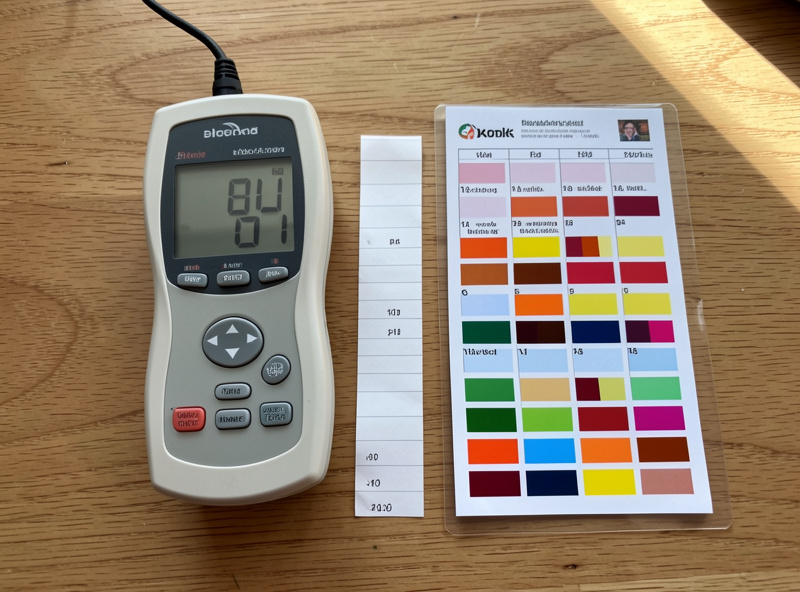
My setup is a digital pocket pH meter with ATC as the primary instrument and a tube of pH test strips in the drawer. When the meter and the strips disagree by more than about 0.3, that is my signal to recalibrate the meter rather than trust either reading blindly. Two cheap tools that check each other beat one expensive tool you have to take on faith.
| Tool | Typical resolution | Best for | Limitation |
|---|---|---|---|
| Digital pocket meter (ATC) | 0.1 pH | Everyday batches, shelf-stable sauces | Needs calibration and probe care |
| pH test strips | ~0.5 pH bands | Quick check, probe-failure backup | Subjective colour reading |
| Benchtop lab meter | 0.01 pH | Lab work, commercial process authority | Overkill and costly for home use |
How to Calibrate and Care for the Probe
A pH meter is only as honest as its last calibration. Calibrate against fresh pH 7.0 and pH 4.0 buffer before any batch where the number matters — bottling a hot sauce, confirming a vinegar, checking a kombucha. Rinse the probe in distilled or clean water between the buffer and the sample so you do not drag buffer into your reading, and never wipe the glass bulb dry with a cloth, which scratches it and shifts the calibration.
Storage is where most meters die early. The glass electrode must stay wet; a probe stored dry develops a slow, drifting response that no calibration fully recovers. Keep the probe in its cap with a few drops of storage solution or, in a pinch, pH 4.0 buffer — never plain tap water, which leaches the reference junction over time. Treated this way, an inexpensive pocket meter holds a trustworthy reading for years.
What I Would Buy Starting Over
If I were buying my first fermentation pH meter today, I would get an inexpensive ATC pocket meter with a replaceable probe, a two-pack of pH 4.0 and 7.0 calibration solution, and a tube of strips for cross-checks — the whole kit costs less than one benchtop meter and covers every home ferment I run. Spend the money you save on more buffer solution, because the calibration habit is what makes any meter worth owning.
Skip the temptation to buy lab-grade precision you will never use, and skip the sealed-probe bargain meters that cannot be recalibrated or repaired. The dial that keeps your ferments safe is not resolution — it is a calibrated, well-cared-for probe reading to 0.1 pH, every time you check.
Some links above are Amazon affiliate links; if you buy through them I may earn a small commission at no extra cost to you. I only recommend gear I actually use on my own bench.
Frequently Asked Questions
Do I really need a pH meter for fermentation?
For everyday kraut and kimchi, salt by weight and time are enough. A pH meter becomes important the moment you want shelf-stable products like fermented hot sauce or vinegar, where you must confirm the reading is below pH 4.0 before bottling for room-temperature storage.
What pH range should a fermentation meter cover?
Anything that reads reliably from pH 3 to 5 with 0.1 resolution covers home fermentation. A healthy lacto ferment lands between pH 3.2 and 3.8, the botulism safety floor is 4.6, and shelf-stable sauces target below 4.0, so that band is where accuracy matters most.
Are pH strips good enough instead of a meter?
Strips work as a quick check and a backup, but they resolve in coarse half-unit colour bands and depend on how you read the colour. I use them to cross-check a digital meter; if the two disagree by more than about 0.3, I recalibrate the meter rather than trust either alone.
How often should I calibrate my pH meter?
Calibrate against fresh pH 7.0 and 4.0 buffer before any batch where the number decides safety, such as bottling a hot sauce or confirming a vinegar. For casual checks, a calibration every few weeks of regular use keeps a pocket meter honest.
Why does my pH meter drift or read inconsistently?
The most common cause is a probe that dried out or was stored in plain water. The glass electrode must stay wet in storage solution or pH 4.0 buffer. A dry-stored probe develops a slow, drifting response that recalibration only partly fixes.
Is a cheap pocket meter accurate enough for food safety?
Yes, when calibrated. An inexpensive ATC pocket meter reading to 0.1 pH is accurate enough because the safety threshold sits a full 0.6 pH away from where a healthy ferment lands. Lab-grade 0.01 resolution buys precision you do not need at home.
Related Guides
- Fermentation Equipment: The Complete Home Brewer Toolkit
- Fermented Hot Sauce pH: Safe Levels for Shelf Stability
- Kombucha pH Guide: Safe Levels, Timeline, and Fixes
- Crock vs Jar vs Vacuum Bag: Which Fermentation Vessel Wins
- Vinegar Brewing at Home: Mother Cultures and Acetobacter

About Kenny Nyhus Fadil
A home fermenter documenting brines, bubbles, and the occasional moldy tragedy.
Keep Bubbling
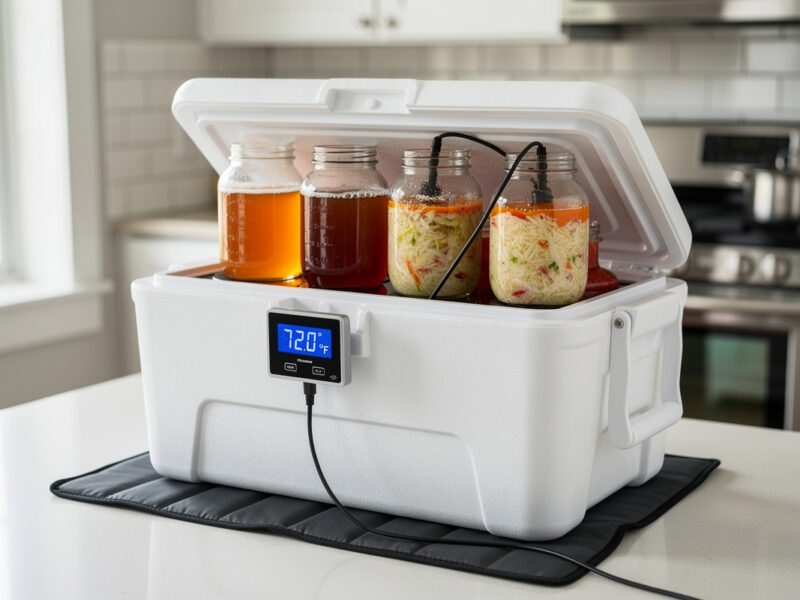
Smart Fermentation Chamber: Temperature and pH Monitoring with Home Automation Sensors
Fermentation Equipment: The Complete Home Brewer Toolkit