Lacto-Fermented Pickles That Stay Crunchy: The Tannin Trick

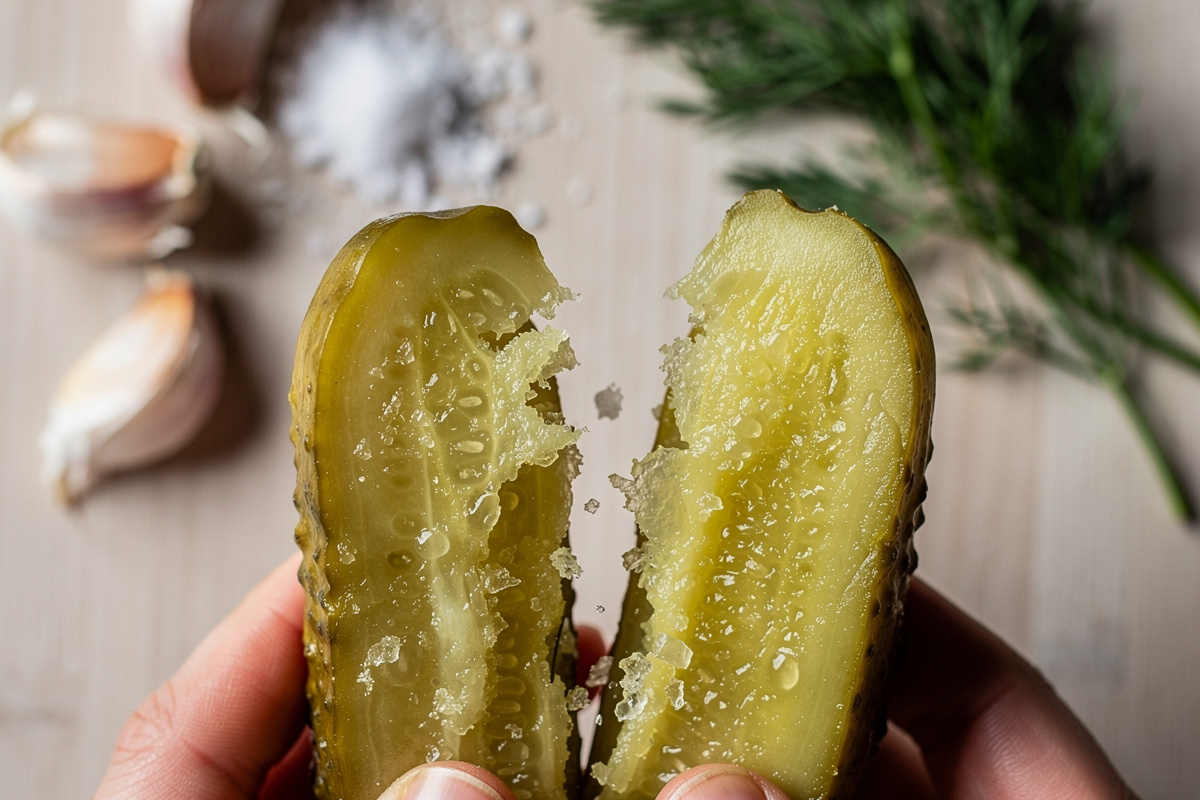
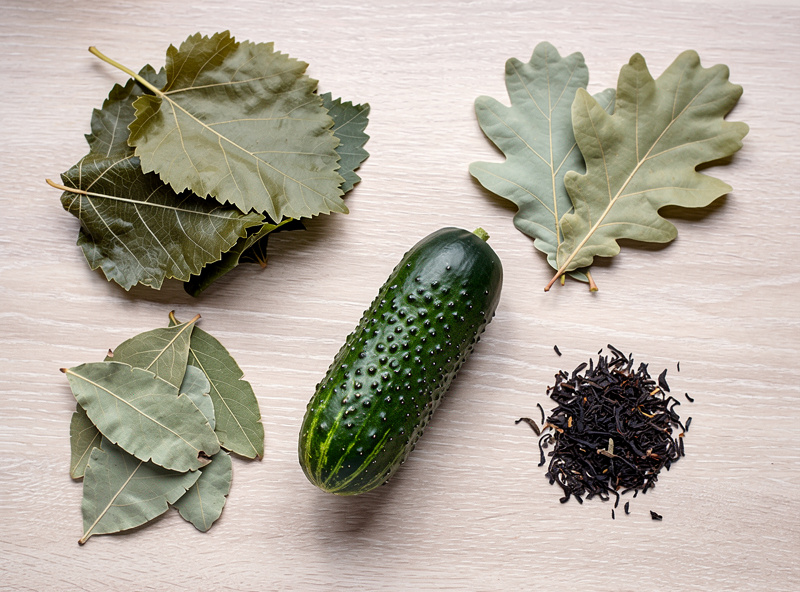
The trick to crunchy lacto-fermented pickles is adding a tannin source — grape leaves, oak leaves, black tea, or bay leaves — to each jar. Tannins inhibit the pectinase enzymes that break down cucumber cell walls, producing pickles as crunchy as commercial Claussen-style ferments at a fraction of the cost.
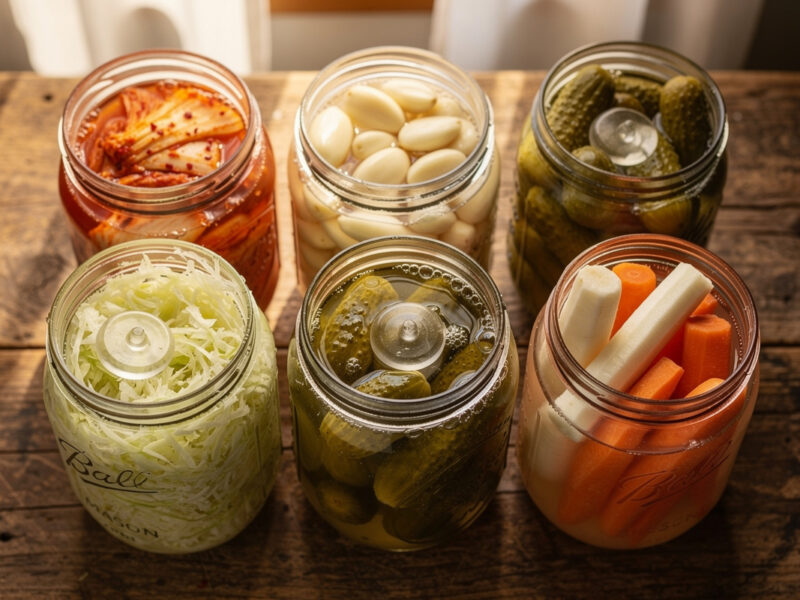
Lacto-pickles are one of six vegetables in my permanent rotation; the salt percentages, equipment, and seasonal calendar for all six live in my lacto fermentation guide.
I grew up helping my grandmother make cucumber pickles every August. She’d send me out to the grape arbor with a basket and say “one leaf per jar, same as my mother did.” I didn’t understand why until years later when I skipped the grape leaves on my first solo batch — the pickles came out so soft they collapsed when I picked them up with a fork. That was the day I learned the tannin trick isn’t just tradition — it’s chemistry.
Without tannins, lacto-fermented pickles often turn soft by day 4 or 5 even when fermentation is otherwise textbook. Salt percentage and temperature control don’t fix the softening problem because pectinase activity is biological, not chemical. Combined with trimming the blossom end and using cucumbers within 24 hours of harvest, the tannin trick produces consistently crunchy pickles — a 30-second addition that transforms texture for the life of the jar.
As an Amazon Associate I earn from qualifying purchases.
Why Lacto-Fermented Pickles Go Soft
The first time I fermented pickles on my own, I skipped trimming the blossom ends — I was in a hurry and figured the tannins alone would do the job. By day 5, all six jars had turned to mush. I opened the first jar expecting a satisfying crunch and instead found what looked like cucumber soup with dill floating in it. The experience taught me that tannins are insurance, not a substitute for proper preparation. For the full process from harvest to jar, see our Garden to Jar: Fermenting What You Grow guide.
Cucumber cell walls are held together by pectin, a structural carbohydrate that gives raw cucumbers their crunch. Pectinase enzymes — naturally present in cucumber blossoms, on cucumber skin, and produced by some surface bacteria — break down pectin into water-soluble sugars over time. The result: the cell walls collapse and the pickle texture goes from crunchy to mushy.
Pectinase activity is fastest at the warm end of fermentation temperature (75 to 80°F), peaks around days 3 to 5, and plateaus by day 7. Cold-fermented pickles (60 to 65°F) soften slower than warm-fermented but still soften without intervention. Cooking destroys pectinase entirely, which is why traditional vinegar-and-cook pickles stay crunchy easily — but cooking also kills the LAB that defines lacto-fermentation.
The challenge for lacto-fermented pickles specifically is keeping pectinase suppressed throughout the 5 to 10 day ferment without cooking. Tannins solve this by binding to and denaturing the pectinase enzymes — they’re an enzyme inhibitor that’s safe to eat and adds no flavor at typical use levels.
Tannin Sources Compared
| Tannin Source | Amount Per Quart Jar | Where to Get | Pros | Cons |
|---|---|---|---|---|
| Fresh grape leaves | 1 leaf, washed | Backyard vines, farmers market, Greek delis | Traditional, no flavor change | Seasonal availability |
| Oak leaves (untreated) | 1 leaf | Backyard oak trees | Highest tannin content | Confirm species, no pesticides |
| Bay leaves (dried) | 2 leaves | Spice aisle | Available year-round, adds slight herb note | Slight flavor change |
| Black tea | 1/4 teaspoon loose leaf | Standard kitchen supply | Cheap, always available | Slight tea note in finished pickles |
| Horseradish leaves | 1 leaf | Garden, Eastern European markets | Traditional Polish addition | Adds horseradish note |
| Cherry leaves | 2-3 leaves | Backyard cherry trees | Slight cherry note | Seasonal |
| Calcium chloride (Pickle Crisp) | 1/4 tsp per quart | Canning supply | Most reliable, no flavor | Less natural; some prefer to avoid |
Calcium chloride (sold as Pickle Crisp by Ball) isn’t a tannin but works through a different mechanism — it crosslinks pectin chains and prevents enzymatic breakdown. Many commercial picklers use it. For purist home fermenters who prefer natural ingredients, grape or oak leaves are the standard choice.
For my own batches, I keep a jar of Frontier Co-op Organic Black Tea Leaves on my fermentation shelf — one tablespoon costs about 40 cents and handles four quart jars of pickles. When I ferment larger batches, I use a 5-liter Gartopf fermentation crock with a water-seal lid, which keeps the brine anaerobic and makes tannin distribution more consistent across multiple jars. Grape leaves are my go-to in summer when the backyard vines are full; black tea carries me through winter. For more on choosing the right gear, see our fermentation weights comparison.
Step 2: Trim the Blossom End
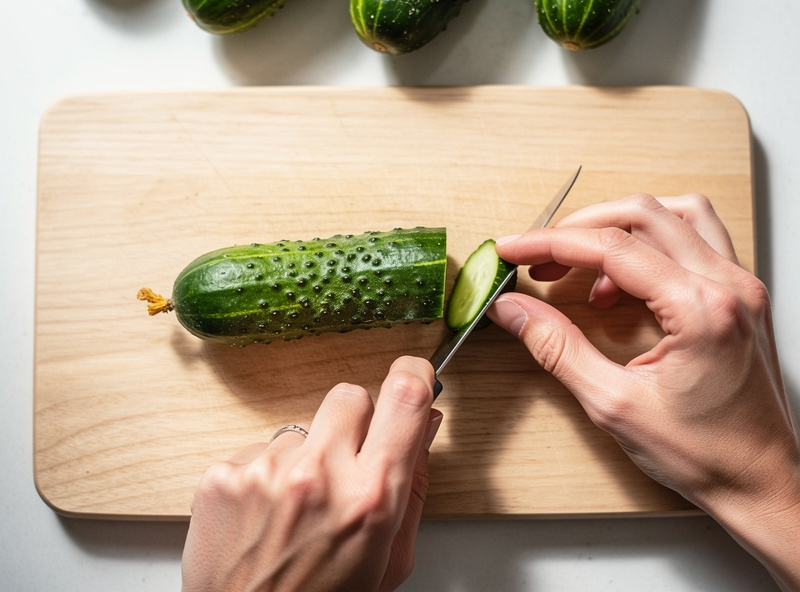
The blossom end of the cucumber (opposite from the stem end) contains the highest concentration of pectinase enzymes. Slicing off the blossom end before fermentation removes the pectinase factory and slows softening dramatically.
Identify the blossom end: the end with a small dark dot or rough texture, opposite the rounded stem end. Slice off about 3 mm — just enough to remove the visible blossom area. Don’t trim too much; you lose pickle yield without additional benefit past 3 mm.
Extension guidance (Penn State, USDA-ARS pickling research) consistently flags the blossom end as the concentrated source of the softening enzymes, and on my own batches this single step alone — done without tannins — is the difference between “acceptable” and “mushy” by day 5. Combined with tannins, it produces consistently crunchy pickles. The combination is more reliable than either intervention alone.
Step 3: Use Fresh Cucumbers
Cucumbers picked more than 24 hours before fermentation start are noticeably softer when fermented than same-day-picked cucumbers. Pectinase activity in stored cucumbers slowly dissolves pectin even at refrigerator temperatures.
For best results, pick or buy cucumbers the day you ferment. Farmers market cucumbers are usually 1 to 3 days old; supermarket cucumbers are often 5 to 14 days old. Backyard cucumbers picked the morning of ferment day are the gold standard.
If you must use older cucumbers, soak them in ice water for 1 to 2 hours before fermentation. The cold and water uptake helps firm up cell walls slightly and partially compensates for storage softening.
The Crunchy Pickle Recipe
Ingredients per quart jar:
• 1 to 1.25 lb fresh Kirby or pickling cucumbers (use 1 day or fresher)
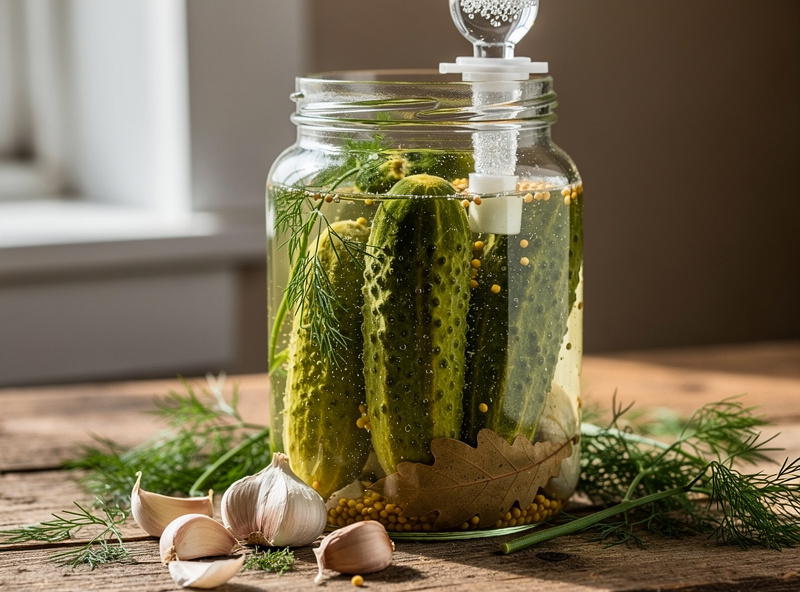
• 1 grape leaf OR 1 oak leaf OR 2 bay leaves OR 1/4 teaspoon black tea (tannin source)
• 4 cloves garlic, peeled and lightly crushed (see our lacto-fermented garlic guide)
• 2 fresh dill heads OR 1 tablespoon dill seed
• 1 teaspoon black peppercorns
• 1 teaspoon mustard seeds
• 1 dried chili (optional)
• 750 ml 3% brine (22 g kosher salt in 750 ml filtered water)
Step 1: Trim 3 mm off the blossom end of each cucumber. Wash thoroughly. If using whole cucumbers, choose ones small enough to fit standing upright in the jar.
Step 2: Place tannin source at the bottom of the jar. Add garlic, dill, peppercorns, mustard seeds, and chili (if using). Pack cucumbers vertically, leaving 1 inch headspace at the top.
Step 3: Make brine by dissolving 22 g pickling salt in 750 ml filtered water — I weigh it rather than measure by volume so the 3% ratio holds no matter which salt is in the jar. Pour over cucumbers, ensuring all are fully submerged below the brine surface. Add a fermentation weight if needed to keep cucumbers down (see our weights comparison). For post-ferment aging, see our guide on brining and curing chamber aging.
Step 4: Seal with an airlock lid — I use fermentation lids for mason jars on this batch size — or a loosened standard mason jar lid. Ferment at 65 to 72°F for 5 to 10 days. Cucumbers should be tangy and crunchy after 7 days; longer ferments produce stronger flavor.
Step 5: Move to refrigerator after fermentation completes. Refrigerated lacto-fermented pickles keep 4 to 6 months and stay crunchy throughout if the tannin trick worked.
Why Calcium Chloride Is Sometimes the Better Choice
Calcium chloride is a food-grade salt that works by crosslinking pectin chains, making them more resistant to pectinase breakdown. It’s the most reliable crunchy-pickle additive available — almost foolproof when used at the recommended 1/4 teaspoon per quart (rounded 1/8 teaspoon per pint) (Healthy Canning, citing Ball’s own dosing guide).
The trade-off: calcium chloride is a manufactured ingredient (vs leaves and tea, which are whole foods). Many home fermenters prefer to avoid it on principle. For commercial-quality consistency, calcium chloride beats tannins; for traditional method authenticity, tannins beat calcium chloride.
Combining calcium chloride and tannins gives the most crunchy pickles possible — both mechanisms work additively. Use this combination for pickling competitions or for preserving large batches where consistency matters more than purist methodology. The lacto-fermented vegetables cluster covers calcium chloride in detail.
Other Crunchiness Factors
Cucumber variety: Kirby cucumbers are bred specifically for pickling and stay crunchier than slicing or English cucumbers. National Pickling, Boston Pickling, and Wautoma are reliable Kirby varieties. Avoid using slicing cucumbers (the standard supermarket green cucumbers) — they soften badly even with tannins.
Cucumber size: smaller cucumbers (3 to 5 inches) stay crunchier than larger ones (6+ inches). The smaller surface-area-to-volume ratio means less pectinase exposure per cell. Pick or buy cucumbers in the 3-5 inch range.
Salt percentage: 3% brine produces crunchier pickles than 2.5%. The higher salt slows pectinase activity slightly. Don’t go above 4% — pickles become unpleasantly salty.
Fermentation temperature: cooler is better for crunch (60 to 68°F is ideal). Warm fermentation (75°F+) accelerates pectinase activity. If your kitchen runs warm in summer, ferment in a basement or use a wine cooler/temperature-controlled environment.
Troubleshooting Soft Pickles
Pickles soft after fermentation: Most common cause is no tannin source used. Add tannins to the next batch. Other causes: cucumbers were too old (more than 2 days from harvest), blossom ends not trimmed, fermentation temperature too high, or salt percentage too low.
Pickles soft only at the top of the jar: cucumbers floated above the brine surface during fermentation. Air-exposed pickle areas soften faster than fully-submerged ones. Use a fermentation weight to keep all cucumbers below the brine line.
Pickles crunchy initially then soft after refrigeration: surface bacteria continued breaking down pectin even in cold storage. Use larger amounts of tannins (2 grape leaves instead of 1, or both tannins and calcium chloride) to suppress bacterial pectinase more aggressively.
Pickles hollow or shriveled: cucumbers were already past their prime when fermented (over-mature, with seeds and air pockets developing). Use only firm fresh cucumbers without visible hollow areas. The lacto-fermented vegetables cluster covers cucumber selection in detail.
Safety note (USDA/NCHFP standard): The National Center for Home Food Preservation standard is that fermented pickles must reach and maintain a pH of 4.6 or below to prevent Clostridium botulinum growth. Most properly lacto-fermented pickles reach pH 3.5 to 4.0 by day 5, well within the safe zone. Test your brine with pH strips the first few times you ferment to confirm your process — if pH hasn’t dropped below 4.6 by day 4, your brine may be too salty or the LAB culture stalled. In that case, discard the batch and start fresh with 3% brine and an active starter culture. For help identifying surface growths that can interfere with proper acidification, see our Kahm Yeast guide.
If I were making my first batch of lacto-fermented pickles today, I would start with Kirby cucumbers picked that morning, trim every blossom end without exception, slip one grape leaf (or 1/4 teaspoon black tea) into each quart jar, and ferment at 65–68°F for seven days. That combination — fresh cucumbers, blossom-end removal, tannin source, and cool fermentation — has never failed to produce pickles my grandmother would recognize. Skip any one of those four steps and you roll the dice on crunch. Do all four and you’ll wonder why you ever bought shelf-stable pickles. For the full garden-to-ferment workflow, read our Garden to Jar guide.
Frequently Asked Questions
What is the trick to crunchy lacto-fermented pickles?
Add a tannin source to each jar — 1 grape leaf, 1 oak leaf, 2 bay leaves, or 1/4 teaspoon black tea. Tannins inhibit pectinase enzymes that break down cucumber cell walls into mush. Combined with trimming the blossom end and using fresh cucumbers, the tannin trick produces consistently crunchy pickles.
Why do my homemade pickles go soft?
Pectinase enzymes naturally present in cucumber blossoms break down pectin during fermentation. Without intervention, pickles soften by day 4 to 5 of a typical 7-10 day ferment. Three fixes: add tannins (grape leaves, oak, bay, or black tea), trim 3 mm off the blossom end, and use cucumbers within 24 hours of harvest.
Can I use calcium chloride instead of tannins for crunchy pickles?
Yes — Ball Pickle Crisp Granules at 1/4 teaspoon per quart (rounded 1/8 teaspoon per pint) is the most reliable crunchy-pickle additive. Many commercial picklers use it exclusively. Tannins are the traditional natural alternative; calcium chloride is the foolproof modern alternative. Combine both for maximum crunch.
What is the best cucumber variety for lacto-fermented pickles?
Kirby cucumbers are bred specifically for pickling and stay crunchier than slicing varieties. National Pickling, Boston Pickling, and Wautoma are reliable Kirby cultivars. Avoid using English or standard slicing cucumbers — they soften badly even with tannins added.
How long do lacto-fermented pickles take?
5 to 10 days at 65 to 72 degrees F. Cucumbers should be tangy and crunchy after 7 days; longer ferments produce stronger flavor. Move to refrigerator after fermentation completes — refrigerated lacto-fermented pickles keep 4 to 6 months and stay crunchy if tannins were used.
Do I need to trim cucumbers before fermenting them?
Yes — slice off 3 mm from the blossom end (opposite the stem end) before fermenting. The blossom end contains the highest concentration of pectinase enzymes that soften pickles during fermentation. Extension research (Penn State, USDA-ARS) confirms the blossom end as the concentrated enzyme source; trimming it is essentially free and noticeably reduces softening on its own.
Related Articles
- Garden to Jar: Fermenting What You Grow
- How to Lacto-Ferment Garlic: Honey vs Brine
- Fermented Pickle Brining and Curing Chamber Aging
- Kahm Yeast: What It Is, How to Prevent It
- Fermentation Weights: Glass vs Ceramic vs Ziplock

About Kenny Nyhus Fadil
A home fermenter documenting brines, bubbles, and the occasional moldy tragedy.
Keep Bubbling
Lacto-Fermentation for Vegetables: The Complete Home Guide
Fermented Carrots Recipe with Ginger (Crunchy + Tangy)