Garden to Jar: Fermenting What You Grow (Cabbage, Peppers, Cucumbers)

I ferment roughly 60 pounds of garden vegetables each season — cabbage, peppers, cucumbers, and garlic — and the single variable that determines whether a jar succeeds or fails is the salt percentage: 2.0% by weight for sauerkraut, 3.5-5% for pepper mash, and 5.0% brine for sour pickles. The lactobacillus on freshly picked produce does the rest.
Garden-to-jar is the seasonal expression of a broader six-vegetable rotation; the salt math, brine-vs-dry-salt decision, and troubleshooting playbook are in my lacto fermentation guide.
Most fermentation guides start at the supermarket. This one starts at the raised bed. The shorter the gap between harvest and brine — ideally under 4 hours — the more lactobacillus bacteria survive on the produce skin, and the cleaner, faster, and more predictable the ferment. Garden-to-jar fermentation is a complete loop: plant the seed, harvest at peak, brine within hours, age for 1–6 weeks, store for months. Done well across a full growing season, a modest backyard garden produces enough fermented vegetables to cover most of a family’s lacto-ferment needs for the year. Done sloppily, you waste the garden time and the salt.
Why Garden Produce Ferments Better Than Store-Bought
Three reasons fresh-from-garden produce outperforms supermarket vegetables for lacto-fermentation. First, the wild lactobacillus population on plant surfaces takes a real hit from commercial washing and days of cold storage before it ever reaches a shelf. Garden produce going into the brine within 4 hours of harvest carries a much fuller live culture; supermarket produce often needs a starter culture or whey to ferment reliably. Second, garden vegetables have higher water content and crisper cell structure when freshly picked, which translates to better texture in the finished ferment. Third, you control the variety — heirloom cabbages with higher sugar content (like Brunswick or Premium Late Flat Dutch) ferment more cleanly than commercial Glory of Enkhuizen.
Last August I pulled 18 pounds of Brunswick cabbage from a single 4-by-8 bed after a wet July that had me worried about splitting heads. The heads were dense and tight — tighter than any store-bought cabbage I’ve handled — and the cut stems wept water within seconds of slicing. That batch fermented fully in 10 days at 68°F, two weeks faster than my typical supermarket cabbage ferments, and produced a clean, bright tang that later batches with store-bought cabbage couldn’t replicate. When you taste the difference side by side, the garden-to-jar argument makes itself.
The garden side of this loop matters as much as the fermentation side. CityRooted’s complete container gardening guide covers the bed sizing and crop rotation that produces enough volume to ferment seriously — typically a 4 by 8 ft bed of cabbage produces 25-40 lb of heads, enough for 6-8 batches of sauerkraut at 2 lb each. Without that production volume, garden-to-jar stays a hobby; with it, it replaces a substantial fraction of grocery-store vegetables.
Cabbage to Sauerkraut: The Foundation Ferment
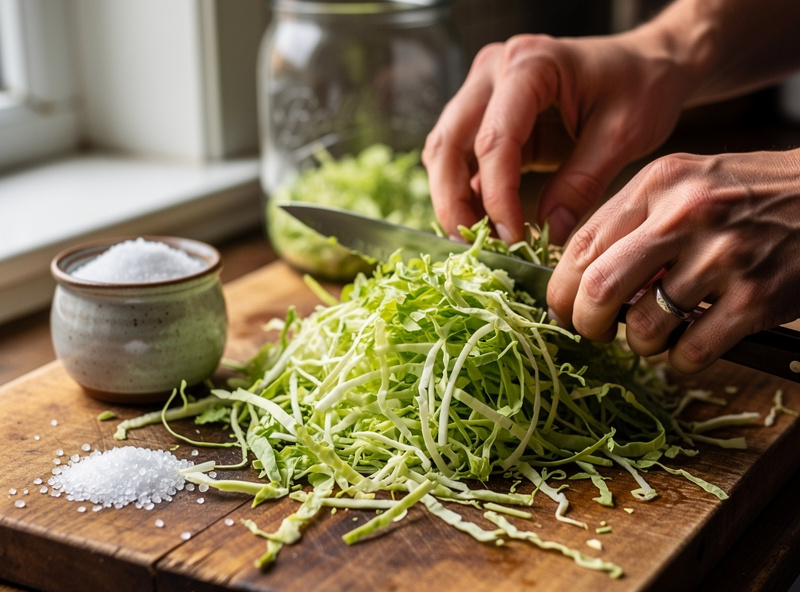
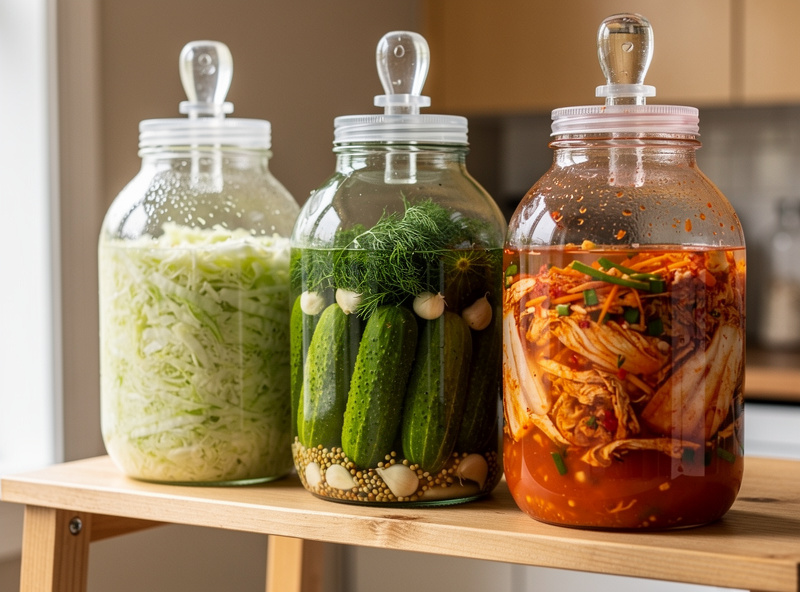
Sauerkraut is the right first ferment for almost every gardener because cabbage is forgiving and the technique scales. The recipe is simple: shred cabbage finely, weigh it, add 2.0% of that weight in non-iodized salt, massage until liquid releases, pack tightly in a fermentation vessel under the brine, age 2-6 weeks at 65-72 °F.
The variables that matter: salt percentage (1.5-2.5% range, 2.0% is the sweet spot), temperature (lower means slower and safer, higher means faster and more sour), and oxygen exclusion (keeping the cabbage submerged is the single most important step). Use a glass weight or a small ziplock bag of brine to keep everything below the liquid line. Fermentation is anaerobic — anything above the brine grows mold.
Yield: 1 lb of cabbage produces about 14 oz of finished sauerkraut. A 4 by 8 ft cabbage bed yielding 30 lb of heads gives you roughly 26 lb of finished kraut — enough for a household of 4 to eat a serving twice a week for 8-10 months.
Peppers to Hot Sauce: The High-Value Ferment
Pepper-based hot sauce is the highest-value-per-pound ferment in the home garden. A pound of fresh chiles becomes about 12 oz of fermented hot sauce, which sells at farmer’s markets for $10-$15 per 5 oz bottle. The economics compound when you grow rare varieties (Aji Amarillo, Fatalii, Tobago Scorpion) that are hard to source.
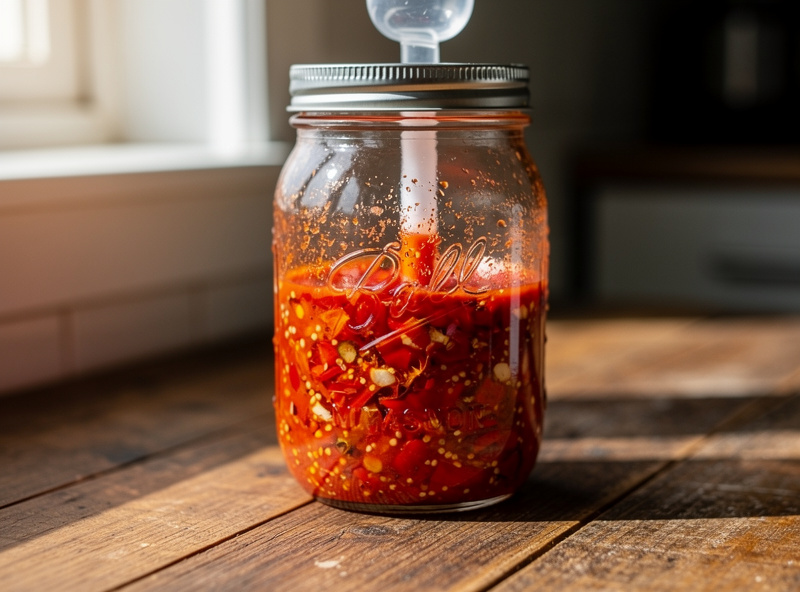
The technique: roughly chop peppers (seeds in or out depending on heat preference), weigh, add 3.5-5% salt by weight (chili mashes run higher-salt than leafy ferments), blend lightly to break the cell walls, pack in a wide-mouth jar with an airlock, ferment 1-3 weeks at 65-72 °F. After fermentation, blend smooth, optionally add vinegar at 5-10% by volume for shelf stability, and bottle.
The pepper-growing-to-fermenting loop is genuinely deterministic if you get pepper variety choice right. Garden plants from a single Aji Amarillo seed packet ($4) produce 2-4 lb of pods in a season, enough for 4-6 small bottles of finished sauce. CityRooted’s growing peppers indoors guide covers how to extend the pepper season for year-round fermentation supply.
Cucumbers to Pickles: The Texture Ferment
Lacto-fermented pickles (real sour pickles, not vinegar pickles) are the ferment most home picklers struggle with because cucumbers turn mushy if anything goes wrong. The two variables that determine success: tannin source (tea leaves, oak leaves, grape leaves added to the brine, all of which inhibit the pectinase enzyme that softens cucumbers) and brine strength (5.0% salt by weight, not the 2% that works for cabbage).
The recipe: cut fresh-from-garden pickling cucumbers (Boston pickling, National pickling, or homestead Kirby) within 6 hours of harvest, pack them whole or quartered into a jar with garlic, dill, and 1-2 oak/grape/tea leaves per quart, cover with 5% brine (50 g salt per 1 L water), weight down, ferment 1-3 weeks at 65-70 °F.
The 6-hour-from-harvest window is what separates crisp homemade sour pickles from mushy ones. Cucumber pectinase activity ramps up rapidly post-harvest at room temperature — by 24 hours from picking, even with cold storage, the enzyme has compromised the cell walls enough to soften the finished ferment. For the full tannin technique that guarantees crunch — including oak leaf vs grape leaf test results — see our lacto-fermented pickles guide.
Salt, Vessel, and Tools
Three tools cover all garden-to-jar fermentation:
- Kitchen scale (0.1 g resolution). Salt percentage is by weight, not volume. A $20 jewellery scale is more accurate than a kitchen scale for small batches.
- Wide-mouth Mason jars or fermentation crock. Half-gallon Ball jars handle most batches. A 2-gallon Ohio stoneware crock for kraut at scale.
- Glass weights or airlock lids. The Pickle Pipe, Mason Tops, or Easy Fermenter lid systems all work. Glass weights ($8–$15 for a set) keep produce submerged — for a full breakdown of glass, ceramic, and ziplock options including which ones float under heavy brine, see our fermentation weights comparison.
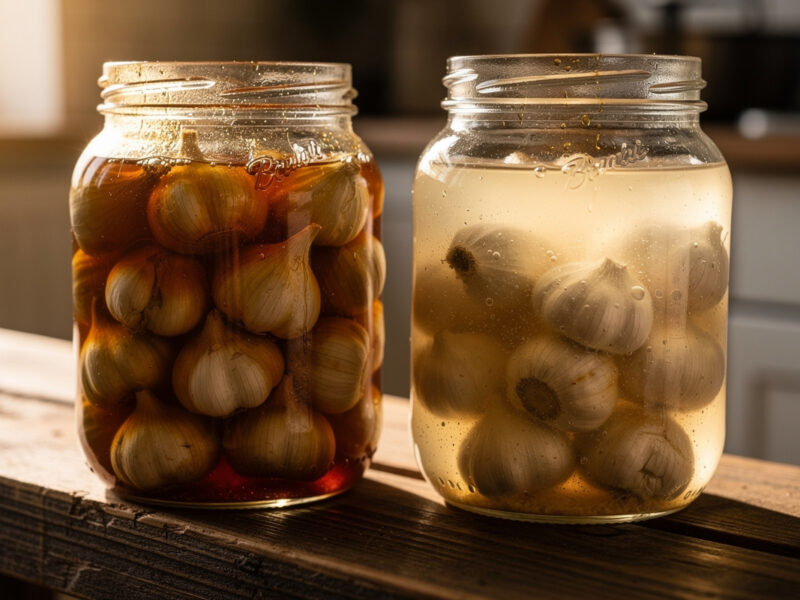
Salt: use non-iodized salt only. Pickling salt, kosher salt (Diamond Crystal or Morton), or sea salt without anti-caking agents. Iodized table salt inhibits lactobacillus and produces off-flavours. Lacto-fermented garlic runs its own lower-salt brine math — honey vs brine changes the flavour profile, but don’t borrow the higher pepper-mash percentage for garlic cloves.
Salt Percentage Reference Table
| Vegetable | Salt % | Method | Ferment Time | Yield Factor |
|---|---|---|---|---|
| Cabbage (sauerkraut) | 2.0% | Massage / dry salt | 2-6 weeks | 1 lb cabbage → 14 oz kraut |
| Cabbage (kimchi) | 2.5% | Brine soak then paste | 1-4 weeks | 1 lb cabbage → 14 oz kimchi |
| Cucumbers (sour pickles) | 5.0% brine | Submerged in brine | 1-3 weeks | 1 lb cukes → 12 oz pickles + brine |
| Peppers (hot sauce mash) | 3.5-5.0% | Chop + dry salt + airlock | 1-3 weeks | 1 lb peppers → 12 oz finished sauce |
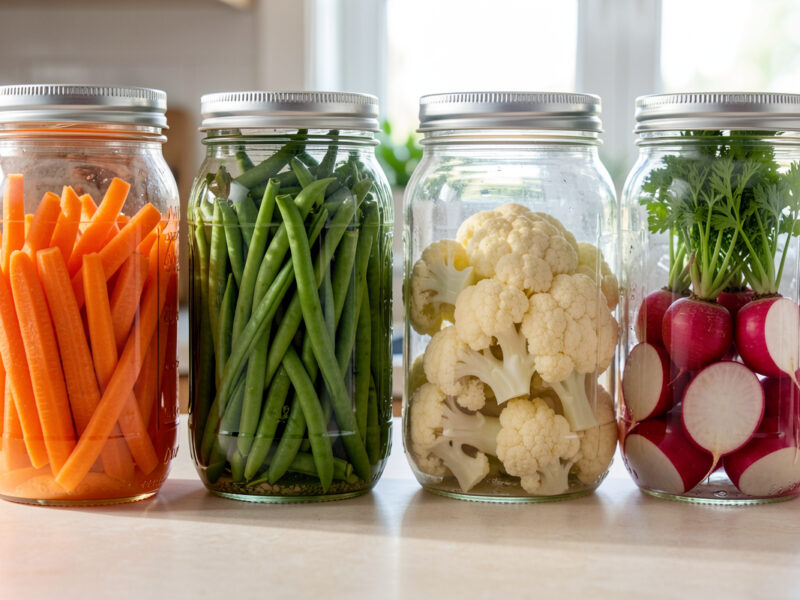
| Carrots / radishes | 2.0-2.5% | Dry salt or 2.5% brine | 1-2 weeks | 1 lb root → 12-14 oz |
| Garlic (whole cloves) | 3.0% brine | Submerged brine | 3-6 weeks | 1 lb cloves → 13 oz |
| Beans (green) | 2.5% brine | Submerged brine | 1-2 weeks | 1 lb beans → 12 oz |
The USDA Complete Guide to Home Canning, Guide 6 confirms the 2.25 to 2.5 percent salt window for sauerkraut favors the Leuconostoc lactic acid bacteria that drive a clean ferment, and that vegetable fermentation generally runs 2.0 to 5.0 percent salt by weight depending on the vegetable. These ratios have been validated across decades of food safety testing — the 2.0 to 2.5 percent window for sauerkraut specifically keeps the ferment in the range that suppresses Clostridium botulinum while allowing lactobacillus to dominate.
Storage and Yield Planning
Finished lacto-ferments stored at 38-42 °F (refrigerator or root cellar) keep for 6-12 months. Above 50 °F they continue fermenting and become progressively more sour and softer. The end-of-season planning math for a household of four:
- Sauerkraut for 2 servings/week × 50 weeks = 25 lb finished, requires ~30 lb of cabbage
- Hot sauce for cooking + meals = 6-10 small bottles, requires 4-6 lb of peppers
- Sour pickles for snacks + cooking = 8-12 quarts, requires 12 lb of cucumbers
That bulk fits in a 4 by 8 ft cabbage bed plus a 4 by 4 ft pepper bed plus a 6-vine cucumber trellis row. A garden of that scale is a real preservation system, not just a hobby. For pickles specifically, extended aging in a controlled environment develops deeper flavour — see our brining and curing chamber guide for how to build a small temperature-stable station that extends the pickle season into late autumn. The companion planting and crop rotation that supports this scale is in CityRooted’s companion planting and raised beds and planters guides.
Start with sauerkraut. Get two clean batches under your belt with 2.0 percent salt and a glass weight before you attempt hot sauce. Once you’ve made a pepper mash that bubbles through an airlock for two weeks and tastes like something you’d happily pay $12 a bottle for, the garden-to-jar loop stops feeling like a hobby and starts feeling like how you eat. The same raised bed that grew your summer salads can produce a year-long ferment pantry — but only if you nail the salt percentages on your first two batches. Sauerkraut is the training ground; hot sauce is the graduation ceremony.
Frequently Asked Questions
Why does garden-fresh produce ferment better than store-bought?
Commercial washing and days of cold storage measurably thin out the wild lactobacillus population on plant surfaces. Garden produce going into brine within 4 hours of harvest carries a much fuller live culture, ferments faster, and has fewer off-flavour issues. Store-bought produce often needs a starter culture to ferment reliably.
What salt percentage should I use for sauerkraut?
2.0 percent by weight is the sweet spot. The safe range is 1.5 to 2.5 percent. Below 1.5 percent the kraut may grow mold or other unwanted bacteria; above 2.5 percent fermentation slows and the finished kraut tastes too salty. Always weigh the salt and the cabbage rather than volume measure.
Why are my homemade pickles always mushy?
Two causes. Either the cucumbers were too long out of the garden before brining (the pectinase enzyme softens cell walls within 24 hours of harvest), or the brine lacked tannin. Add 1 to 2 oak leaves, grape leaves, or black tea bags per quart jar to inhibit the softening enzyme.
Can I ferment vegetables I bought from the supermarket?
Yes, but expect slower starts and occasional failed batches. Add a tablespoon of whey from plain yogurt or a splash of brine from a previous ferment to introduce live cultures. Garden produce ferments more reliably without these starters.
How long do finished ferments last?
Properly stored at 38 to 42 degrees F (refrigerator or root cellar), lacto-ferments keep 6 to 12 months. Above 50 F they continue fermenting and become progressively more sour and softer. Most households eat through their stock well before the end-of-storage threshold.
What is the most reliable first ferment for a beginner?
Sauerkraut. Cabbage is forgiving, the technique scales to any batch size, the salt window is wide (1.5 to 2.5 percent), and you can recover from minor mistakes. Get sauerkraut right twice in a row before attempting hot sauce or pickles.
Related Articles
- Lacto-Fermented Pickles That Stay Crunchy
- How to Lacto-Ferment Garlic: Honey vs Brine
- Fermented Pickle Brining and Curing Chamber
- Fermentation Weights: Glass vs Ceramic vs Ziplock
- Easy Napa Cabbage Kimchi Recipe

About Kenny Nyhus Fadil
A home fermenter documenting brines, bubbles, and the occasional moldy tragedy.
Keep Bubbling
How to Keep Fermented Vegetables Crunchy: Texture Science
How to Lacto-Ferment Garlic: Honey vs Brine Methods