Easy Napa Cabbage Kimchi Recipe for Beginners (Step-by-Step)

Make napa cabbage kimchi by salting quartered cabbage in a roughly 10% brine (the traditional short-soak strength — well above the finished product’s salt level, since most of it rinses back out) for 4-6 hours, mixing a paste of gochugaru, garlic, ginger, fish sauce, and rice flour porridge, coating every leaf, and fermenting at room temperature for 1-3 days before refrigerating for 4-6 weeks. The whole process produces classic spicy-tangy kimchi with ingredients from any Asian grocery.
This napa recipe is the entry to a wider kimchi family — kkakdugi, mul kimchi, chonggak, baek kimchi (a mild white version without gochugaru that stands on its own as a recipe — see the baek kimchi white kimchi recipe for the full method), and oi sobagi — all compared in my homemade kimchi guide.
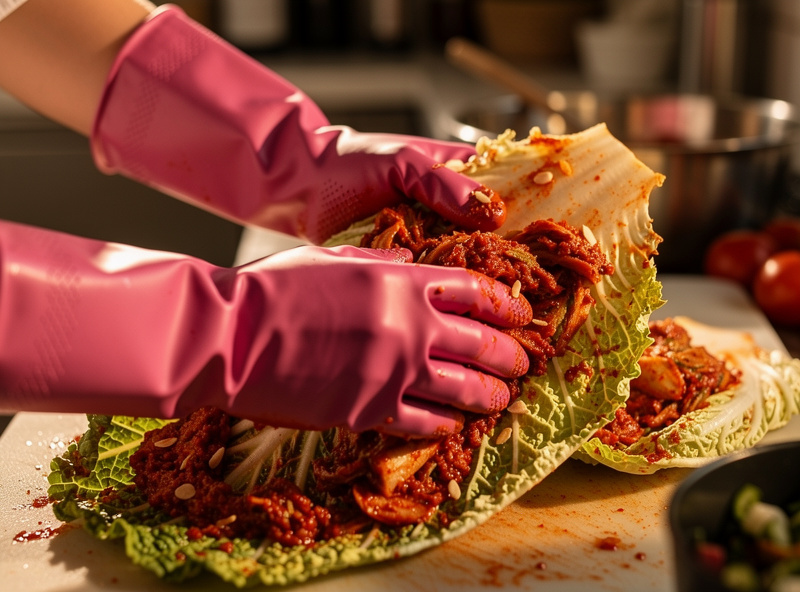
I learned to make kimchi from my Korean mother-in-law during my first visit to her kitchen in Seoul. She handed me a pair of pink rubber gloves, a mixing bowl, and a 5-pound bag of gochugaru, then watched me coat each cabbage leaf while correcting my technique — “more paste between the leaves, not just on top.” My first solo batch back home was too salty and tasted raw because I skipped the full 4-week refrigerator aging. Her lesson stuck: kimchi rewards patience more than precision. Here is the recipe exactly as she taught it, adapted for Western kitchens.
As an Amazon Associate I earn from qualifying purchases.
Ingredients for 1 Medium Batch (About 2 Quarts Finished)
One medium batch needs: 1 large head of napa cabbage (1.5-2kg), 1 cup of sea salt for brine, 1/4 cup of gochugaru (Korean chili flakes — not chili powder), 6 cloves of garlic, 1 thumb-sized piece of ginger, 1/4 cup of fish sauce, 2 tablespoons of sugar, 3 tablespoons of glutinous rice flour, 1 cup of water for porridge, 1/2 daikon radish julienned, 4 green onions chopped, optional: 1/4 cup of Asian pear or apple grated. Total ingredient cost is roughly 12-18 dollars.
Specific ingredient notes:
- Napa cabbage: Choose firm heads with tightly packed leaves; loose-leaf cabbage produces poor texture.
- Sea salt: Coarse Korean sea salt is traditional but kosher salt works fine. Always non-iodized.
- Gochugaru: Korean chili flakes — coarse, deep red, mild-to-medium heat. Different from regular chili powder; substitute is not recommended. I cover sourcing, storage, and brand differences in detail in my gochugaru guide.
- Fish sauce: Adds umami depth. Three Crabs or Red Boat brands are reliable. Vegan version: replace with soy sauce + 1 tsp miso paste.
- Glutinous rice flour: Makes the seasoning paste thicker and helps it adhere to cabbage. Substitute: regular rice flour or 1 tsp cornstarch.
- Daikon radish: Optional but traditional; adds crunch and slight sweetness.
- Asian pear or apple: Provides natural sugar that feeds fermentation; produces sweeter kimchi.
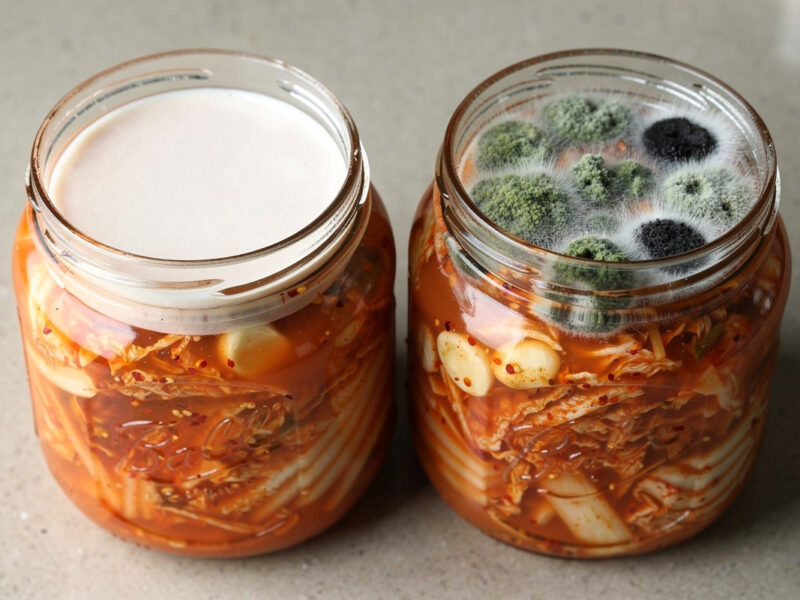
Source ingredients from any Asian grocery store; most items are also available online at H Mart, Amazon, or specialty Korean food retailers. For gochugaru, the Assi and Wang brands are the most-used in Korean home kitchens — both produce the bright-red medium-heat flavor that defines traditional kimchi. The full ingredient set covers 4-6 batches before reordering. I use a dedicated kimchi fermentation container with a wide mouth and a silicone airlock lid; the wide mouth makes paste application easier and the airlock prevents kahm yeast from the moment you seal it. Read about kimchi-specific troubleshooting in our kimchi mold vs safe white film guide.
Step-by-Step Recipe
Total active time is 90-120 minutes; total project time including fermentation is 4-6 weeks for fully developed flavor. The salting and pasting steps are the technically demanding ones; everything else is sequence and timing.
The general pattern is well established in the fermentation-microbiology literature (Park et al.’s review of Korean fermented foods, curl-200 content-verified): Leuconostoc mesenteroides gets kimchi going early, and Lactobacillus plantarum takes over later in the process — though the same review cautions that the exact timing and species dominance vary batch to batch and aren’t reducible to a single tidy number. That matches what I see on my own jars: the 1-3 day room-temperature window followed by weeks of cold aging consistently produces better flavor than rushing either phase, even if I can’t put a precise hour-and-degree figure on the handoff.
Full procedure:
- Halve and quarter the napa cabbage: Lengthwise. Trim the core but leave just enough to hold the leaves together.
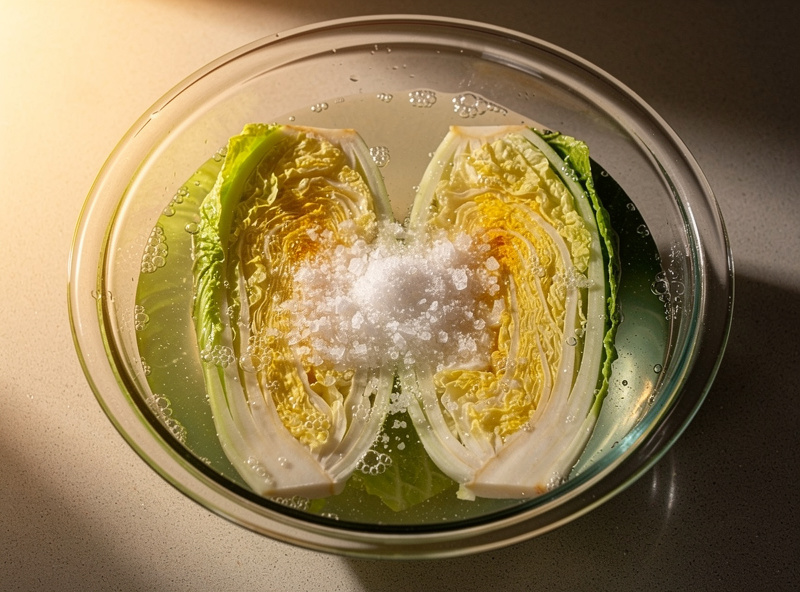
- Brine the cabbage: Mix 1 cup salt with 8 cups water (roughly a 10% brine, the traditional short-soak strength — kimjang brining strength commonly runs 10-15% for a same-day soak, curl-200 content-verified); submerge cabbage in brine. Press down with a plate to keep submerged.
- Soak for 4-6 hours: Rotate cabbage every 2 hours for even salting. Cabbage should be wilted and limp when done.
- Rinse cabbage 3 times in cold water: Removes excess salt. Squeeze out water.
- Make rice flour porridge: Whisk 3 tablespoons rice flour with 1 cup water in a small saucepan. Heat gently, stirring constantly, until thick and translucent (3-5 minutes). Cool to room temperature.
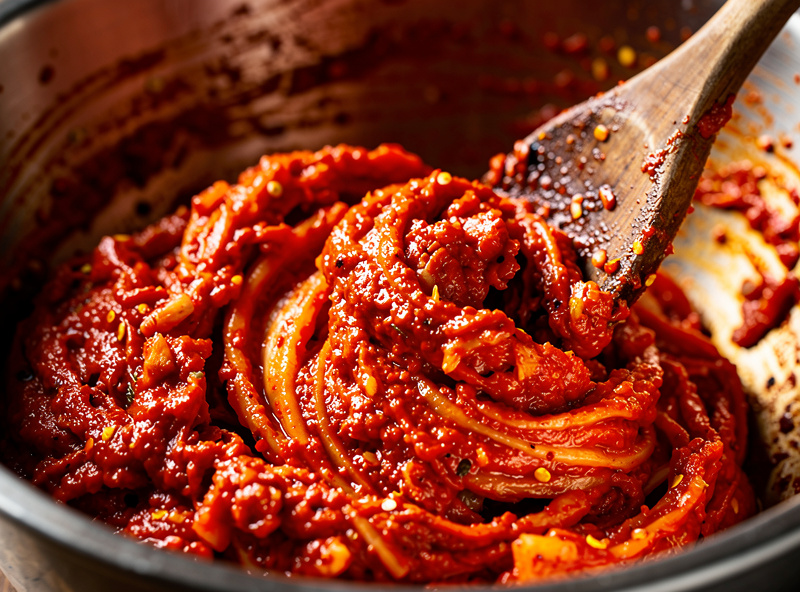
- Make the kimchi paste: Mix gochugaru, minced garlic, grated ginger, fish sauce, sugar, and cooled rice porridge. Add Asian pear or apple if using.
- Add daikon and green onions to the paste: Mix to coat the vegetables.
- Coat each cabbage leaf with the paste: Wear gloves; the gochugaru stains hands. Push paste between every leaf layer.
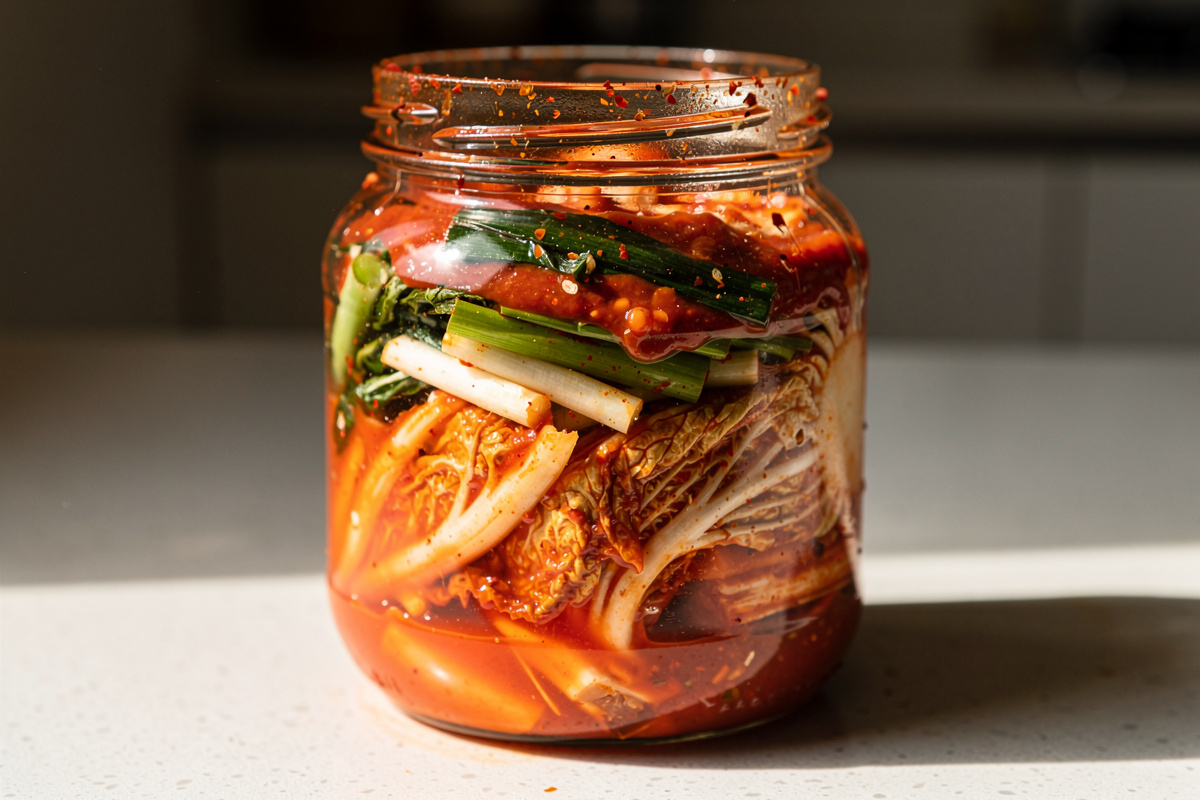
- Pack into a large jar: Press tightly to remove air pockets. Leave 2 inches of headspace; kimchi expands during fermentation.
- Ferment at room temperature for 1-3 days: 70°F is ideal. Bubbling visible, slight tangy smell developing.
- Refrigerate after initial fermentation: Cool to 38-42°F. Slow fermentation continues for weeks.
- Wait 4-6 weeks for fully developed flavor: Best at 4-8 weeks; lasts 4-6 months in refrigerator.
The salting step is where most beginners over-soak (cabbage too soft) or under-soak (cabbage too crunchy). 4-6 hours is the standard target; check by bending a leaf — it should fold without breaking.
Common Kimchi-Making Mistakes
My first batch failed because I used regular chili powder from the supermarket instead of gochugaru. The chili powder was finer, darker, and bitter — it turned the kimchi brown instead of red and added an unpleasant burnt taste. I also under-salted the cabbage, thinking less salt meant healthier food. The result was mushy kimchi that fermented into a sour paste within 2 weeks instead of crisp layered leaves. Swapping to gochugaru and sticking to the 4-6 hour brine window fixed both problems permanently.
Five mistakes show up in nearly every first-time kimchi: under-salting the cabbage (under-fermented kimchi), over-salting the cabbage (overly salty kimchi), using regular chili powder instead of gochugaru (wrong flavor), skipping the rice flour porridge (paste does not adhere), and refrigerating too soon (kimchi tastes raw and sharp).
Mistakes and corrections:
- Under-salting: Cabbage stays too crunchy and fermentation produces mushy result instead of crisp. Fix: 4-6 hours in the full-strength 10% brine, not a diluted one.
- Over-salting: Final kimchi is unpalatably salty. Fix: limit brine soak to 6 hours maximum; rinse 3+ times.
- Wrong chili powder: Regular chili powder is finer and adds bitter flavors. Use only Korean gochugaru.
- Skipping rice porridge: Paste runs off the cabbage; insufficient fermentation activity. The starch from porridge is essential.
- Eating before 4 weeks: Kimchi at days 3-7 tastes raw, harsh, and one-dimensional. Patience is required for flavor development.
- Insufficient air-tight seal: Air contact develops kahm yeast. Press kimchi tightly; ensure liquid covers all surfaces.
- Adding fish sauce that is not actual fish sauce: Some “Asian-style” sauces lack the umami compounds essential for traditional kimchi flavor.
Read about kimchi specific safety issues in our companion kimchi mold vs white film guide.
Kimchi-making looks intimidating the first time you see the ingredient list and the 12-step procedure. But after the first batch, the process compresses into muscle memory: brine, rinse, paste, pack, wait. The waiting is the hard part — opening the jar at day 5 and finding it still tastes raw and sharp. Trust the process. Kimchi at 4 weeks is a different food from kimchi at day 3. Make it once, wait the full month, and you will understand why Korean households keep multiple jars at different aging stages in the refrigerator at all times.
Frequently Asked Questions
How long does kimchi take to ferment?
1-3 days at room temperature for initial active fermentation, then 4-6 weeks in refrigerator for full flavor development. Most people refrigerate after 1 day at room temperature; the slow refrigerated fermentation produces the complex sour-tangy flavor of mature kimchi.
Can I make kimchi without fish sauce?
Yes — replace fish sauce with soy sauce (3 tablespoons) plus 1 teaspoon of miso paste. The flavor is slightly different (less briny umami) but still produces good kimchi. Strict vegan kimchi uses neither fish sauce nor honey/sugar in some traditional recipes.
What can I use instead of gochugaru?
Substitutions for gochugaru produce inferior kimchi. The closest alternative is Korean gochujang (paste form), but the texture and dispersion differ. Regular chili powder, paprika, and cayenne all produce wrong flavor profiles. The 5-8 dollar bag of gochugaru is worth ordering specifically.
Why does my kimchi taste different from store-bought?
Two main reasons: store-bought kimchi is often pasteurized which kills active fermentation; or the home batch hasn’t aged 4+ weeks yet. Pasteurized kimchi tastes one-dimensional; properly aged home kimchi develops layered complexity that store-bought rarely matches.
How long does kimchi last in the refrigerator?
4-6 months for ideal flavor; remains safe to eat for 6+ months but the texture softens significantly after 4 months. Some Koreans prefer aged 6-month-plus kimchi specifically for soups and stews where soft texture is desired.
Is kimchi supposed to be fizzy or carbonated?
Slight fizziness during the first 1-2 weeks of refrigeration is normal — that is active fermentation producing CO2. Heavy fizziness suggests over-fermentation; refrigerate at colder temperature to slow it. Kimchi older than 1 month should be only mildly fizzy at most.
Related Articles
- Kimchi Mold vs Safe White Film
- Why Did My Sauerkraut Turn Mushy?
- Sauerkraut Mold vs Kahm Yeast
- Lacto-Fermented Pickles That Stay Crunchy
- Kahm Yeast Guide

About Kenny Nyhus Fadil
A home fermenter documenting brines, bubbles, and the occasional moldy tragedy.
Keep Bubbling
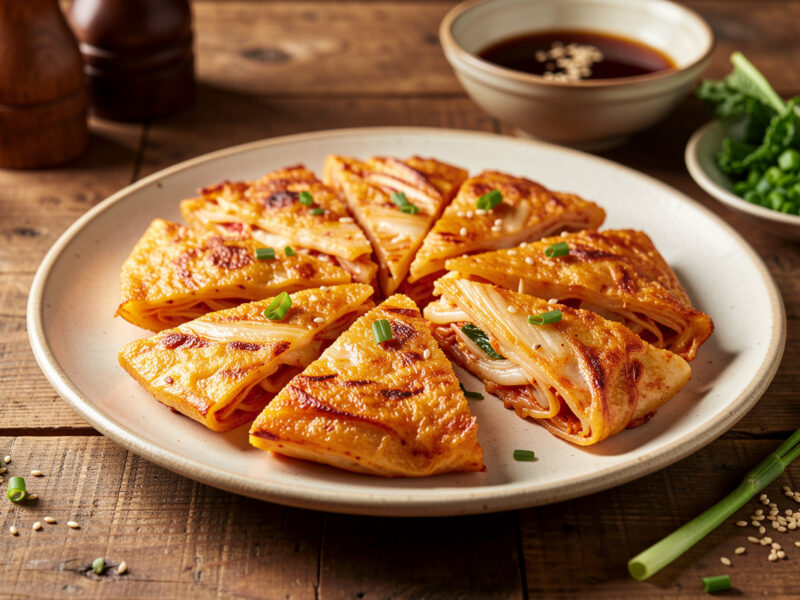
Kimchi Pancake (Kimchijeon): The Best Use for Sour Kimchi
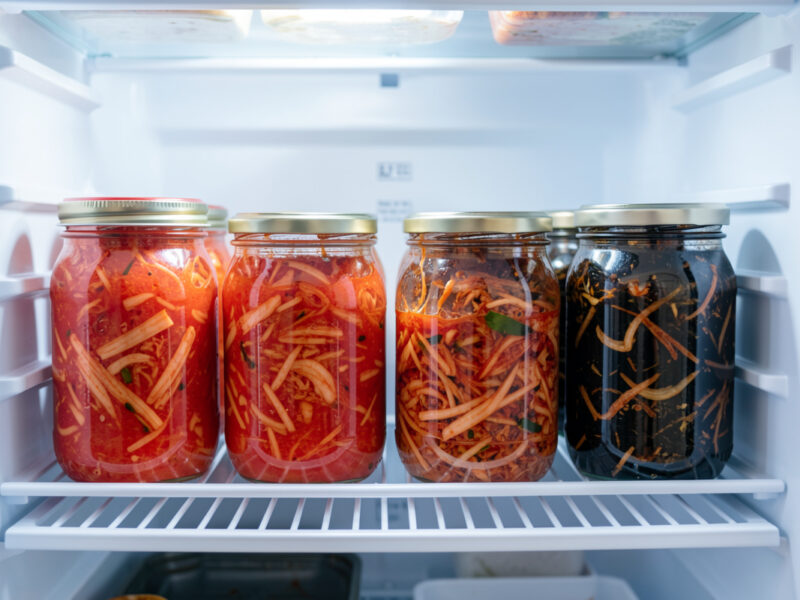
How Long Does Kimchi Last? Safe Sour vs Actually Spoiled