Kimchi Mold vs Safe White Film: What Is Growing on Your Kimchi?

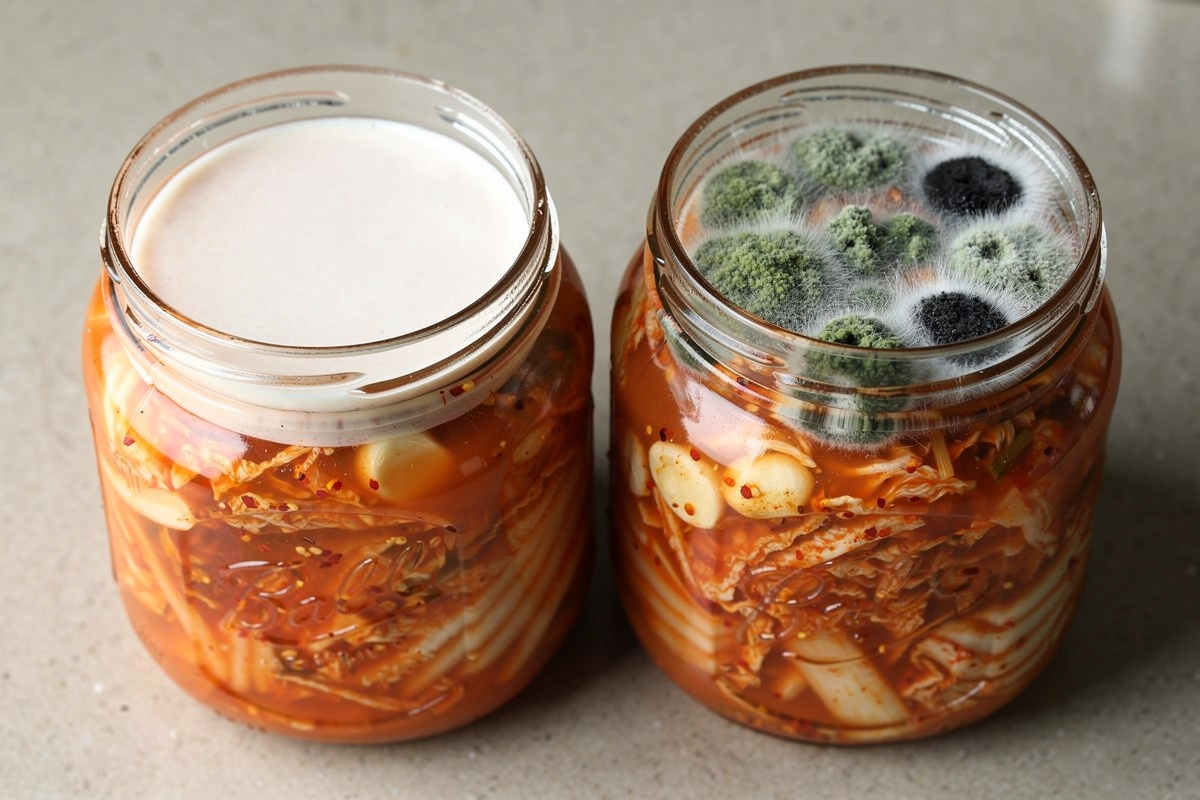
The white film on fermenting kimchi is kahm yeast about 95 percent of the time — flat, safe, and easy to skim off. Actual mold on kimchi looks fuzzy, raised, and colored (green, blue, black, or pink), and means you should toss the jar if mold has been present 48 or more hours. Kahm looks like wax paper; mold looks like fur.
White-film ID is one part of a broader kimchi system; the regional styles, salt-rinse procedure, paste building, and counter-to-fridge timing are in my homemade kimchi guide.
I remember my first batch of kimchi, staring at a thin white film on day two, absolutely convinced I had ruined fifteen dollars worth of Napa cabbage and gochugaru. I dumped the whole jar, scrubbed the glass with bleach, and started over. A Korean friend of mine laughed when I told him — I had thrown away perfectly good kimchi over kahm yeast. Had I just skimmed the white film and waited 24 hours, that jar would have been the best batch of my first year fermenting.
Kimchi specifically attracts kahm yeast more than sauerkraut because the chunky, uneven pieces (cabbage leaves, radish, scallion) coated in a viscous chili paste are harder to press fully below the brine than shredded cabbage, and the fermentation often happens at room temperature for 1 to 3 days before refrigerator storage — both give surface oxygen more opportunity than a tightly-packed sauerkraut crock. The first-day kahm appearance is not a failed batch — it’s a sign that surface oxygen exposure happened. This guide covers visual ID, the simple skim-and-continue rescue, and why kimchi specifically is more prone than other ferments.
Why Kimchi Looks Different From Other Ferments
Kimchi runs a broadly similar salt range to European sauerkraut (2 to 3% vs 2 to 2.5%), but Korean culinary tradition builds it in stages — a heavier salt brine to wilt the whole cabbage leaves first, then a rinse before the paste and final salt level land in that 2 to 3% window. The bulkier, paste-coated pieces are what make kimchi more kahm-prone than shredded sauerkraut, not a lower final salt level.
Kimchi also includes ingredients (gochugaru chili powder, ginger, garlic, fish sauce) that change the brine color from clear-amber to red-orange. Surface films and mold show up against this red background instead of the pale brine of sauerkraut, which can make visual identification trickier for first-time fermenters.
The fermentation timeline is faster too: kimchi typically completes active fermentation in 2 to 5 days at room temperature (vs 7 to 14 days for sauerkraut), then moves to refrigerator storage for slow ongoing development. The shorter active window means less time for kahm yeast to establish before LAB pH drop, but the room-temperature start phase is exactly when kahm appears most.
Safe White Film: Kahm Yeast
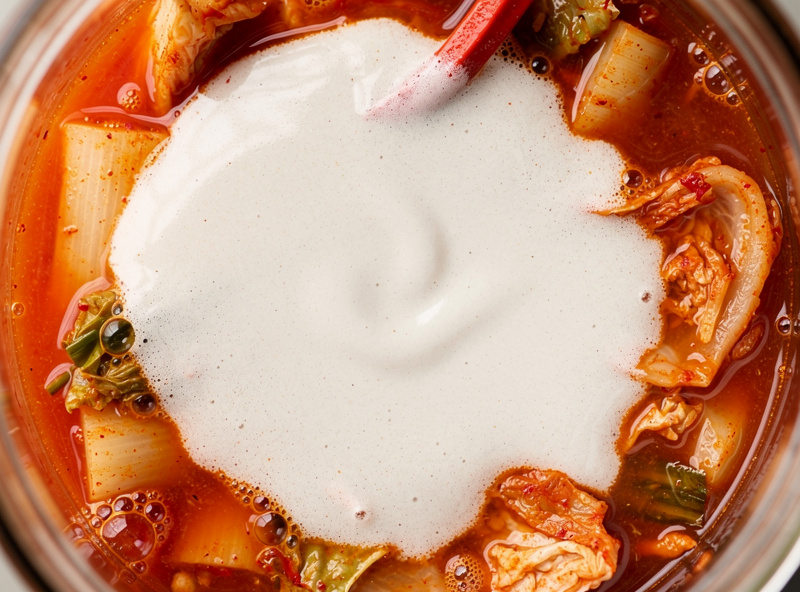
What it looks like on kimchi: a thin white-to-cream film floating on the red-orange brine surface, often appearing day 2 or 3 of room-temperature fermentation. Texture is flat and slightly wrinkled. Sometimes covers the entire surface; sometimes just patches where vegetables peek above the brine.
Why it appears specifically: same as sauerkraut — aerobic kahm yeasts (Pichia, Candida species) establish on the brine surface where oxygen is present. The lower salt concentration and shorter cabbage-press time in traditional kimchi mean more oxygen-exposed vegetables and more chances for kahm to find a foothold.
What it tastes like: musty, slightly soapy if left in place for 5+ days. The off-flavor transfers into the kimchi over time, but skimming within 48 hours of appearance prevents the transfer. Skimmed kimchi tastes completely normal.
What it isn’t: dangerous, contaminated, or a sign your kimchi failed. Many traditional Korean fermentation methods accept and even encourage a thin kahm film as part of the surface ecology. The style of kimchi you make also affects how kahm-prone your batch is — mak kimchi (quick-cut) and pogi kimchi (whole-leaf) behave differently; the mak vs pogi kimchi guide covers the difference and which method suits which fermentation setup. The “throw it away” instinct is American sanitation culture; Korean tradition is to skim and continue.
Dangerous Mold: Fuzzy and Colored
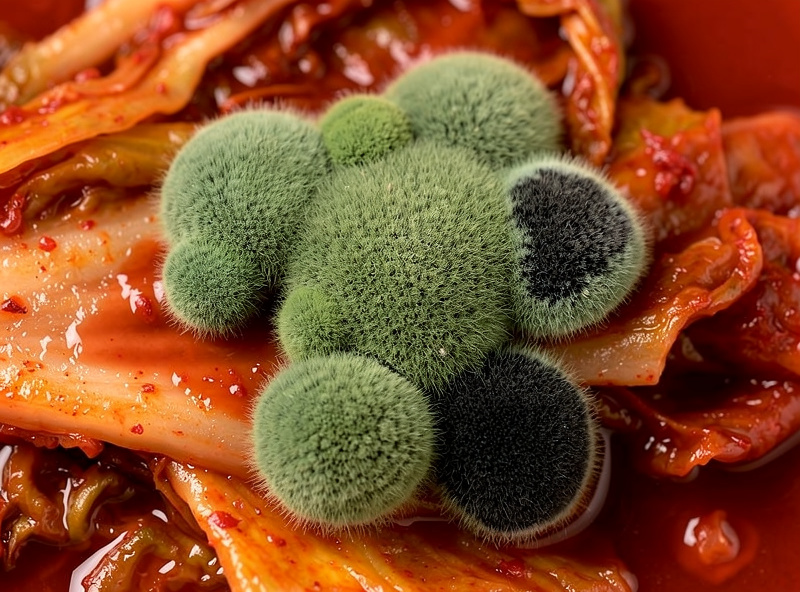
Actual mold on kimchi appears as raised three-dimensional fuzzy growth in distinct patches rather than even film coverage. Color is the diagnostic: green or blue-green (Penicillium expansum, Aspergillus species), black (Aspergillus niger or other dark molds), pink or red (Fusarium — most dangerous), or white-fuzzy that’s clearly raised rather than flat.
The toothpick test: press a clean toothpick gently into the surface growth. Kahm yeast collapses immediately and feels slick under the toothpick. Mold resists, springs back slightly, and feels fibrous. The difference is unmistakable once you’ve felt both.
Mold on kimchi specifically usually means: brine level dropped exposing vegetables, the jar wasn’t sealed properly, fermentation happened too warm (above 78°F for 3+ days), or the jar was stored at room temperature too long after active fermentation completed.
The Skim-and-Continue Rescue (Kahm Yeast on Kimchi)
Step 1: Skim the white kahm film off with a clean spoon. Try to lift it in one or two pieces. Discard the skimmed material. The brine and vegetables underneath should appear normal kimchi-red and smell like fresh fermenting kimchi.
Step 2: Inspect the top layer of vegetables for kahm clinging to them. Scrape any visibly affected pieces off and discard. The vegetables 1 to 2 cm below should look bright red and smell like fresh fermenting kimchi (sour, garlicky, spicy).
Step 3: Press the remaining vegetables back below the brine surface with a clean fork or spoon. If brine level is low, top up with a 2% saltwater solution: 20 g salt dissolved in 1 liter water, kept on hand for emergency top-ups. Don’t use plain water — it dilutes the brine and risks kahm returning.
Step 4: Place a fermentation weight (glass disc, ceramic weight, or zip-bag of brine) on top to hold all vegetables submerged. Re-seal the jar (loosely if still actively fermenting, tight if moved to fridge storage).
Step 5: If kimchi was at room temperature, move it to the refrigerator now. Active room-temperature fermentation past day 3 is when kahm appears repeatedly. Refrigerator storage at 38 to 42°F slows fermentation dramatically and prevents kahm regrowth.
One mistake I made repeatedly during my first year of fermenting was skimming kahm, patting myself on the back for a successful rescue, and then forgetting to top up the brine. Without that extra inch of liquid covering the vegetables, the kahm returned within two days — same jar, same problem, entirely my fault. Now I keep a small mason jar of 2-percent saltwater brine in the fridge at all times, so topping up after a skim takes ten seconds instead of mixing a fresh batch. The brine does not go bad; a half-liter jar lasts me two to three months.
The Toss Decision (Mold on Kimchi)
Confirmed mold — raised, fuzzy, three-dimensional growth in any color — gets the same conservative answer regardless of how small the spot is. The UC Davis fermentation troubleshooting guide is direct: confirmed mold growth on any part of a ferment means discard immediately, no exception for a small patch. I don’t scrape-and-rescue kimchi that’s grown actual mold anymore — the visible edge doesn’t tell you how far the mycelium has spread into the brine below.
Mycotoxins from many mold species migrate through the brine and contaminate vegetables that look fine even a short distance from the visible colony. The cost of a $3 to $8 jar of kimchi isn’t worth the food poisoning risk.
Pink, red, or orange mold: toss immediately regardless of coverage. Fusarium mycotoxins (trichothecenes) cannot be reliably removed by trimming or scraping. Don’t try to rescue any kimchi with red/pink contamination.
Kimchi Surface Growth ID Cheat Sheet
| What You See | Identification | Action | Underlying Fix |
|---|---|---|---|
| Thin flat white film | Kahm yeast (safe) | Skim, continue ferment | Better submersion, raise salt to 2-3% |
| Slightly wrinkled cream film | Kahm yeast (safe) | Skim, continue | Lower temperature, refrigerate sooner |
| Fuzzy white raised colonies | White mold (contamination) | Toss the batch, any amount | Tighter seal, weight down vegetables |
| Green or blue-green spots | Penicillium mold | Toss the batch, any amount | Sterilize jar, fresh start |
| Black powdery patches | Aspergillus niger | Toss; rare in kimchi | Check storage temperature |
| Pink, red, orange | Fusarium (toxic) | Toss immediately | Deep clean equipment, fresh start |
| Bubbles around the brine surface | Active fermentation (good!) | None — this is correct | None — keep going |
The Smell Test on Kimchi
Healthy fermenting kimchi smells like fresh kimchi — strongly garlic-forward, sour-tangy, spicy from gochugaru, with a slight sulfurous note from the cabbage. The smell intensifies during fermentation but stays in the same character. Day 3 kimchi smells stronger than day 1 but the flavor character is the same. For batches made without fish sauce or saeujeot, the fermentation smell is slightly cleaner and less pungent — the vegan kimchi recipe without fish sauce uses miso and seaweed to build the umami base that traditional paste relies on seafood for.
Spoiled kimchi smells distinctly wrong: rotten, sweet-rotten, or alcoholic in a way that’s clearly not fermentation. Sometimes the smell arrives before visible mold. If your nose says “this isn’t right,” trust it even if the kimchi looks fine.
Kahm yeast on kimchi adds a faint musty note to the smell — slightly different from healthy kimchi but not in the alarming way that mold smells different. After skimming kahm and waiting 24 hours, the musty note disappears and the kimchi smells normal again. The step-by-step kimchi recipe covers smell evaluation across the fermentation timeline.
Preventing Surface Growth on Kimchi
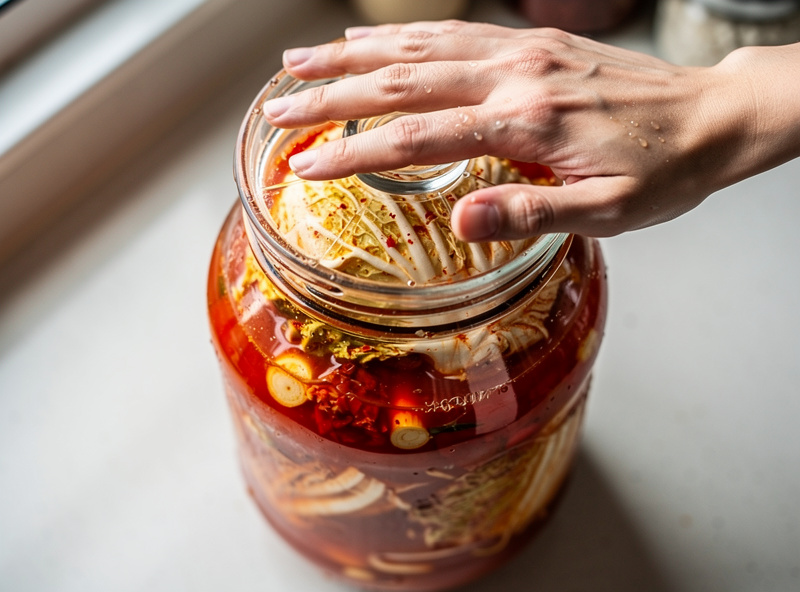
Submersion is the single most effective prevention. Use a fermentation weight or simply press the vegetables down with a clean spoon every day during the room-temperature fermentation phase. All cabbage should sit at least 5 mm below the brine surface.
Salt at 2 to 3% by total weight (cabbage + added water + radish or other vegetables). Lower salt risks kahm and slow LAB activity; much higher salt produces a saltier kimchi than traditional and can actually slow the pH drop that helps keep pathogens in check. Most of my batches land around 2.5%. Radish-based kkakdugi follows the same salt window — full procedure in my kkakdugi radish kimchi recipe.
Room-temperature fermentation: 1 to 3 days at 65 to 72°F, then refrigerator storage. Going beyond 3 days at room temperature substantially increases kahm and mold risk. The active phase is short — move to fridge storage on day 2 or 3 once you see early bubbling.
Use an airlock-style lid (silicone valve, fermentation lid) for room-temperature fermentation. Standard mason jar lids let oxygen in; airlock lids let CO2 out without letting oxygen in. Glass fermentation discs sized to your jars distribute weight evenly so vegetables cannot sneak past the edges — a small, inexpensive investment that eliminates the most common cause of surface growth. The kahm yeast prevention guide covers airlock options and fermentation gear in detail.
Storage Phase: Different Rules
Once kimchi moves to refrigerator storage (38 to 42°F), surface growth becomes much rarer. The cold temperature dramatically slows both LAB activity and kahm yeast growth. Kimchi can sit in the refrigerator for 6 to 12 months without surface growth issues. Kimchi’s low pH (commercial kimchi typically runs pH 3.8 to 4.2, right around the same salt level as home batches) and fermentation are real safety factors, but published food-science research is more cautious than the folk version of this claim — peer-reviewed studies on kimchi fermentation have found that E. coli O157:H7 and Listeria monocytogenes can survive for periods during fermentation and cold storage, and that a slower pH drop (which higher salt levels can cause) is linked to longer pathogen survival. A pH reading isn’t a green light on its own — clean produce and properly handled ingredients matter as much as the acid. Skimming kahm off a jar that otherwise smells and looks normal is a texture and flavor fix, not a pathogen-elimination step; it doesn’t change how carefully you sourced and handled the batch going in.
If you do see white film on long-stored refrigerated kimchi, it’s still kahm yeast (cold-tolerant strains) and the same skim-and-continue rescue applies. Refrigerated kimchi just shouldn’t develop visible mold under proper storage conditions; if it does, the kimchi was likely stored at warmer-than-fridge temperatures at some point. White kimchi (baek kimchi) made without gochugaru is sometimes easier to monitor visually because the pale brine makes any surface growth more obvious — the baek kimchi white kimchi recipe is also genuinely delicious on its own, not just a troubleshooting tool.
Long-stored kimchi develops a stronger fermented character — more sour, more umami, sometimes slightly carbonated. This isn’t spoilage; it’s traditional aged kimchi (mukeun-ji) that’s prized in Korean cooking for stews and soups. The best vehicle for deeply sour kimchi is a slow-cooked stew — the kimchi jjigae stew recipe covers the technique and timing that turns overripe kimchi into something exceptional. Don’t toss aged kimchi just because it’s stronger than fresh. The kimchi pancake recipe for sour kimchi is one of the best uses for a batch that has aged past peak eating but is still perfectly safe — pajeon with aged kimchi is richer and more complex than fresh.
If I were troubleshooting a kimchi surface-film problem today, here is exactly what I would do: skim the white film with a clean spoon, wipe the jar rim dry with a paper towel, top up the brine with 2-percent saltwater, place a glass fermentation weight on top, seal the jar loosely, and move it to the refrigerator. In nine out of ten cases, that five-minute sequence solves the problem the same day and the kimchi tastes excellent within 48 hours. The one case where I reach for the trash bag instead of the spoon: any growth that is pink, red, or fuzzy green and clearly not a flat film.
Frequently Asked Questions
Is the white film on my kimchi mold or kahm yeast?
Almost always kahm yeast — a thin flat white film on the brine surface that is completely safe. Real mold is fuzzy, raised, and colored (green, blue, black, pink). Press a clean toothpick gently into the growth: kahm collapses; mold resists. Skim kahm off and continue fermenting normally.
Can I eat kimchi that had a white film on top?
Yes — once you have skimmed the kahm yeast film off and discarded any visibly affected vegetables on the surface, the kimchi below is safe to eat. Some musty flavor transfer may have happened if the film was present several days; this is unpleasant but not unsafe.
What does dangerous mold on kimchi look like?
Fuzzy raised growth in distinct colors: green (Penicillium), blue-green, black (Aspergillus), or pink/red (Fusarium). Any confirmed mold, any color or amount, means discard the whole jar immediately — don’t scrape and continue. Pink/red (Fusarium) is especially dangerous due to trichothecene mycotoxins.
Why does my kimchi keep getting white film?
Three causes: cabbage or radish not fully submerged below the brine (most common, since chunky paste-coated pieces are harder to press down than shredded cabbage), salt percentage below 2 percent, or fermentation at room temperature for more than 3 days. Fix submersion with a fermentation weight, raise salt to 2 to 3 percent, and move to refrigerator storage by day 3 of room-temperature fermentation.
How long should kimchi ferment at room temperature?
1 to 3 days at 65 to 72 degrees F before moving to refrigerator storage. Going beyond 3 days at room temperature substantially increases kahm yeast and mold risk. Watch for early bubbling around the surface — that signals active fermentation has started and the jar can move to the fridge.
Can I save kimchi with mold by scraping off the affected parts?
No — university extension food-safety guidance is conservative here: any confirmed mold, regardless of color or how small the spot is, means the jar should be discarded immediately. Mold’s visible edge does not reliably show how far its mycelium has spread through the brine. This is different from kahm yeast, which is always safe to skim and continue.
Related Articles
- Easy Napa Cabbage Kimchi Recipe for Beginners
- Sauerkraut Mold vs Kahm Yeast: Visual ID
- Kahm Yeast: What It Is, How to Prevent It
- Fermentation Weights: Glass vs Ceramic vs Ziplock
- Garden to Jar: Fermenting What You Grow

About Kenny Nyhus Fadil
A home fermenter documenting brines, bubbles, and the occasional moldy tragedy.
Keep Bubbling
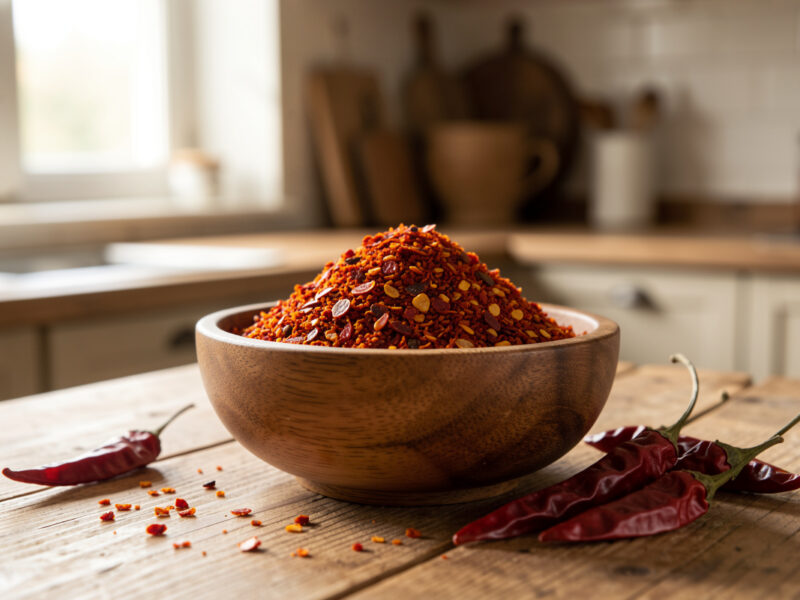
Gochugaru: The Korean Chili Flakes That Make or Break Your Kimchi
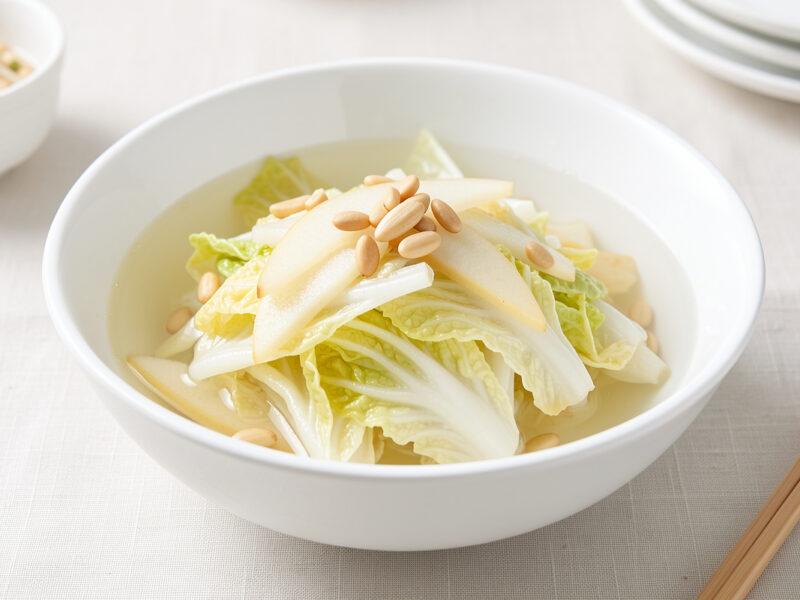
Baek Kimchi: White Kimchi Recipe with No Chili Heat