Kkakdugi: Crunchy Korean Cubed Radish Kimchi (Easy Recipe)

Kkakdugi is the kimchi I make when I want crunch. Where baechu (napa cabbage kimchi) is leafy and folds into rice and ramen, kkakdugi is cubed daikon — dense, juicy, and snappy, the kimchi that belongs next to a bowl of pork-bone soup or grilled meat. It is also one of the easiest kimchi to make, because daikon does not need the long salt-rinse step that napa cabbage demands. After four years of running a kkakdugi batch roughly every three weeks alongside my baechu rotation, this is the method I have settled on, including the one mistake that ruins more kkakdugi than any other: getting the radish cubes too wet before pasting.
This is a recipe-forward guide. I will give you the salt step, the paste, the cube size that actually matters, the fermentation timing, and how to keep the cubes crunchy instead of soft. The flavour rides on good gochugaru, same as every red kimchi, so if you have not sorted your chilli flakes yet, start there.
What Kkakdugi Is and How It Differs from Baechu
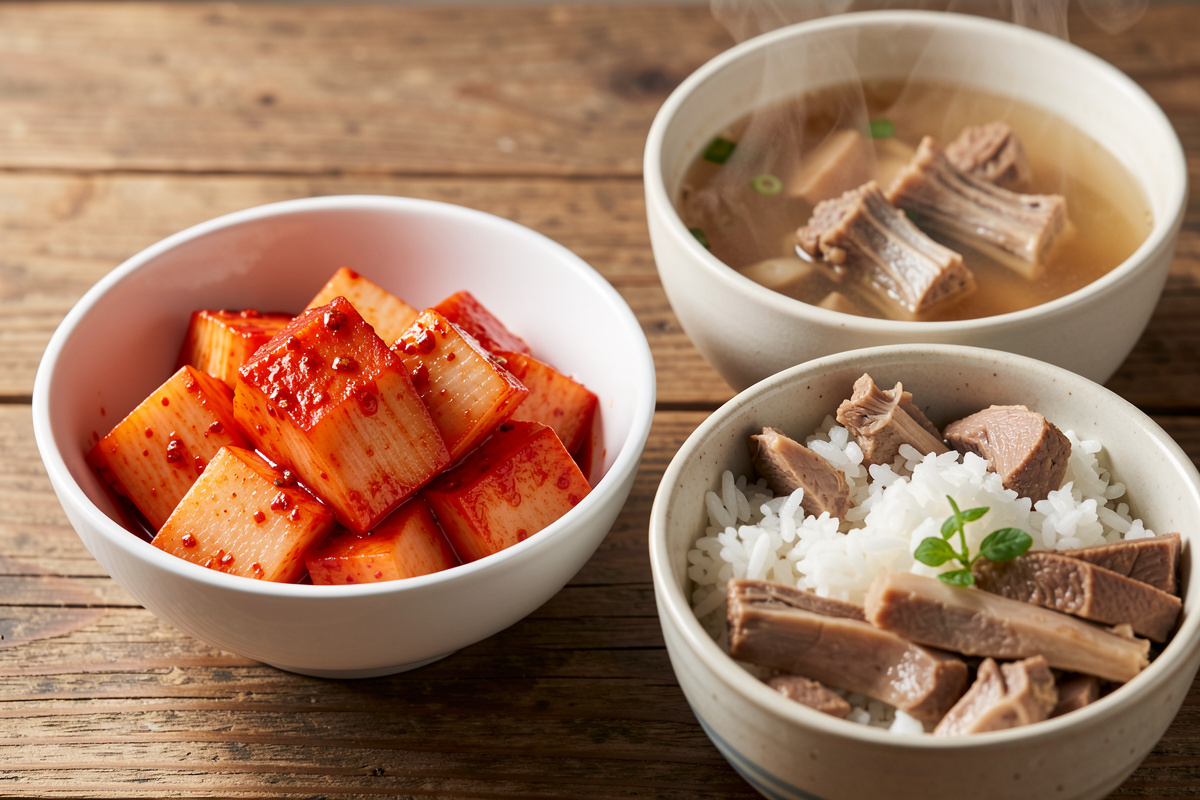
Kkakdugi (깍두기) is cubed radish kimchi. The radish is Korean mu (a fat, pale daikon-type radish) cut into roughly 2-centimetre cubes, salted briefly, then coated in essentially the same gochugaru paste used for napa kimchi. The result is a crunchy, slightly sweet, deeply savoury kimchi with a juicy bite that napa kimchi cannot match. It ferments a touch faster than baechu and is the classic partner for seolleongtang (ox-bone soup) and gomtang.
| Feature | Kkakdugi (cubed radish) | Baechu (napa cabbage) |
|---|---|---|
| Main vegetable | Korean mu / daikon radish | Whole quartered napa cabbage |
| Salt step | Salt cubes ~30 minutes, drain | Salt-layer and rest 3-5 hours, rinse |
| Texture | Dense, crunchy, juicy | Leafy, tender, folds into dishes |
| Counter ferment | 2-4 days at 20 C | 1-3 days at 18-22 C |
| Best with | Bone soups, grilled meat, rice | Eggs, ramen, stews when aged |
| Shelf life (fridge) | 4-6 months | 4-6 months |
The big practical difference is the salt step. Napa cabbage needs hours of salting and a thorough rinse to wilt the leaves; daikon cubes only need about 30 minutes of salting to draw out surface water and season them, with no rinse afterward. That shorter, simpler prep is why kkakdugi is the kimchi I recommend to people who found their first baechu batch fiddly.
Choosing and Cutting the Radish
Use Korean mu if you can get it — it is denser, sweeter, and less watery than a typical European daikon, which makes for crunchier kkakdugi. Failing that, a firm, heavy daikon works well; avoid any radish that feels light for its size or has a spongy, hollow core, because those make soft, watery kkakdugi. A good radish should feel solid and snap cleanly when cut.
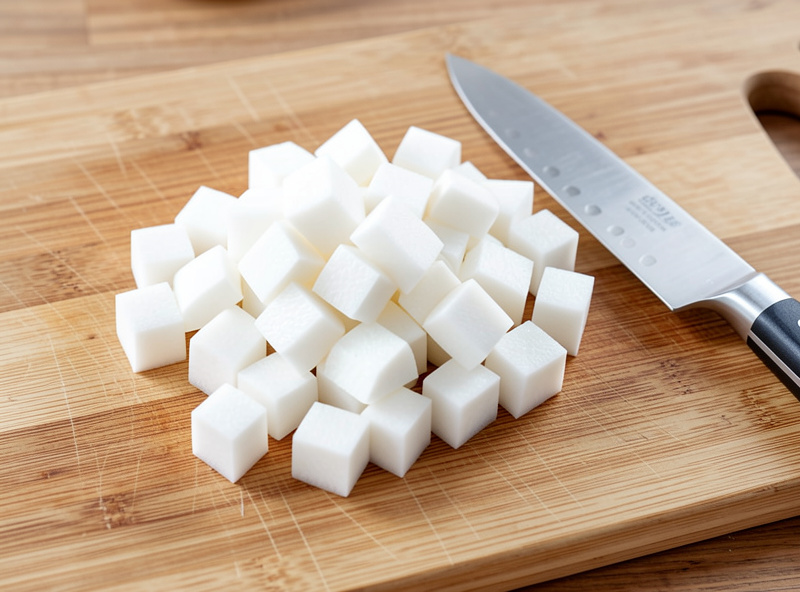
Cube size is not just aesthetic. I cut to about 2 centimetres — large enough to keep a satisfying crunch through months of fermentation, small enough to season and ferment evenly. Cut smaller than 1.5 centimetres and the cubes go soft faster and lose their identity; cut much larger than 2.5 centimetres and the centres stay raw-tasting and under-fermented while the outsides over-soften. Peel the radish first; the skin can be fibrous and bitter on older roots.
The Salt Step: Short and Crucial
Toss the cubes with salt and a little sugar and let them sit about 30 minutes. The salt pulls surface moisture out, which both seasons the radish and removes the excess water that would otherwise dilute the paste and make the finished kkakdugi soupy. For a kilogram of cubed radish I use roughly 20 grams of coarse sea salt and a teaspoon of sugar. After 30 minutes the cubes will have released a pool of liquid and will feel slightly flexible at the corners.
Here is the step most recipes get wrong: drain the cubes but do NOT rinse them. Unlike napa, you want to keep the salt that has penetrated the radish — it is doing the seasoning and the food-safety work. Drain off the released liquid (or reserve a few spoonfuls to loosen a stiff paste later), give the cubes a gentle shake in the colander, and move straight to pasting. Rinsing here washes out the seasoning and leaves bland kkakdugi.
The Kkakdugi Paste
The paste is the same family as baechu paste, just slightly thicker because the radish releases more liquid during fermentation. For a kilogram of salted, drained radish cubes, I use roughly 50-60 grams of coarse gochugaru, 25 grams of minced garlic, 10 grams of grated ginger, 30 millilitres of Korean fish sauce, a tablespoon of saeujeot (salted fermented shrimp) if I have it for extra depth, a teaspoon of sugar, and a handful of chopped scallion. A spoonful of glutinous rice porridge helps the paste cling, though kkakdugi can be made without it since the radish gives off its own starchy liquid.
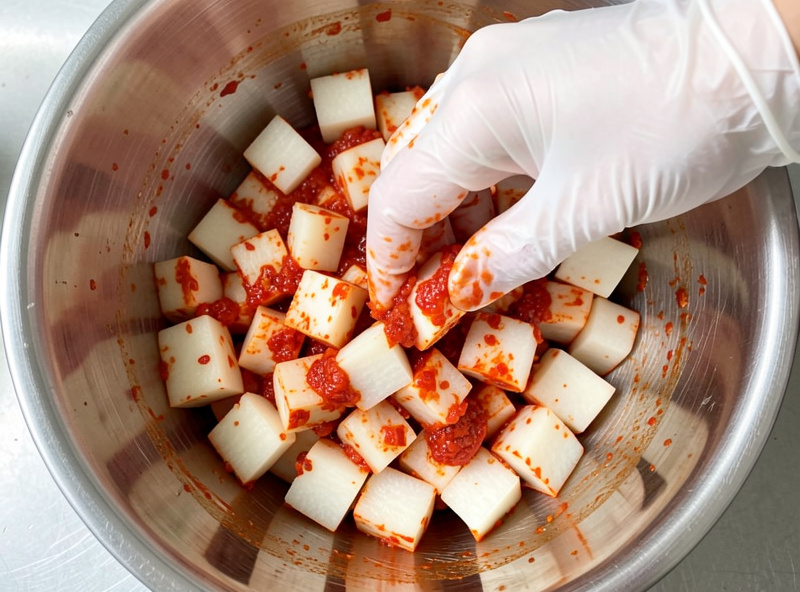
Let the gochugaru bloom in the wet ingredients for 20-30 minutes before mixing it into the cubes — this is the same bloom step that gives baechu its silky deep-red paste, and skipping it leaves kkakdugi looking pale and tasting thin. Then fold the paste through the cubes by hand (wear a glove; gochugaru stains and stings) until every cube is evenly coated, and pack into a jar.
Fermenting and Storing Kkakdugi
Pack the pasted cubes into a clean jar, pressing down to remove air pockets and bring the radish juices up over the surface. Leave 2-3 centimetres of headspace because kkakdugi bubbles vigorously — daikon ferments fast. Ferment on the counter at around 20 C for 2-4 days; you will see active bubbling and the brine will turn from opaque to slightly translucent. Taste from day 2: when it has a pleasant tang and the raw-radish sharpness has softened, move it to the fridge.
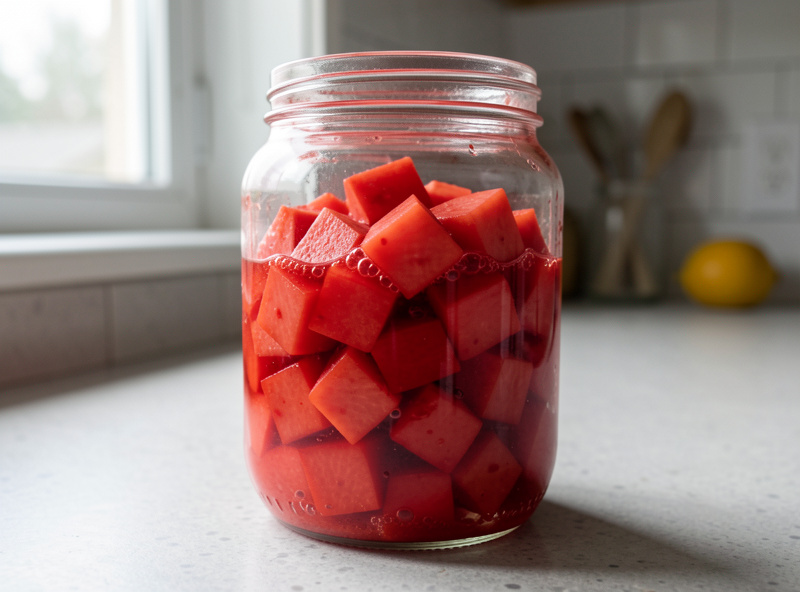
In the fridge at 2-5 C, kkakdugi keeps developing slowly and stays good for 4-6 months. Like all kimchi, it shifts from bright and crunchy when young to softer and more sour when aged — aged kkakdugi is excellent cooked into fried rice or stews. To keep the cubes at their crunchiest, ferment a little shorter on the counter (2 days) and store cold; the longer the warm stage, the softer the final texture. An airtight kimchi container with a tight gasket keeps the smell contained and the cubes submerged in their juice.
As an Amazon Associate I earn from qualifying purchases. Links are to product searches, not specific listings, and add no cost to you.
Keeping Kkakdugi Crunchy
Soft, mushy kkakdugi almost always traces to one of three causes: a watery or spongy radish to begin with (choose dense, heavy roots), too long on the warm counter stage (move to fridge by day 3-4), or cubes cut too small. The salt step also matters — properly salted and drained cubes hold their structure far better than under-salted ones that ferment in their own excess water. If your kkakdugi consistently goes soft, shorten the counter stage and try a firmer radish before changing anything else.
The white film question comes up with kkakdugi just as it does with cabbage kimchi: a thin papery white film on the surface is usually harmless kahm yeast (skim, push the cubes back under the juice, continue), while fuzzy raised coloured patches are mold and mean the batch should go. The same diagnostic that works across every lacto-ferment applies here — keep the radish submerged in its brine and surface growth is rare.
Frequently Asked Questions
Do I need to rinse the radish after salting for kkakdugi?
No. Unlike napa cabbage, kkakdugi radish is salted for only about 30 minutes and then drained, not rinsed. The salt that has penetrated the cubes does the seasoning and food-safety work; rinsing washes it out and leaves bland, watery kkakdugi. Just drain off the released liquid and paste the cubes.
What radish is used for kkakdugi?
Korean mu, a fat pale daikon-type radish, is traditional and best — dense, sweet, and less watery than common European daikon, which gives crunchier kkakdugi. A firm, heavy daikon works as a substitute. Avoid light or spongy radishes with hollow cores; they make soft, watery kkakdugi.
How big should I cut the radish cubes?
About 2 centimetres. That size keeps a satisfying crunch through months of fermentation while still seasoning and fermenting evenly. Cubes under 1.5 centimetres soften too fast; cubes over 2.5 centimetres stay raw-tasting in the centre while the outsides over-soften.
How long does kkakdugi take to ferment?
Ferment on the counter at about 20 C for 2-4 days until it bubbles actively and the raw-radish sharpness softens into a pleasant tang, then refrigerate. It ferments slightly faster than napa kimchi. In the fridge at 2-5 C it keeps for 4-6 months, growing softer and more sour with age.
Why is my kkakdugi soft and mushy?
Usually a watery or spongy radish, too long on the warm counter stage, or cubes cut too small. Choose dense heavy radish, move to the fridge by day 3-4, and cut to about 2 centimetres. Proper salting and draining also helps the cubes hold their structure.
Can I use the same paste as napa kimchi?
Yes — kkakdugi paste is the same gochugaru, garlic, ginger, and fish sauce family as baechu paste, just slightly thicker since radish releases more liquid. Many home cooks make a single batch of paste and split it between a napa batch and a radish batch on the same day.
Related Guides on FermentFoundry
- Homemade Kimchi: The Complete Guide from Cabbage to Stew
- Gochugaru: The Korean Chili Flakes That Make or Break Your Kimchi
- Easy Napa Cabbage Kimchi Recipe for Beginners
- Kimchi Mold vs Safe White Film: Photo ID Guide

About Kenny Nyhus Fadil
A home fermenter documenting brines, bubbles, and the occasional moldy tragedy.
Keep Bubbling
How Long Does Kimchi Last? Safe Sour vs Actually Spoiled
Homemade Kimchi: The Complete Guide from Cabbage to Stew