Vegan Kimchi: How to Make It Taste Real Without Fish Sauce

Traditional kimchi leans on fish sauce and salted shrimp for its deep savoury backbone, which puts authentic-tasting kimchi out of reach for vegans and vegetarians who try the usual recipes and end up with something flat. The good news, after years of making both versions side by side, is that vegan kimchi can be genuinely excellent — not a sad compromise — once you understand that the job of the fish sauce is umami, and umami is something you can build several other ways. This guide is the vegan kimchi recipe I actually make, plus the umami-substitution logic that makes it taste like real kimchi instead of spicy salted cabbage.
Everything else about vegan kimchi is identical to the standard process: same napa cabbage, same salt-rinse, same gochugaru, same two-stage fermentation. Only the savoury elements change. Get those right and even committed kimchi eaters will not miss the fish sauce.
The Real Job of Fish Sauce
Fish sauce and saeujeot (salted fermented shrimp) do two things in kimchi: they add salt, and more importantly they add glutamate-rich umami and a fermented funk that gives kimchi its savoury depth. The salt is easy to replace — just adjust your salt elsewhere. The umami and funk are the real challenge, and the mistake most vegan kimchi recipes make is simply omitting the fish sauce and replacing it with nothing, which leaves a one-dimensional, sharp-tasting kimchi.
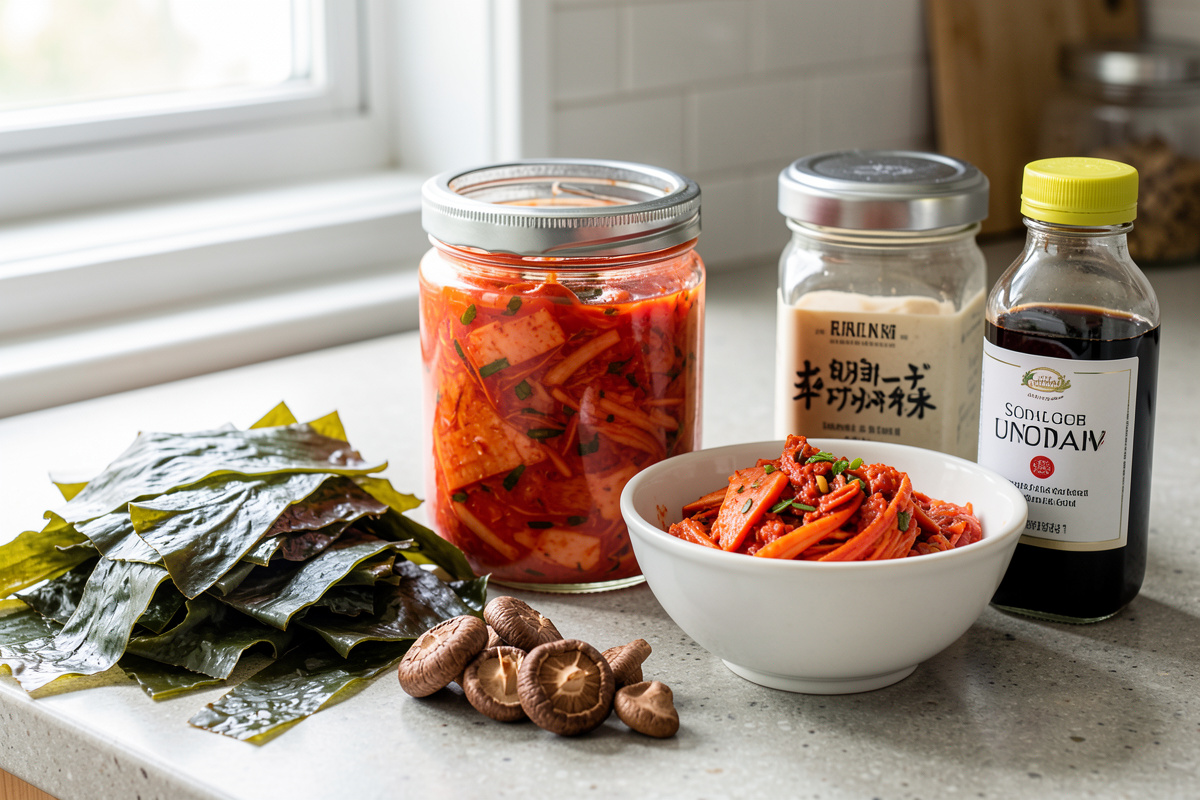
The fix is to layer several plant-based umami sources rather than looking for one magic substitute, because no single vegan ingredient replicates fish sauce exactly. Kelp (kombu), dried shiitake, miso, soy sauce, and a little extra fruit each contribute a different facet of the savoury-sweet-funky profile, and together they get remarkably close.
| Vegan umami source | What it contributes | How to use |
|---|---|---|
| Kombu (dried kelp) | Clean glutamate umami | Simmer into the rice porridge or a small dashi |
| Dried shiitake | Deep savoury, meaty funk | Soak and blend into the paste, or use the soaking water |
| Miso paste | Fermented salty-savoury depth | 1-2 tbsp whisked into the paste |
| Soy sauce / tamari | Salt plus roasted umami | Replace fish sauce splash-for-splash, then taste |
| Asian pear / apple | Natural sweetness, rounds edges | Grated into the paste, as in traditional kimchi |
My working vegan substitute for the fish sauce in one cabbage batch is roughly equal parts soy sauce and a strong kombu-shiitake broth, plus a tablespoon of miso, adjusted to taste. That combination delivers salt, clean glutamate, fermented funk, and a little roasted depth — the four things the fish sauce was carrying.
The Vegan Kimchi Recipe
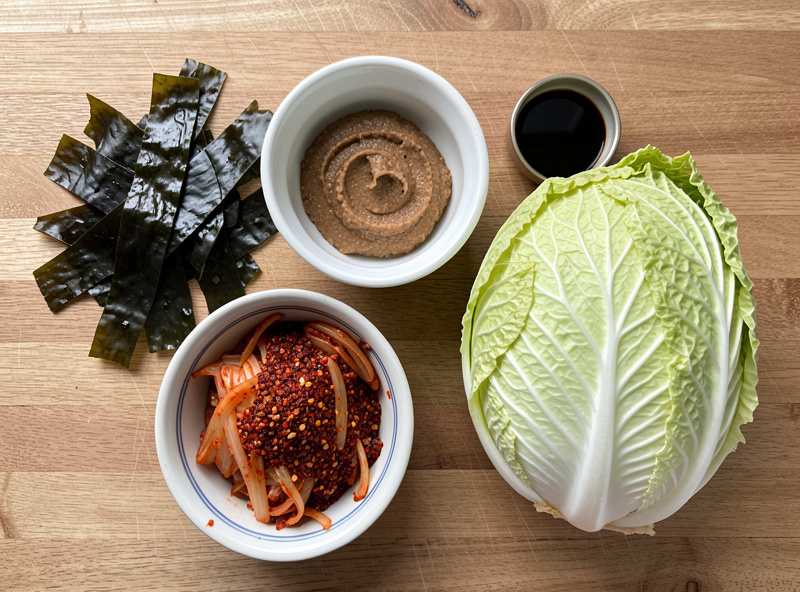
Start exactly as for red napa kimchi. Quarter a 1.5-kilogram head of napa, salt between the leaves with about 90 grams of unrefined sea salt, and rest 3-5 hours, flipping halfway, until pliable. Rinse three times under cold water and drain 30 minutes. This salt-rinse step is the same regardless of whether the kimchi is vegan — it wilts the leaves and sets the residual salt the fermentation needs.
For the paste, cook a glutinous rice porridge and, while it simmers, drop in a piece of kombu and a couple of dried shiitake to infuse umami directly into the base; remove them before cooling. To the cooled porridge add about 80 grams of gochugaru and let it bloom for 30 minutes, then mix in 40 grams of minced garlic, 20 grams of grated ginger, 2 tablespoons of soy sauce, 1 tablespoon of miso, a grated Asian pear, a teaspoon of sugar, and chopped scallion. Taste and adjust — vegan paste often wants a touch more soy or miso to reach the savoury depth fish-sauce kimchi has naturally.
Apply the paste glove-deep into every layer of the quartered cabbage, working inner to outer leaves, then pack into jars with 1.5 centimetres of headspace and press down firmly to remove air pockets. Quality gochugaru does a lot of the work here, so if your local shops do not carry good Korean chilli flakes, a bag of coarse gochugaru is worth ordering.
As an Amazon Associate I earn from qualifying purchases. Links are to product searches, not specific listings, and add no cost to you.
Fermentation and Notes
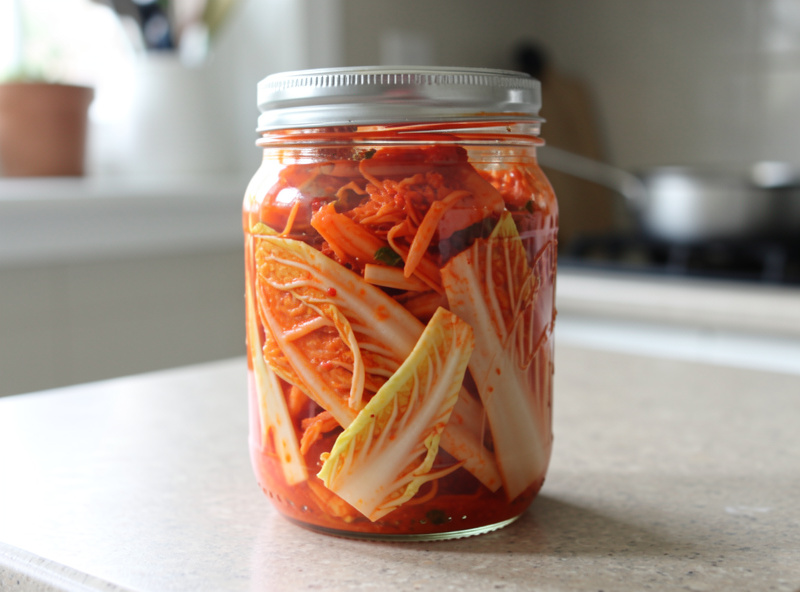
Ferment vegan kimchi the same as any napa kimchi: counter stage at 18-22 C for 1-3 days until you see active bubbling lift the cabbage, then move to the fridge at 2-5 C. Burp the jars on day 2 to release built-up CO2. The fermentation behaves identically to fish-sauce kimchi — the lactobacillus does not care whether the umami came from anchovies or kombu — so all the usual timing and the same shelf life of 4-6 months from my guide to how long kimchi lasts apply.
One real difference: vegan kimchi can taste slightly less complex very young, because some of the funk that fish sauce provides instantly is instead built slowly by the fermentation itself. Give vegan kimchi a little extra time — it is often at its best from week two or three onward, once the lactobacillus has deepened the flavour. If your first taste on day three seems thinner than you hoped, fridge it and try again in two weeks; the gap between vegan and traditional narrows considerably with age.
Other Ferments That Lift Vegan Kimchi
One of the quiet advantages of building vegan kimchi from layered umami is that a couple of the substitutes are ferments in their own right, and leaning into that makes the result taste deeper rather than thinner. Miso is the obvious one — a long-fermented soybean paste carrying exactly the salty-savoury funk that fish sauce provides, which is why even a single tablespoon noticeably rounds out a vegan paste. If you keep a miso going at home, this is a natural crossover.
Doenjang, the Korean fermented soybean paste, is closer still to the traditional flavour profile and worth seeking out if you want vegan kimchi that reads as specifically Korean rather than generally savoury. A spoonful of doenjang in place of (or alongside) the miso adds a more authentic backbone. Some cooks also stir in a little of the brine from a previous batch of vegetable ferment to back-slop fermented funk straight in. None of these change the food-safety picture — the salt and the lactobacillus still run the show — but they each give the finished vegan kimchi a head start on the complexity that fish sauce would otherwise contribute instantly.
Frequently Asked Questions
What can I use instead of fish sauce in kimchi?
Layer several plant-based umami sources rather than one substitute: kombu (kelp) and dried shiitake for clean glutamate and funk, miso for fermented depth, soy sauce or tamari for salt and roasted umami, and grated pear for sweetness. Together they replace the salt, glutamate, and fermented funk that fish sauce provides.
Does vegan kimchi taste different from regular kimchi?
Slightly, especially when young — vegan kimchi can taste a touch less complex at first because some funk that fish sauce adds instantly is instead built by fermentation over time. By week two or three the gap narrows a lot. Well-made vegan kimchi using layered umami is genuinely excellent, not a sad compromise.
Is gochugaru vegan?
Yes. Gochugaru is simply dried, coarse-ground Korean chilli flakes with nothing added, so it is naturally vegan. The non-vegan ingredients in standard kimchi are the fish sauce and salted shrimp (saeujeot), both of which the recipe here replaces with plant-based umami sources.
Can I make vegan kimchi without soy sauce?
Yes. If you avoid soy, lean harder on a strong kombu-shiitake broth for glutamate, use a soy-free miso or chickpea miso, and add a little extra salt to compensate. The principle is the same — replace fish sauce with layered plant umami — just from soy-free sources.
How long does vegan kimchi last?
The same as regular kimchi: 4-6 months refrigerated at 2-5 C, kept submerged. Fermentation behaves identically whether the umami came from fish sauce or kombu, so timing and shelf life do not change. Vegan kimchi often improves with a couple of weeks of cold aging as the flavour deepens.
Related Guides on FermentFoundry
- Homemade Kimchi: The Complete Guide from Cabbage to Stew
- Gochugaru: The Korean Chili Flakes That Make or Break Your Kimchi
- Baek Kimchi: White Kimchi Recipe With No Chili Heat
- Easy Napa Cabbage Kimchi Recipe for Beginners

About Kenny Nyhus Fadil
A home fermenter documenting brines, bubbles, and the occasional moldy tragedy.
Keep Bubbling
Kimchi Mold vs Safe White Film: What Is Growing on Your Kimchi?
Baek Kimchi: White Kimchi Recipe with No Chili Heat