Why Did My Sauerkraut Turn Mushy? 7 Fixes That Actually Work

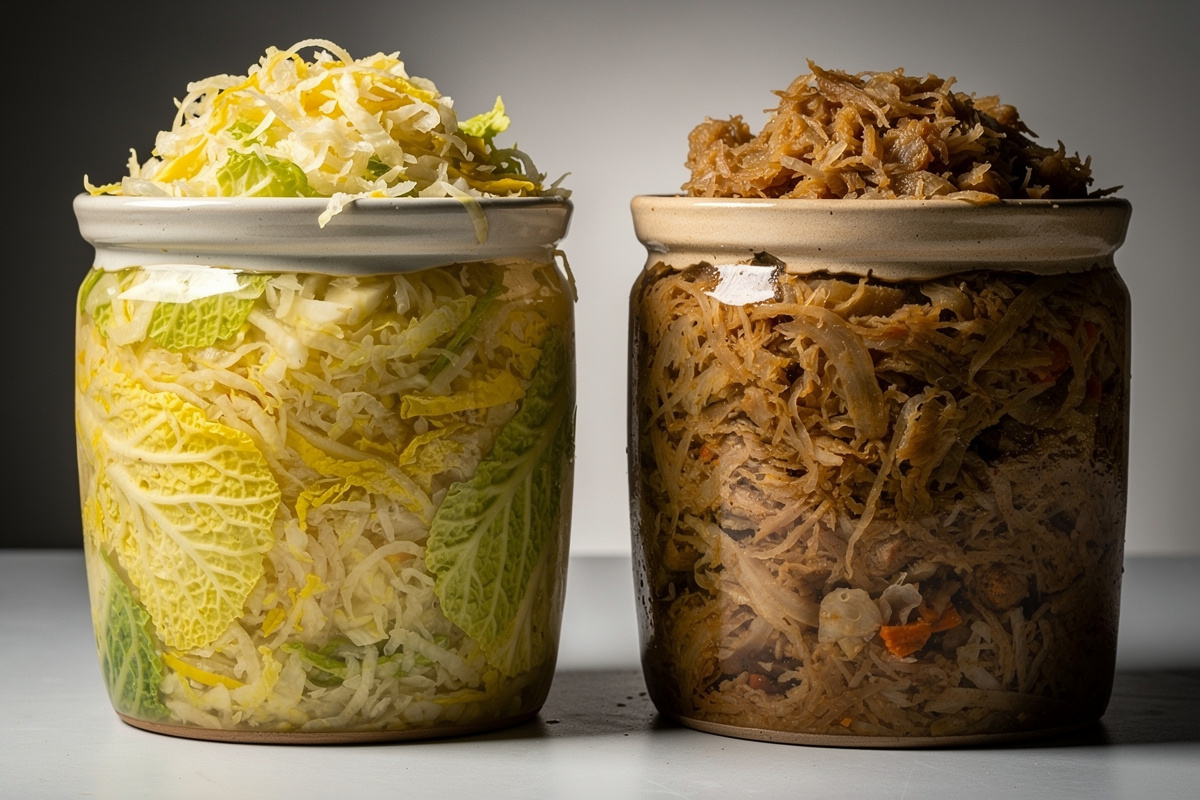
Sauerkraut turns mushy when cabbage cell walls break down faster than lactic acid fermentation can preserve them — caused by too-warm temperatures (above 75°F), too-low salt (below 2% by weight), exposed cabbage above brine, or soft aged cabbage. Fix it by maintaining 65-72°F, hitting 2.25% salt by weight, keeping cabbage fully submerged, and starting with fresh firm heads.
Mushy is one failure mode out of several; chalky, slimy, and surface kahm are the others, all covered alongside prevention in my homemade sauerkraut guide.
My first three batches of sauerkraut all went mushy. I blamed the recipe, the jar, the cabbage — everything except my salt scale. On batch four, I weighed my salt with the cheap kitchen scale I already owned for bread baking instead of eyeballing tablespoons, and the kraut came out crunchy. That experience taught me that sauerkraut texture is a science with seven specific levers, and getting any one wrong produces mush. Here is what I learned fixing each cause.
As an Amazon Associate I earn from qualifying purchases.
Cause 1: Fermentation Temperature Too Warm
Cabbage fermentation produces best texture at 65-72°F; above 75°F the lactic acid bacteria multiply too fast and pectin enzymes break down cabbage cell walls faster than acidification can preserve them. Below 65°F fermentation is slow but produces firm sauerkraut. Above 82°F mushy sauerkraut is essentially guaranteed within 5-7 days.
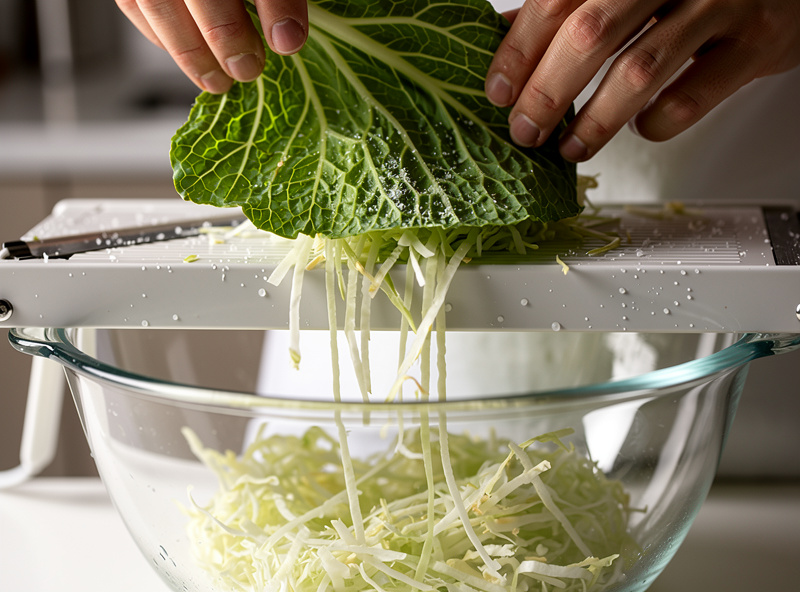
Temperature management:
- Ideal: 65-72°F: Most home kitchens hit this naturally without intervention. Crisp texture, balanced flavor.
- Too cold (below 60°F): Slow fermentation but firm texture. Acceptable but takes 4-6 weeks instead of 2-4.
- Too warm (75-82°F): Fast fermentation but progressive softening. Texture starts firm then degrades after week 2.
- Way too warm (above 82°F): Mushy within 5-7 days; sometimes contaminated with off-flavors.
- Fix: move to a cooler location: Basement floor, root cellar, garage in winter, refrigerator after initial 7-10 days.
The single most common temperature mistake is fermenting in summer in an air-conditioned house. AC keeps the air cool but kitchen counters near appliances can run 5-10°F warmer than the room temperature. Place the crock on a basement floor or in a hallway — anywhere that stays consistently cooler than the kitchen. The National Center for Home Food Preservation’s sauerkraut guidance confirms the same pattern I see on my own batches: 70-75°F ferments fully in 3-4 weeks with acceptable texture, while kraut held above 75°F is prone to going soft — which is why I treat 65-72°F as the real target rather than just folk wisdom.
Cause 2: Salt Ratio Too Low
Sauerkraut requires 2.0-2.5% salt by weight of shredded cabbage to maintain texture. Lower salt allows pectin enzymes to break down cell walls; higher salt slows fermentation and produces overly salty product. The 2.25% target is forgiving of small measurement errors and produces excellent texture. The tested comparison of 2%, 2.5%, and 3% brine — what changes in fermentation speed, crunch, and acidity at each level — is documented in the sauerkraut salt percentage guide.
Salt math:
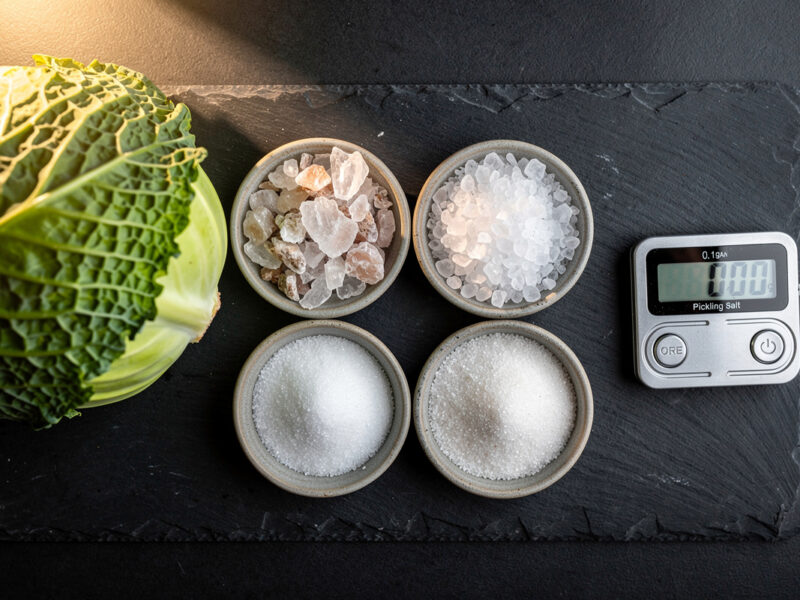
- For 1kg shredded cabbage: 22-25g salt: Use Diamond Crystal kosher salt, fine sea salt, or a dedicated pickling salt — the side-by-side performance test across sea salt, kosher, pickling, and iodised is in the best salt for sauerkraut guide. Non-iodized only.
- For 5 pounds shredded cabbage (about 2.27kg): 50-57g salt: Roughly 1/4 cup of kosher salt by volume.
- Below 2.0% salt: Mushy sauerkraut almost guaranteed. Pectin enzymes win against the slow lactic acid development.
- Above 3.0% salt: Slow fermentation, sometimes stalled. Texture is firm but flavor is overly salty.
- Fix: use a kitchen scale, never volume measurements: Different salt brands pack at 50-100% different densities. The “1.5 tablespoons per 5 pounds” volume rule produces wildly different salt content depending on brand.
The reliable practice is to weigh the cabbage AFTER shredding (not before — the core gets removed), calculate 2.25% of that weight, and use a kitchen scale to measure salt. I use an Escali Primo digital scale (reads to 1 gram) — any digital kitchen scale that reads to 1g works. A digital pH meter is also worth the $12 investment once you have 3-4 batches under your belt; sauerkraut is ready at pH 3.8-4.0, and testing pH removes the guesswork from the “is it done?” decision. These two tools eliminate the two biggest estimation errors in home fermentation. Read about salt percentage fundamentals in our companion sauerkraut mold vs kahm yeast guide.
Cause 3: Cabbage Exposed Above the Brine Line
Any cabbage exposed above the brine surface immediately starts decaying because lactic acid fermentation cannot reach it. The exposed pieces become soft, brown, and develop unwanted molds — and the softening sometimes propagates downward into the submerged kraut. Always keep cabbage 100% submerged with a glass weight or other food-safe weight.
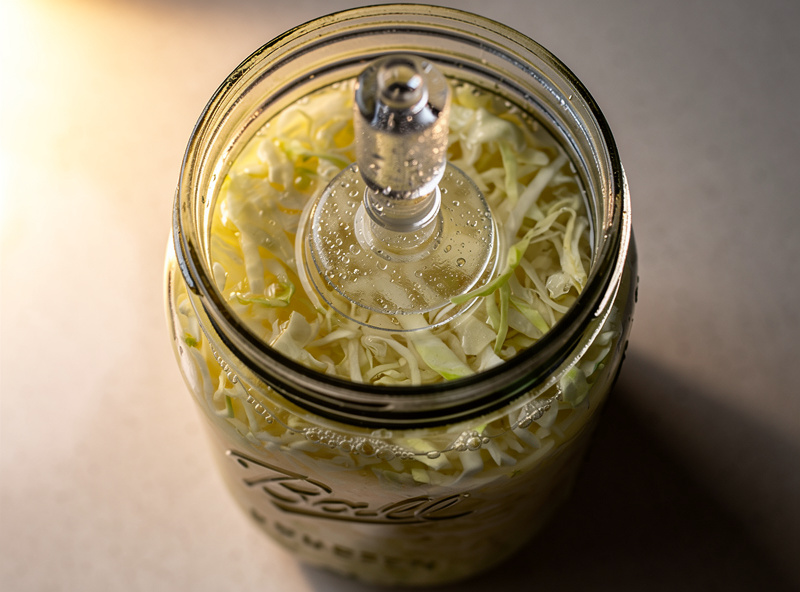
Submersion solutions:
- Glass fermentation weights: Match your jar size; sit on top of the cabbage and below the brine. The standard hobbyist solution.
- Cabbage outer leaves as a wrap: Reserved outer leaves wrapped over the shredded cabbage, then weighted down. Adds protection without external weights.
- Resealable plastic bag filled with brine: Sits on top, filled with the same salt brine in case it leaks (no flavor change).
- Smaller jar nested inside: A small mason jar full of water set inside a larger fermenting vessel weighs down the cabbage.
- Avoid metal weights: Acid in fermentation reacts with metal, contaminating flavor.
- Fix: check daily and remove any exposed pieces: Shrinking volume during fermentation can leave cabbage above the brine line. Push down or remove problem pieces.
The brine level is the most-watched variable in fermentation forums. Aggressive monitoring during the first 7 days catches the most-common cause of partial mushiness — a few pieces popping above the brine and softening, then propagating to the surrounding pieces.
Cause 4: Soft or Aged Cabbage
Fresh firm cabbage from the recent harvest produces the crispest sauerkraut. Cabbage that has been stored in the refrigerator for 2+ weeks before fermenting has already started losing cell wall integrity; cabbage that has gone limp or wilted has lost too much structure to make crunchy sauerkraut. Fresh-from-farmers-market cabbage in season produces meaningfully better texture than supermarket cabbage stored for weeks.
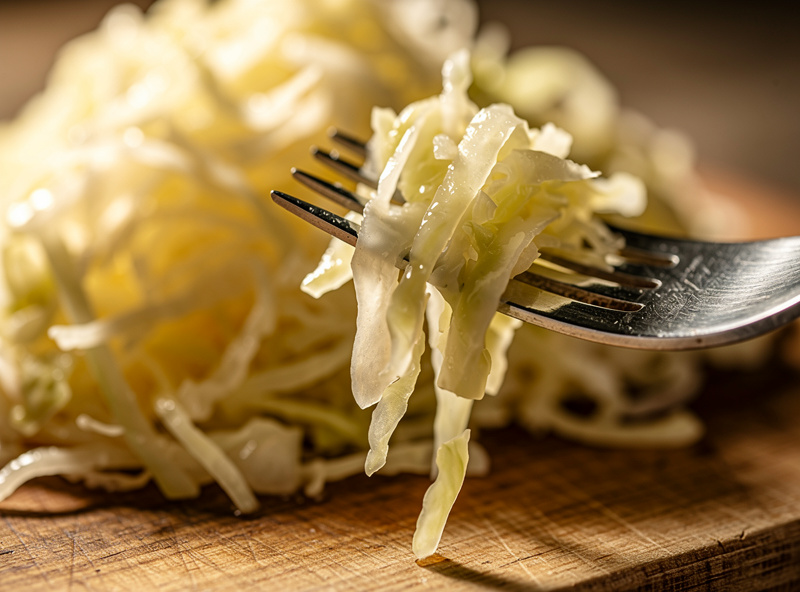
Cabbage selection:
- Fresh firm head: Outer leaves bright green and snap when bent, no brown spots, no wilted areas. The single most-used quality test.
- Heavy for its size: Dense cabbage indicates good moisture content and freshness.
- Sliced cleanly: The cut surface should look bright and slightly damp, not dried out or oxidized.
- Storage: refrigerator under 14 days: Beyond 2 weeks of refrigerator storage, cabbage starts losing the firmness needed for crunchy sauerkraut.
- Avoid: pre-shredded cabbage from grocery store: The shredding process damages cell walls; pre-shredded products produce mushy sauerkraut.
- Avoid: cabbage with multiple wilted outer leaves: Wilting indicates significant moisture loss; outer cabbage cell walls have already weakened.
- Best: cabbage from local farmers market in season: 1-3 days from harvest, typically firmer than grocery store cabbage that traveled 5-10 days.
For supermarket cabbage that turns out marginal, the trick is upping the salt to 2.5% to compensate. The slightly higher salt slows pectin enzyme activity and helps marginal cabbage produce acceptable sauerkraut.
Cause 5: Kahm Yeast or Mold Contamination
Kahm yeast — a harmless white film that develops on the brine surface — is not directly mushy-causing, but its presence indicates fermentation conditions that favor mushiness. The same conditions that breed kahm yeast (high temperature, exposed surface, low salt) also produce soft sauerkraut. Address the kahm yeast and the mushy texture problem usually goes away.
Kahm yeast prevention and removal:
- Skim the white film daily: Use a clean spoon. Kahm yeast itself is harmless but indicates suboptimal conditions.
- Tighten airlock or covering: Reduce air contact. Some submerged-environment ferments avoid kahm yeast entirely.
- Lower temperature: Move to cooler location; kahm yeast thrives at 75°F+.
- Increase salt slightly: Add brine made at 3% salt to the existing kraut to raise overall salt level.
- Submerge weights more aggressively: Ensure cabbage cannot float; kahm yeast colonizes exposed surfaces.
- Discard if mold appears: Real mold (green, black, or fuzzy) is different from kahm yeast (smooth white film). Mold means toss the batch.
The full visual identification between kahm yeast and dangerous mold is detailed in our companion guide on sauerkraut mold vs kahm yeast. Kahm yeast is a sign — fix the underlying conditions and kahm yeast disappears along with the mushiness it predicts.
Cause 6: Wrong Cabbage Variety or Cut
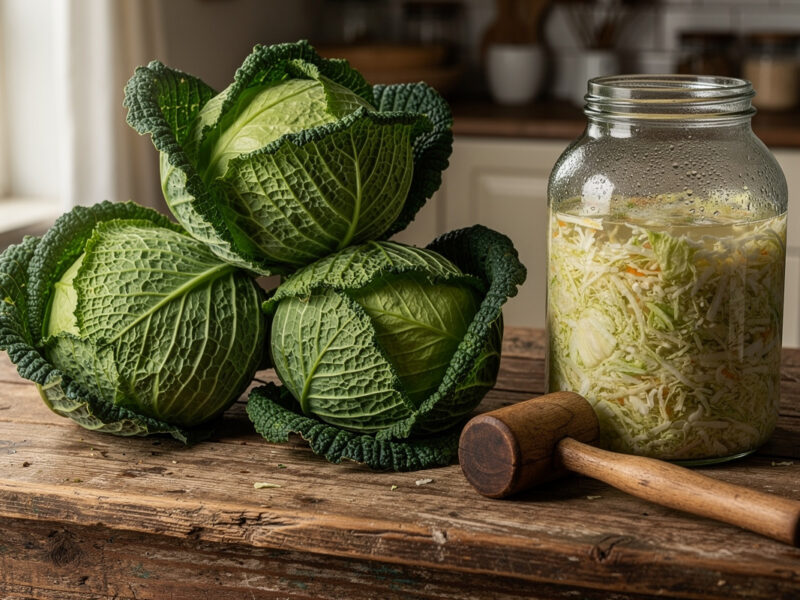
Green cabbage produces the crispest sauerkraut; red cabbage softens faster but holds color well; savoy and napa cabbage produce softer sauerkraut by nature of their thinner leaves. Within green cabbage, late-season harvested heads are denser and produce firmer kraut than early-season cabbage. The cut size also matters: 1/8-inch shreds produce traditional sauerkraut texture; finer shredding accelerates softening; chunks fail to ferment uniformly.
Cabbage selection by goal:
- Standard green cabbage, late-season harvest: The crispest sauerkraut by default. Look for late-summer/early-fall harvest dates.
- Red cabbage: Acceptable but softens faster than green; expect slightly less crunchy texture.
- Savoy cabbage: Decorative leaves; results in softer sauerkraut. Acceptable for occasional variation.
- Napa cabbage: Used for kimchi specifically; thinner cell walls than European cabbages.
- Cut size: 1/8-inch shreds: Standard texture. Mandoline or sharp chef’s knife produces uniform cuts.
- Avoid finer shredding: Below 1/16 inch the cell walls are damaged at cutting; expect mushy results.
- Avoid coarser cutting: Chunks larger than 1/4 inch ferment unevenly and develop firm exteriors with mushy interiors.
For first-time sauerkraut makers, standard green cabbage with 1/8-inch shreds is the right baseline — but choosing the right cabbage head matters just as much as variety. Our best cabbage for sauerkraut guide covers variety selection, freshness checks, and seasonal timing in detail. After the first 2-3 successful batches, experimenting with cabbage varieties becomes a fun variation rather than a risky deviation. Read about specific texture issues in our lacto-fermented pickles that stay crunchy guide.
Cause 7: Fermenting Too Long
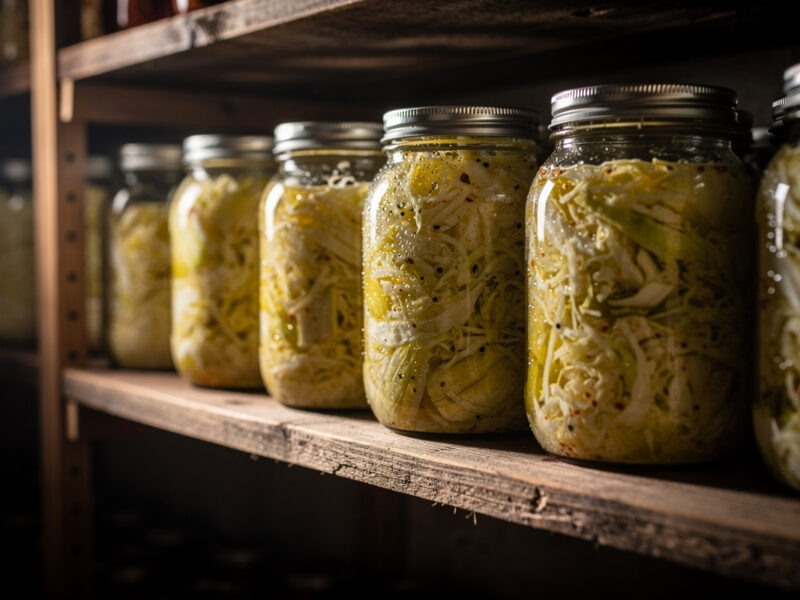
Sauerkraut continues fermenting after the initial fermentation period; pectin enzymes continue breaking down cell walls slowly even after lactic acid bacteria have done their primary work. Sauerkraut left at room temperature for 6+ weeks gradually softens. Move to refrigeration at 38-40°F after the desired flavor and acidity is reached, typically 2-4 weeks for room-temperature ferments.
Timing guidance:
- Days 1-3: Initial fermentation, lots of bubbling, maximum activity.
- Days 4-7: Flavor develops; sauerkraut tastes mildly sour.
- Days 7-14: Standard fermentation period. Most sauerkraut reaches “done” flavor here.
- Days 14-21: Maximum flavor development; texture still firm if conditions remained right.
- Days 21-28: Sauerkraut is fully fermented. Move to refrigeration to halt further softening.
- Days 28+: Continued slow softening at room temperature; refrigerated sauerkraut holds texture for 6-12 months.
- Beyond 60 days at room temperature: Texture deterioration becomes pronounced regardless of other factors.
The reliable practice is to taste at day 14, day 21, and day 28. When the flavor reaches your preferred sourness, transfer to the refrigerator. Most home sauerkraut transitions happen at day 18-21. Leaving sauerkraut “too long because the timer says so” is a common cause of late-stage mushiness. Read about other Kombucha and sauerkraut troubleshooting in our kahm yeast guide.
Mushy sauerkraut is frustrating because the batch took weeks of waiting and cost real money in ingredients. But every mushy batch teaches something specific. Track your salt percentage, fermentation temperature, and cabbage variety for the next batch and adjust one variable at a time. Most home fermenters who document their batches fix their texture issues permanently within 3-4 attempts. The kraut you are making next month will be crunchier than anything you have made before — because you now know which lever was out of position.
Frequently Asked Questions
Why is my sauerkraut mushy after fermenting?
Most commonly because of warm fermentation temperature (above 75°F), insufficient salt (below 2% by weight), exposed cabbage above the brine, or stale cabbage that lacked structural integrity to begin with. Each cause has a specific fix; identifying which one applies determines the recovery approach.
What temperature should I ferment sauerkraut at?
65-72°F is ideal. Below 60°F fermentation slows but produces firm texture. Above 75°F mushy sauerkraut becomes likely; above 82°F it is essentially guaranteed. Most home kitchens hit the ideal range naturally without intervention.
How much salt should I use for sauerkraut?
2.0-2.5% salt by weight of shredded cabbage. For 1kg cabbage: 22-25g salt. Below 2% allows pectin enzymes to break down cell walls; above 3% slows fermentation. Use a kitchen scale, never volume measurements — different salt brands pack at very different densities.
Can I save mushy sauerkraut?
Mushy sauerkraut is rarely texturally salvageable, but the flavor is usually fine and it can be cooked into other dishes (sauerkraut soups, kraut and sausage, slow-braised cabbage). Mushy sauerkraut is not unsafe — just texturally disappointing as a stand-alone product.
Why does my sauerkraut develop white film on top?
Kahm yeast — a harmless white film that develops in conditions favoring mushiness. The same conditions cause both. Skim daily, lower temperature, increase salt, ensure full submersion. Fixing kahm yeast usually fixes the mushiness too.
How long should sauerkraut ferment before refrigerating?
2-4 weeks for most preferences. Taste at days 14, 21, and 28; refrigerate when the desired sourness is reached. Most sauerkraut transitions to refrigeration at day 18-21. Beyond 4 weeks at room temperature, gradual softening becomes a real concern.
Related Articles
- Sauerkraut Mold vs Kahm Yeast: How to Tell the Difference
- Best Cabbage for Sauerkraut: Varieties Compared
- Kahm Yeast: What It Is, How to Prevent It
- Fermentation Weights Compared: Glass vs Ceramic vs Bag
- Garden to Jar: Fermenting What You Grow

About Kenny Nyhus Fadil
A home fermenter documenting brines, bubbles, and the occasional moldy tragedy.