How to Store Sauerkraut: Fridge, Cellar, and Long-Term Keeping

Store finished sauerkraut in the fridge, packed tight under its own brine in a clean sealed jar, and it will keep for many months — often well past six. The two rules that decide its lifespan are simple: keep the kraut fully submerged under brine, and keep it cold. A cool cellar (around 0 to 4°C) works as well as a fridge for long-term keeping. Freezing is possible but softens the texture, and canning is a poor choice because the heat kills the live cultures and turns crisp kraut to mush.
Sauerkraut is, at its heart, a preservation method — the whole reason it exists is that lacto-fermentation lets cabbage survive a winter without refrigeration. So storing it is far more forgiving than storing most foods. The acidity and salt that made it safe to ferment are the same things that keep it safe in the jar. Your job in storage is just to hold the flavor where you like it and keep air off the surface, and the kraut does the rest.
Here is exactly how I store mine — the fridge method I use for everyday jars, the cool-cellar method for big batches, and the two approaches I deliberately avoid.
The fridge method (what I use most)
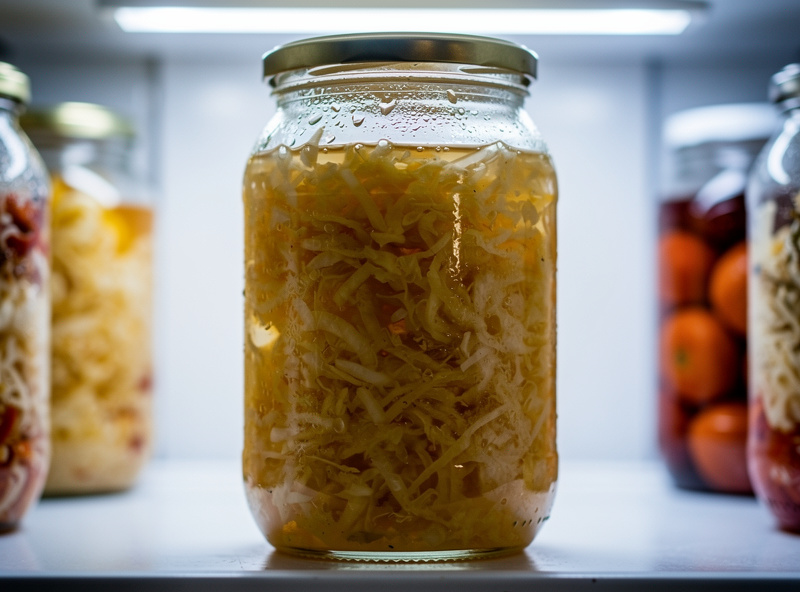
When a ferment tastes the way I want it, I move it to the fridge to effectively pause it. Cold doesn’t kill the fermentation, it slows it almost to a stop, so the flavor holds roughly where you left it and only creeps slowly more sour over months. To set a jar up for the long haul:
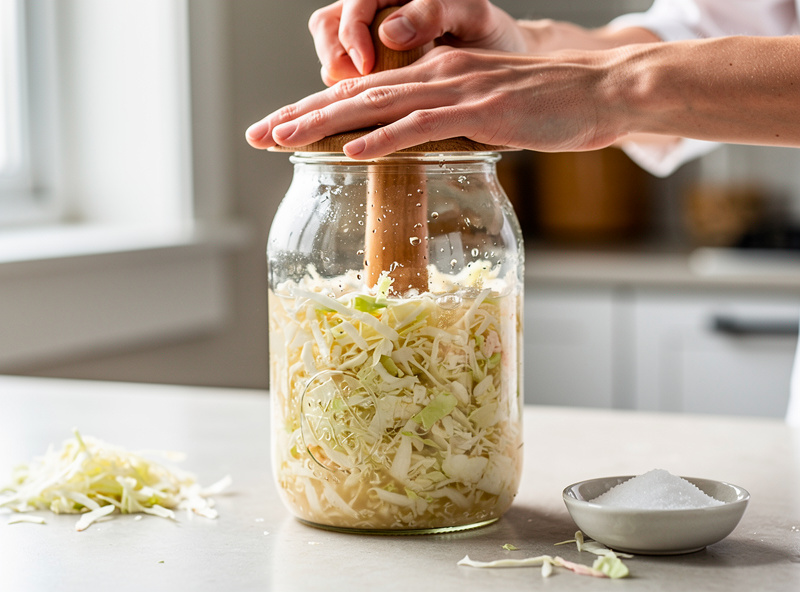
- Pack it tight. Press the kraut down firmly so the brine rises above it and air pockets are squeezed out. Less trapped air means a cleaner, longer-lasting jar.
- Keep it submerged. The kraut sitting under brine is the single most important storage rule. Exposed kraut at the surface can dry out, discolor, or grow surface yeast.
- Seal it. A tight lid keeps the fridge’s smells out and the kraut’s smell in, and slows any surface activity.
- Use a clean utensil every time. Never your fingers, never a used fork. Cross-contamination from dirty utensils is the most common way a good jar goes off, and after each serving press the remaining kraut back under the brine.
Done this way, a fridge jar routinely keeps six months or more, and I’ve eaten kraut considerably older that was still excellent. A set of clean, wide-mouth glass mason jars with tight lids is all the storage hardware you really need.
The cool-cellar method (for big batches)
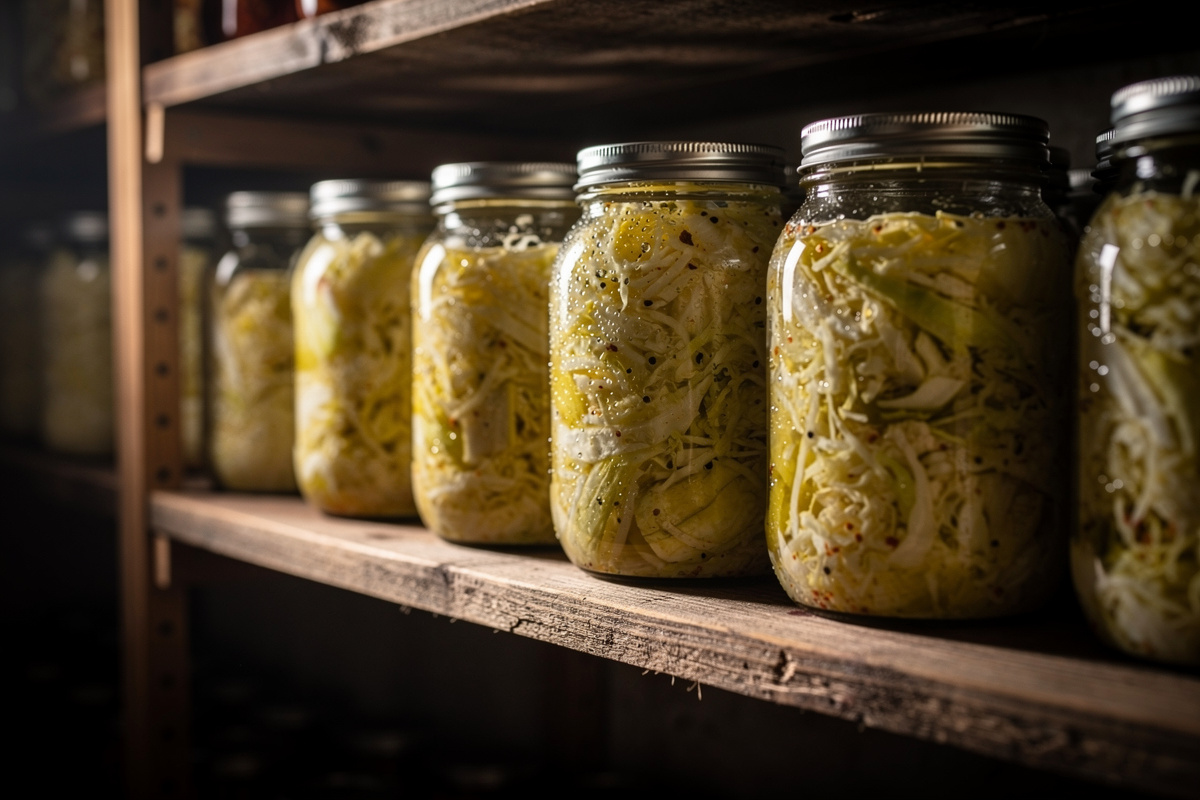
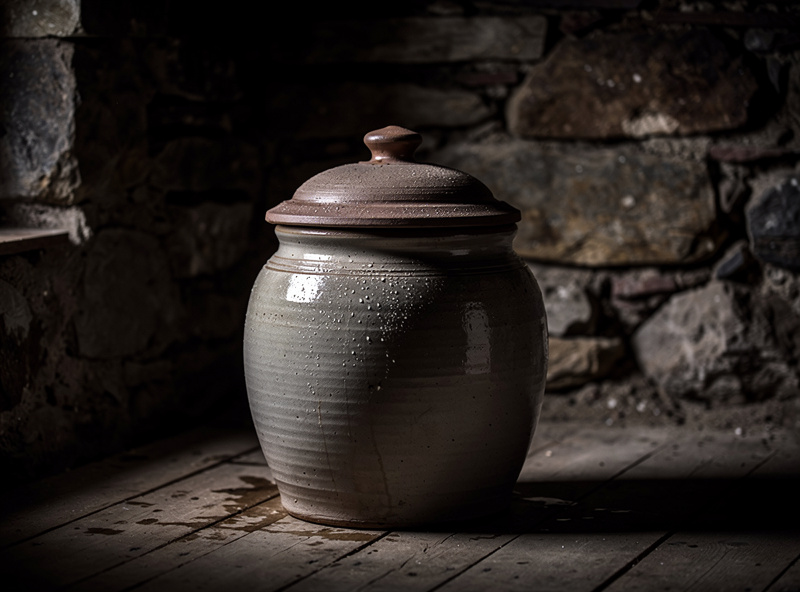
If you ferment in a large crock or put up several kilos at once — which is the traditional point of kraut — a cool cellar, root cellar, or unheated larder at roughly 0 to 4°C does the same job as a fridge without taking up fridge space. This is how sauerkraut was kept for centuries before refrigeration: ferment in autumn, then move the crock somewhere cold and dark for the winter, drawing from it as you go. The cold slows everything to a crawl, the brine keeps it safe, and a well-managed crock holds for many months.
The catch with an open crock in storage is surface management: because it isn’t sealed in a small jar, the exposed top is more prone to kahm yeast (a harmless white film) and, if neglected, mold. Keep everything under brine with a weight, skim any white film promptly, and check it periodically. If you see a white film and aren’t sure whether it’s harmless yeast or something to worry about, I walk through telling them apart in my guide to sauerkraut mold vs kahm yeast — it’s the one judgment call worth getting right.
| Method | Temperature | Keeps for | Texture impact | Best for |
|---|---|---|---|---|
| Fridge (sealed jar) | 0–4°C | 6+ months | None — stays crisp | Everyday jars, my default |
| Cool cellar (crock) | 0–4°C | Many months | None, if managed | Big seasonal batches |
| Freezer | −18°C | ~8–12 months | Softens; kills cultures | Surplus you’ll cook with |
| Canning (water bath) | Shelf-stable | Long | Mushy; kills cultures | Not recommended |
Why I don’t can or freeze (usually)
Two storage methods look appealing and mostly aren’t, for the same underlying reason: heat and ice both work against what makes sauerkraut special.
Canning (water-bath processing) makes kraut shelf-stable, but the heat does two unwanted things — it kills the live Lactobacillus cultures, so you lose the probiotic, living-food quality that’s much of the point, and it cooks the cabbage, turning that hard-won crunch soft. Commercial canned kraut is exactly this: pasteurized and limp. If you went to the trouble of fermenting fresh kraut, refrigeration or a cool cellar keeps it raw, crisp, and alive, which is why I never can mine.
Freezing is less destructive but still costs you. Ice crystals rupture the cabbage’s cell walls, so frozen-and-thawed kraut comes out noticeably softer, and freezing also halts the live cultures. I’ll freeze genuine surplus that I know I’m going to cook into a dish — a choucroute, a braise, a soup — where texture matters less and the heat would kill the cultures anyway. But for kraut I want to eat raw and crisp, the freezer is a last resort. To freeze it well, drain off excess brine, pack it into airtight containers leaving headspace, and use it within a year.
How to tell if stored sauerkraut has gone bad
Properly stored kraut very rarely spoils — the acidity is a powerful preservative — but here’s how to read a jar with confidence:
- Smell: sharp, sour, cabbagey is good and normal. Genuinely putrid, rotten, or foul means toss it.
- Surface: a thin white film is usually harmless kahm yeast — skim it and the kraut beneath is fine. Fuzzy, raised, colored spots (green, black, pink) are mold, and you discard the batch.
- Texture and taste: it should still be tangy and have body. Slimy, ropey brine or a flat, off taste is a sign something went wrong — usually contamination from a dirty utensil.
- Color: some darkening or dulling over months is normal, especially at the surface. It’s not a safety problem.
The recurring theme is the same one that runs through the whole craft: keep it cold, keep it submerged, keep it clean. Do those three things and a jar of sauerkraut will outlast almost anything else in your fridge. If you’re still dialing in when to pull a batch into storage in the first place, that timing question is covered in my guide to how long to ferment sauerkraut, and a set of silicone fermentation jar lids keeps long-stored jars sealed cleanly.
Disclosure: the product links above are Amazon affiliate links. I may earn a small commission if you buy through them, at no extra cost to you. I only recommend storage gear I use myself.
How long does homemade sauerkraut last in the fridge?
Stored cold in a sealed jar with the kraut pressed under its brine, homemade sauerkraut routinely keeps six months or more, and often considerably longer. The acidity and salt that made it safe to ferment also preserve it in storage. Always serve with a clean utensil and press the remaining kraut back under the brine.
Does sauerkraut need to be refrigerated?
Once it has fermented to the flavor you want, yes, you store it cold to hold it there. That means a fridge or a cool cellar around 0 to 4°C. Cold slows the fermentation almost to a stop. At warm room temperature it would keep getting more sour and eventually soft, so cold storage is how you preserve the kraut you like.
Can you freeze sauerkraut?
You can, but it softens the texture because ice crystals rupture the cabbage cells, and freezing halts the live cultures. It is fine for surplus you plan to cook into braises or soups, where texture matters less. Drain excess brine, pack airtight with some headspace, and use within a year. For raw, crisp kraut, refrigeration is much better.
Should I can sauerkraut for long-term storage?
I do not recommend it. Water-bath canning makes kraut shelf-stable but the heat kills the live Lactobacillus cultures and cooks the cabbage soft, losing both the probiotic quality and the crunch. If you fermented fresh kraut, refrigeration or a cool cellar keeps it raw, crisp, and alive, which is the whole point.
Why is it important to keep sauerkraut under the brine in storage?
The brine is an anaerobic, acidic shield. Kraut left exposed above the brine can dry out, discolor, or grow surface yeast and mold. Keeping everything submerged under brine, whether in a sealed jar or under a weight in a crock, is the single most important rule for storing sauerkraut safely and keeping it for months.
How do I know if my stored sauerkraut has gone bad?
Properly stored kraut rarely spoils. A sharp sour cabbage smell is normal; a putrid or rotten smell means discard it. A thin white surface film is usually harmless kahm yeast you can skim, but fuzzy, raised, colored spots are mold and mean toss the batch. Slimy, ropey brine or an off taste also signals a problem, usually from a dirty utensil.

About Kenny Nyhus Fadil
A home fermenter documenting brines, bubbles, and the occasional moldy tragedy.