How Long to Ferment Sauerkraut: 1 Week vs 4 Weeks (and Beyond)

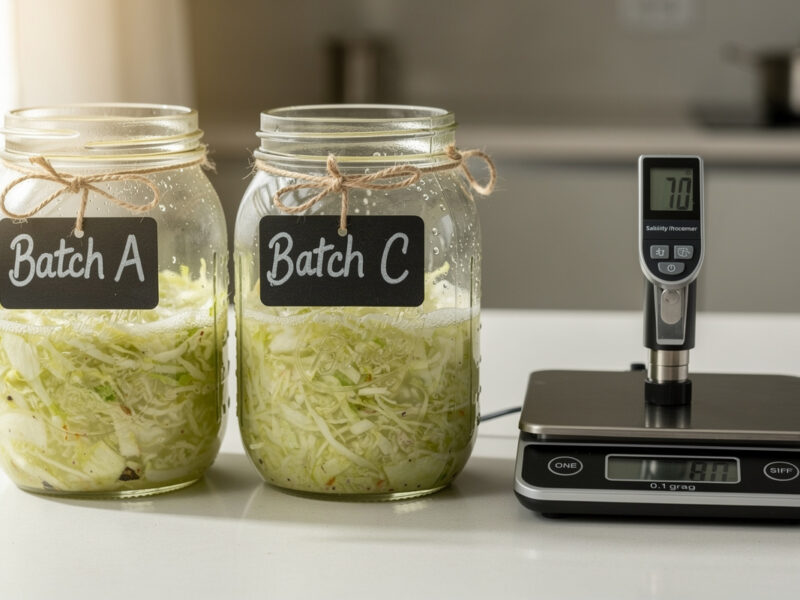
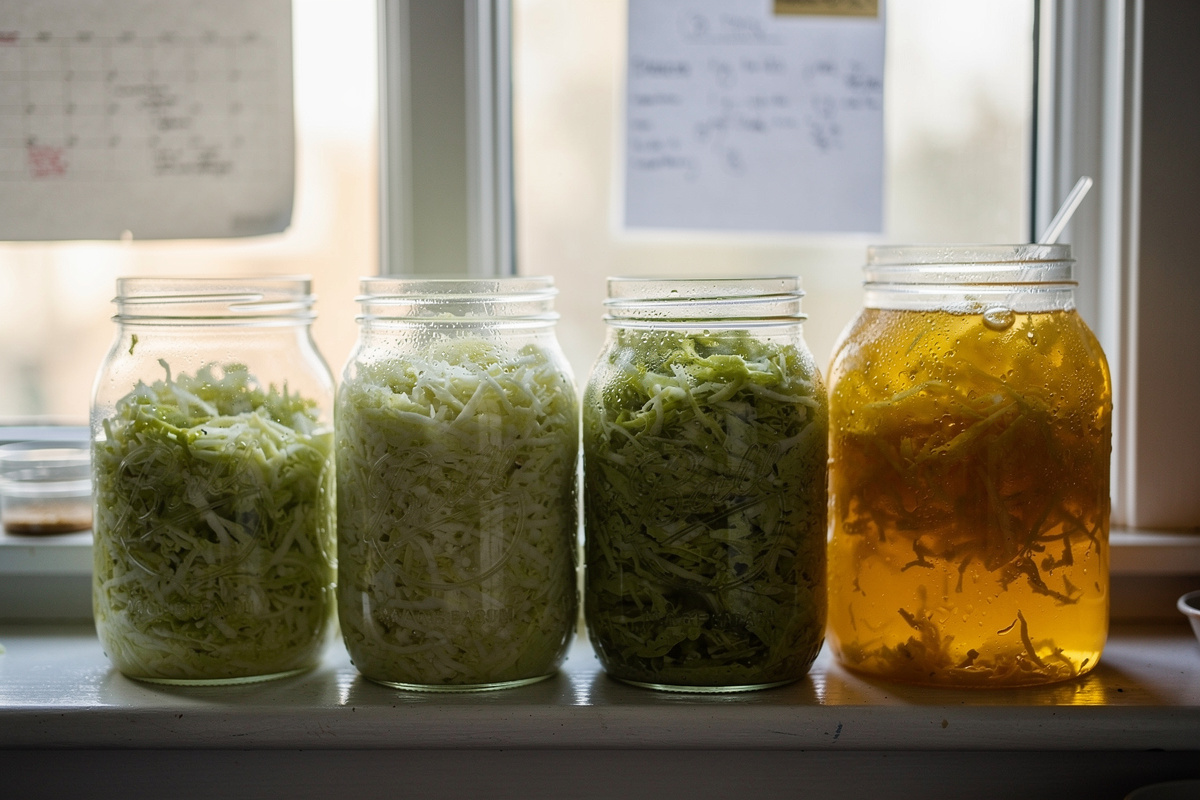
Sauerkraut is ready whenever it tastes right to you — there is no fixed finish line. A 1-week kraut is mild, crisp, and lightly tangy; a 4-week kraut is deeply sour, complex, and softer; and a long ferment of 6 weeks or more gives you the most developed, funky-in-a-good-way flavor. At cool room temperature (around 18 to 20°C) most people land somewhere between 2 and 4 weeks. Temperature, not the calendar, is the real timer: warmer ferments faster, cooler ferments slower.
“How long do I ferment sauerkraut?” is the question I get most, and the honest answer frustrates people at first: until you like it. There is no moment where the kraut switches from unfinished to finished. It is sour from day three or four and only gets more sour, more complex, and a little softer from there. The whole skill is learning to taste your way to the point you prefer and then stopping the clock by chilling it.
What I can give you is a reliable map — what is happening in the jar at each stage, what each timeframe tastes like, and how temperature stretches or compresses the whole thing. Once you have run a few batches you stop counting days entirely and just go by taste.
What happens week by week
Sauerkraut fermentation runs in overlapping microbial phases. Different bacteria take the lead as the environment changes, and each phase pushes the flavor forward:
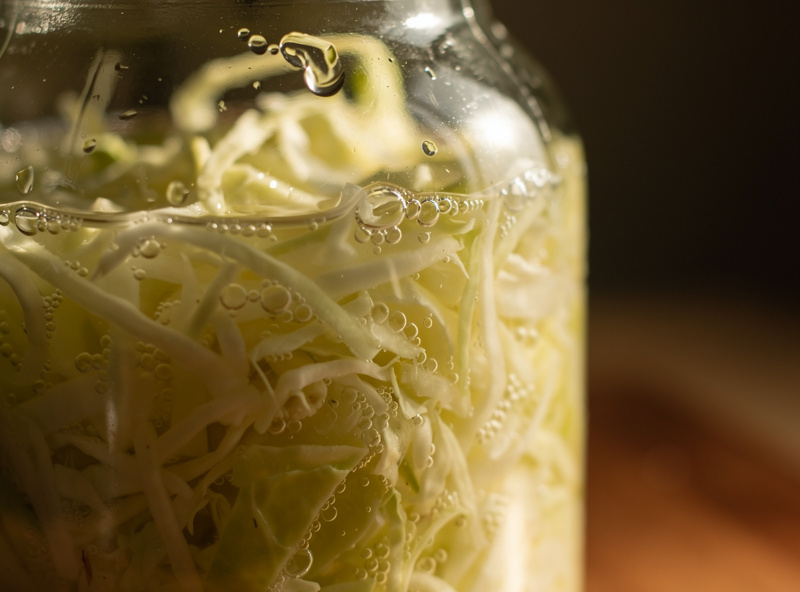
- Days 1–3 (the kickoff): salt pulls the brine out and the first wave of bacteria gets going. You’ll see early bubbling and the brine turning cloudy. The cabbage still tastes mostly like salty raw cabbage.
- Days 3–10 (the engine): Lactobacillus takes over and acidity climbs fast. This is peak bubbling. By the end of this window the kraut is recognizably sour and pleasantly crisp — a 1-week kraut lives here.
- Weeks 2–4 (the deepening): bubbling slows, the sourness rounds out and gains complexity, and the texture softens slightly. Most “classic” sauerkraut is pulled in this band.
- Weeks 4+ (the long haul): flavor keeps developing toward a deeper, funkier, more wine-like sourness. Texture continues to soften gradually. This is where the most characterful krauts come from.
1 week vs 4 weeks: how they actually taste
| Ferment length | Flavor | Texture | Best for |
|---|---|---|---|
| ~1 week | Mild, lightly tangy, fresh-cabbage notes remain | Very crisp | Beginners, fresh slaw-style use, the impatient |
| 2–3 weeks | Balanced, clean classic sour | Crisp with a little give | The everyday sweet spot for most people |
| 4 weeks | Deep, complex, fully sour | Softer, still with bite | Cooking, reubens, anyone who loves it sharp |
| 6+ weeks | Funky, wine-like, very developed | Soft | Connoisseurs and long cold storage |
A 1-week kraut and a 4-week kraut are genuinely different foods, not just “less done” and “more done.” I keep both going on purpose: a quick crisp batch for fresh eating and a long sour batch for cooking into things. Neither is more correct — they are different points on the same continuous line.
Temperature is the real timer
This is the single most important thing to understand about timing: the days-counts above assume cool room temperature, roughly 18 to 20°C. Move off that and the whole timeline stretches or compresses. Warmer rooms accelerate the bacteria, so a kraut that takes 3 weeks at 18°C might be equally sour in 10 to 14 days at 24°C — but warm ferments also tend to be a little softer and can develop off-notes if they run too hot. Cooler ferments take longer and reward you with crisper, cleaner, more slowly-developed kraut, which is exactly why traditional cellars and cool larders make such good sauerkraut.
My rule of thumb: I aim for a steady, cool-ish spot — a corner of the kitchen away from the oven, a pantry, a cellar — and I avoid both extremes. Below about 15°C the ferment crawls and may stall; above about 24°C it rushes and softens. A simple digital thermometer parked next to the crock tells me which end of the timeline I am actually on, which matters far more than the date I started.
How to know it’s done
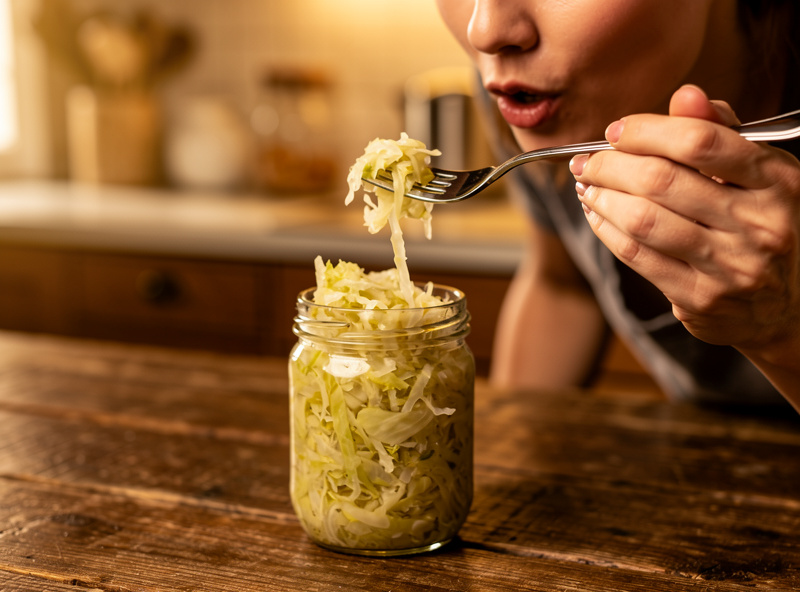
Forget the calendar and use your senses. Starting around day five, taste a forkful every few days (use a clean utensil each time). You’re checking for:
- Sourness: is it tangy enough for you? This is the main call. It only gets more sour from here.
- Bubbling has slowed: vigorous early bubbling tapering off is a sign the most active phase is past. A kraut can absolutely be eaten while still bubbling, though.
- Smell: clean, sharply sour, cabbagey — good. Genuinely rotten or putrid — different problem, and worth checking everything stayed submerged.
- Texture: still has crunch if you pull it early, softer if you wait.
When it tastes right, you “stop” the ferment by moving the jar to the fridge. Cold doesn’t kill the fermentation, it just slows it almost to a standstill, so the flavor holds roughly where you left it. To keep the surface clean and oxygen-free during the active weeks so it can run uninterrupted, I ferment under silicone airlock lids — they let the CO2 escape without letting air in, which keeps kahm yeast and mold off the top during a long ferment.
Disclosure: the links above are Amazon affiliate links. I may earn a small commission if you buy through them, at no cost to you. I only recommend gear I run myself.
Can you ferment it too long?
Not really, from a safety standpoint — a properly salted, submerged kraut stays safe for a very long time because the low pH protects it. What “too long” means is purely a texture and flavor preference: leave it for many weeks at room temperature and it gets very sour and quite soft, which some people love and others don’t. If you want a crisp kraut, pull it earlier and refrigerate; if you want maximum depth, let it ride. The salt level you chose also matters here — a higher-salt batch ferments slower and holds texture longer, which I cover in my guide to sauerkraut salt percentage. The one thing to keep watching throughout is that everything stays under the brine.
One practical consequence of all this: I almost never start a single huge crock and wait for one finish date. I’d rather pack two or three smaller jars from the same shred and pull them at different points — one at a week, one at three, one left to go long. It costs nothing extra in cabbage or salt, and it teaches you faster than any guide what each stage tastes like in your kitchen at your temperature. After a couple of rounds of that, you stop asking how many days and just taste, because you already know roughly where your room lands on the timeline. That instinct — reading the ferment instead of the calendar — is the whole skill, and it transfers to every other vegetable ferment you’ll ever run.
How long does sauerkraut take to ferment?
At cool room temperature (about 18 to 20°C), most sauerkraut is ready somewhere between 2 and 4 weeks. A 1-week kraut is mild and crisp, a 4-week kraut is deeply sour and softer. There is no fixed finish line, so taste it from about day five onward and pull it when the sourness is where you like it.
Can I eat sauerkraut after just one week?
Yes. By the end of the first week the kraut is already sour and safe to eat, just milder and crisper than a longer ferment. A 1-week kraut is a great place to start, especially for beginners. It will simply keep getting more sour and complex if you leave it longer.
Does temperature change how long sauerkraut takes?
Significantly. Warmer rooms speed the bacteria up, so a kraut that takes 3 weeks at 18°C might be equally sour in 10 to 14 days at 24°C, though warm ferments can be softer. Cooler ferments take longer and stay crisper. Aim for a steady cool spot and avoid going below about 15°C or above 24°C.
How do I know when my sauerkraut is done?
Taste is the only real test. Starting around day five, sample a forkful with a clean utensil every few days and check the sourness. When it is tangy enough for you, it is done. Slowing bubbles and a clean sharp smell are supporting signs. Then move it to the fridge to hold the flavor where you like it.
Can sauerkraut ferment too long?
Not in terms of safety, since the low pH keeps a properly salted, submerged kraut safe for a long time. Too long is only a matter of taste and texture: long ferments become very sour and quite soft. If you prefer crisp kraut, pull it earlier and refrigerate. If you love deep flavor, let it ride for six weeks or more.
Why has my sauerkraut stopped bubbling?
Slowing or stopped bubbling usually just means the most active fermentation phase has passed, which is normal after the first week or two. The kraut keeps developing flavor more slowly. A ferment that never really bubbled may be too cold, under-salted differently than intended, or not packed tightly enough, so check the temperature and that everything is submerged.

About Kenny Nyhus Fadil
A home fermenter documenting brines, bubbles, and the occasional moldy tragedy.
Keep Bubbling
Sauerkraut Mold vs Kahm Yeast: How to Tell the Difference (Photos)
How to Store Sauerkraut: Fridge, Cellar, and Long-Term Keeping