Vinegar Fermentation Stages: From Sugar to Acetic Acid

The vinegar fermentation stages are two distinct biological steps: an anaerobic alcoholic stage where yeast turns sugar into ethanol, then an aerobic acetic stage where Acetobacter turns that ethanol into acetic acid. The handoff between them is an oxygen switch, and on my bench the whole journey takes six to ten weeks depending on substrate.
Understanding the two stages as separate jobs — with different organisms, different oxygen needs, and different instruments to read them — is what turns vinegar from guesswork into a process you can steer. My complete home vinegar guide gives the timeline at a glance; this article gets under the hood of what is actually happening, stage by stage, and which number tells you where you are.
The Two Stages at a Glance
If you make vinegar from a finished wine, beer, or cider, stage one is already done for you and you start at the acetic stage. If you start from fruit, juice, or sugar-water, you run both. The reactions are chemically simple but biologically separate: yeast first, bacteria second, and the conditions that suit one actively work against the other.
| Stage | Organism | Reaction | Oxygen | Instrument that reads it |
|---|---|---|---|---|
| 1. Alcoholic | Yeast (Saccharomyces) | Sugar → ethanol + CO₂ | Anaerobic | Hydrometer / refractometer (gravity falls) |
| 2. Acetic | Acetobacter | Ethanol + O₂ → acetic acid + water | Aerobic | pH meter / acid titration (pH falls) |
That single table is the mental model I wish I had when I started. Stage one needs sugar, yeast, and an airlock that keeps oxygen out. Stage two needs alcohol, bacteria, and as much air as you can give it. Try to run them in the same sealed jar at the same time and you get neither — you get flat, alcoholic, half-soured liquid that stalls.
Stage One: Alcoholic Fermentation
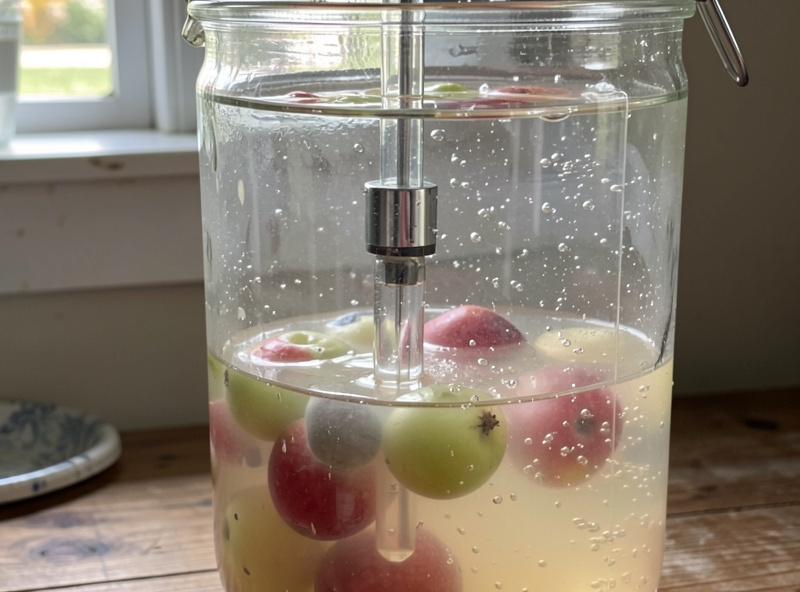
In the first stage, yeast consumes the sugar in your substrate and excretes ethanol and carbon dioxide. This is ordinary winemaking or brewing chemistry, and it is anaerobic — yeast does its alcohol-producing work without oxygen, which is why this stage belongs under an airlock or a loosely capped vessel that lets CO₂ out but keeps air from rushing in. The marker here is density. As sugar (heavy) converts to alcohol (light), the specific gravity of the liquid falls.
I track this with a hydrometer. A fruit must might start near 1.060 and finish around 0.995 when the yeast has eaten essentially all the sugar; a refractometer reads the same trend in Brix. The practical target for vinegar is an alcohol level of roughly 6 to 9 percent. That matters for stage two: Acetobacter is happiest converting ethanol in that band, and alcohol much above 12 percent actually inhibits the bacteria, which is why strong wine gets diluted before acetification. Stage one is finished when the gravity stops dropping and holds steady for a couple of days — the bubbling slows to nothing and the liquid tastes dry rather than sweet.
The Oxygen Switch Between Stages
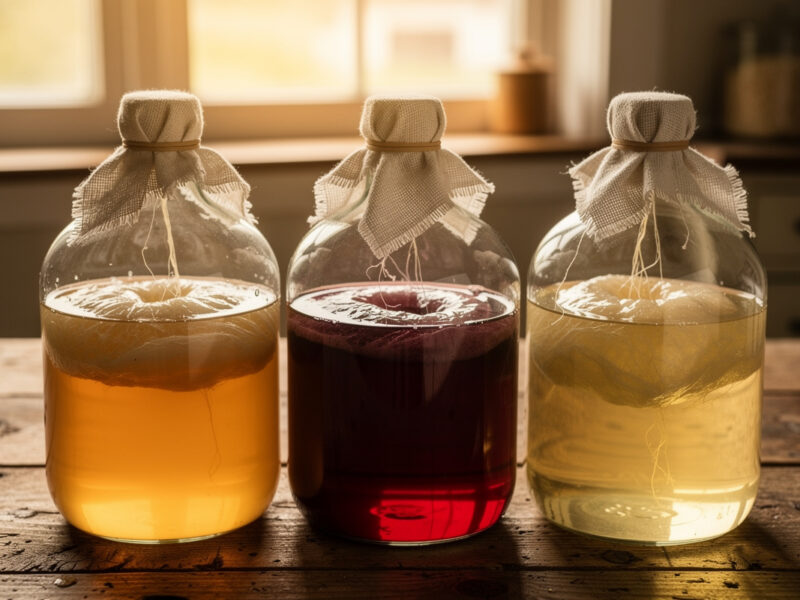
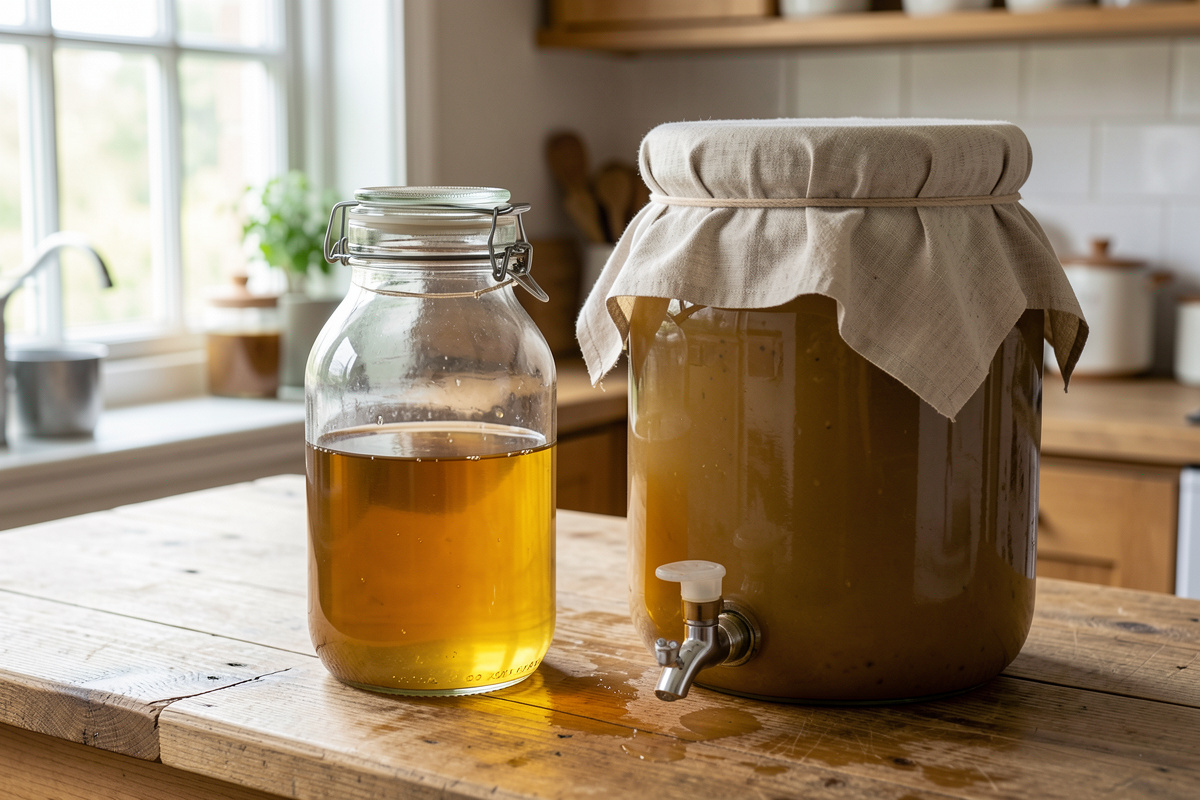
The moment between stages is the one beginners miss. Once stage one is done you have an alcoholic base, and now everything reverses. You pull off the airlock, move the liquid to a wide vessel for maximum surface area, and cover it with breathable cloth so air can reach it. You also introduce the second organism — a mother of vinegar or a slug of raw unpasteurised vinegar carrying live Acetobacter. The same liquid that needed protection from oxygen ten minutes ago now needs all the oxygen it can get.
This is also where temperature shifts. Yeast in stage one is comfortable around 18 to 24 °C. Acetobacter in stage two wants warmer, 21 to 29 °C with a sweet spot near 26 °C. If you make vinegar from a bottle of finished wine or cider, you skip stage one entirely and start right here — which is exactly why wine-to-vinegar is the fastest route and the one I recommend to anyone starting out.
Stage Two: Acetic Fermentation
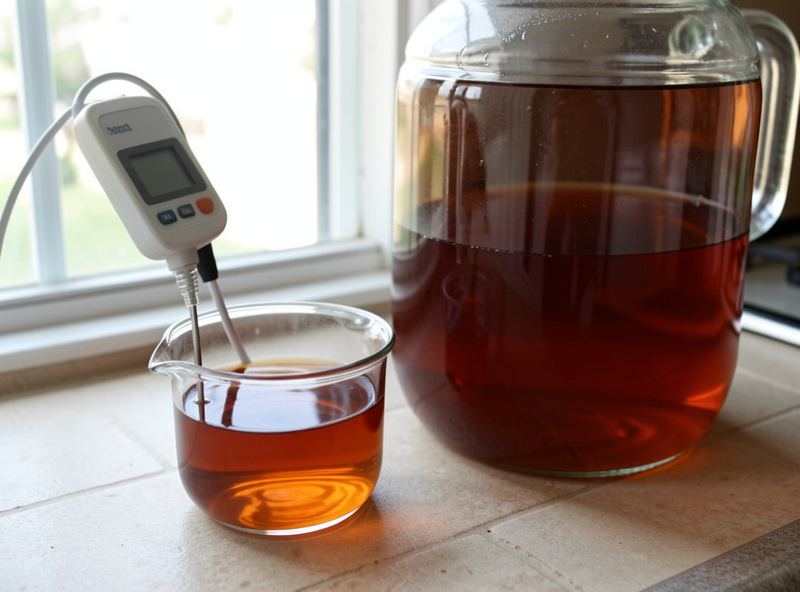
In the second stage, Acetobacter uses oxygen to oxidise the ethanol into acetic acid. This is the reaction that makes vinegar vinegar, and it is strictly aerobic — every molecule of acetic acid requires oxygen the bacteria pull from the air at the surface. The marker now is no longer density; it is acidity. As ethanol converts to acetic acid, the pH falls and the titratable acidity climbs.
I read this with a calibrated pH meter, with test strips as a cross-check. A fresh alcoholic base might sit around pH 3.8 to 4.5; as acetification proceeds the pH drops into the 2.4 to 3.4 range of finished vinegar. The food-safety anchor to memorise is pH 4.6 — that is the floor below which acid-sensitive pathogens cannot establish — the same boundary the FDA codifies for acidified foods in 21 CFR 114 — and any properly finished vinegar sits well under it. Commercial vinegar is standardised to 5 percent acetic acid; home vinegar typically lands between 4 and 6 percent. Roughly speaking, every 1 percent of alcohol in your base converts to about 1 percent acidity, so a 6 percent base gives you a solidly acidic vinegar.
The Sub-Phases You Can Watch
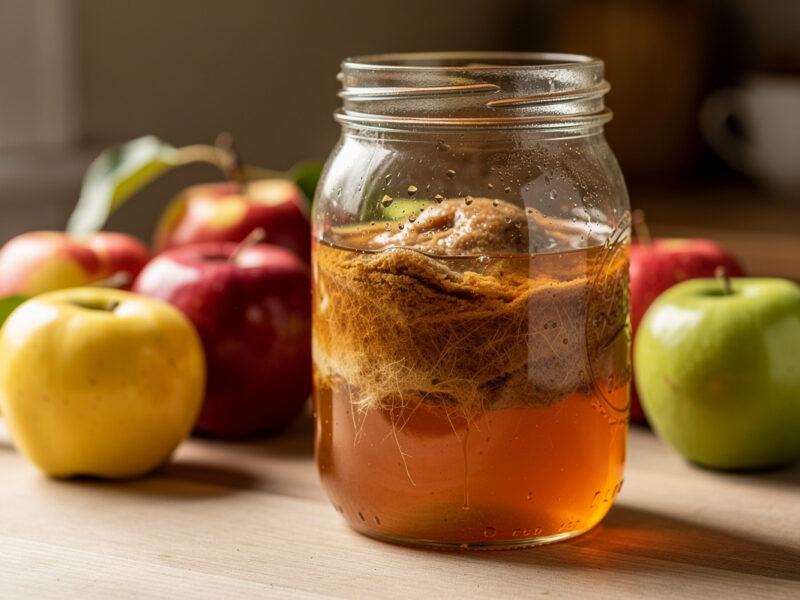
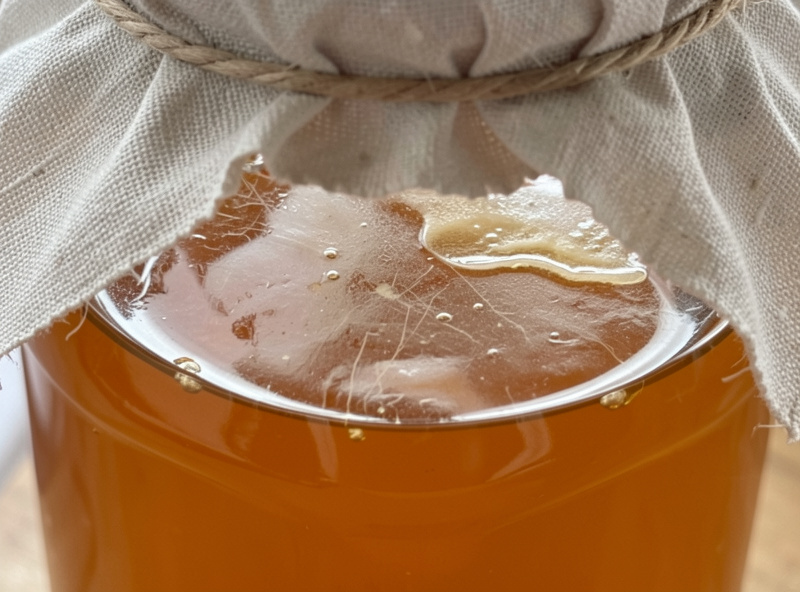
Within the acetic stage there is a visible rhythm that tracks the chemistry. In week one a thin translucent film — the start of a fresh mother — lays down across the surface as the bacteria establish. By week three that film has thickened to a 3 to 5 millimetre rubbery mat and the vinegar smell becomes unmistakable. Around week five a taste test usually shows 3 to 4 percent acidity, sharp but not yet complete. By week six to eight the conversion finishes: no alcohol harshness on the tongue, no residual sweetness, a clean and complete sourness.
Two off-notes tell you something went wrong. If you still taste raw alcohol at week eight, the bacteria need more time or more warmth — give it two to three more weeks. If you taste or smell acetone, a nail-polish sharpness, the ferment ran too warm and overshot; drop the temperature and let future batches finish more slowly. The tongue is genuinely accurate here, but a pH meter removes the doubt: a reading that has stopped falling and a taste with no alcohol left means the batch is done.
How I Read Which Stage I Am In
My rule is one instrument per stage. During alcoholic fermentation I only care about the hydrometer — is the gravity still dropping, and has it reached roughly 0.995? During acetic fermentation I only care about the pH meter and my nose — is the pH still falling toward the low 3s, and does it taste of clean vinegar rather than wine? Trying to read acidity during stage one or alcohol during stage two just produces numbers that do not mean anything yet.
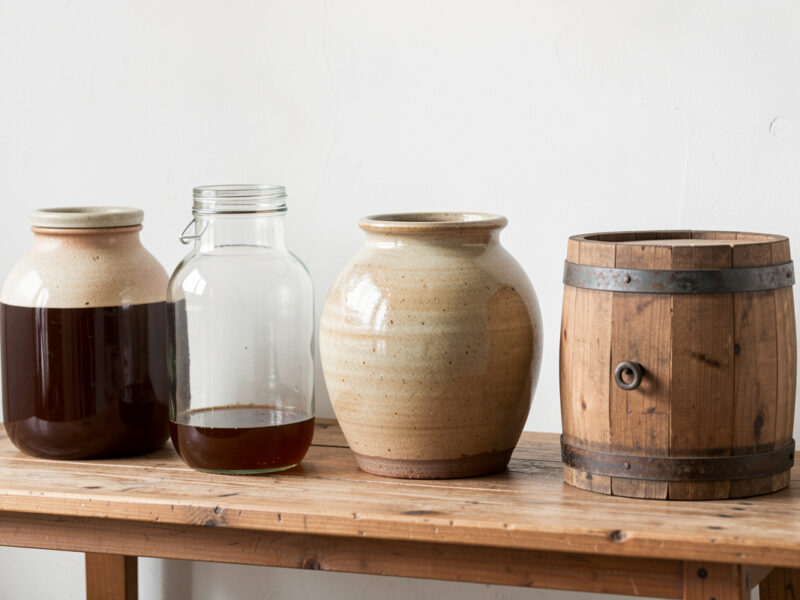
The deeper point is that vinegar is two ferments wearing one coat, and the same patience that watches a sourdough starter rise watches a hydrometer sink and then a pH meter follow it down. Once you stop treating it as one mysterious process and start treating it as two measurable ones, the failures mostly disappear. The vessel you run stage two in matters too — surface area is everything for aerobic bacteria, which is why I cover choosing the right vinegar vessel separately.
Controlling the Speed of Each Stage
Temperature is the main dial on both stages, and pulling it the right way saves weeks. Stage one finishes fastest with the yeast held at the warm end of its range, around 22 to 24 °C; below 16 °C the gravity crawls down over a month instead of a week. Stage two is even more temperature-sensitive: at 26 °C my Acetobacter finishes a wine base in five to six weeks, while the same jar in an 18 °C room can take twelve. A seedling heat mat under the vessel, set to hold the high 20s, is the single cheapest way to speed acetification.
Surface area is the other lever, and it only applies to stage two. Roughly doubling the exposed surface halves the acetic timeline, which is why moving from a narrow carboy to a wide jar is not optional. What you cannot rush is the finish: the last half-percent of acidity always comes slowly, and pulling a batch the day it first tastes sharp rather than waiting for the pH to settle is the most common way to bottle vinegar that keeps fermenting in storage. Patience at the end is cheaper than a cloudy refermenting bottle.
Frequently Asked Questions
What are the two stages of vinegar fermentation?
First is alcoholic fermentation, where yeast converts sugar to ethanol without oxygen. Second is acetic fermentation, where Acetobacter bacteria use oxygen to convert that ethanol into acetic acid. Yeast runs the first stage, bacteria the second.
How long does each stage take?
Alcoholic fermentation typically runs one to three weeks until the gravity stops dropping. Acetic fermentation takes another four to eight weeks at 21 to 29 degrees Celsius. Starting from a finished wine or cider skips the first stage entirely.
How do I know when the alcoholic stage is finished?
Track specific gravity with a hydrometer. When it falls to around 0.995 and holds steady for two days, and the liquid tastes dry rather than sweet, the yeast has consumed the sugar and you can move to the acetic stage.
Why do I need to remove the airlock for the second stage?
Acetobacter is aerobic and needs oxygen to make acetic acid, the opposite of the yeast in stage one. Swap the airlock for breathable cloth and a wide vessel so air reaches the surface, or the ethanol simply sits unconverted.
What pH should finished vinegar reach?
Finished vinegar typically reads pH 2.4 to 3.4 on a meter, corresponding to roughly 4 to 6 percent acetic acid. The food-safety floor to remember is pH 4.6, below which acid-sensitive pathogens cannot grow, and any real vinegar sits well under it.
Related Guides
- Home Vinegar Making: The Complete Guide from Mother to Bottle
- The Mother of Vinegar, Explained
- How to Make Apple Cider Vinegar From Scratch
- How to Make Red Wine Vinegar at Home
- Infused Vinegar Recipes and Methods

About Kenny Nyhus Fadil
A home fermenter documenting brines, bubbles, and the occasional moldy tragedy.