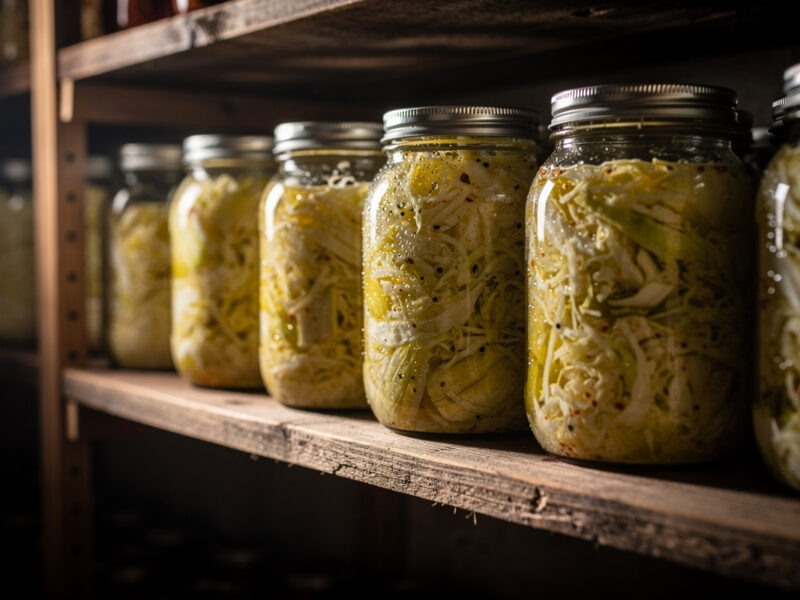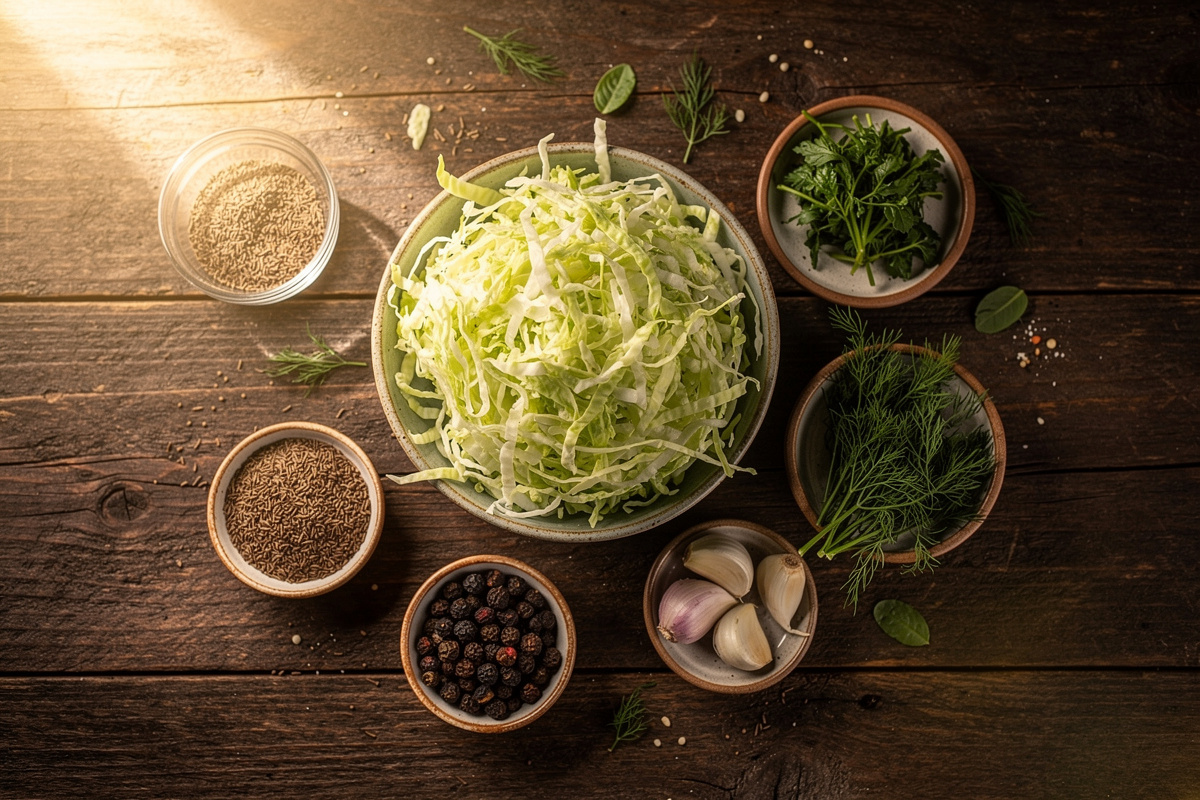
Flavored Sauerkraut: Caraway, Juniper, and Garlic Pairings

The three classic sauerkraut flavorings are caraway (the traditional partner, warm and slightly anise-like), juniper (piney and resinous, brilliant with red cabbage and game), and garlic (pungent and savory, which mellows beautifully as it ferments). Add whole spices and aromatics during the salting step at roughly 1 to 2 teaspoons of seed per kilo of cabbage, and keep additions food-safe — dried spices, garlic, and firm aromatics ferment cleanly, while delicate fresh herbs are better stirred in at the end.
Plain sauerkraut is a finished food on its own, but flavoring it is where the craft gets fun. Over the years I have thrown nearly everything in the spice drawer at a cabbage ferment, and a clear hierarchy emerged: a handful of additions are timeless and reliable, a few are excellent once you know how to use them, and a couple of categories are best avoided in the crock and added on the plate instead. The good news is that flavoring kraut barely changes the method — you fold the aromatics in when you salt, and the ferment does the rest, marrying everything together over its weeks in the jar.
Here is how I actually flavor kraut, pairing by pairing, with the amounts and the timing that work.
How to add flavorings (the method barely changes)
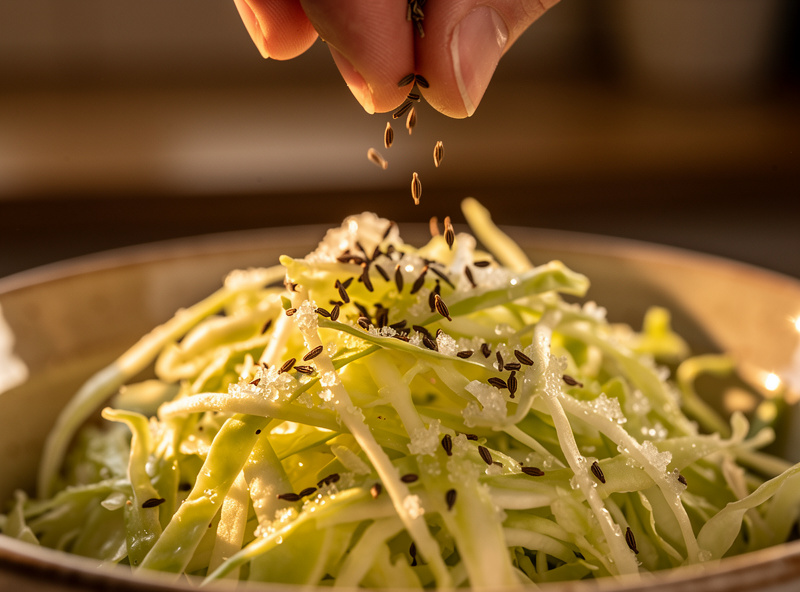
Whatever you’re adding, the timing is the same: fold it in during the salting and massaging step, before you pack the jar. That way the aromatics distribute evenly and ferment with the cabbage rather than sitting on top. Use whole or coarsely crushed dried spices rather than ground — ground spice clouds the brine and can go bitter — and keep the quantities modest, because the long ferment concentrates and marries flavors. Start lighter than you think; you can always make the next batch bolder.
A good baseline is 1 to 2 teaspoons of seed spice (caraway, dill seed, fennel) per kilogram of cabbage, a few crushed juniper berries per kilo, or a couple of sliced garlic cloves per kilo. Everything still gets the same 2 to 2.5% salt by weight — flavorings don’t change the salt math, which I break down in my guide to sauerkraut salt percentage.
The pairings, ranked by how I use them
| Flavoring | Character | Amount (per kg cabbage) | Pairs especially well with |
|---|---|---|---|
| Caraway | Warm, faintly anise — the classic | 1–2 tsp whole seeds | Green cabbage, pork, rye bread, sausage |
| Juniper | Piney, resinous, slightly gin-like | 5–10 crushed berries | Red cabbage, game, duck, pork |
| Garlic | Pungent fresh, mellow fermented | 2–4 sliced cloves | Almost anything savory; dill kraut |
| Dill (seed) | Bright, grassy, pickle-like | 1–2 tsp seed | Garlic, a pickle-style kraut |
| Ginger | Warm, zingy | 1–2 tbsp grated | Carrot-kraut, turmeric, Asian-leaning krauts |
| Apple & onion | Sweet, savory, rounded | ½ apple + ½ onion, sliced | A gentler, sweeter everyday kraut |
Caraway — the one to start with
If you only ever flavor kraut one way, make it caraway. It is the traditional German pairing for a reason: its warm, slightly licorice note sits perfectly against the clean sourness of green cabbage, and it is the flavor most people actually think of when they picture “real” sauerkraut. Whole seeds, 1 to 2 teaspoons per kilo, folded in at the massage. It is forgiving, it never overpowers, and it makes the kraut taste finished. A jar of whole caraway seeds goes a long way and keeps for ages.
Juniper — the red-cabbage move
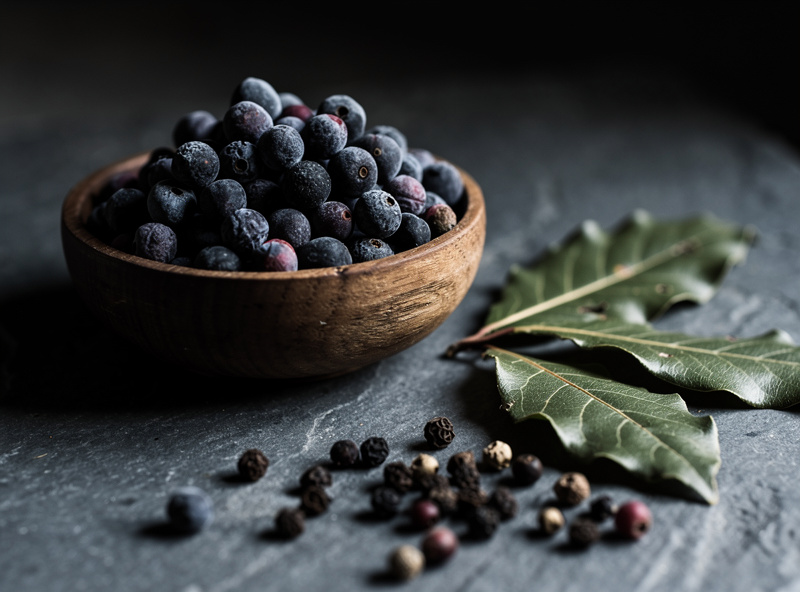
Juniper is my favorite “level up” flavoring, especially in a red kraut. Crush the berries lightly first to release their resinous oils, then use 5 to 10 per kilo — it is potent, so restraint matters. The piney, almost gin-like note is fantastic with the earthier red cabbage and pairs naturally with the kind of food red kraut ends up next to: pork, duck, venison. This combination is exactly why I reach for juniper when I’m making red cabbage sauerkraut. A small bag of dried juniper berries lasts through many batches.
Disclosure: the spice links here are Amazon affiliate links. I may earn a small commission if you buy through them, at no cost to you. I only recommend things I actually fold into my own crocks.
Garlic — pungent in, mellow out
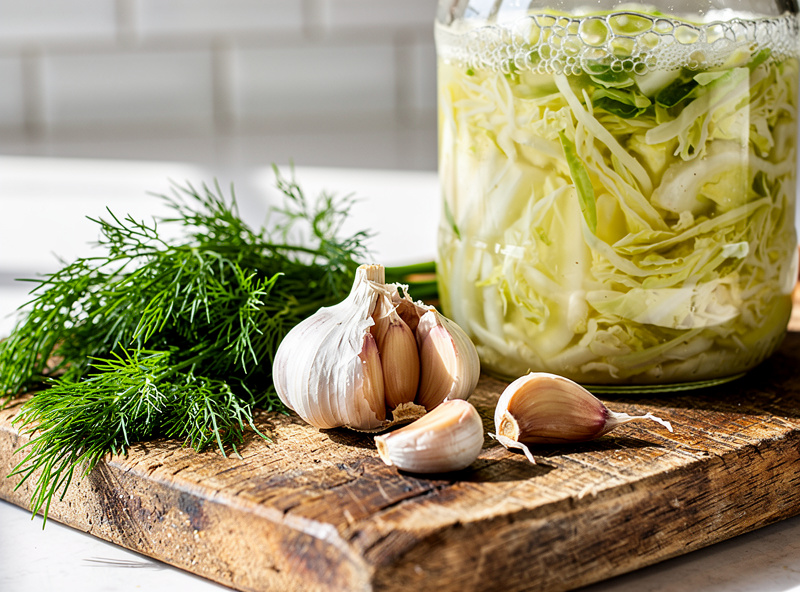
Fresh garlic smells aggressive going into the jar, but fermentation transforms it: the harsh raw edge mellows into a deep, savory roundness over the weeks. Two to four sliced cloves per kilo is plenty. Garlic and dill together make a “pickle-style” kraut that tastes like the love child of sauerkraut and a garlic dill pickle — one of my favorites for sandwiches. One caution worth knowing: fermented garlic sometimes turns blue or green. It looks alarming but it is a harmless reaction between garlic’s sulfur compounds and trace minerals, and the kraut is perfectly fine to eat.
What to add at the end instead of fermenting
Not everything belongs in the crock. Delicate fresh herbs — parsley, fresh dill fronds, cilantro — tend to go slimy or muddy over a long ferment, so I stir those in fresh at serving time rather than fermenting them. The same goes for anything I want bright and raw-tasting: a squeeze of citrus, fresh chili, toasted seeds for crunch. Think of it as two layers — robust, fermentable aromatics that go in at the start and develop with the cabbage, and fresh, fragile finishing touches that go on at the end. Firm root additions like grated carrot, beet, or ginger are an exception; they’re sturdy enough to ferment right alongside the cabbage and add color and sweetness.
A few combinations I keep coming back to
- Caraway + green cabbage: the timeless default. Make this first.
- Juniper + red cabbage: earthy, piney, gorgeous color — the holiday kraut.
- Garlic + dill: a pickle-forward kraut that disappears off sandwiches.
- Ginger + carrot + turmeric: a bright, golden, zingy kraut that leans away from the German tradition.
- Apple + onion: a softer, sweeter everyday kraut that wins over people who think they don’t like sauerkraut.
- Fennel seed + black pepper: a slightly sweeter, peppery green kraut that’s lovely with fish and pork.
A couple of additions deserve a special mention because they change the kraut’s whole personality. Grated beet turns a batch a startling magenta and adds an earthy sweetness — it’s the trick behind a lot of “ruby kraut” that isn’t actually red cabbage at all. Turmeric, a teaspoon or so per kilo, stains the cabbage a vivid gold and brings a gentle warmth that plays beautifully with the ginger-and-carrot combination above. And a single dried bay leaf or two tucked into the jar adds a quiet, savory background note that you won’t necessarily name but will miss if it’s gone. None of these change the method or the salt — they’re just more colors on the same palette. The point of flavored kraut is that the safe, simple base never moves; only the aromatics you fold in at the start do, and the ferment patiently does the work of making them taste like they always belonged together.
Whichever route you take, the underlying ferment is identical to plain kraut — same salt, same submersion, same patience. Flavoring is just a layer of intention you fold in at the start and then let the Lactobacillus weave together over the weeks. Start with caraway, branch out to juniper and garlic, and you’ll quickly build a personal shortlist of krauts you make on rotation.
What spices are best in sauerkraut?
Caraway is the classic and the best place to start, with its warm, slightly anise flavor. Juniper berries are excellent, especially with red cabbage and game, and garlic adds savory depth that mellows as it ferments. Dill seed, ginger, and apple-and-onion are also reliable. Add whole or crushed spices during the salting step.
How much spice do I add to sauerkraut?
Start modest, because a long ferment concentrates flavor. A good baseline per kilogram of cabbage is 1 to 2 teaspoons of seed spices like caraway or dill, 5 to 10 crushed juniper berries, or 2 to 4 sliced garlic cloves. You can always go bolder on the next batch.
When do I add flavorings to sauerkraut?
Fold robust, fermentable flavorings such as caraway, juniper, garlic, and grated root vegetables in during the salting and massaging step so they distribute evenly and ferment with the cabbage. Save delicate fresh herbs, citrus, and crunchy garnishes to stir in fresh at serving time, since they can go slimy over a long ferment.
Why did my fermented garlic turn blue or green?
It is a harmless reaction between the sulfur compounds in garlic and trace minerals in the cabbage or water. Blue or green fermented garlic looks surprising but is completely safe to eat, and the kraut around it is fine. It is purely cosmetic and does not affect flavor or safety.
Can I use fresh herbs in sauerkraut?
Sturdy aromatics and dried spices ferment cleanly, but delicate fresh herbs like parsley, cilantro, and fresh dill fronds tend to go slimy or muddy over weeks in the crock. The better approach is to ferment plain or with robust spices, then stir fresh herbs in at the end for brightness when you serve it.
Do flavorings change the salt amount for sauerkraut?
No. You still salt to 2 to 2.5% of the cabbage’s weight regardless of what you add. Spices and aromatics like caraway, juniper, and garlic are added on top of that base and do not affect the salt-to-cabbage math that keeps the ferment safe and balanced.

About Kenny Nyhus Fadil
A home fermenter documenting brines, bubbles, and the occasional moldy tragedy.
Keep Bubbling
Sauerkraut Juice: What It Is and Why I Never Pour It Down the Drain
Sauerkraut Salt Percentage: 2% vs 2.5% vs 3% Brine, Tested