How to Make Red Wine Vinegar at Home (From Bottle to Bottle)

Make red wine vinegar by combining 750ml of medium-priced red wine with 250ml of unpasteurized vinegar containing a live mother, covering with breathable cloth, and fermenting at room temperature for 4-8 weeks. The mother is the key — without it, wine just oxidizes into undrinkable but not-quite-vinegar liquid.
Red wine vinegar is one of three perpetual mothers in my system; the others (ACV and rice) and the full method are in my home vinegar making guide.
I started making red wine vinegar because I could never finish a bottle of Malbec before it turned — I was pouring half-bottles down the drain every week. Rather than waste more wine, I bought a bottle of Bragg’s raw vinegar, poured a week-old Cabernet into a widemouth jar, and waited. Six weeks later I had better vinegar than anything in my grocery aisle, and I have maintained a continuous mother ever since.
Red wine vinegar is the gateway home-vinegar project because it requires the simplest technique: combine wine, mother, and oxygen, then wait. Apple cider vinegar requires fruit prep and pectin management; balsamic requires aged grape must; malt vinegar requires beer brewing first. Red wine vinegar uses standard table wine and produces commercial-quality vinegar in 4-8 weeks. The 4-week patience requirement is the only real challenge.
How Wine Becomes Vinegar
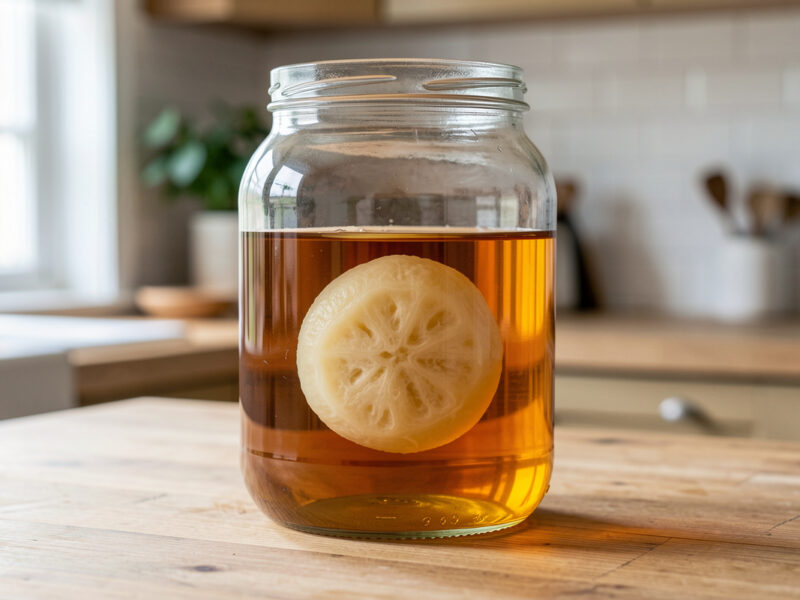
Acetic acid bacteria (primarily Acetobacter species) consume the alcohol in wine and produce acetic acid plus water. The bacteria need oxygen to function, so vinegar fermentation happens in containers covered with breathable cloth rather than airtight lids. The bacteria form a visible “mother” — a gelatinous film on the surface that contains the active culture. Without the mother starter, wine left out in air will turn to vinegar very slowly (or not at all) and risks contamination from competing bacteria.
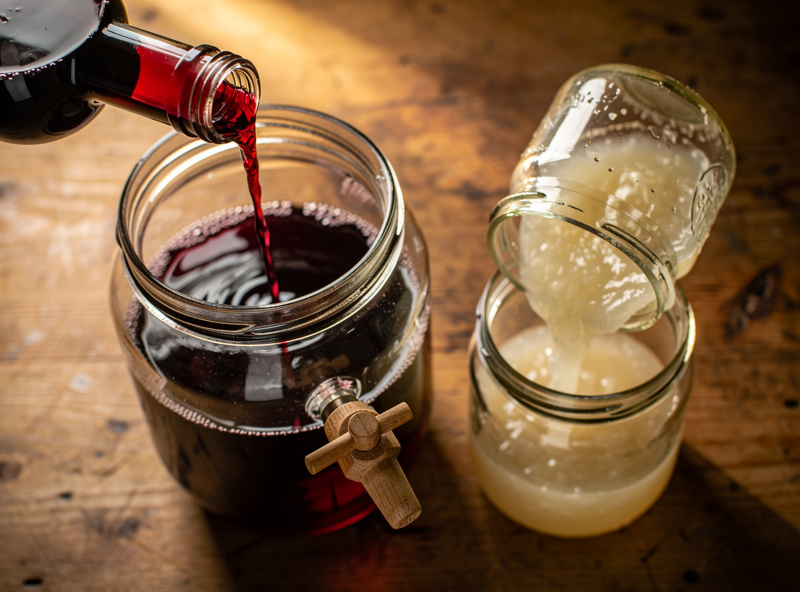
The chemistry simplified:
- Ethanol + oxygen → acetic acid + water: The basic conversion driven by Acetobacter bacteria.
- Time required: 4-8 weeks: Depends on temperature, surface area, mother strength, and starting alcohol content.
- Final acidity: 4-7% acetic acid: Commercial vinegars are typically 5%; home vinegars often hit 5-6.5%.
- Color and flavor of starting wine carry through: Red wine produces ruby red vinegar with grape character; white wine produces pale vinegar with different flavor profile.
- Optimal temperature: 70-80°F: Below 65°F fermentation slows dramatically; above 85°F the bacteria stress.
- Mother sustains itself: Once established, a healthy vinegar mother continues producing vinegar from added wine for years.
Acetobacter species are among the most-studied bacteria in food science. Acetobacter aceti and A. pasteurianus are well-documented as dominant species across vinegar fermentations, including the biofilm succession that forms the visible “mother” (peer-reviewed study on Acetobacter pasteurianus strain succession in traditional vinegar production, content-verified). In my own crocks the bacteria concentrate at the liquid-air interface where oxygen levels are highest — that’s where the mother forms and thickens first.
The “mother” is essential. Without it, wine usually oxidizes to undrinkable but not-quite-vinegar liquid. With even a small starter mother, the conversion proceeds reliably. Read more about acetic-acid fermentation in our how to make apple cider vinegar from scratch guide.
Materials and Wine Selection
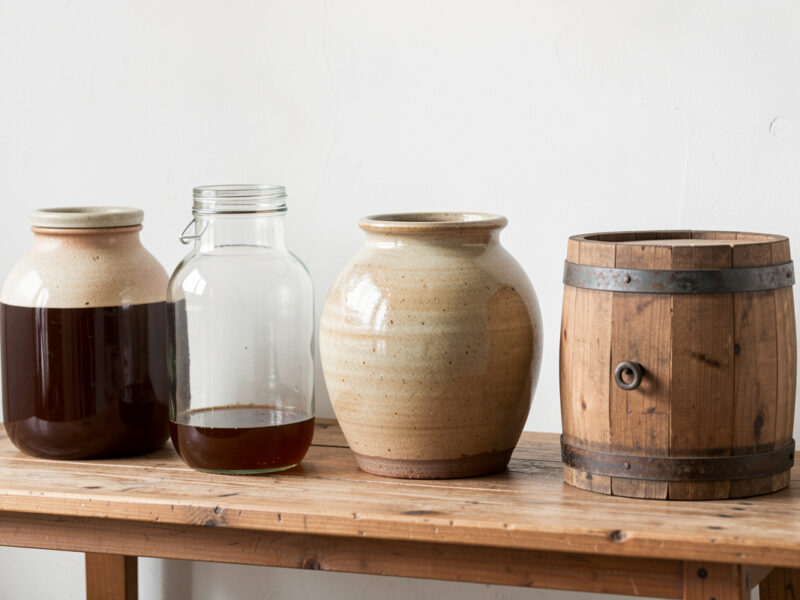
Materials: a 1-2 gallon glass crock with wide opening (a 1-gallon ceramic crock or large glass jar works), 750ml red wine (medium-priced; cheap wine produces flat vinegar; expensive wine is wasted on this process), 250ml unpasteurized red wine vinegar with mother (visible cloudy or jelly-like sediment) OR a purchased vinegar mother starter, breathable cloth (cheesecloth or thin kitchen towel), rubber band to secure cloth.
As an Amazon Associate I earn from qualifying purchases.
Wine selection notes:
- Medium-priced red wine ($8-15 per bottle): The sweet spot. Good flavor without wasting money. Trader Joe’s and Costco wines work well.
- Avoid sulfite-heavy wines: High-sulfite wines suppress the Acetobacter culture. Look for “low sulfite” or “natural wine” labels for best results.
- Cabernet Sauvignon, Merlot, Zinfandel: All work well. Tannins translate into vinegar character.
- Pinot Noir: Lighter; produces lighter-colored vinegar.
- Avoid: very expensive wine ($30+): Wasted on vinegar; the conversion masks delicate flavors.
- Avoid: dessert/fortified wines: Higher alcohol than Acetobacter prefers. Sweet wines produce sweeter vinegar.
- Avoid: pasteurized wines without natural microflora: Some mass-market wines are over-treated; produce slow inconsistent fermentation.
Most home vinegar makers settle on a single wine variety after experimentation. The wine you drink most often probably produces vinegar that pairs best with your cooking — match the source to the use.
Step-by-Step Procedure
Combine wine and mother-containing vinegar in a clean glass crock, cover with breathable cloth secured by rubber band, place in a warm location out of sunlight, wait 4-8 weeks, taste-test weekly after week 4, decant when vinegar reaches desired acidity. The mother grows during fermentation; save it for the next batch.
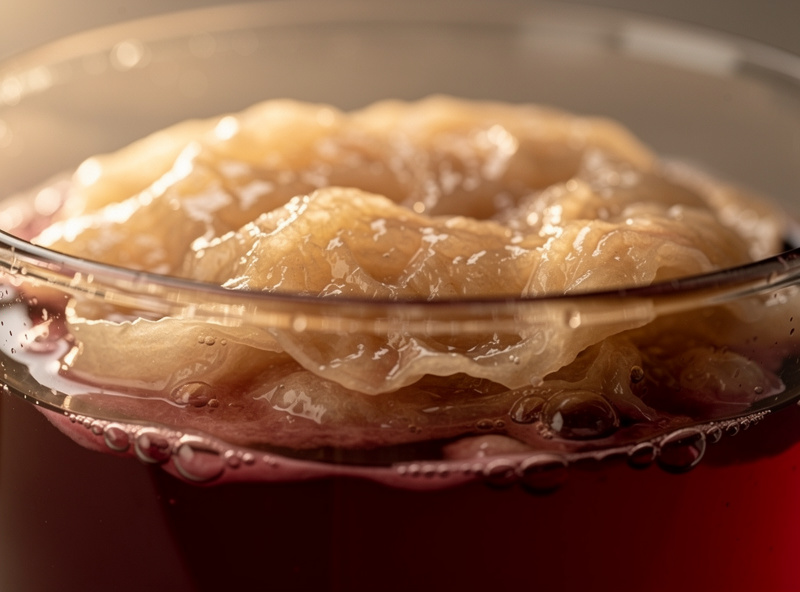
Full procedure:
- Sanitize the crock: Rinse with hot water; no soap residue. Some makers spray with white vinegar before use.
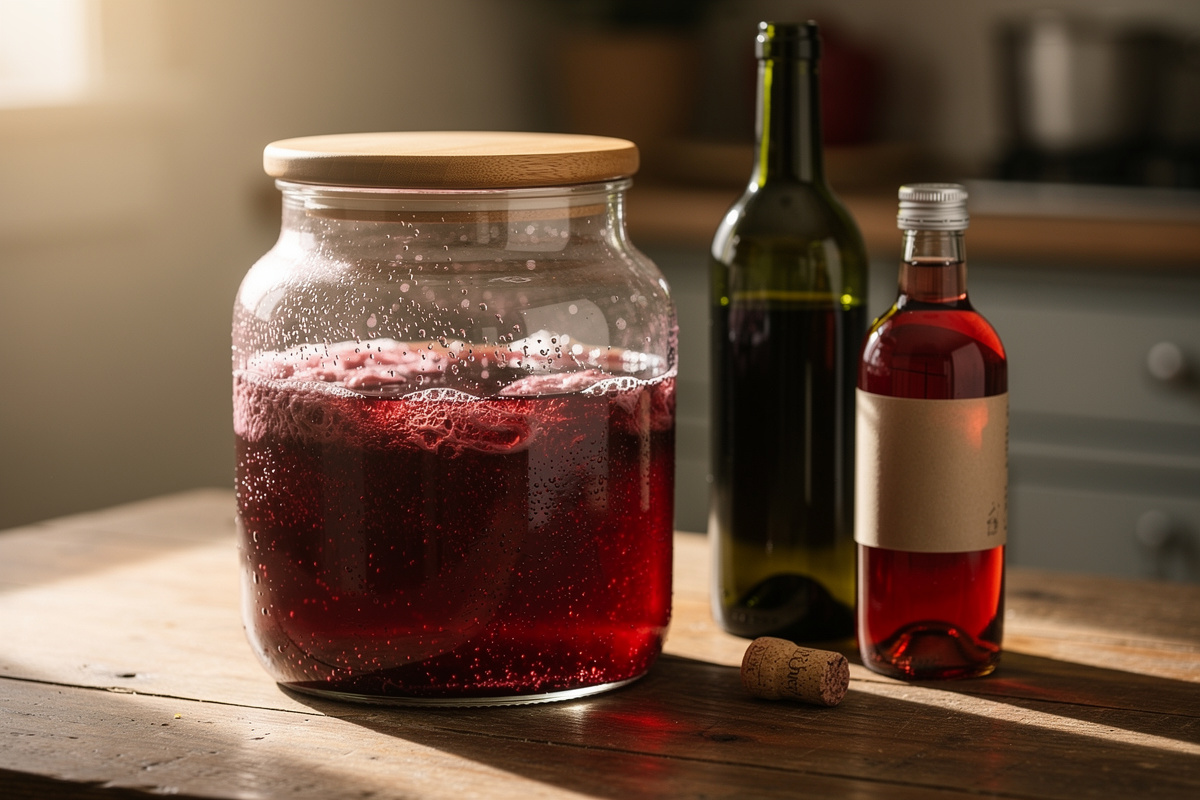
- Pour 750ml of red wine into the crock: One bottle. Slightly less is fine; significantly more requires longer fermentation.
- Add 250ml unpasteurized red wine vinegar: The mother culture. Try Bragg’s, organic store brands, or vinegar from a friend’s home setup.
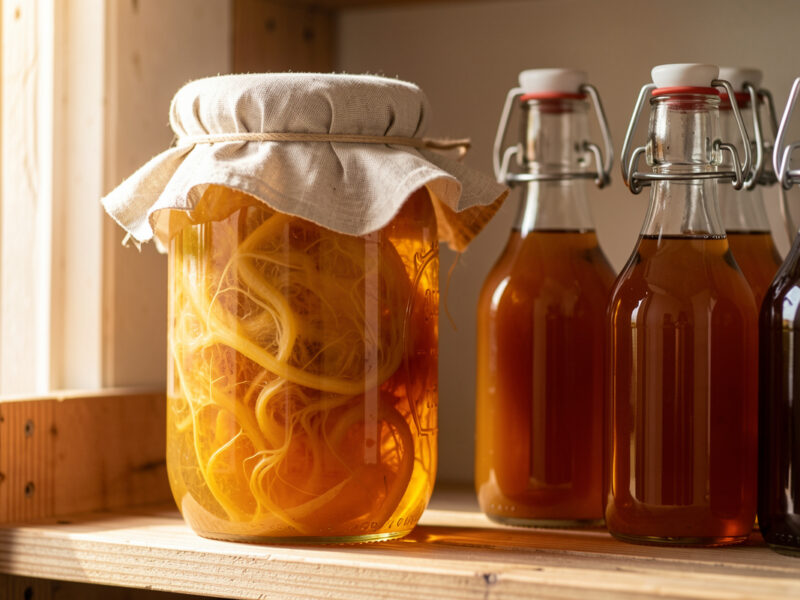
- Cover with breathable cloth: Cheesecloth or thin kitchen cotton. Secure with rubber band; prevents fruit flies but allows air exchange.
- Place in a warm dark location: Pantry, cabinet, or basement. Out of direct sunlight. 70-80°F ideal.
- Wait 4 weeks before checking: Activity is slow and quiet. Bubbling minimal; visible mother formation may take 2-3 weeks.
- Taste-test at week 4: Should taste vinegary with hints of wine character. Bitter or harsh = needs more time.
- Continue weekly tastings: Vinegar develops complexity through weeks 5-8. Most batches reach optimal flavor at week 6-7.
- Decant when ready: Pour off the vinegar through a fine mesh strainer into clean bottles. Save the mother for the next batch.
- Refrigerate or store at room temperature: Bottled vinegar lasts indefinitely; refrigeration slows further changes but is not required.
The “fruit fly cover” function of the cheesecloth is essential during summer — uncovered vinegar attracts fruit flies that lay eggs and ruin the batch. Always cover, even in winter.
Maintaining and Reusing the Mother
A healthy vinegar mother grows continuously and can be reused indefinitely. After the first batch, save 250-500ml of the finished vinegar (containing fragments of mother) to start the next batch. Adding wine periodically to the same crock without removing all the vinegar produces continuous-brew vinegar that runs for years.
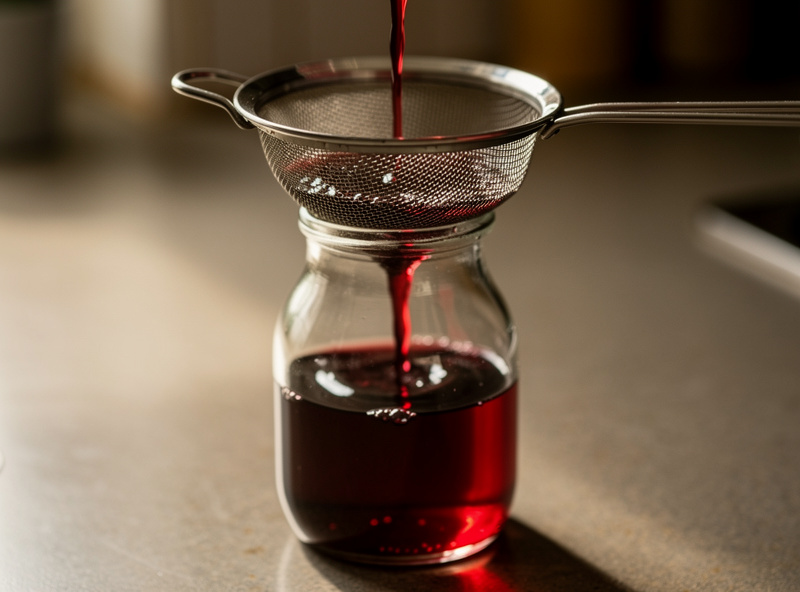
Mother management:
- Save the mother between batches: The thick gelatinous film floats on top. Carefully transfer to a clean jar with some vinegar.
- Continuous brewing: Decant 75% of finished vinegar; add fresh wine to refill. The mother continues fermenting indefinitely.
- Mother grows over time: Multiple layers form; the bottom-layer mother becomes a “vinegar hotel” of sorts.
- Drying out the mother: Some makers air-dry chunks of mother for storage; rehydrate with vinegar for restart.
- Sharing mothers: Vinegar communities often trade mothers. A small chunk in 250ml vinegar starts a new culture.
- Mother death signs: Sinks instead of floating; develops black or fuzzy mold; produces alcoholic instead of vinegar smell. Discard and start fresh.
- Multiple-vinegar mothers: White wine and red wine cultures can be kept separate or merged depending on preference.
Most home vinegar makers maintain a single mother across years of brewing. The mother becomes a kitchen curiosity that visitors notice and ask about — just like a sourdough starter.
Common Vinegar-Making Mistakes
Eight mistakes show up consistently: airtight lid (Acetobacter needs oxygen), pasteurized vinegar starter (no live culture), too-cold location (stalled fermentation), wine with high sulfites (suppressed culture), impatience (decanting before complete conversion), skipping the cheesecloth cover (fruit flies), too much mother relative to fresh wine (starves the culture), and direct sunlight exposure (damages the culture).
Mistakes and corrections:
- Sealed lid: Acetobacter is aerobic. Always cover with breathable cloth.
- Pasteurized vinegar starter: Read labels carefully. Bragg’s and organic raw vinegars are reliable starters; mass-market clear vinegars are not.
- Cold location (under 65°F): Fermentation stalls. Move to warmer pantry or cabinet near appliances.
- High-sulfite wine: Sulfites suppress Acetobacter. Choose low-sulfite or “natural” wines.
- Decanting too early: Wine that hasn’t fully converted tastes harsh and remains slightly alcoholic. Patience is required.
- Skipping the cheesecloth cover: Fruit flies ruin batches. Always cover.
- Too much mother to too little wine: Excess mother starves; need new wine input regularly.
- Direct sunlight exposure: UV damages cultures. Keep in dark cabinet or covered location.
My first attempted batch failed completely because I used a bottle of standard grocery-store red wine vinegar as the starter — the kind that is crystal clear and pasteurized into shelf-stable uniformity. It contained zero live Acetobacter culture. The wine sat in the crock for three weeks doing absolutely nothing beyond slowly evaporating. A $6 bottle of Bragg’s raw unfiltered apple cider vinegar restarted everything within 48 hours. Always check for the words “with the mother” or “raw unfiltered” on the label.
The reliable practice is to start a new batch every 4-6 weeks while a previous batch is still active — staggered batches mean continuous vinegar supply rather than feast-and-famine cycles. Read about complementary acid fermentation in our apple cider vinegar guide.
Conclusion
Red wine vinegar is the lowest-effort, highest-reward home fermentation project. The input is a single bottle of wine you might otherwise let oxidize; the output is 750ml of vinegar that rivals $12-18 specialty bottles. Once you have maintained a healthy mother through three batches, the process requires less than 10 minutes of attention per month — pour wine in, pour vinegar out. Most home vinegar makers eventually graduate to managing separate mothers for red, white, and fruit wine vinegars.
Frequently Asked Questions
How long does red wine vinegar take to make?
4-8 weeks at 70-80°F. Most batches reach drinkable vinegar at week 4 and optimal flavor at week 6-7. Cooler temperatures (65°F) extend to 8-12 weeks; warmer temperatures (78-82°F) shorten to 3-4 weeks.
What kind of wine should I use for red wine vinegar?
Medium-priced ($8-15) red wine works best. Cabernet, Merlot, and Zinfandel produce excellent vinegar. Avoid expensive wine (wasted on the process) and high-sulfite wines (suppress fermentation). Trader Joe’s and Costco wines are popular reliable choices.
Where do I get a vinegar mother to start?
Three sources: unpasteurized vinegar from grocery (Bragg’s, organic store brands), purchased vinegar mother from specialty fermentation suppliers, or sharing from another vinegar maker. The starter only needs to contain live Acetobacter culture; visible mother helps but is not strictly required.
Can I make vinegar from cheap wine?
Boxed wines and very cheap bottles ($5-7 range) produce flat one-dimensional vinegar. The vinegar reflects the source wine quality — no amount of fermentation rescues bad starting material. Spend $8-15 per bottle for noticeably better results.
Why is my vinegar not getting sour?
Three causes: pasteurized vinegar starter (no live culture), sealed container (no oxygen for Acetobacter), or temperature too cold (under 65°F). Verify all three; the missing factor is almost always one of these. Restart with raw unpasteurized vinegar in an open-cloth-covered crock at warm room temperature.
Is homemade red wine vinegar safe?
Yes — properly fermented vinegar reaches pH 2.5-3.5, well below the level where pathogenic bacteria can survive. The acidic environment is naturally preservative. Failed fermentation produces non-vinegar but non-dangerous results; just dispose and try again. Vinegar safety is not a meaningful concern.
Related Articles
- How to Make Apple Cider Vinegar From Scratch
- Kahm Yeast Guide
- How to Lacto-Ferment Garlic
- Flavor Kombucha in Second Fermentation
- Why Did My Sauerkraut Turn Mushy?

About Kenny Nyhus Fadil
A home fermenter documenting brines, bubbles, and the occasional moldy tragedy.