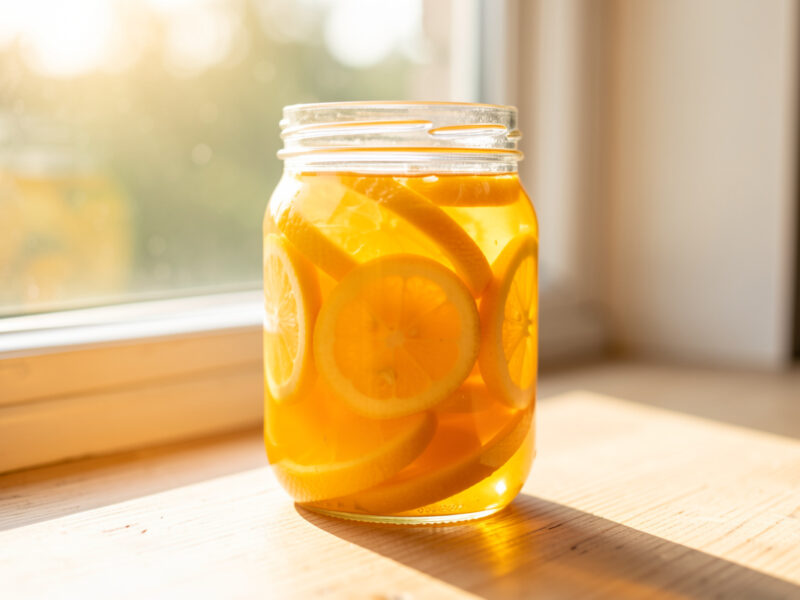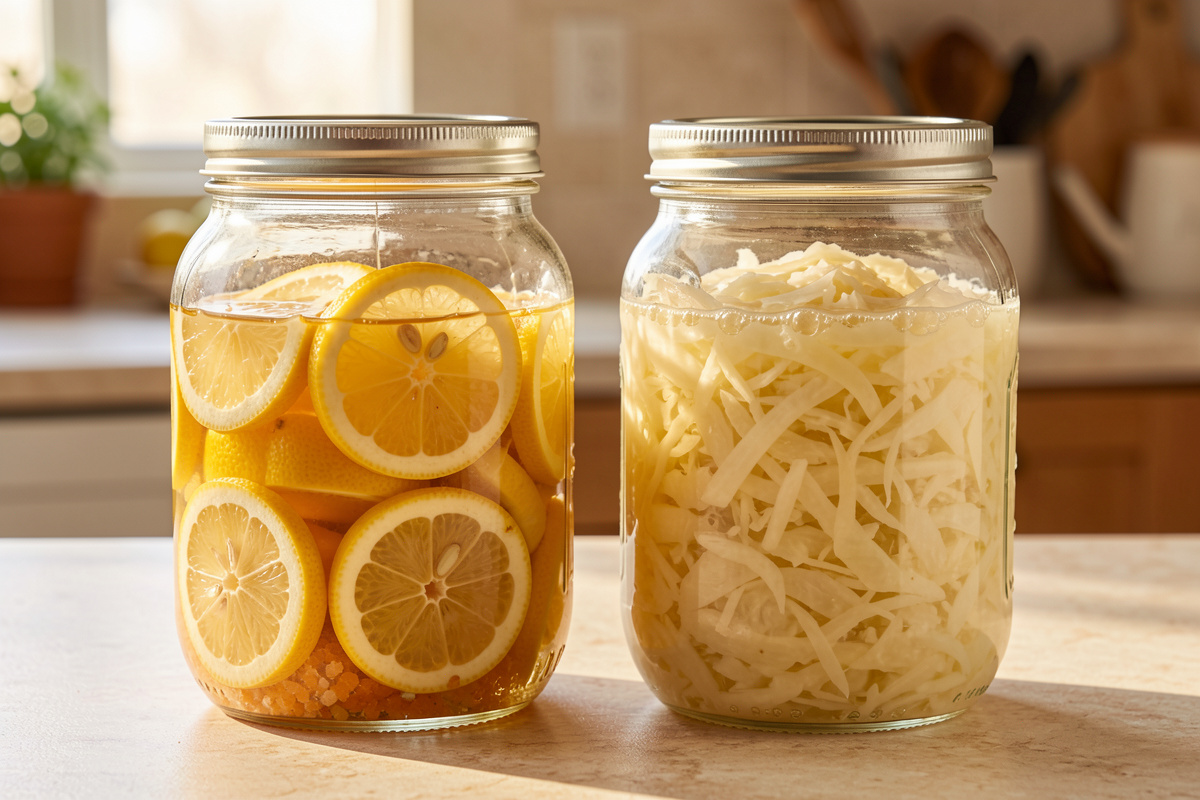
Salt-Cured vs Lacto-Fermented: Two Preservation Paths

Salt-curing and lacto-fermentation are two different preservation paths that people constantly confuse. Salt-curing uses a high salt level — 15 to 25 percent — to lower water activity until almost nothing microbial can grow, preserving through dehydration. Lacto-fermentation uses a low salt level — 2 to 3 percent — that deliberately lets Lactobacillus bacteria grow and produce lactic acid, dropping the pH below 4.6 and preserving through acidity. High salt versus friendly bacteria. Two dials, two safe zones.
I run both on the same shelf, all the time — a kraut crock and a SCOBY hotel a foot away from a jar of preserved lemons — and the fact that they look similar on the counter is exactly why the mix-up happens. But they’re safe for opposite reasons, which means the rules you follow for one can actively endanger you if you apply them to the other. Get the two straight and salt curing stops feeling like a risky version of fermentation and starts feeling like its own clean, forgiving method. This piece is the conceptual anchor of my salt-preserved produce guide.
What Actually Preserves the Food in Each Method?
In lacto-fermentation, acid preserves the food: lactic acid bacteria eat the vegetable’s sugars and excrete lactic acid, pulling the pH down to around 3.2–3.8, well under the 4.6 safety floor where Clostridium botulinum can’t grow. In salt-curing, water activity preserves the food: so much salt is present that free water is bound up and no organism — not even the lactobacilli — can establish. Acid does the work in one; salt does it in the other.
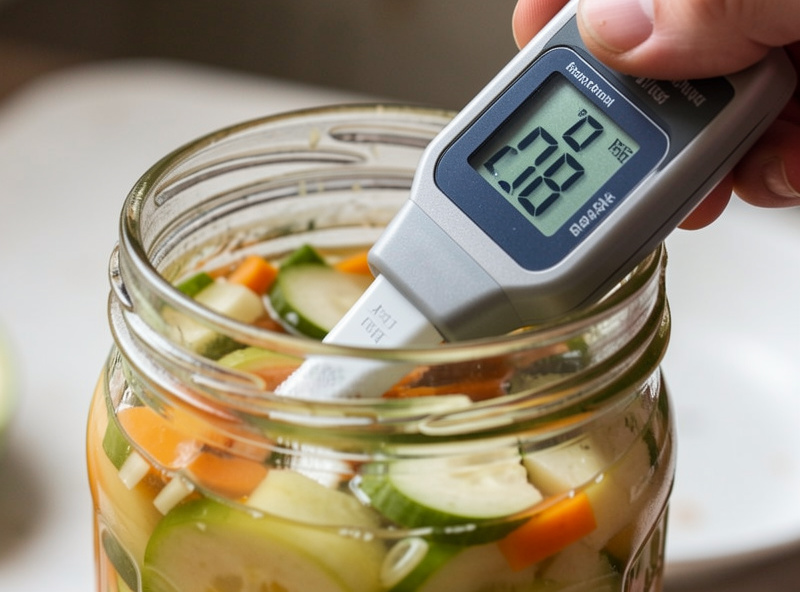
This is the whole distinction, and it’s why my measurement bench matters. For a ferment I care about pH, so a jar of finished kraut goes on the pH meter and I want to see it under 4.0. For a salt cure I care about salt fraction and submersion, and pH is almost beside the point — a preserved lemon is safe at pH 3 or pH 5 because salt, not acid, is holding the line. The FDA Food Code recognizes both routes: a food is controlled for safety either by dropping pH to 4.6 or below, or by dropping water activity to 0.85 or below. Fermentation takes the first road; salt curing takes the second.
How Much Salt Does Each Method Use?
Lacto-fermentation uses 2–3% salt by weight — high enough to favor Lactobacillus over spoilage bacteria but low enough that the ferment proceeds vigorously. Salt-curing uses 15–25% — high enough to shut fermentation down entirely. That roughly tenfold difference in salt is the practical fork in the road, and it’s why you can’t casually swap one recipe’s salt level into the other.
Here’s the trap: if you take a lacto recipe and crank the salt to preserved-lemon levels, you’ll stall the fermentation and get a salt cure instead — which is fine, just not what you meant. Go the other way and under-salt a preserved lemon down to kraut levels, and you’ve removed its only safeguard, because there’s no fermentation stepping in to acidify and cover for the missing salt. That’s the genuinely dangerous mistake, and I nearly made it myself early on — my first jar of lemons I cut the salt to maybe 8% because I was convinced a fifth of their weight in salt would be inedible. Two weeks later the rinds had gone slimy and smelled sour-off rather than bright, and the whole jar went in the bin. On my scale now, kraut cabbage gets salt at 2% of its weight; preserved lemons get close to 20%. Same tool, same technique of weighing, completely different targets.
| Factor | Salt-Curing | Lacto-Fermentation |
| Salt level | 15–25% by weight | 2–3% by weight |
| Preserved by | Low water activity (salt) | Acidity (lactic acid) |
| Key organism | None — activity suppressed | Lactobacillus |
| Target metric | Salt fraction + submersion | pH below 4.6 (aim 3.2–3.8) |
| Gas / airlock | Minimal CO2, no airlock needed | Active CO2, airlock helps |
| Flavor | Intensely salty, mildly sour | Tangy, sour-forward |
| Examples | Preserved lemons, salt-cured herbs | Sauerkraut, kimchi, lacto pickles |
Does One Bubble and the Other Doesn’t?
Yes — that’s often the fastest way to tell them apart. A lacto-ferment is biologically active: the bacteria produce carbon dioxide, so a jar of sauerkraut or kimchi bubbles, hisses when you open it, and builds pressure that needs venting, which is why I use airlocks or burp the lids. A salt cure is largely inert — the salt has suppressed the microbes producing gas — so a preserved-lemon jar just sits there quietly with little to no fizz.
You can hear and feel this difference. Crack a jar of my kraut mid-ferment and it sighs and foams at the surface; the brine is alive. Open a preserved-lemon jar and it’s silent, the liquid still, just the sharp smell of salt and citrus. That’s why airlocks matter enormously for one method and not at all for the other — a sealed jar of lacto pickles with no vent can build enough CO2 to pop a lid, while a salt cure will happily sit under a plain tight lid for months. If you want the vessel-selection logic in depth, the produce guide covers which container suits which job.
Is There a Grey Zone Between the Two?
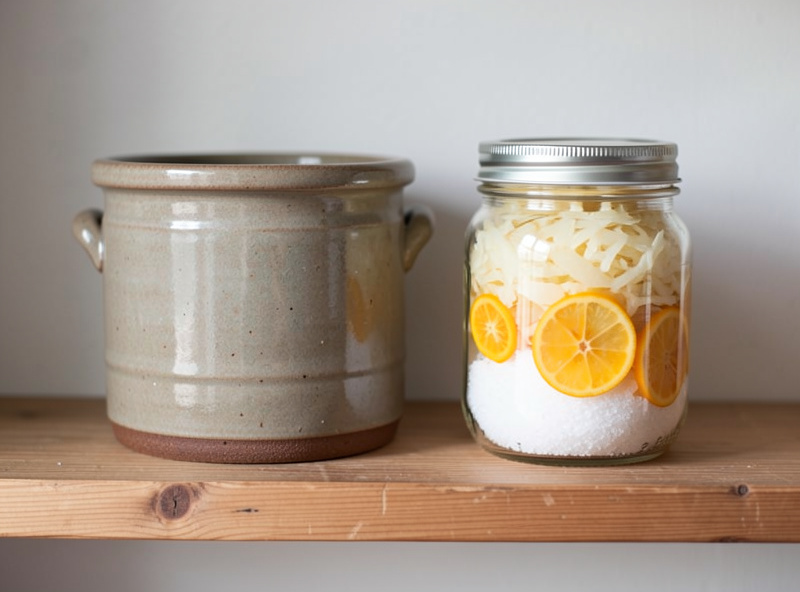
Yes — the boundary isn’t a wall. A lightly salted preserve left long enough will pick up some lacto activity at its surface, and certain traditional pickles deliberately straddle the line, using moderate salt (5–8%) that both slows spoilage and permits a slow, restrained fermentation. Lacto hot-sauce mashes and some brined chilies live in exactly this middle ground.
I run a few of these myself — a chili mash at around 5% salt that ferments slowly and sourly is neither a pure salt cure nor a fast 2% kraut. The point isn’t to police the categories; it’s to understand which mechanism is actually keeping your food safe so you don’t accidentally remove it. A classic 20% preserved lemon is unambiguously a salt cure. A 2% sauerkraut is unambiguously a ferment. In between, know which dial you’re leaning on. When I want acid safety I verify pH; when I want salt safety I verify concentration and keep everything submerged.
Which Method Should You Choose?
Choose lacto-fermentation when you want tang, a live culture, and a lower-salt result — sauerkraut, kimchi, crunchy dill pickles. Choose salt-curing when you want long shelf stability, an intense concentrated flavor, and a hands-off preserve you don’t have to monitor — preserved lemons, salt-packed herbs, cured garlic. The produce itself often decides: watery cabbage ferments beautifully; oily citrus rind cures beautifully.
In my kitchen the two are complementary, not competing. Cabbage and chilies from the garden go into the kraut crock and the fermenting jars; lemons, limes, garlic, and hardy herbs go into salt cures. The fermentation route gives me the sour, living foods; the salt route gives me the shelf-stable flavor bombs. If you’re ready to actually make something, the preserved lemons walkthrough is the easiest salt cure to start with — and it’s genuinely more forgiving than a first batch of kraut, because you don’t have to manage a fermentation at all, just weigh salt and keep things underwater.
One last safety note that ties both together: the reason I trust either method is that I know exactly what’s protecting the food. Guidance from the National Center for Home Food Preservation underpins both the acid math and the salt math I use. Never treat a salt cure like a ferment or a ferment like a salt cure — respect the dial that’s actually doing the work.
How Do the Two Methods Change Texture and Flavor?
Salt-curing and lacto-fermentation leave produce feeling completely different in the mouth. Salt-curing draws water out and breaks down cell walls slowly, so a preserved lemon rind ends up soft, silky, and almost translucent, with an intense concentrated flavor because the water is gone and everything left behind is amplified. Lacto-fermentation keeps more of the food’s water and builds acid, so a properly fermented pickle or kraut stays crisp and turns bright and sour rather than concentrated.
You can taste the mechanism directly. A salt-cured food is a flavor concentrate — a little goes a long way, and it reads salty first, then complex. A lacto-fermented food is refreshing and tangy, closer in water content to the original vegetable. That’s why I mince preserved lemon peel by the teaspoon into a dish but eat sauerkraut by the forkful. It’s also why crunch matters so much in fermentation and matters not at all in a salt cure, where softness is the goal.
Both methods keep the food raw and unheated, so heat-sensitive compounds survive in each — but I’ll stay out of health claims here, because in my kitchen these are preservation and flavor techniques, not medicine. What I care about is the practical result: one gives me shelf-stable intensity, the other gives me living, sour crunch. Knowing which texture and flavor you’re after is often the fastest way to decide which method to reach for before you even think about the salt math.
Frequently Asked Questions
Are preserved lemons fermented?
Not in the lactic-acid sense. A classic preserved lemon uses 15 to 20 percent salt, which suppresses fermentation and preserves through low water activity instead. It is a salt cure. A very lightly salted lemon left long enough can pick up some surface lacto activity, but the standard recipe is not a ferment.
Can I ferment with high salt like a cure?
No. At 15 to 25 percent salt the Lactobacillus bacteria cannot grow, so no fermentation happens and no acid is produced. If you want a lacto-ferment you need low salt, around 2 to 3 percent, which favors the bacteria while still discouraging spoilage organisms.
Why does my sauerkraut bubble but my preserved lemons do not?
Sauerkraut is a live fermentation, so the bacteria produce carbon dioxide that bubbles and builds pressure. Preserved lemons are a salt cure with microbial activity suppressed, so they produce little to no gas and sit quietly. That difference is why ferments benefit from airlocks and salt cures do not.
Is one method safer than the other?
Both are safe when done correctly, but they are safe for different reasons. Fermentation relies on dropping pH below 4.6, so acidity is the safeguard. Salt curing relies on high salt lowering water activity, so salt concentration is the safeguard. The danger is applying one method’s rules to the other.
Which should a beginner start with?
Salt curing, specifically preserved lemons, is arguably more forgiving for a first-timer because there is no live fermentation to manage. You weigh salt accurately, keep everything submerged, and wait. Sauerkraut is also beginner-friendly but requires managing an active ferment and its gas production.
Further Reading
- Salt-Preserved Produce: The Complete Guide
- How to Make Preserved Lemons and How to Use Them
- Salt-Preserved Garlic and Herbs for the Pantry
- Are Preserved Lemons Supposed to Get Soft and Cloudy?

About Kenny Nyhus Fadil
A home fermenter documenting brines, bubbles, and the occasional moldy tragedy.
Keep Bubbling
Bread and Butter Pickles: The Sweet-Tangy Recipe Guide
Preserved Limes, Oranges, and Other Citrus Variations