Salt-Preserved Garlic and Herbs for the Pantry

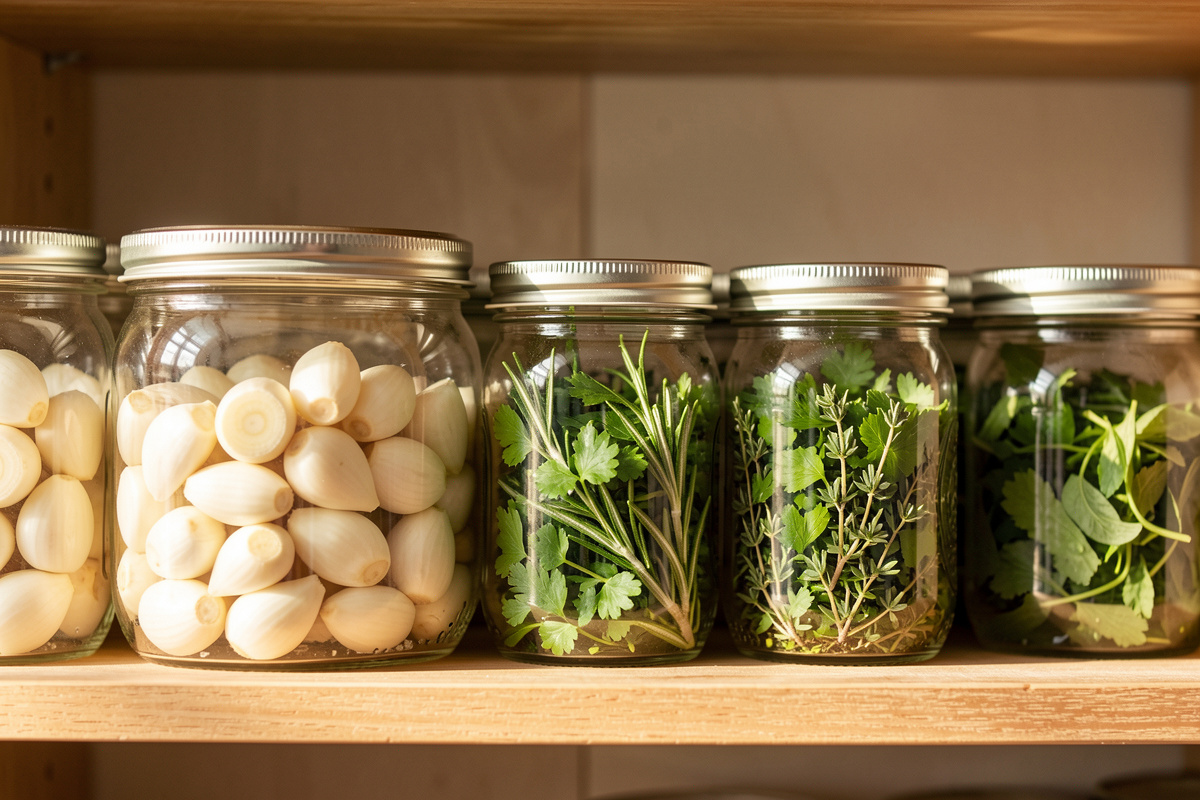
Salt-preserving garlic and herbs turns two of the most perishable things in the kitchen into shelf-stable pantry staples that last six months or more. Garlic cloves go into a saturated salt brine or a 20% salt pack and stay firm, sweet, and sprout-proof; soft herbs like parsley, cilantro, and dill get layered with salt at about 25% of their weight, which draws out their water and locks the green flavor into a spoonable seasoning base. Same principle as preserved lemons — salt low enough water activity that nothing spoils.
These are the two salt cures I lean on hardest through a Swedish winter, when the garden’s dead and fresh herbs cost a fortune for a sad little plastic clamshell. A jar of salt-cured garlic means I always have usable aromatics; a jar of salt-packed parsley means a hit of summer green in February. Both live on the same shelf as my citrus cures and follow the same rules laid out in the salt-preserved produce guide. There’s one genuine safety nuance with garlic that I’ll hit head-on, because it’s where people get hurt.
Is Salt-Preserved Garlic Safe From Botulism?
Yes — garlic preserved in a saturated salt brine or heavy salt pack is safe from botulism, because the high salt lowers water activity below the level Clostridium botulinum needs to grow. This is completely different from garlic stored in oil, which is a genuine botulism risk: oil creates an anaerobic, low-acid, moist environment with nothing to stop the bacteria. Salt is the safeguard; oil is the hazard. Never confuse the two.
I want to be blunt here because this is the one place casual garlic preservation actually kills people. Raw garlic sitting in oil at room temperature is a textbook botulism setup — low acid, no oxygen, moisture present — and it’s caused documented poisonings. A salt cure removes the moisture the bacteria depend on. A saturated brine runs around 25% salt, which puts the water-phase salt well above the roughly 10% threshold that inhibits C. botulinum, and a 20% dry pack does the same. The FDA Food Code treats foods at or below 0.85 water activity as safe from this exact hazard, and a proper garlic brine gets there. So: garlic in salt, good; garlic in oil at room temp, dangerous. If you ever want garlic in oil, it has to be refrigerated and used within a few days, and that’s a different conversation than preservation.
How Do You Salt-Preserve Whole Garlic Cloves?
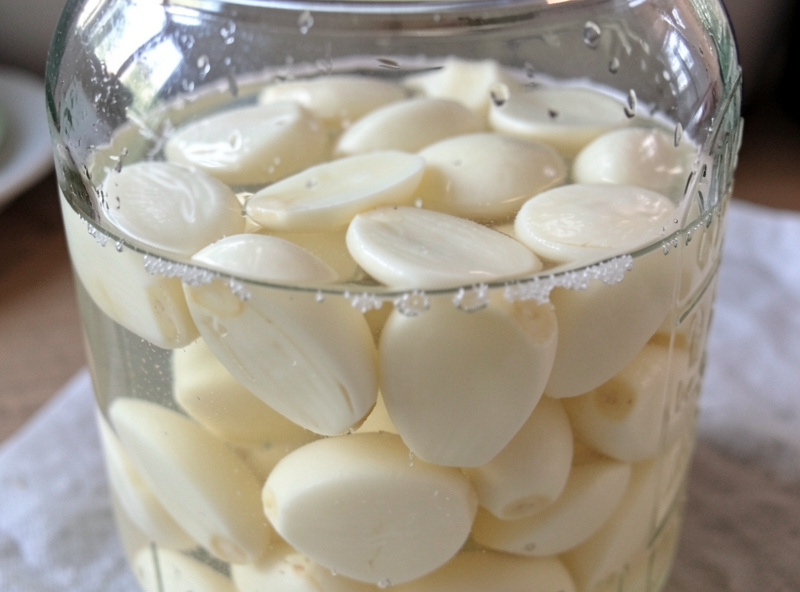
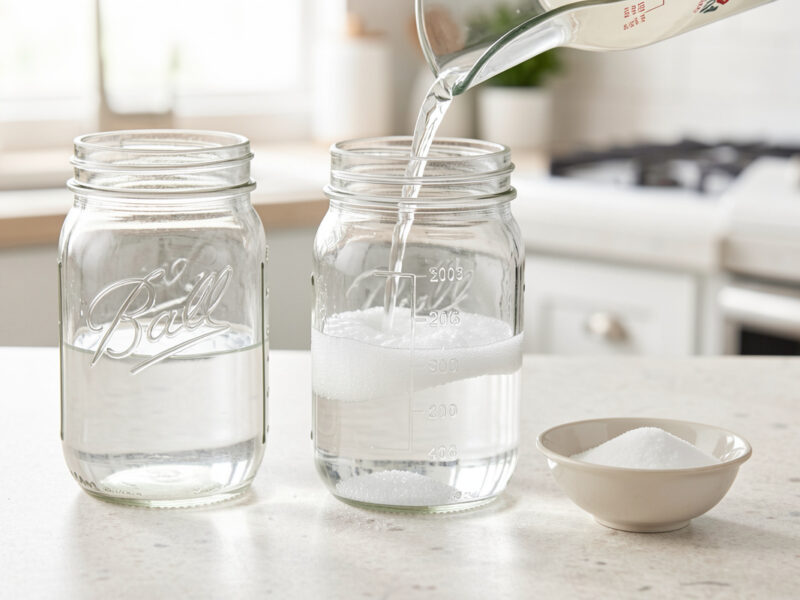
To salt-preserve whole garlic cloves, peel them, pack them into a clean jar, and either cover completely with a saturated salt brine (dissolve salt into water until no more dissolves, roughly 360 grams per liter) or bury them in a 20% dry salt pack that will pull out their moisture and self-brine. Keep the cloves fully submerged, seal, and store cool. They stay firm and usable for six months or longer.
I prefer the brine method for garlic I want to keep whole and usable — the cloves stay plump and you can fish out exactly as many as you need. The dry-pack method concentrates the flavor more and is better if you’re going to mince the garlic into things anyway. Either way, on my scale I make the brine by weight: I’ll dissolve salt into warm water, let it cool, and pour it over peeled cloves until they’re covered with a good centimeter to spare. The garlic sweetens and mellows over the first couple of weeks, losing its raw bite. A blue-green tinge sometimes develops — that’s a harmless reaction between garlic sulfur compounds and trace metals or acids, not spoilage, though I minimize it by using non-iodized salt and a glass jar. Rinse the cloves before using and cut back on salt elsewhere in the dish.
How Do You Make Salt-Cured Herbs?
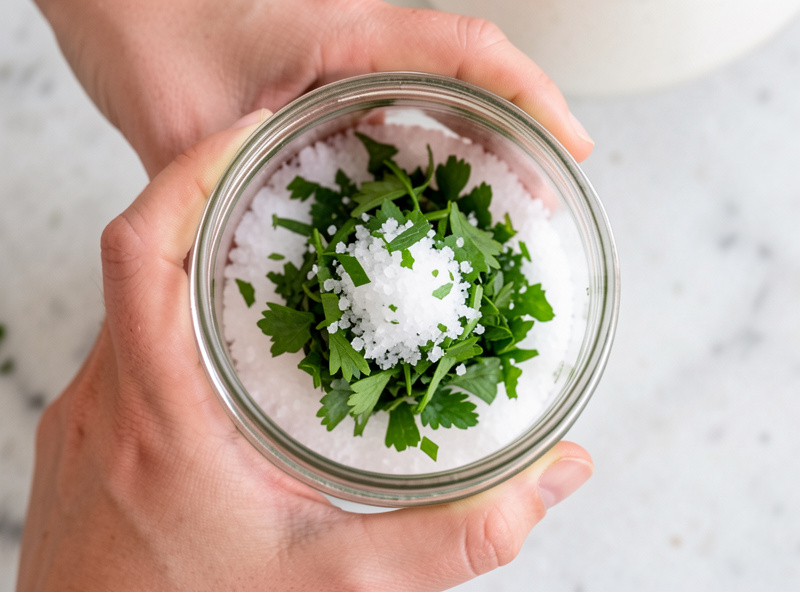
Make salt-cured herbs by layering fresh, dry herbs with coarse salt at about 25% of the herb’s weight — a layer of salt, a layer of chopped or whole herbs, repeat, pressing down as you go — until the jar is packed. The salt draws moisture from the leaves within a day, forming a briny paste that preserves the herb. Store it cool and spoon it straight into cooking, accounting for the salt it carries.
This is the most underrated preservation trick I know, and it takes about five minutes. Parsley, cilantro, dill, and chervil — the soft, tender herbs that wilt in the fridge in days — become a concentrated green seasoning that keeps for months. Make sure the herbs are bone dry before you start, because surface water invites trouble; I spin them and let them air-dry fully. My first parsley jar taught me that — I packed it barely towel-dried, and within a week a patch of fuzzy mold had bloomed at the top where the damp leaves sat, so the whole jar went in the bin; now I never pack an herb that isn’t completely dry. Chop them or leave sprigs whole, then layer with salt at a full quarter of their weight, which is higher than citrus because herbs are so wet and delicate. Woody herbs like rosemary, thyme, and sage keep almost indefinitely this way — I strip rosemary needles, pack them in salt, and pull a pinch whenever a braise needs it. The salt and the herb effectively become a single ingredient, so I always reduce the recipe’s added salt to compensate.
Which Herbs Work Best for Salt Curing?
The best herbs for salt curing are the sturdy, aromatic ones — rosemary, thyme, sage, oregano, and bay — which hold their oils and keep almost indefinitely, plus the tender soft herbs — parsley, cilantro, dill, chervil, and tarragon — which preserve their fresh green flavor far better in salt than dried. Basil is the tricky one; it browns easily, so I salt-cure it fast and use it quickly or turn it into a salted paste.
Across the herbs I’ve run, the woody ones are the most forgiving and the soft ones give the biggest payoff, because dried parsley is basically flavorless while salt-cured parsley still tastes like parsley. I keep separate jars rather than mixing, so I can reach for exactly the herb a dish wants, though a mixed “herb salt” of rosemary, thyme, and sage is a fantastic all-purpose seasoning for roasts. Tarragon salt-cured is a revelation with chicken and eggs. The same submersion-and-salt logic from the salt-cure method applies: keep the herbs coated and pressed into the salt-brine, and don’t leave dry leaves exposed to air at the top of the jar where they can mold.
How Do You Cook With Salt-Preserved Garlic and Herbs?
Cook with them by treating the salt they carry as part of your seasoning: rinse or account for it, add the garlic or herb as you normally would, then reduce or skip the salt you’d otherwise add. A spoonful of salt-cured herbs finishes a soup, dressing, or pan sauce; salt-brined garlic cloves go straight into braises, roasts, and sauté bases. Both bring a rounder, mellower flavor than their raw versions.
My habit is to taste before salting anything I’ve added these to, because it’s easy to overshoot. Salt-cured garlic has lost its harsh raw edge, so it’s gentler roasted whole or crushed into a vinaigrette. Salt-cured parsley or dill stirred into a yogurt sauce, spooned over roast potatoes, or melted into butter for fish carries a brightness that dried herbs can’t touch. A pinch of rosemary salt on a lamb roast seasons and perfumes in one move. Because these are preservation-first ingredients, the flavor is concentrated — start small and build. For how long each keeps and the storage details, the rules in how long do preserved lemons keep and how to store them carry straight over to garlic and herbs.
If you’re starting a pantry of these, a few small jars and a scale are all you need. As an Amazon Associate I earn from qualifying purchases. Compare small airtight glass jars to get set up. And for the safety backbone behind all of this, I keep coming back to the National Center for Home Food Preservation, which is the reference I trust on salting and the garlic-in-oil hazard specifically.
Frequently Asked Questions
Is salt-preserved garlic safe when garlic in oil is not?
Yes. Garlic in a saturated salt brine or heavy salt pack is safe because the high salt lowers water activity below what Clostridium botulinum needs. Garlic in oil at room temperature is dangerous because oil creates a moist, low-acid, oxygen-free environment where the bacteria can grow. Salt is the safeguard; oil at room temperature is the hazard.
Why did my preserved garlic turn blue or green?
A blue-green tinge is a harmless reaction between garlic’s sulfur compounds and trace acids or metals. It is a color change, not spoilage, and the garlic is still safe to eat. You can minimize it by using non-iodized salt and a glass jar rather than metal, but it does not affect safety or flavor.
How much salt do salt-cured herbs need?
Use salt at about 25 percent of the herb’s weight, layered through the jar. Herbs are very wet and delicate, so they need a higher salt fraction than citrus to fully draw out their moisture and stay safe. Make sure the herbs are completely dry before salting to avoid trapped surface water.
Do I still need to add salt when cooking with these?
Usually much less, or none. Salt-preserved garlic and herbs carry a lot of salt, which becomes part of your seasoning. Rinse the garlic if it is very salty, add your ingredient, then taste before adding any more salt to the dish. It is easy to over-salt if you forget they are already seasoned.
Which herbs preserve best in salt?
Woody herbs like rosemary, thyme, sage, and oregano keep almost indefinitely in salt. Soft herbs like parsley, cilantro, dill, and tarragon keep their fresh green flavor far better in salt than dried. Basil is trickiest because it browns quickly, so cure it fast and use it soon or make it into a salted paste.
Related Articles
- Salt-Preserved Produce: The Complete Guide
- How to Make Preserved Lemons and How to Use Them
- Preserved Limes, Oranges, and Other Citrus Variations
- How Long Do Preserved Lemons Keep and How to Store Them

About Kenny Nyhus Fadil
A home fermenter documenting brines, bubbles, and the occasional moldy tragedy.
Keep Bubbling
How Much Water and Salt for a Quart Jar: A Brine Cheat Sheet
Are Preserved Lemons Supposed to Get Soft and Cloudy?