Why Is My Kombucha Not Fizzy? 6 Fixes for Flat Second Fermentation

Flat kombucha after second fermentation usually means one of six things: not enough sugar in the bottle, temperature below 68°F, the wrong bottle type, too short a ferment time, an over-soured first batch, or opening the bottle too soon.
Flat fizz is one of several kombucha problems; SCOBY care, F1 timing, and continuous-brew workflow are covered alongside the fix in my kombucha brewing guide.
When I first started brewing kombucha in my basement, I lost three entire batches to flat bottles before I found the real culprit. My kitchen counter held steady at 64°F in February — cold enough that the yeast simply went dormant. Twelve days of second fermentation, three different sugar ratios, two bottle types — nothing produced a single bubble. Then I moved one test bottle to the top of my refrigerator and the difference appeared in 48 hours: full carbonation, proper fizz, the satisfying pop when the swing-top released. The problem was never the recipe — it was the temperature, and the fix cost nothing but awareness.
The fix for almost all six causes: add 1 to 2 teaspoons of sugar (or fruit purée providing equivalent sugars) per 16 oz bottle, use a proper swing-top bottle, ferment 3 to 5 days at 70 to 78°F, and refrigerate for at least 24 hours before opening to let CO2 dissolve into the liquid. This gives reliable carbonation in roughly 95% of batches. This guide walks each cause, the fix, and the brewing variables that affect carbonation reliability.
Disclosure: FermentFoundry is reader-supported. As an Amazon Associate I earn from qualifying purchases made through links in this article, at no extra cost to you. I only point to gear I actually use or would buy for my own kitchen.
Why Kombucha Carbonation Works the Way It Does
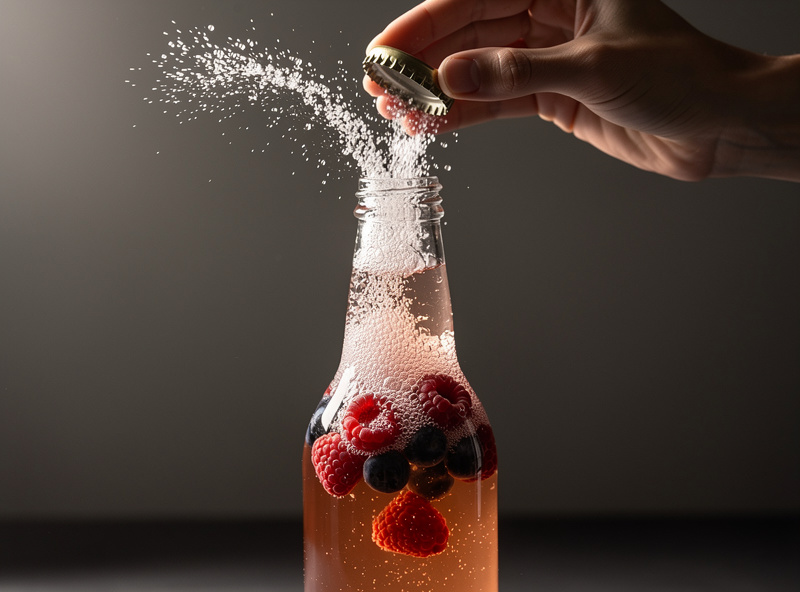
Carbonation in kombucha comes from yeast metabolizing sugar into CO2 in a sealed bottle. The CO2 dissolves into the liquid under pressure and stays dissolved as long as the bottle stays sealed and cold. Open the bottle and CO2 comes out of solution as bubbles — fizz.
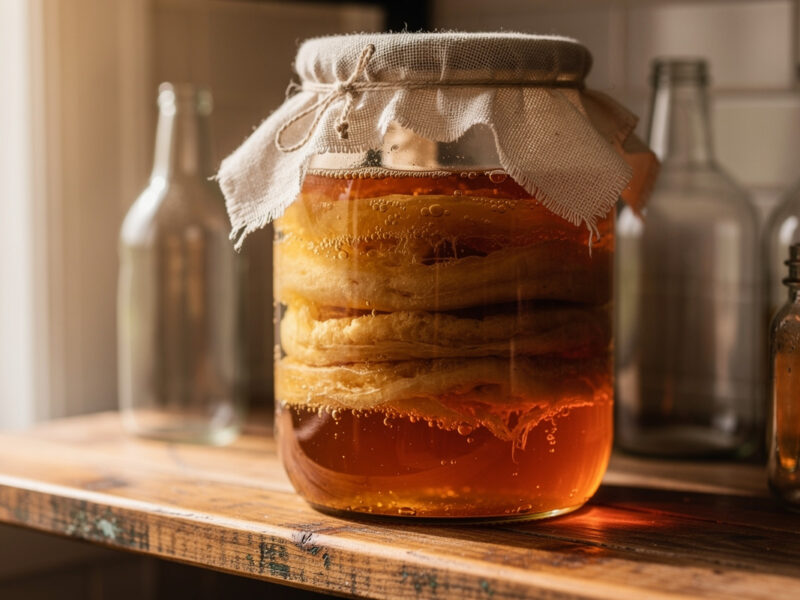
The first fermentation (with the SCOBY in an open vessel) doesn’t produce drinkable carbonation because the CO2 escapes into the air. All meaningful fizz comes from the second fermentation, which happens in a sealed bottle after you’ve removed the SCOBY and added flavoring (typically sugar or fruit).
The yeast and bacteria community in your kombucha needs three things to produce CO2 reliably: sugar (their food), warmth (above 68°F for activity), and time (3 to 5 days for a typical batch). Each of the six common failure modes maps to one of these three variables.
Cause 1: Not Enough Sugar in the Second Ferment
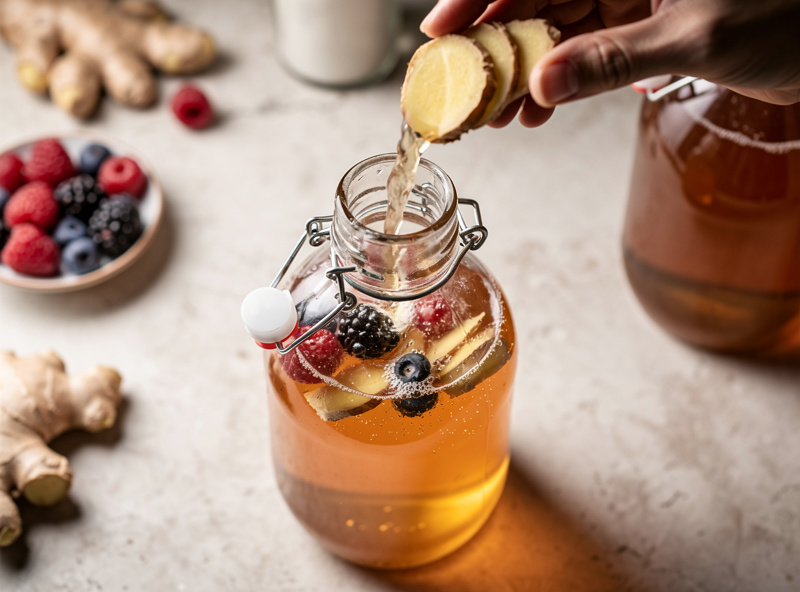
The most common cause. After the first fermentation, your kombucha has very little remaining sugar (the SCOBY ate most of it for 7 to 14 days). For carbonation, you need to add new sugar to the bottle: 1 to 2 teaspoons of plain table sugar per 16 oz, or equivalent in fruit purée.
Fruit-based flavoring guidelines for natural sugar: 1 to 2 tablespoons of fresh fruit purée (strawberry, peach, mango, raspberry) per 16 oz, OR 2 to 3 tablespoons of fresh fruit juice (pomegranate, grape, cherry), OR 1 teaspoon honey plus 1 teaspoon ginger juice. The fruit provides both sugar and flavor. For dozens of tested combinations that produce reliable carbonation, see our complete kombucha flavoring guide.
Don’t use Stevia or artificial sweeteners — the yeast can’t metabolize them and they produce no CO2. The whole second ferment is sugar-driven; sugar substitutes give you flavor but no fizz.
Test with a small sample bottle: brew one bottle with double the sugar (4 teaspoons per 16 oz). If that bottle is fizzy and the others aren’t, your sugar quantity was the problem. If the high-sugar bottle is also flat, look at causes 2-6.
Cause 2: Temperature Too Low
Yeast activity drops sharply below 68°F. A kitchen counter at 65°F (typical winter indoor temperature) might produce no detectable carbonation in 5 days, while the same brew at 75°F is fully fizzy in 3 days. The temperature difference is more important than most kombucha brewers realize.
Fix: bottle and second-ferment in the warmest part of your home. Top of the refrigerator (the warm exhaust zone), top of a wall oven, near a south-facing window. Target 70 to 78°F for second fermentation. Above 80°F is acceptable but increases the chance of over-carbonation explosions.
Heat mat option: a small reptile heat mat ($15) under the bottling area gives reliable 75°F second ferment temperature year-round. Not strictly necessary for summer brewing in temperate climates; very useful for winter brewing or cold-house brewing.
I made the 64°F mistake in my first winter of kombucha brewing. Three batches, eighteen bottles, every single one flat. I kept adding more sugar thinking that was the fix, and each batch got sweeter but never fizzy. After reading a sourdough forum post about proofing temperature, I bought a $15 reptile heat mat and placed it under my bottling shelf. The very next batch — identical recipe, identical bottles, same three-day ferment — came out perfectly carbonated. If your kitchen runs cold and your kombucha stays flat, before you change anything else, buy the heat mat. It solved a problem I wasted six weeks trying to fix with sugar adjustments.
Cause 3: Wrong Bottle Type
Mason jars (2-piece lid) and standard threaded-cap bottles leak CO2 around the seal. The pressure difference between bottle interior and atmosphere is small at the start of the second ferment, and even the slow leak from a mason jar prevents pressure buildup.
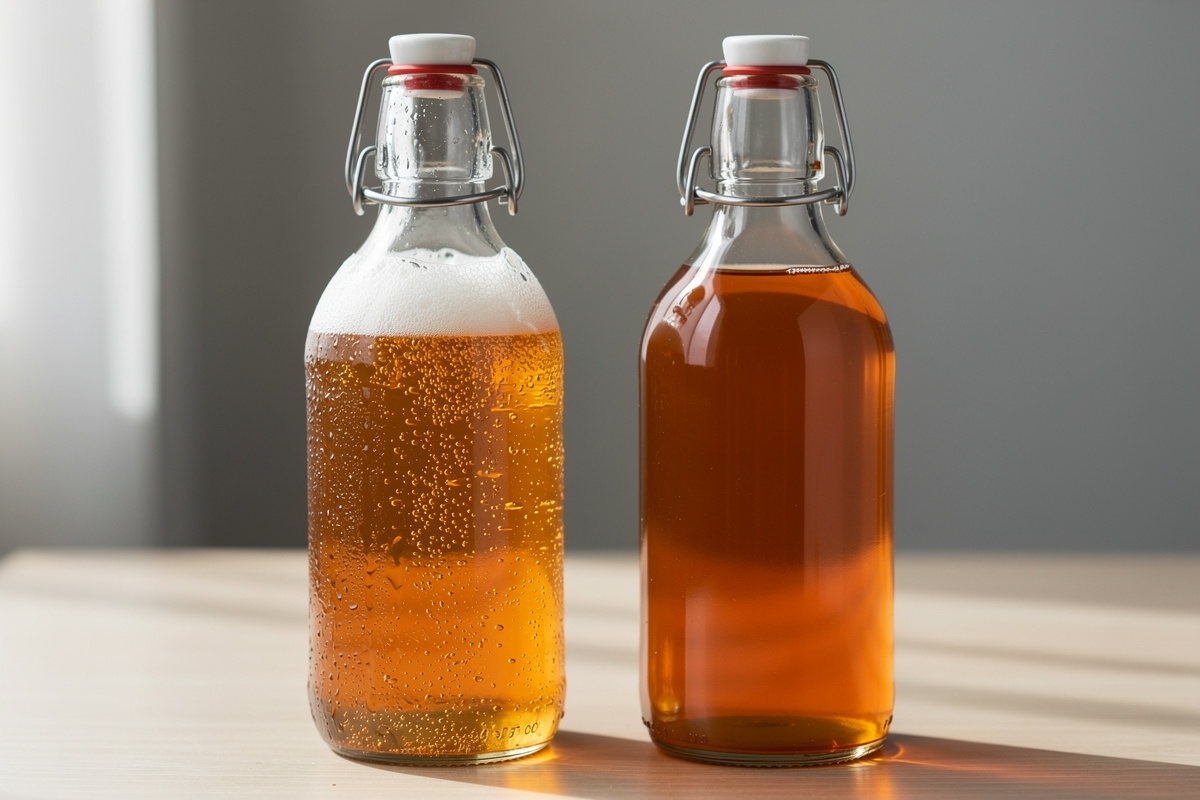
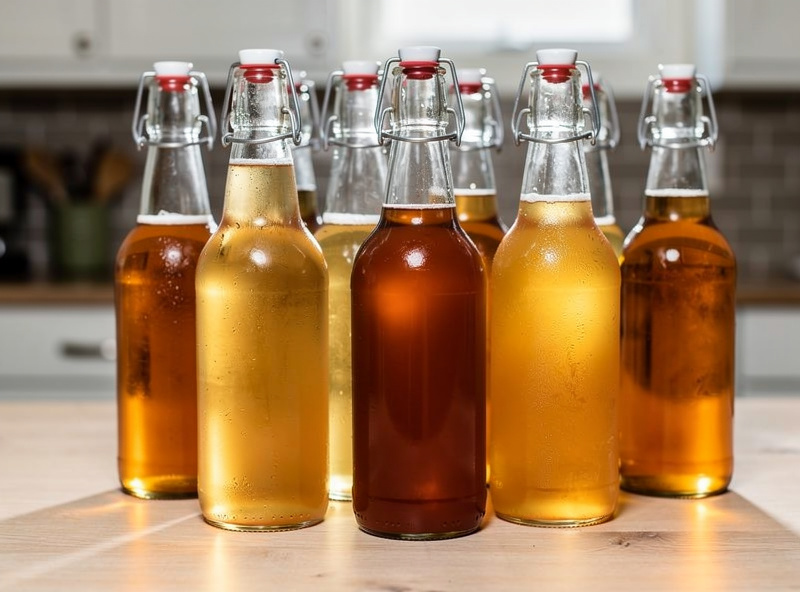
Swing-top bottles (Grolsch-style with the rubber gasket and wire bail) seal tight enough to hold pressure for weeks. Champagne bottles with cork-and-cage closures also work. Standard 16 oz “EZ-Cap” swing-top bottles cost $1.50 to $3 each on Amazon or restaurant supply sites.
Test your bottles before bottling: fill with water, seal, squeeze the bottle hard. If the cap holds against the squeeze without any air escape, it’ll hold kombucha CO2 pressure. If air escapes, the bottle’s gasket is worn or the seal is wrong; switch bottles.
Cause 4: Second Ferment Too Short
Common bad advice: “Bottle, wait 24 hours, refrigerate.” This works in summer at 78°F with very active yeast; it fails reliably in winter or with sluggish cultures. Most batches need 3 to 5 days at 70 to 78°F to develop full carbonation.
The “burp” test: every 24 hours after bottling, briefly open one bottle to listen for the CO2 release. Day 1: faint hiss. Day 2: noticeable hiss. Day 3: clear pop and bubbles visible. Day 4-5: strong pop, foam at the neck. When you hear a strong pop, the second ferment is complete.
Burp the bottles daily after day 3 to release excess pressure. Strong second ferments at warm temperatures can develop enough pressure to crack glass within 5 days; daily burping releases excess CO2 while keeping enough dissolved for fizz.
Cause 5: Kombucha Too Sour From First Ferment
If the first ferment ran too long (10+ days at warm temperatures, or 14+ days at cool temperatures), the SCOBY converted essentially all sugar into acetic acid. The result is a sharp vinegar-like kombucha with no remaining sugar for the second ferment yeast to convert. A quick check with a meter or strips confirms it — see the kombucha pH guide for the safe ranges and how to taste-and-bottle a little earlier next time.
Diagnosis: taste the kombucha straight after first ferment. Should be mild-tart with a faint sweet undertone. If it’s sharp-vinegar with no sweetness, you’ve over-fermented.
Fix for the current batch: add more sugar than usual to second ferment bottles (3 to 4 teaspoons per 16 oz instead of 1 to 2). The yeast has plenty of food now and CO2 production resumes.
Long-term fix: end the first ferment earlier. For typical setups, 7 to 10 days at 75°F or 10 to 14 days at 68°F. Taste-test daily after day 7 — pull the SCOBY and bottle when the kombucha is mild-tart with detectable sweetness. If you notice unusual film or surface growth on your brew during the first ferment, see our guide on identifying Kahm yeast — it is often mistaken for mold and is usually harmless.
Cause 6: Opening Too Early or Storing Warm
Even fully-fermented kombucha needs cold-storage time for CO2 to fully dissolve into the liquid. Opening a bottle straight from the second ferment (warm and just-finished) often gives “spritzy” fizz that disappears in seconds. The same bottle after 24 hours in the refrigerator gives proper sustained carbonation.
Standard sequence: complete second ferment (3 to 5 days at room temp), refrigerate at 38 to 42°F for at least 24 hours, open and serve. The cold step is non-negotiable for proper fizz mouthfeel.
If you store kombucha warm long-term (not refrigerated after second ferment completes), the yeast continues converting any remaining sugar into more CO2 until pressure exceeds bottle limits. Result: bottle explosions or sour, vinegar-like over-fermented product. Always refrigerate after second ferment to halt fermentation.
Six Causes of Flat Kombucha — Summary Table
| Cause | How to Recognize | Fix |
|---|---|---|
| Not enough sugar in 2F bottle | Most common; especially if you use fruit only | 1-2 tsp sugar per 16 oz, plus fruit |
| Temperature too low (under 68°F) | Winter brewing; cold kitchen | Move to warmer spot or use heat mat |
| Wrong bottle type | Mason jars or threaded-cap bottles | Switch to swing-top or champagne bottles |
| Second ferment too short | Less than 72 hours at room temp | Wait 3-5 days, daily burp test |
| Over-fermented first batch | Sharp vinegar taste, no sweetness | Add 3-4 tsp sugar; end 1F earlier next time |
| Opened too early or stored warm | Spritzy then flat; or bottle exploded | Refrigerate 24+ hours after 2F complete |
The Reliable Carbonation Recipe
For consistently fizzy kombucha that works in 95% of batches:
Step 1: Stop first ferment when kombucha is mild-tart with detectable sweetness (typically day 7-10 at 75°F). Taste-test starting day 7.
Step 2: Bottle into 16 oz swing-top bottles. Add 1 tablespoon fresh fruit purée + 1 teaspoon plain sugar per bottle (see our kombucha flavoring guide for 25 specific combinations that carbonate well). Leave 1 inch headspace at the top of each bottle.
Step 3: Seal bottles and place in a warm spot (70 to 78°F). Top of the refrigerator works year-round.
Step 4: Burp test daily starting day 2. Open each bottle briefly to release pressure and assess fizz. Strong “pop” by day 3-4 means ready for cold storage.
Step 5: Refrigerate at 38 to 42°F for at least 24 hours. Open and serve. The cold storage step is what gives the proper sustained carbonation mouthfeel.
The bottles I use for every batch are EZ-Cap 16 oz swing-tops — $22 for a six-pack, and they have lasted me three years. The only maintenance they need is rubber gasket replacement every 12 to 18 months (a pack of replacement gaskets costs $4). When the gasket starts to look dry or cracked, or when you notice reduced carbonation using the same recipe and timing, replace the gaskets. A slow leak through a worn gasket looks exactly like a temperature or sugar problem — and it is the easiest thing to miss.
This sequence works at temperatures from 68 to 82°F, with any standard kombucha culture, with fruit or plain sugar flavoring. The kombucha cluster covers recipe-specific carbonation tweaks for ginger, berry, and citrus flavors.
Safety: Avoiding Bottle Explosions
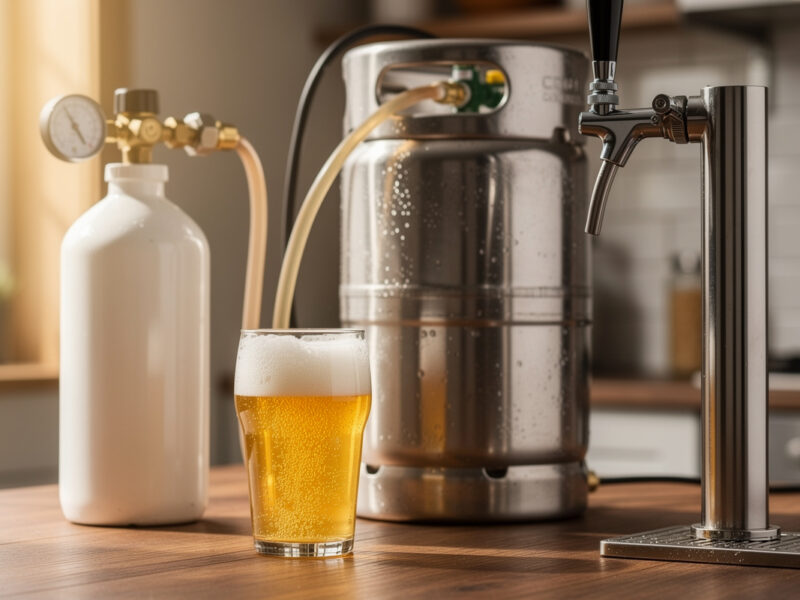
Strong second ferments at high temperatures (above 80°F for 4+ days) can develop enough pressure to crack thick glass swing-top bottles. Use modern thick-glass swing-tops rather than thin glass; never use mason jars for second ferment (the lid can fail explosively); and burp daily after day 3. If bottle pressure makes you uneasy, kegging and force-carbonating with CO2 removes the bottle-bomb risk entirely.
If you forget about a batch and it’s been at room temperature for 7+ days: open the bottle very carefully outside or over a sink. Wear glasses or face protection. The pressure can be intense and fizz can spray several feet. Once depressurized, refrigerate and assess flavor.
Never use plastic soda bottles for kombucha second fermentation. They tolerate the pressure but the CO2 reacts with the plastic over time and leaches compounds into the kombucha. Glass swing-top is the standard for hobby brewing.
From a food safety perspective, the FDA Food Code addresses acidified beverages directly. Section 3-502.11 states that beverages with a finished equilibrium pH below 4.6 are considered non-potentially-hazardous — and properly brewed kombucha typically lands between pH 2.5 and 3.5. This means correctly fermented kombucha falls into the same regulatory category as vinegar and wine: the acidity itself is the preservative. If you follow the standard recipe and the kombucha tastes properly sour-tart (not flat-neutral), you are well within the safety range.
If I were a brand-new kombucha brewer today, I would buy six swing-top bottles, one $15 reptile heat mat, and a $4 digital thermometer — about $40 total — before I brewed my first batch. These three pieces of equipment solve 90% of the carbonation problems that frustrated me for my first six months of brewing. The kombucha itself is forgiving. The equipment is where most beginners get it wrong, and it is the cheapest part of the hobby to get right.
Frequently Asked Questions
How long should kombucha second ferment for proper fizz?
3 to 5 days at 70 to 78 degrees F gives reliable carbonation. Less than 72 hours typically produces flat kombucha; more than 7 days risks bottle explosions. The exact time depends on temperature, sugar amount, and culture activity. Use the daily burp test to determine readiness.
How much sugar should I add for kombucha second fermentation?
1 to 2 teaspoons plain sugar per 16 oz bottle, OR 1 to 2 tablespoons fresh fruit purée providing equivalent sugars. Avoid Stevia and artificial sweeteners — the yeast cannot metabolize them and they produce no CO2.
What bottles work best for kombucha second fermentation?
Swing-top bottles (Grolsch-style with rubber gasket and wire bail) or champagne bottles with cork-and-cage closures. Mason jars leak CO2 around the lid seal and produce flat kombucha. EZ-Cap 16 oz swing-tops cost $1.50 to $3 each and last for years.
Why is my kombucha flat even though I added sugar?
Most likely cause is wrong bottle type (mason jars leak CO2) or temperature too low (under 68 degrees F slows yeast dramatically). Confirm you have swing-top bottles, move them to a warmer spot (top of refrigerator), and wait 4 to 5 days for second ferment.
Should I refrigerate kombucha after second fermentation?
Yes — refrigerate at 38 to 42 degrees F for at least 24 hours after second ferment completes. The cold storage step lets CO2 dissolve into the liquid for proper sustained carbonation mouthfeel. Storing warm long-term causes over-fermentation and bottle explosions.
Can I use Stevia or other sugar substitutes for fizzy kombucha?
No — the yeast that produces CO2 cannot metabolize Stevia, monk fruit, sucralose, or other artificial sweeteners. They give you flavor but no carbonation. The second ferment is fundamentally sugar-driven; you must use real sugar or fruit purée for fizz.
Related Articles
- How to Flavor Kombucha: 25 Second Fermentation Ideas
- Kahm Yeast: What It Is, How to Prevent It
- Fermentation Weights Compared: Glass vs Ceramic vs Ziplock
- How to Make Red Wine Vinegar at Home
- How to Make Fermented Hot Sauce at Home
- Best Tea for Kombucha: Black, Green, Oolong, and White
- Kombucha pH Guide: Safe Levels, Timeline, and Fixes
- How to Keg Kombucha and Force-Carbonate with CO2

About Kenny Nyhus Fadil
A home fermenter documenting brines, bubbles, and the occasional moldy tragedy.