Best Tea for Kombucha: Black, Green, Oolong, and White

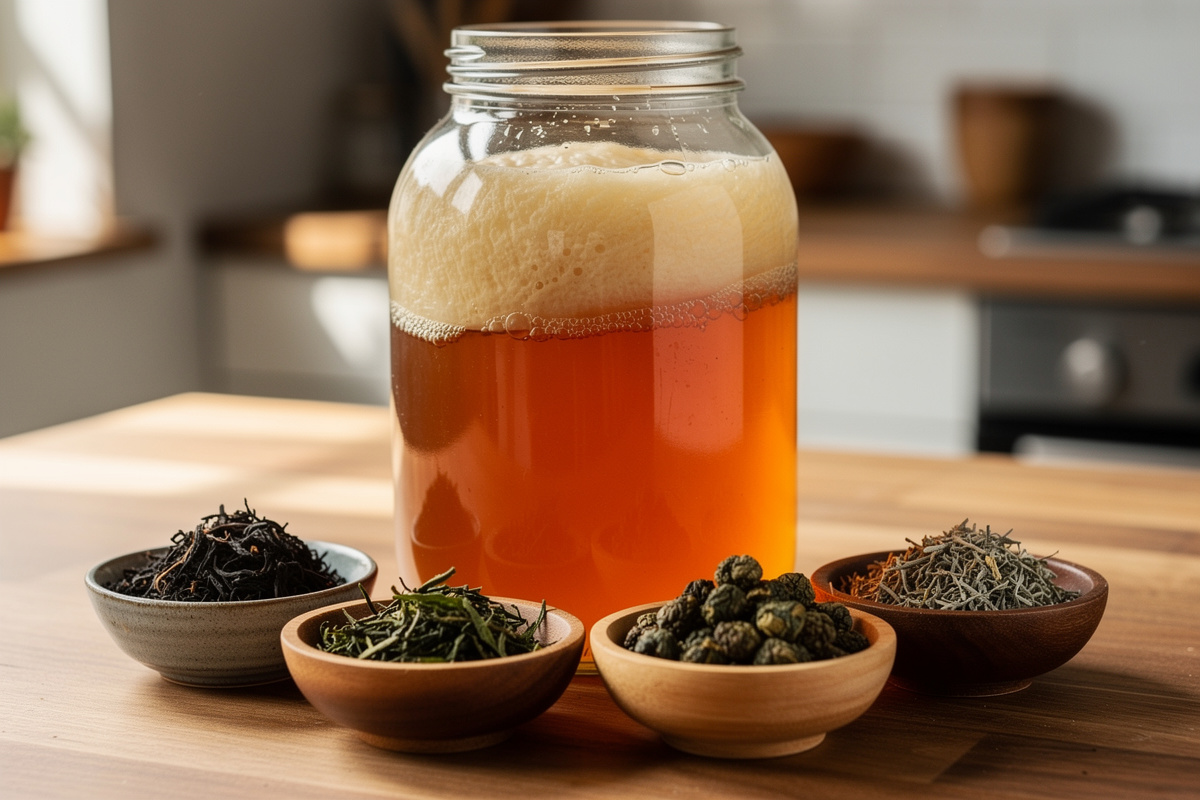
The best tea for kombucha is plain Camellia sinensis — black, green, oolong, or white — brewed with white cane sugar. Black tea is the most reliable: it carries the most nitrogen and purines, so your SCOBY builds a thick, healthy pellicle and the brew sours predictably. Herbal “teas” are not tea at all and starve the culture over time.
That one rule — real tea leaf, not a herbal infusion — solves about 80% of the “my SCOBY went thin and slimy” problems that land in my inbox. The yeast and bacteria in a kombucha culture evolved to eat what a tea plant puts into hot water: nitrogen compounds, tannins, theanine, and a little caffeine, all dissolved alongside the sugar they ferment. Take those away and the colony slowly weakens, no matter how clean your kitchen is. If you are new to the whole process, start with my complete kombucha brewing guide for the full SCOBY-to-bottle workflow; this article is the deeper dive on the one input most people get wrong. Below is exactly how each kind of tea behaves on my bench, why the leaf chemistry matters, and the blend I keep my own continuous brew running on.
Why Kombucha Needs Real Tea (Not Just Sugar)
Kombucha ferments sugar, but the culture feeds on tea. Camellia sinensis supplies nitrogen, purines (caffeine and theobromine), and tannins that the yeast and Acetobacter need to reproduce and build cellulose. Sugar is the fuel; tea is the nutrient package. Skip it and the SCOBY runs lean.
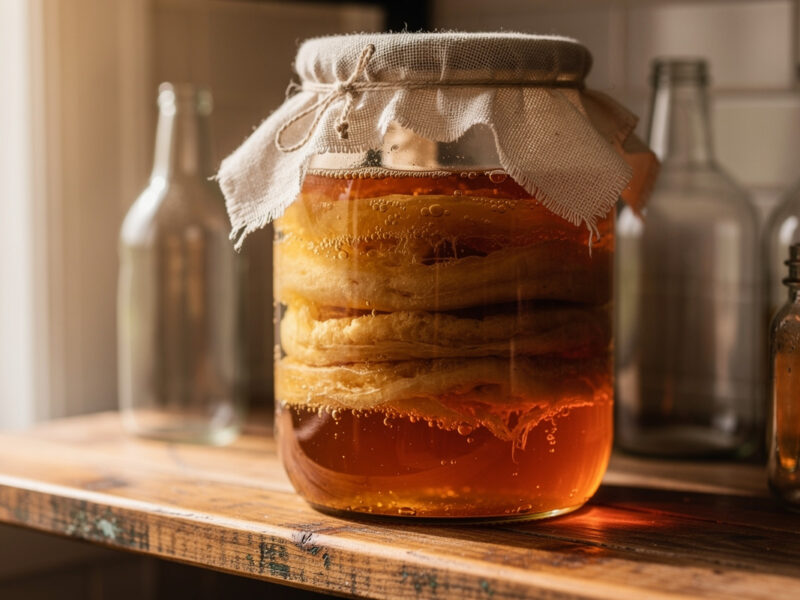
People assume the sugar does everything because the sugar is what disappears — a cup per gallon goes in and the brew comes out dry and tart. But sugar is pure carbon and energy. The cell-building blocks, the nitrogen especially, come from the tea. This is why a jar brewed on rooibos or chamomile will limp along for a batch or two on the residual nutrients in the starter liquid, then produce a thinner and thinner pellicle until the culture stalls. I have run that experiment on purpose, parking a small jar on pure herbal infusion, and watched the new growth go from a firm quarter-inch mat to a translucent skin within three batches. The fix every time was simply going back to leaf tea.
The caffeine question comes up constantly, so to be clear: the culture genuinely uses the purines, but it does not need a lot of them. Decaffeinated Camellia sinensis still works because decaffeination removes most — not all — of the caffeine and leaves the nitrogen and tannins intact. A pure herbal blend with zero Camellia sinensis is the thing to avoid as a sole nutrient base, not caffeine specifically.
Black, Green, Oolong, White: How Each One Behaves
All four come from the same plant; the difference is oxidation. Black is fully oxidized and most nutrient-dense, white is barely processed and most delicate, with green and oolong in between. On my bench, black gives the thickest SCOBY and the most forgiving ferment, while white gives the lightest cup but the slowest, thinnest growth.
Black tea is the workhorse and what I tell every beginner to start on. It is the most oxidized, which means the most tannin and the richest nutrient profile, so the pellicle forms fast and firm and the brew acidifies on a predictable clock. A plain English Breakfast, Assam, or a generic loose-leaf black is ideal. The flavor is the classic malty, cidery kombucha most people picture. If you only ever brew on one tea, brew on this.
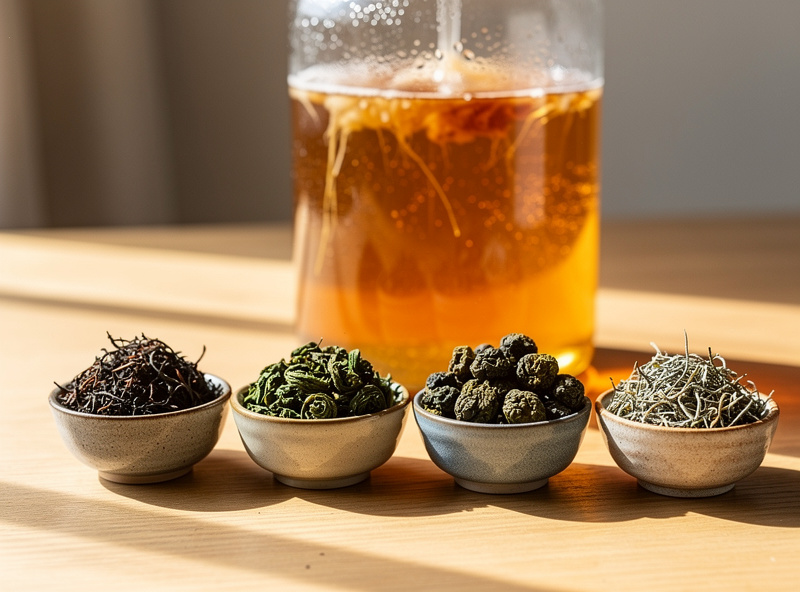
Green tea is my second-most-used and makes a lighter, grassier, slightly more floral kombucha. Because green tea is less oxidized it carries a bit less tannin, so a pure-green SCOBY tends to grow paler and a touch thinner than a black-tea one — perfectly healthy, just less robust looking. Greens also tend to ferment a hair faster in my warm-cycle months. Use a plain sencha or gunpowder; skip the toasted genmaicha as a base because the puffed rice muddies a long ferment.
Oolong sits in the middle on every axis — partial oxidation, medium body, medium tannin — and makes a rounder, slightly toasty brew. It is a lovely tea to brew on once your culture is established, and it keeps a SCOBY in good shape. I treat it as a flavor option rather than a default, mostly because good oolong costs more than I want to pour into a gallon jar every week.
White tea makes the most delicate, almost honeyed kombucha, and it is the one tea I would never run on its own long-term. It is the least processed, so it carries the least nitrogen and tannin, and a pure-white brew produces a thin, fragile pellicle and a sluggish ferment. White tea shines as a portion of a blend — a quarter white to three-quarters black gives you the elegance without starving the culture.
Kombucha Tea Comparison
Here is how the four sit side by side on the two things that actually matter for brewing — how well they keep the SCOBY fed, and what they do to the cup. Ferment speed assumes the same sugar level and temperature; the differences are modest but real across the batches I have run.
| Tea | SCOBY health | Flavor | Ferment speed | Best use |
|---|---|---|---|---|
| Black | Excellent (thick pellicle) | Malty, cidery, classic | Fast, predictable | Default base for any brew |
| Green | Good (paler, thinner) | Grassy, light, floral | Slightly faster | Lighter everyday brew |
| Oolong | Good | Round, toasty | Moderate | Flavor variety once established |
| White | Weak alone (use in blend) | Delicate, honeyed | Slow | Up to 25% of a black-tea blend |
| Herbal (no C. sinensis) | Starves the culture | Varies | Stalls over time | F2 flavoring only, never F1 base |
The Blend I Actually Brew On
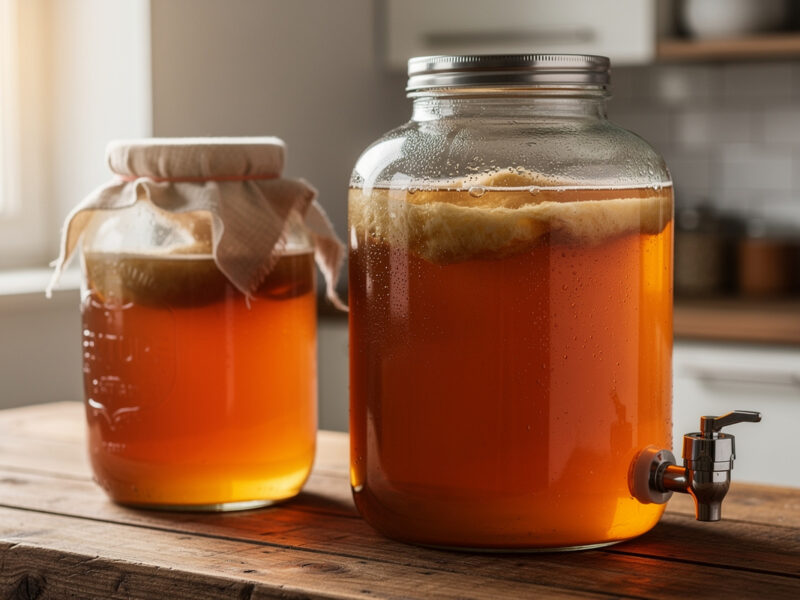
My continuous-brew vessel runs on roughly 80% black tea and 20% green — about six grams of leaf per litre. The black keeps the SCOBY thick and the ferment dependable; the green lifts the finished flavor so it is not all malt. It is the most forgiving everyday recipe I have landed on after years of swapping.
For a one-gallon batch that works out to around eight teaspoons of loose black plus two of green, or eight to ten tea bags total, steeped in the hot portion of the water and then topped to volume with cool water before the SCOBY ever goes in. I steep five to seven minutes — long enough to pull the tannins, not so long that a cheap black turns harsh. A reliable bulk loose-leaf black tea is the single best value upgrade for a regular brewer; bagged works fine but you pay more per gram. I keep a tin of plain loose-leaf green tea next to it for the blend and for the occasional all-green summer batch.
Disclosure: FermentFoundry is reader-supported. As an Amazon Associate I earn from qualifying purchases made through links in this article, at no extra cost to you. I only point to gear I actually use or would buy for my own kitchen.
Sugar and Water Matter as Much as the Leaf
Plain white cane sugar is the right fuel — about one cup per gallon — and dechlorinated water is non-negotiable. Chloramine in tap water is the quiet killer of kombucha cultures; it does not gas off the way old-style chlorine does, so it sits in the jar and suppresses the colony.
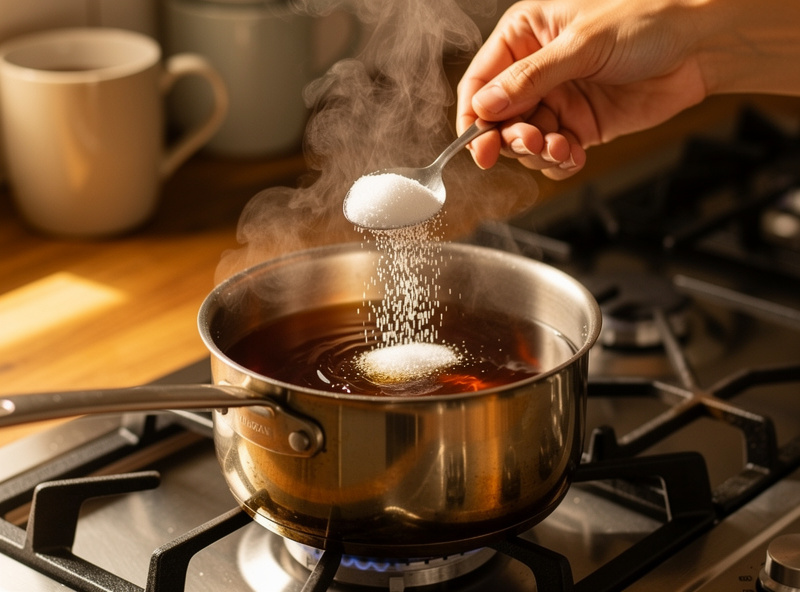
I get asked about “healthier” sugars all the time. Honey, maple, coconut sugar, and rapadura all work in the sense that the yeast can ferment them, but they drag in flavors and minerals that change the brew unpredictably and, in honey’s case, introduce wild yeasts that compete with your culture — honey-fed cultures are their own drink, jun, which is a separate practice. For ordinary kombucha, plain sucrose is the clean choice, and almost all of it is consumed by the time the brew is tart. If your tap water is chloraminated, fill a pot and boil it for a few minutes, or use filtered water; a carbon filter handles chloramine where simply letting water sit overnight will not. Steep the tea in that water, dissolve the sugar while it is hot, cool the whole thing to room temperature, and only then introduce the SCOBY and starter liquid — heat above about 40°C will damage the culture.
Teas to Avoid as Your Base
Two categories cause almost all tea-related culture problems: oil-flavored teas and herbal infusions. Earl Grey carries bergamot oil, and essential oils are mildly antimicrobial — fine for one curiosity batch, but they wear on a culture used continuously. Herbals contain no Camellia sinensis at all.
Rooibos, chamomile, peppermint, hibiscus, ginger, and the rest are wonderful in second fermentation, where you are adding flavor to already-finished kombucha and the SCOBY is back in its hotel. As an F1 nutrient base they slowly starve the colony, because they simply do not contain the nitrogen package the culture needs. If you love a rooibos note, brew a normal black-tea batch and add rooibos at bottling — and if those F2 bottles come out flat, the tea base is rarely the cause; see my fixes for kombucha that will not carbonate. The same logic applies to heavily smoked teas like lapsang souchong — striking flavor, but I keep it to flavoring, not feeding. Stick to plain leaf for F1, get creative in F2, and your SCOBY will stay thick for years.
Frequently Asked Questions
Can I make kombucha with herbal tea?
Not as your base. Herbal teas contain no Camellia sinensis, so they lack the nitrogen the SCOBY needs and will starve the culture within a few batches. Use herbals only in second fermentation for flavor.
Is black or green tea better for kombucha?
Black tea is more reliable — it has the most tannin and nitrogen, so the SCOBY grows thick and the brew sours predictably. Green makes a lighter cup but a paler, thinner pellicle. Many brewers use a blend.
Does kombucha tea need caffeine?
The culture uses purines like caffeine, but not in large amounts. Decaffeinated Camellia sinensis still works because the nitrogen and tannins remain. Only pure caffeine-free herbal blends, which lack real tea entirely, are the problem.
How much tea per gallon of kombucha?
About eight to ten tea bags or eight teaspoons of loose leaf per gallon, with roughly one cup of cane sugar. Steep five to seven minutes in the hot water, then cool fully before adding the SCOBY.
Can I use flavored tea like Earl Grey?
For one batch, yes, but not as a continuous base. The bergamot and other added oils are mildly antimicrobial and wear on a culture over time. Keep oil-flavored and smoked teas for occasional brews, not daily feeding.
Why is my SCOBY thin and weak?
The most common cause is brewing on herbal or low-nutrient tea, or on chloraminated tap water. Switch to plain black tea and dechlorinated water and the next pellicle should come back thick within a batch or two.
Related Articles
- Kombucha Brewing: The Complete Home Guide from SCOBY to Bottle
- Why Is My Kombucha Not Fizzy? 6 Fixes for Flat Second Fermentation
- How to Flavor Kombucha During Second Fermentation: 25 Ideas
- Kahm Yeast: What It Is, How to Prevent It, When It Is Safe
- Fermentation Equipment: The Complete Home Brewer Toolkit

About Kenny Nyhus Fadil
A home fermenter documenting brines, bubbles, and the occasional moldy tragedy.