SCOBY Hotel: How to Store, Feed, and Revive Kombucha Cultures

A SCOBY hotel is a jar where you keep spare kombucha cultures submerged in mature, sour kombucha on the counter — not the fridge. It is your backup culture, your supply of strong starter liquid, and the safest place to park extra SCOBYs between batches. Feed it sweet tea every four to six weeks and a healthy hotel keeps for years.
Every kombucha brewer ends up with too many SCOBYs — the culture grows a new layer every single batch, so within a couple of months you have a stack thick enough to sole a boot. The hotel is what you do with them, and it is genuinely useful rather than just a holding pen. The jar I keep on my shelf has been running for years; it is where I pull strong starter when I am setting up a fresh brew, where I quarantine a culture I am not sure about, and what saved me the one time my main continuous brew went sideways. Here is how to build one, feed it, and bring a neglected one back from the brink.
What a SCOBY Hotel Is and Why You Want One
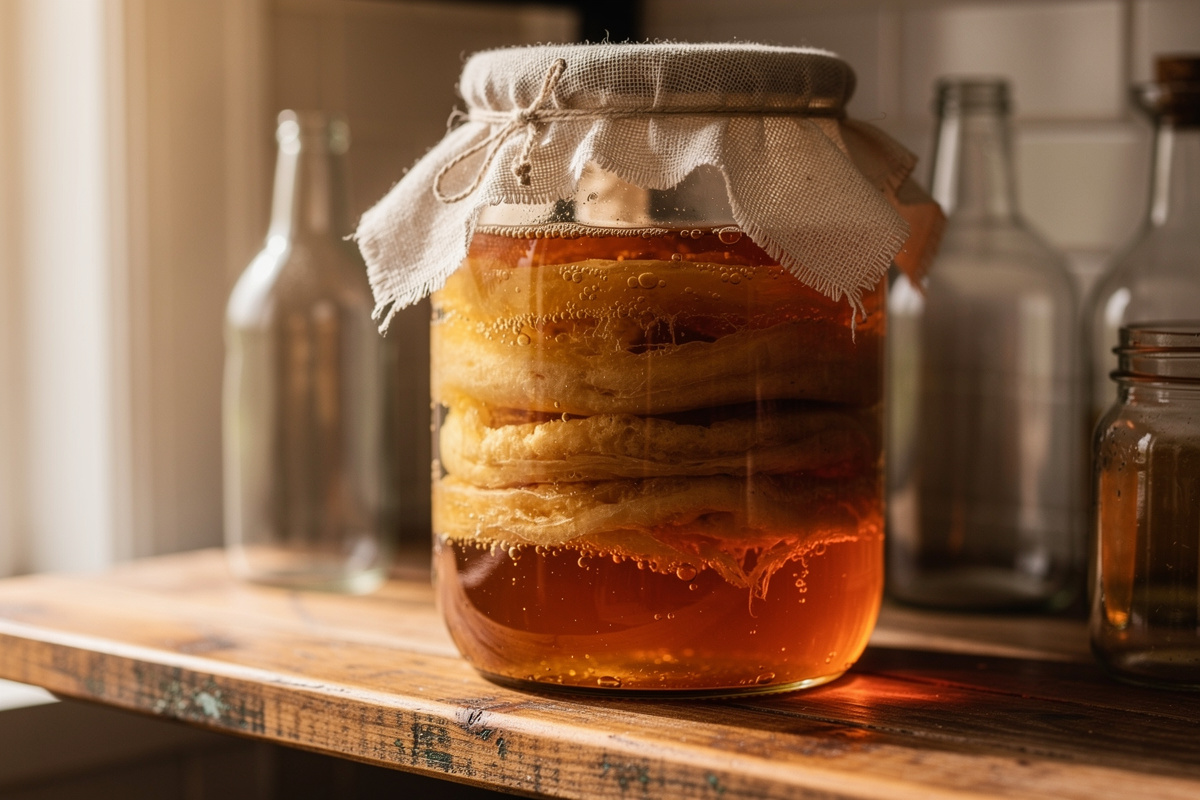
A SCOBY hotel is simply spare cultures stored in their own jar of mature kombucha and sweet tea, kept covered with breathable cloth at room temperature. It serves three real purposes: an insurance backup if your main brew fails, a reservoir of strong, low-pH starter liquid, and a place to store extras without throwing living cultures away.
The starter-liquid job is the one most people underrate. A new batch of kombucha ferments cleanly because you pour in a good slug of mature, acidic liquid that drops the pH straight away and locks out mold and stray bacteria before they get a foothold. Hotel liquid is the strongest starter you will ever have — it sits and sours for weeks, so it ends up sharper and lower-pH than anything you would drink. On my meter a well-aged hotel runs down around 2.5 to 2.8, which is exactly the acidic head start a fresh jar wants — and if you do not run a meter, a strip of pH test strips will tell you the hotel is still safely acidic at a glance. The backup job matters too: if your working culture catches mold or you simply forget a batch for a month, you have not lost your kombucha line — you reach into the hotel, pull a healthy SCOBY and a cup of liquid, and you are brewing again the same afternoon.
How to Build a SCOBY Hotel
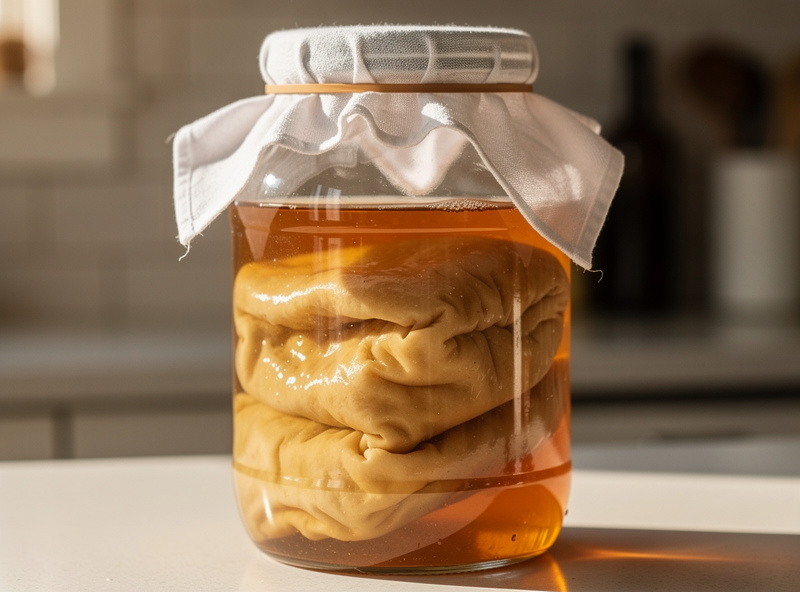
You need a large glass jar, one or more healthy SCOBYs, and enough mature kombucha plus fresh sweet tea to keep them submerged. A half-gallon or gallon wide-mouth jar is ideal; cover it with tight-woven cloth and a band, never a solid lid. The culture needs air but not bugs.
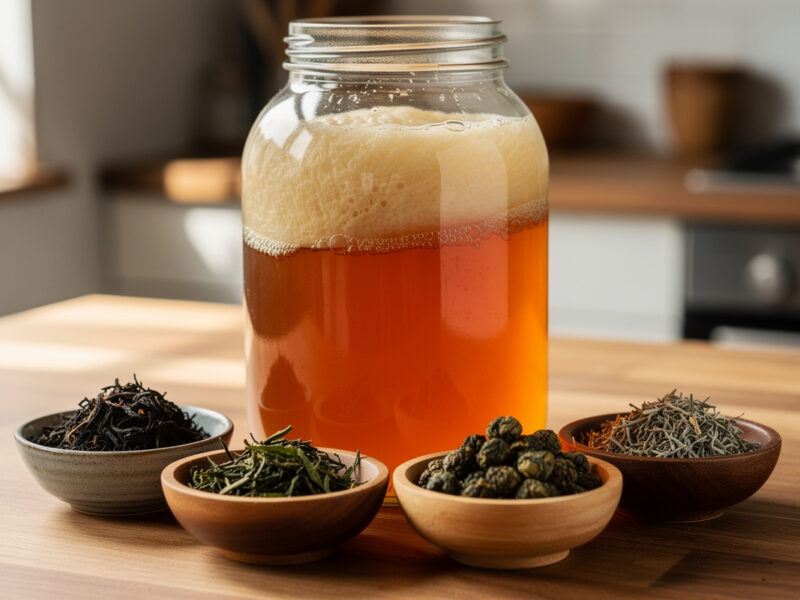
Start with a clean half-gallon jar — bigger is better because a generous volume of liquid buffers the hotel against drying out and swings in temperature. Add your spare SCOBYs, then pour in every bit of mature kombucha you have on hand. Top up with fresh, cooled sweet tea — the same brew you would use for a normal batch, roughly one part sugar-tea concentrate to the kombucha already in there — until the cultures are well covered with a couple of centimetres to spare. A breathable cover is essential: a half-gallon wide-mouth jar with a piece of tight-woven cloth and a rubber band keeps fruit flies out while letting the culture breathe. The exact ratios are forgiving here — the hotel is meant to be low-maintenance, and the tea you use is the same plain black leaf that keeps any SCOBY thick; if you are unsure which to buy, my notes on the best tea for kombucha apply to the hotel just as they do to a drinking batch.
Disclosure: FermentFoundry is reader-supported. As an Amazon Associate I earn from qualifying purchases made through links in this article, at no extra cost to you. I only point to gear I actually use or would buy for my own kitchen.
Feeding and Maintaining a SCOBY Hotel
A SCOBY hotel is alive, so it needs feeding — but rarely. Top it up with fresh sweet tea every four to six weeks to replace what the cultures consume and what evaporates. Skip feeding for too long and the cultures eat through all the sugar, the liquid turns to pure vinegar, and the colony slowly starves.
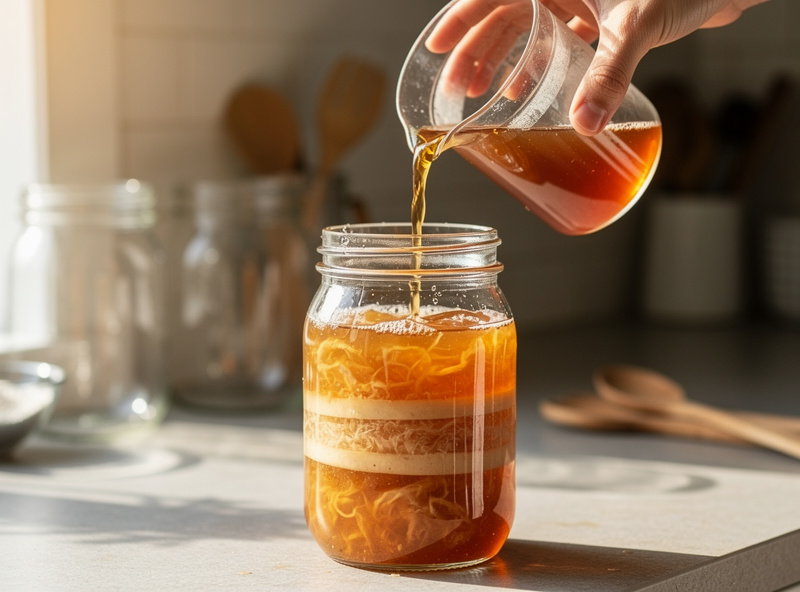
The rhythm is simple: once a month or so, pour off some of the now-very-sour liquid (keep it — it is excellent starter, and it works as a sharp cleaning vinegar or a salad acid too), and replace it with the same volume of fresh, cooled sweet tea. That single feed resets the sugar supply and keeps the cultures plump. The liquid level is the thing to watch more than the calendar — as long as the SCOBYs stay submerged and there is residual sweetness for them to work on, the hotel is fine. Over months the stack of cultures will grow tall; when it gets unwieldy, peel off and compost the oldest, darkest bottom layers and keep the newer, paler ones. There is no benefit to a twenty-layer SCOBY, and the dark old ones contribute nothing but bulk.
Counter vs Fridge: Where to Keep It
Keep a SCOBY hotel at room temperature on the counter, not in the fridge. Cold does not “preserve” a kombucha culture the way it preserves food — it pushes it into a stressed dormancy where it stops protecting itself with fresh acid, and cold cultures are far more prone to mold when revived. Room temperature keeps the hotel actively acidic and self-defending.
This is the single most common hotel mistake, so it is worth being blunt about it. The whole reason a SCOBY hotel survives months of neglect is that the living culture keeps the liquid hostile to invaders. Refrigerate it and you switch that defence off. The table below is how the two approaches actually play out over time.
| Storage method | Culture state | Mold risk | Feeding needed | Verdict |
|---|---|---|---|---|
| Counter, room temp | Active, self-acidifying | Low (stays acidic) | Every 4–6 weeks | Recommended |
| Warm spot (24–28°C) | Very active, sours fast | Low | Every 3–4 weeks | Fine, feed more often |
| Cool room (16–18°C) | Slow but alive | Low–moderate | Every 6–8 weeks | Workable |
| Refrigerator | Stressed dormancy | Higher on revival | Stops working | Avoid |
How to Revive a Neglected SCOBY Hotel
A hotel left unfed for months is almost always recoverable. If the liquid has gone sharp and vinegary but the SCOBYs are intact and mold-free, simply pour off half, feed it fresh sweet tea, and give it a week at room temperature. The cultures wake up and the next brew off them ferments normally.
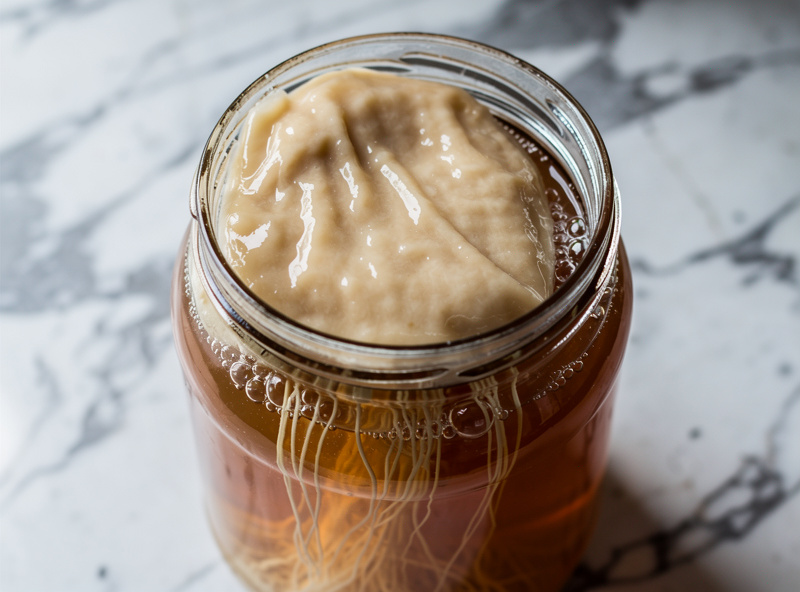
The two genuine failure points are drying out and mold. If the liquid has evaporated low and the top culture has gone leathery and dry, it is usually still alive underneath — submerge it in mature kombucha plus sweet tea and wait; a dry-skinned SCOBY rehydrates and resumes. What you cannot rescue is mold, and the distinction matters. A neglected hotel often grows brown, stringy strands hanging off the cultures, and develops a wrinkled tan skin on the surface — that is yeast and a new pellicle forming, completely normal, no cause for alarm. The same culture I trust for years looks alarming to a beginner who has not seen healthy yeast strands before. Before you toss anything, prove to yourself which one you are looking at — the next section is the test.
Mold vs Normal: When to Toss the Hotel
Real mold on a SCOBY is fuzzy, dry, and clearly raised above the surface — circular spots of white, green, blue, or black that look exactly like mold on bread. If you see that, discard the entire hotel, liquid and all, and start fresh from a clean culture. Everything else — brown strands, bubbles, cloudiness, a beige skin — is normal kombucha life.
The reliable test is texture and location. Mold sits on top of the pellicle as fuzzy, fluffy growth; it is never submerged, because mold needs air. Healthy yeast is the opposite: stringy brown threads that hang down into the liquid, sometimes clumping into dark blobs at the bottom. Kahm yeast can also appear as a flat, wrinkly, off-white film — unappealing but harmless, the same film you get on other ferments, and worth knowing on sight; I keep a fuller breakdown in my guide to kahm yeast. When mold is genuinely present I do not try to salvage a single layer — the spores are microscopic and by the time you see a colony they are through the batch, so the whole hotel goes and I rebuild from a backup or a fresh culture. That is exactly why you keep a hotel in the first place, and ideally why some brewers keep two small ones in different spots: redundancy is cheap when the only cost is a jar and some tea.
Frequently Asked Questions
How often do you feed a SCOBY hotel?
Feed it fresh sweet tea every four to six weeks. Pour off some of the sour liquid, keep it as strong starter, and top up with the same volume of cooled sweet tea. Watch the liquid level more than the calendar.
Can I keep a SCOBY hotel in the fridge?
No. Cold pushes the culture into a stressed dormancy where it stops self-acidifying, which makes it more prone to mold on revival. Keep the hotel at room temperature on the counter so it stays actively acidic and protected.
How long does a SCOBY hotel last without feeding?
Several months, as long as the cultures stay submerged. The risk is the liquid evaporating low or fermenting to pure vinegar and starving the colony. A neglected hotel is usually revived with a pour-off and a fresh tea feed.
What is the brown stringy stuff in my SCOBY hotel?
Those are normal yeast strands, not mold. Healthy yeast hangs down into the liquid as brown threads or clumps. Mold, by contrast, is fuzzy and raised on the surface. Strands and cloudiness are signs of a living, working hotel.
Can I use SCOBY hotel liquid as starter?
Yes, it is the best starter you will have. Hotel liquid sits and sours for weeks, so it is sharper and lower-pH than drinking kombucha, which gives a fresh batch a strong acidic head start against mold and stray bacteria.
How many SCOBYs should I keep in a hotel?
Two or three healthy cultures is plenty. The stack grows a layer per batch, so periodically peel off and compost the oldest dark bottom layers. A huge stack offers no benefit and just crowds the jar.
Related Articles
- Kombucha Brewing: The Complete Home Guide from SCOBY to Bottle
- Best Tea for Kombucha: Black, Green, Oolong, and White
- Kahm Yeast: What It Is, How to Prevent It, When It Is Safe
- Why Is My Kombucha Not Fizzy? 6 Fixes for Flat Second Fermentation
- Fermentation Equipment: The Complete Home Brewer Toolkit

About Kenny Nyhus Fadil
A home fermenter documenting brines, bubbles, and the occasional moldy tragedy.