Selling Kombucha Legally: Cottage Food Laws and Licensing

Selling kombucha legally usually means more than a home kitchen allows. Because kombucha is a fermented, acidified beverage that naturally drifts above 0.5% alcohol, most jurisdictions regulate it as a processed food — and sometimes an alcoholic one — rather than a simple cottage-food item. The rules vary enormously by country and state, so the honest first step is always to call your local food-safety authority before you sell a single bottle.
I want to be upfront about my lane here: I am a home fermenter, not a commercial producer. I run crocks and a continuous brew for my own kitchen, and I have never operated a licensed beverage business — so treat this as an orientation to the landscape and the questions to ask, not as legal advice or anything you should act on without checking locally. What I can do is lay out clearly why kombucha is trickier to sell than, say, jam, what the recognised regulatory hurdles actually are, and the realistic paths people take. The details below describe how the trade generally handles this; your jurisdiction’s specifics are the only ones that matter for your situation.
Why Kombucha Is Harder to Sell Than Most Foods
Kombucha sits in two regulatory grey zones at once: it is an acidified, processed beverage, and it is mildly alcoholic. Those two facts pull it out of the simple “cottage food” category that lets people sell baked goods or jam from home, and into processed-food and sometimes alcohol regulation, which carry far heavier requirements.
Most cottage-food laws exist for shelf-stable, low-risk products — cookies, dry mixes, high-sugar jams — where the science says a home kitchen is safe enough. Kombucha is a live, acidic, fermenting liquid, which regulators treat as higher-risk and process-dependent, so it is frequently excluded from cottage-food allowances even where those laws are generous. On top of that, kombucha keeps fermenting, and its alcohol can climb past the 0.5% threshold that, in many places, legally defines an alcoholic beverage. That second point has caught real commercial brands out, leading to well-known recalls and relabeling, and it is the single most underestimated issue for anyone thinking about selling. The takeaway is not “you cannot sell kombucha” — plenty do — but that the path runs through processed-food and possibly alcohol channels, not the easy home-kitchen one.
The Main Legal Hurdles
Across most jurisdictions, four issues recur: where it is produced, acidity and process control, alcohol content, and labeling. You will generally need a licensed commercial kitchen, documented pH control, a way to keep alcohol under the legal limit (or proper alcohol licensing), and compliant labels. Local rules decide the specifics.
| Hurdle | What it typically involves | Who to ask |
|---|---|---|
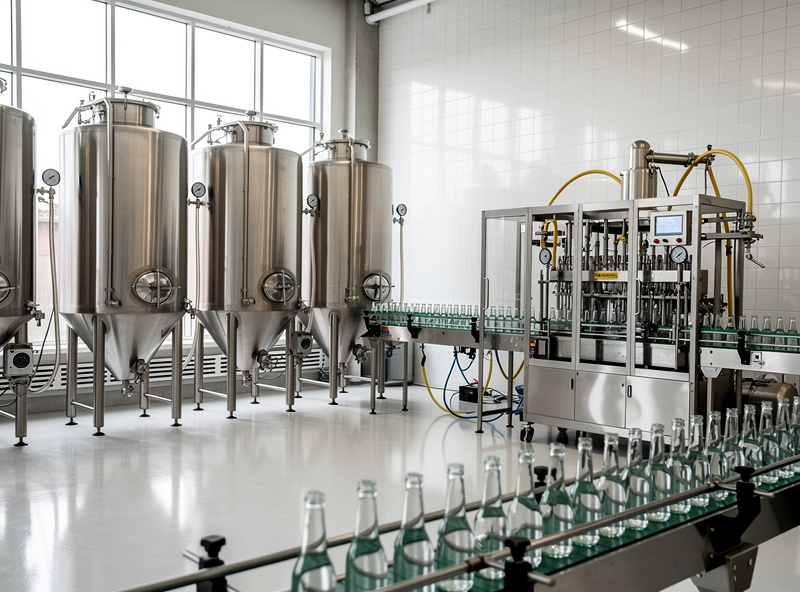
| Production facility | Licensed/inspected commercial kitchen, not home | Local health department |
| Acidified-food rules | pH control, documented process, process authority filing | Food-safety regulator (e.g. FDA in the US) |
| Alcohol content | Keeping ABV under 0.5%, or alcohol licensing if over | Alcohol regulator (e.g. TTB in the US) |
| Labeling | Ingredients, allergens, net contents, warnings | Food-labeling authority |
| Business basics | Business license, insurance, sales tax registration | Local government |
In the United States, for example, kombucha generally falls under FDA acidified-foods regulation, which is why commercial producers document their pH and often complete process-control training — and beverages above 0.5% ABV come under the federal alcohol authority. Other countries have their own equivalents, but the shape is similar everywhere: a controlled facility, a documented safe process, alcohol kept in check, and honest labels. None of this is exotic; it is simply the standard processed-beverage framework, which a home kitchen is not set up to satisfy.
Disclosure: FermentFoundry is reader-supported. As an Amazon Associate I earn from qualifying purchases made through links in this article, at no extra cost to you. I only point to gear I actually use or would buy for my own kitchen.
The Alcohol Problem Nobody Expects
Kombucha that tests above 0.5% ABV is legally an alcoholic beverage in many jurisdictions, which triggers an entirely separate licensing regime. Commercial sellers control this by cold-storing finished product, filtering or adjusting, and testing every batch — because a brew that was compliant when bottled can ferment past the line on a warm shelf.
This is where good fermentation technique becomes a compliance issue, not just a flavour one. The same forces that make a home batch livelier — warmth, time, residual sugar, active yeast — also push alcohol upward, so a producer has to actively keep it down: ferment to target, cold-crash, hold the cold chain, and test. Anyone seriously exploring sales should plan for batch alcohol testing from the start, because “I think it is under 0.5%” is not a defence. If you would rather lean into the alcohol than fight it, the regulated route is to make a labelled hard kombucha under proper alcohol licensing — a different business, but a clearer legal box than trying to hold a non-alcoholic kombucha right at the threshold.
Realistic Paths to Market
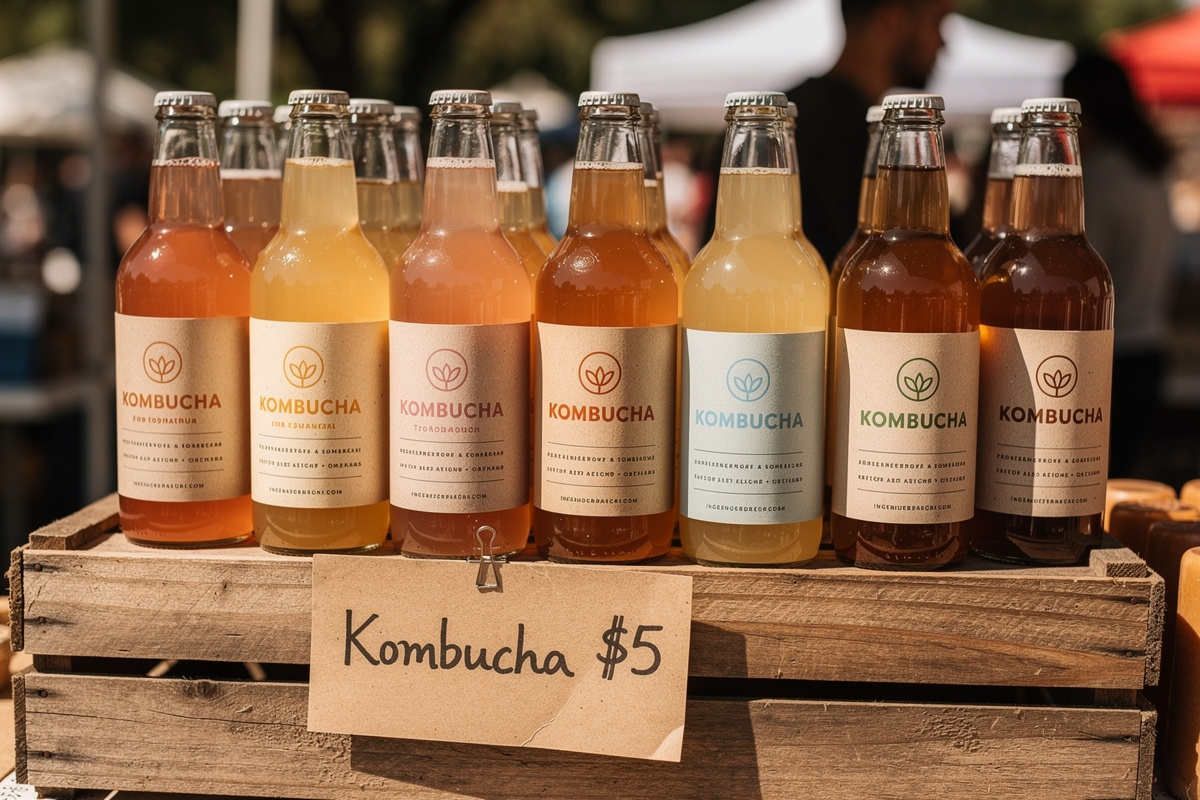
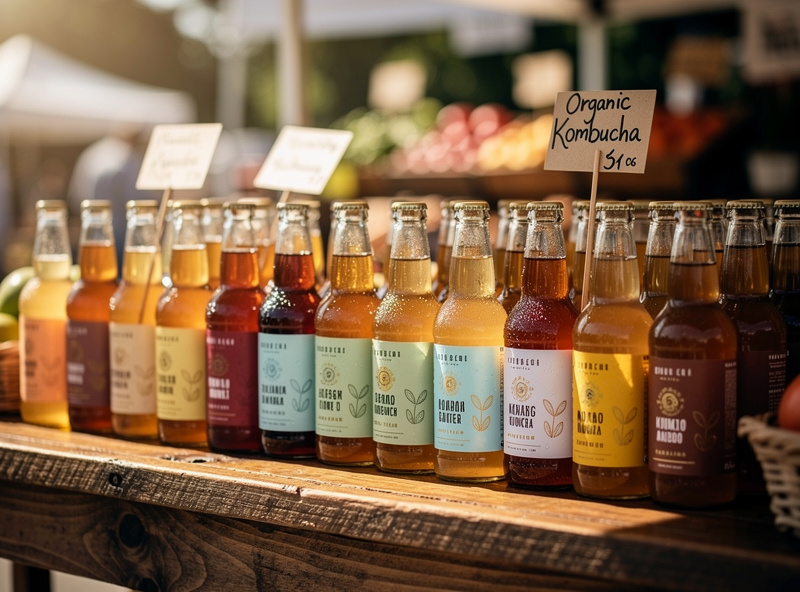
The common routes are a shared licensed commissary kitchen, a farmers-market permit, or a co-packer. Many small producers start by renting time in a certified commercial kitchen and selling at markets under a temporary food permit, then move to their own facility or a co-packer as volume grows. Each step is a conversation with your local regulator.
A shared commissary or commercial kitchen is how most people clear the “must be made in a licensed facility” hurdle without building one — you rent certified space by the hour. Farmers markets often have their own permit process layered on top, sometimes with sampling rules and specific labeling. As things scale, a co-packer (a facility that makes your recipe under their license and process controls) removes the production-compliance burden entirely, at the cost of margin and some control. I am deliberately not going to talk numbers or earnings here — that is genuinely outside what I do and it varies wildly — but the operational sequence above is the well-worn path. Whichever route, it starts the same way: a phone call to your local health department describing exactly what you want to make and sell, and letting them tell you which boxes apply to you.
Labeling and Bottling for Sale
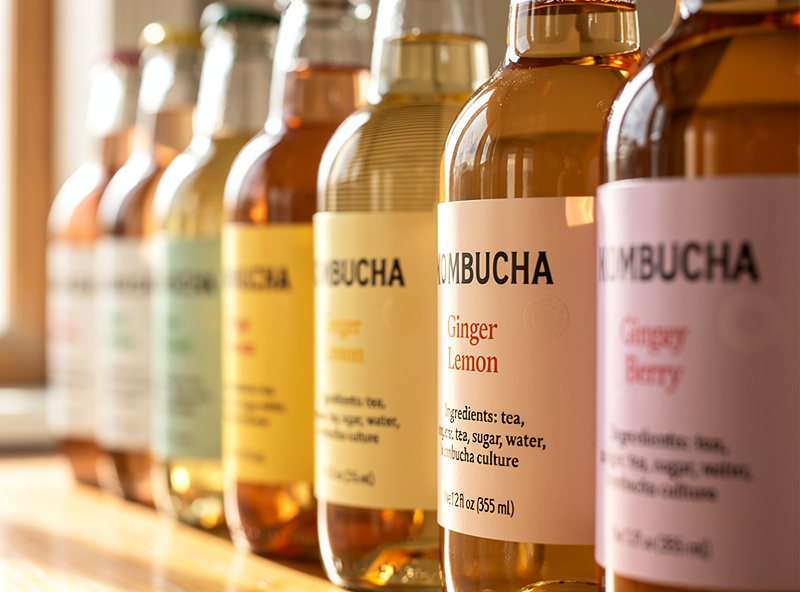
A compliant label generally needs the product name, full ingredient list, allergen statement, net contents, producer details, and often a “contains live cultures” or alcohol-related note depending on your rules. Bottling for sale also means consistent, pressure-safe packaging — typically commercial glass with proper caps, sometimes pasteurized or cold-held to control ongoing fermentation.
Labeling is where a lot of first-time sellers slip, because it is exacting and jurisdiction-specific — net contents in the right units, allergens declared correctly, and any required cautionary wording. On the packaging side, the same bottle-bomb physics that matter at home matter more when a stranger is opening your bottle, so commercial sellers use robust, consistent glass and control fermentation in the bottle through cold-holding or processing. If you are still at the validate-the-idea stage and selling at a market under a temporary permit, sturdy glass kombucha bottles and clean, accurate waterproof bottle labels are the basic packaging tools — though the legal label content is something to confirm with your regulator, not guess at. And the pH control you will be asked to document is exactly the same kombucha pH discipline you already use at home, just written down.
Frequently Asked Questions
Can I sell kombucha made at home?
Usually not directly. Kombucha is a fermented, acidified, mildly alcoholic beverage, so most cottage-food laws exclude it and require production in a licensed commercial kitchen. Rules vary by location, so confirm with your local health department before selling.
Why is kombucha not allowed under cottage food laws?
Cottage-food laws cover shelf-stable, low-risk items like jam and baked goods. Kombucha is a live, acidic, fermenting liquid that regulators treat as higher-risk and process-dependent, and it can become mildly alcoholic, which pushes it into processed-food and sometimes alcohol regulation.
Does kombucha need an alcohol license to sell?
It can. Kombucha that tests above 0.5% ABV is legally alcoholic in many jurisdictions, triggering alcohol licensing. Sellers either keep it under the limit through cold storage and testing, or license it properly as a hard kombucha. Check your alcohol regulator.
What do I need to start selling kombucha?
Generally a licensed commercial or commissary kitchen, a documented acidified-food process with pH control, alcohol kept under the legal limit or licensed, compliant labels, plus a business license and insurance. Start by contacting your local food-safety authority.
Where can small kombucha producers sell legally?
Common starting points are farmers markets under a temporary food permit, using a rented certified commissary kitchen, then scaling to a co-packer or own facility. Each route has its own permits, so confirm the specific requirements with your local regulator.
What must a kombucha label include?
Typically the product name, full ingredient list, allergen statement, net contents, producer details, and any required notes about live cultures or alcohol. Exact requirements are jurisdiction-specific, so verify label content with your food-labeling authority rather than copying others.
Related Articles
- Kombucha Brewing: The Complete Home Guide from SCOBY to Bottle
- Kombucha pH Guide: Safe Levels, Timeline, and Fixes
- Continuous Brew vs Batch Kombucha: Which Method Wins?
- How to Make Hard Kombucha (3-7% ABV) at Home
- How to Keg Kombucha and Force-Carbonate with CO2

About Kenny Nyhus Fadil
A home fermenter documenting brines, bubbles, and the occasional moldy tragedy.