How to Make Hard Kombucha (3-7% ABV) at Home

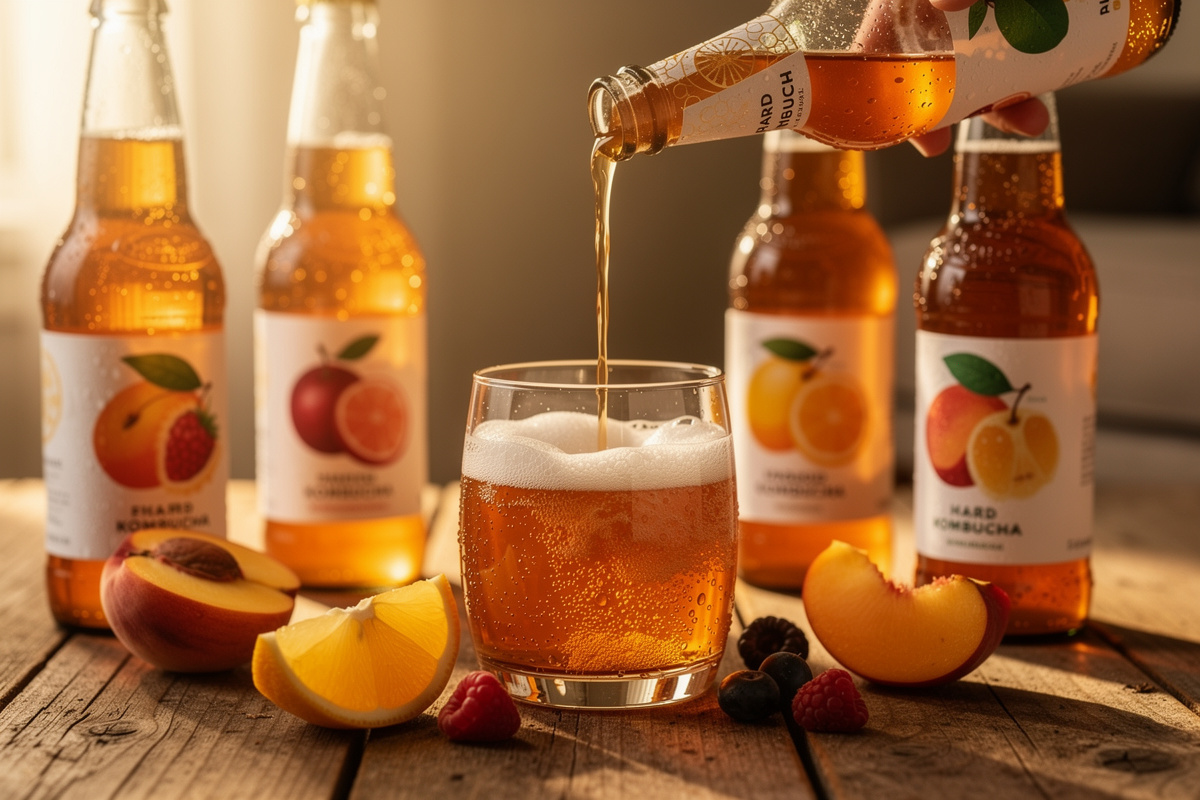
To make hard kombucha, brew a normal strong batch, then run a second fermentation with extra sugar and an alcohol-tolerant wine or champagne yeast in an airlocked vessel — no SCOBY this time. That anaerobic stage pushes the alcohol from kombucha’s usual trace level up to a deliberate 3–7% ABV. Measure it with a hydrometer, then carbonate and chill.
Ordinary kombucha is barely alcoholic — the SCOBY’s own yeast makes a little ethanol that the bacteria mostly convert onward, so a finished brew lands around half a percent to maybe one percent ABV. Hard kombucha is a separate, deliberate step: you stop letting the bacteria win and instead give a proper alcohol yeast the sugar and the sealed, oxygen-free environment it needs to ferment like a cider would. It is the same logic that turns a kombucha into a vinegar if you let acetobacter run — alcohol is the intermediate stage, and here we are choosing to capture it rather than push past it. Here is exactly how to do it, the yeast that actually works, and how to measure the result instead of guessing.
How Hard Kombucha Is Made
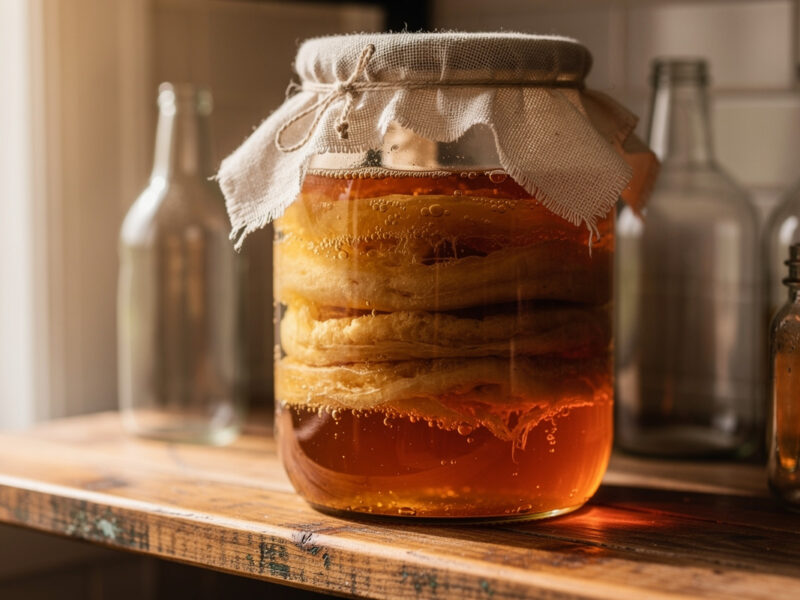
Hard kombucha is made in two stages: a normal aerobic kombucha ferment, then an anaerobic alcoholic ferment. After the first ferment you remove the SCOBY, add more fermentable sugar, pitch a wine or champagne yeast, and seal the vessel under an airlock. The yeast eats the added sugar and converts it to ethanol over one to two weeks.
The reason you switch vessels and seal it is that you are now running a fundamentally different fermentation. Regular kombucha is aerobic — the SCOBY sits on the surface and wants air. Alcohol production is anaerobic — yeast makes far more ethanol and far cleaner flavor when oxygen is shut out, which is why wine and cider go under an airlock. So the SCOBY comes out (park it in your SCOBY hotel), the brew goes into a jug or carboy with an airlock, and from that point it behaves like a light cider. The bacteria that would normally turn the alcohol into acid are suppressed in the low-oxygen, yeast-dominant environment, so the ethanol accumulates instead of disappearing.
Choosing the Right Yeast
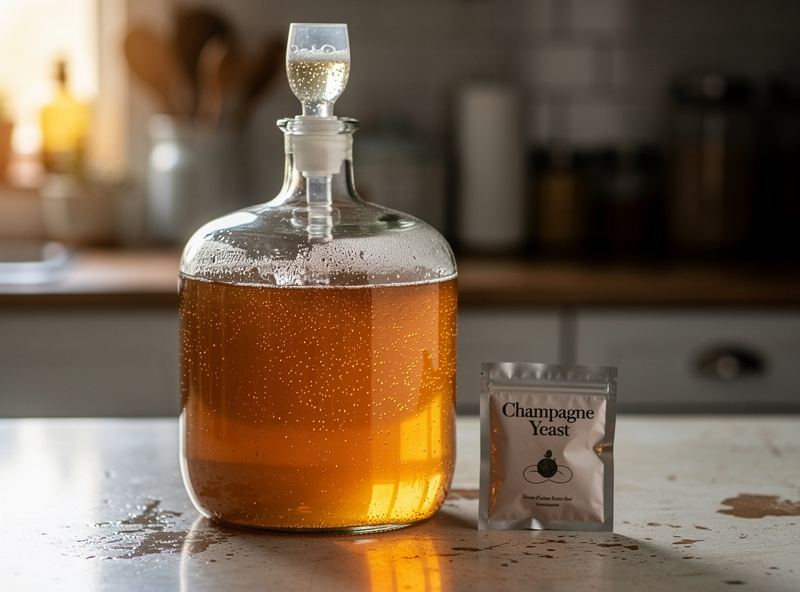
Use a dedicated wine, cider, or champagne yeast — not bread yeast and not the SCOBY’s native culture. Champagne yeast (such as the EC-1118 strain) is the reliable default: it tolerates high alcohol, ferments cleanly to dryness, and leaves a crisp, neutral result that lets the kombucha and any fruit shine.
The SCOBY’s own yeast simply is not built for this — it produces modest alcohol and quits early, which is why a regular brew never gets strong. A proper alcohol yeast changes the ceiling entirely. Champagne strains like EC-1118 tolerate well over 15% ABV, so they will happily ferment all the sugar you give them to bone-dry, every time. A general wine yeast gives a slightly rounder result; an ale yeast leaves more body and fruity esters if you want a fuller, beer-like hard kombucha. The table below is how I think about the choice. Whichever you pick, a sachet of champagne yeast is cheap and stores for ages, so it is worth keeping on hand.
| Yeast type | Alcohol tolerance | Flavor | Finish | Best for |
|---|---|---|---|---|
| Champagne (EC-1118) | Very high (15%+) | Clean, neutral | Bone dry | Crisp, fruit-forward hard kombucha |
| Wine yeast | High (14%+) | Rounder, slightly vinous | Dry | Balanced everyday strength |
| Cider yeast | Moderate–high | Apple-friendly esters | Off-dry to dry | Apple and stone-fruit versions |
| Ale yeast | Moderate (8–10%) | Fruity, fuller body | Some residual sweetness | Beer-like, lower-strength styles |
| SCOBY native yeast | Low (~1%) | Tart, kombucha | n/a | Regular kombucha only — not hard |
Disclosure: FermentFoundry is reader-supported. As an Amazon Associate I earn from qualifying purchases made through links in this article, at no extra cost to you. I only point to gear I actually use or would buy for my own kitchen.
How Much Sugar for Your Target ABV
Alcohol comes from fermentable sugar, and the math is consistent: roughly 17 grams of sugar per litre yields about 1% ABV when fermented to dryness. So to lift a brew by 3%, you add around 50 grams of sugar per litre before pitching the yeast. The SCOBY-fermented base is already fairly dry, so most of your alcohol comes from this added sugar.
In practice I aim for the total potential, not just the addition. If you want a 4.5% hard kombucha, you are looking at roughly 75–80 grams per litre of total fermentable sugar going into the anaerobic stage, give or take what the base still holds. Plain white sugar ferments cleanest; honey, maple, or fruit juice all work but bring their own flavor and a touch more unpredictability. Dissolve the sugar fully, let everything cool to room temperature, pitch the rehydrated yeast, and seal under the airlock. Do not chase ever-higher numbers blindly — past about 7% the kombucha character gets buried and you have essentially made a tart wine. The sweet spot for most people is 4–6%.
Measure It With a Hydrometer
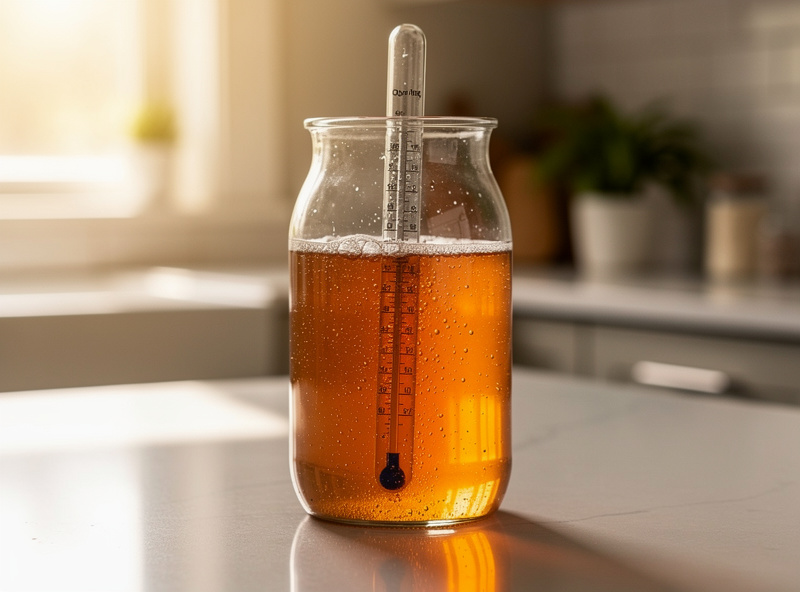
The only way to actually know your ABV is to measure it. Take a hydrometer reading of the original gravity (OG) right after adding sugar and pitching yeast, then a final gravity (FG) reading when fermentation finishes. ABV is roughly (OG − FG) × 131.25. Guessing from sugar alone is a decent estimate; the hydrometer is the proof.
This is where my fermentation habit of measuring everything earns its keep. A hydrometer and test jar costs almost nothing and turns hard kombucha from a guessing game into a controlled process. Float it in a sample, read the gravity at the liquid surface, and the two readings bracket your alcohol. A finished hard kombucha that started around 1.040 and dropped to about 1.000 has fermented to roughly 5% ABV — and an FG that has held steady for two or three days tells you fermentation is genuinely done and safe to package. That stable-FG check is also your insurance against the one real hazard here, which is the next section.
Carbonating and Bottling Safely
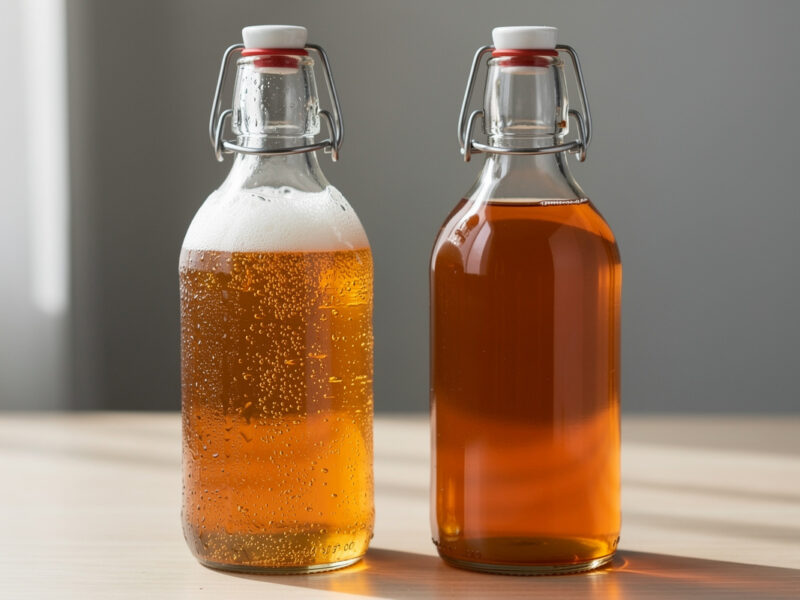
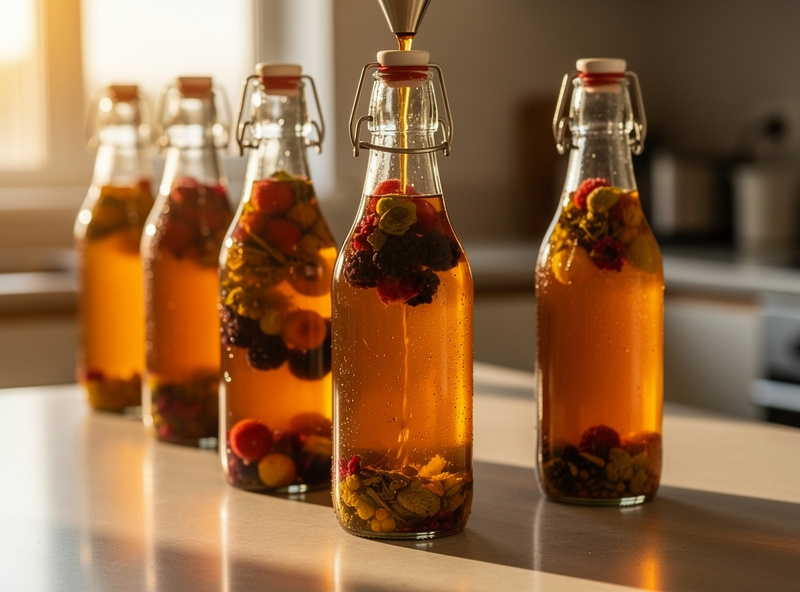
Hard kombucha is usually fizzy, and carbonation is where bottle bombs happen. If you bottle a still-fermenting brew with live yeast and residual sugar in a sealed bottle, pressure keeps building until the glass fails. Either ferment fully dry before bottling, force-carbonate in a keg, or bottle-condition with a small, measured priming dose in pressure-rated bottles.
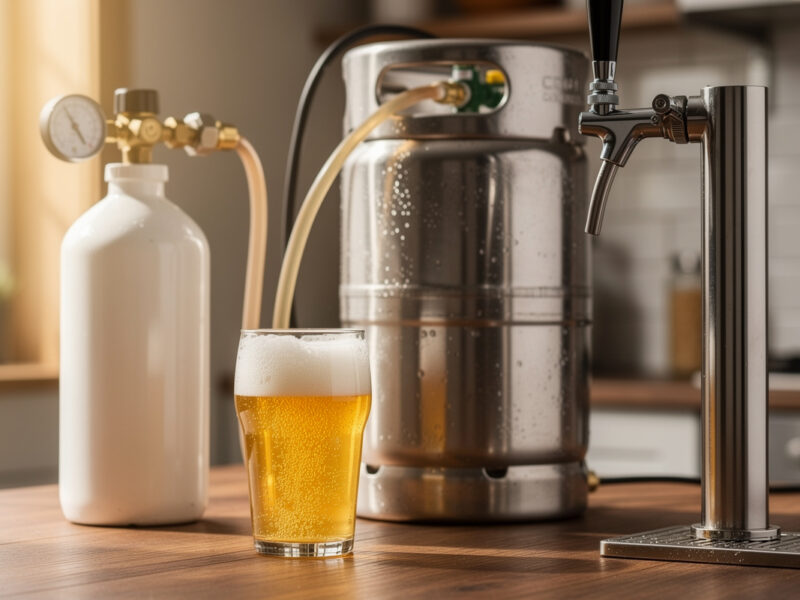
The safest route is to let the yeast finish completely — stable FG, no more activity — then either carbonate in a keg under CO2 or add a precise priming sugar dose and use proper pressure-rated swing-top bottles, never repurposed jars. Once the bottles reach pressure, refrigerate them; cold drops the yeast dormant and halts further carbonation, which is exactly how you avoid the over-pressurized bottle. If you want a sweeter result, back-sweeten only after fermentation is dead and the bottles are going straight into the fridge, or use a non-fermentable sweetener — adding fresh sugar to live yeast in a sealed bottle is the classic bottle-bomb recipe. As for the legal side: in many places brewing alcohol at home for personal use is permitted within set limits, while selling it requires licensing and approvals — that is genuinely jurisdiction-specific, so check your own local rules before you scale up or share widely.
Frequently Asked Questions
What is the difference between kombucha and hard kombucha?
Regular kombucha is barely alcoholic, around 0.5 to 1% ABV. Hard kombucha is deliberately fermented further with added sugar and an alcohol-tolerant yeast in a sealed, airlocked vessel, reaching 3 to 7% ABV like a light cider.
What yeast is best for hard kombucha?
Champagne yeast such as the EC-1118 strain is the reliable default. It tolerates high alcohol, ferments cleanly to dryness, and stays neutral so the kombucha and fruit come through. Wine, cider, and ale yeasts each give a different character.
How much alcohol can hard kombucha reach?
With a proper wine or champagne yeast, hard kombucha commonly reaches 4 to 7% ABV. The yeast can go higher, but past about 7% the kombucha character is lost and the result tastes like a tart wine. Most brewers target 4 to 6%.
How do you measure the alcohol in hard kombucha?
Use a hydrometer. Take an original gravity reading after adding sugar and yeast, and a final gravity reading when fermentation finishes. ABV is roughly the difference multiplied by 131.25. A stable final gravity also confirms fermentation is complete.
Why do hard kombucha bottles explode?
Because live yeast and residual sugar keep producing CO2 in a sealed bottle until the glass fails. Prevent it by fermenting fully dry before bottling, using pressure-rated bottles, refrigerating once carbonated, and never adding fresh sugar to live yeast in a sealed bottle.
Do you keep the SCOBY in for hard kombucha?
No. Remove the SCOBY before the alcoholic stage and store it in your SCOBY hotel. The second ferment is anaerobic and yeast-driven under an airlock, which is the opposite of the aerobic environment the SCOBY needs.
Related Articles
- Kombucha Brewing: The Complete Home Guide from SCOBY to Bottle
- Why Is My Kombucha Not Fizzy? 6 Fixes for Flat Second Fermentation
- SCOBY Hotel: How to Store, Feed, and Revive Kombucha Cultures
- Home Vinegar Making: The Complete Guide from Mother to Bottle
- Fermentation Equipment: The Complete Home Brewer Toolkit

About Kenny Nyhus Fadil
A home fermenter documenting brines, bubbles, and the occasional moldy tragedy.