Fermented Sriracha Recipe (Homemade Rooster Sauce)

Fermented sriracha is the homemade version of the famous rooster-bottle sauce, and it beats the original because the lacto ferment builds a depth of garlic and umami the cooked commercial version never reaches. The recipe is simple: a red jalapeño and garlic mash fermented at 3% salt for two to three weeks, then blended smooth with sugar and vinegar to that signature thick, glossy, tangy-sweet consistency.
I have made sriracha both the quick cooked way and this fermented way, and the fermented batch wins every time on flavour complexity. This guide gives the full method, the pepper choice that gets the colour right, and how to hit the texture and pH that make it shelf stable. It builds on the core technique in my complete fermented hot sauce guide.
Disclosure: FermentFoundry is reader-supported. As an Amazon Associate I earn from qualifying purchases made through links in this article, at no extra cost to you. I only point to gear I actually use in my own kitchen.
What Makes Sriracha Different From Other Hot Sauces
Sriracha is defined by four things: red jalapeño peppers for a medium heat and deep red colour, a heavy dose of garlic, a touch of sugar for sweetness, and a thick, smooth, pourable texture. It is hotter than ketchup but milder than most craft hot sauces — roughly 1,000–2,500 SHU in the bottle — which is exactly why it works as an everyday condiment.
The original commercial sriracha is fermented at the factory, then cooked and stabilised. Making it at home with a live lacto ferment and no final cook keeps all of the fermentation flavour intact. The result is brighter, more garlicky, and more complex. The trade-off is that a raw fermented sauce must hit a safe pH to be shelf stable, which is why the measurement step matters as much here as the recipe — the same logic from my hot sauce pH guide.
Choosing Peppers for the Right Colour and Heat
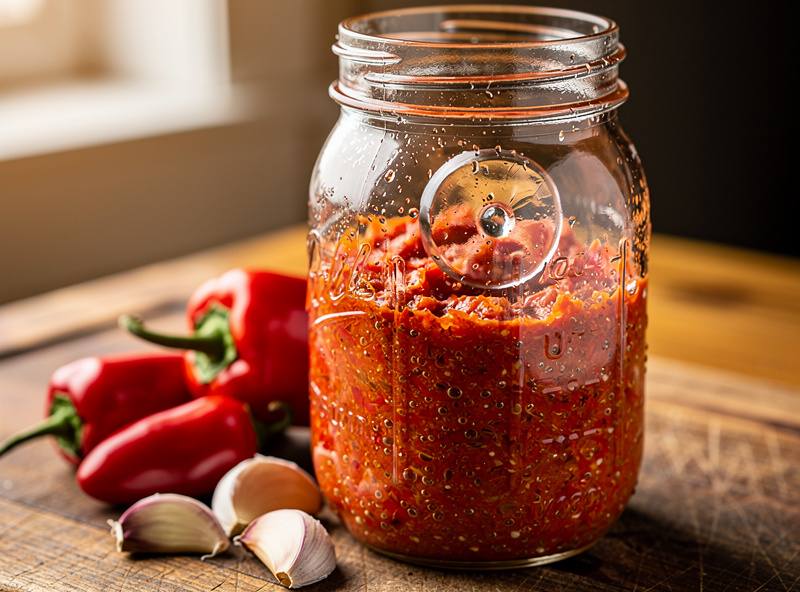
Authentic sriracha uses red jalapeños, which give the medium heat and the deep, glossy red that defines the sauce. Red Fresno or red serrano peppers are excellent substitutes and produce a slightly brighter or hotter sauce respectively. The one rule is to use red, fully ripe peppers — green ones make a muddy, vegetal sauce that misses the mark entirely.
Pepper choice is the single biggest lever on the final character, so it is worth matching it to the heat you want. I cover how each variety behaves in a ferment in my best peppers for hot sauce guide, but for sriracha specifically: red jalapeño for the classic, red Fresno for a touch more fruit, red serrano if you want it noticeably hotter. Keep the garlic generous — roughly one head of garlic per 500 g of peppers is my standard, and it ferments into something mellow and savoury rather than sharp.
The Fermented Sriracha Recipe, Step by Step
This makes roughly two squeeze bottles of sauce. Weigh everything: 500 g red jalapeños (stems removed), one full head of garlic peeled, and 30 g brown sugar. Calculate salt at 3% of the combined pepper-and-garlic weight — for this batch, about 16 g of non-iodised salt. The sugar feeds the ferment and seeds the final sweetness.
Roughly chop the peppers and garlic, blend them with the salt and sugar into a coarse mash, and pack it into a clean jar leaving headspace. Keep the mash submerged under its own liquid with a glass fermentation weight and a loose or airlock lid so gas escapes. Ferment at around 20 °C for 14–21 days, pushing the mash back under the brine daily for the first week. It will bubble actively, smell increasingly sour-garlicky, and darken — all normal. The same submersion and headspace rules from my beginner pepper mash method apply directly.
Blending, Sweetening, and Getting the Texture
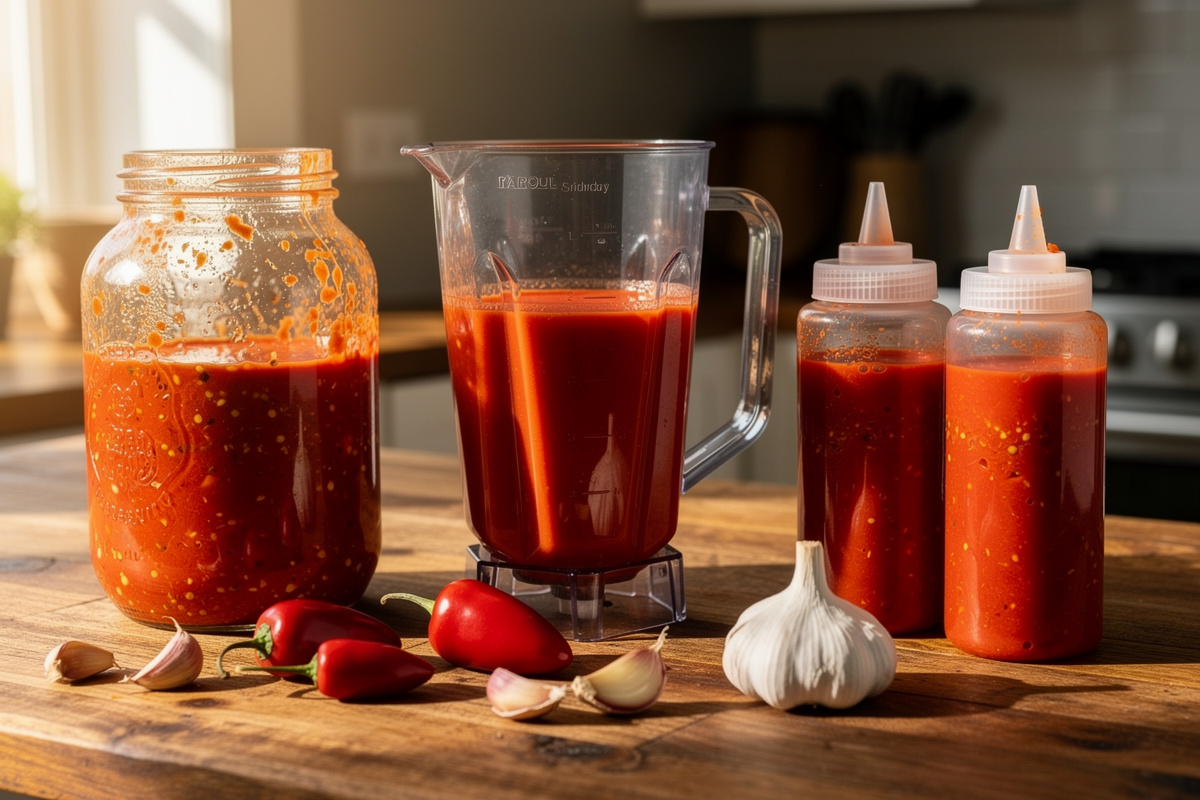
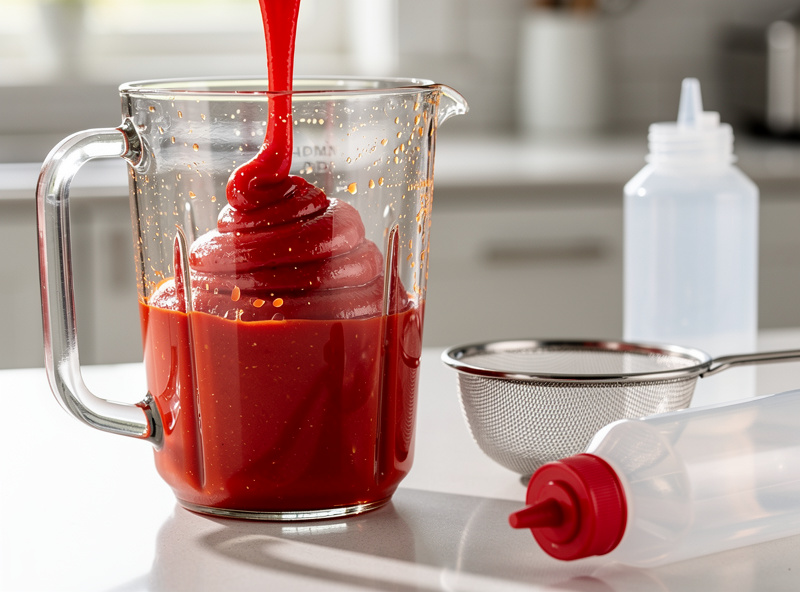
Once the ferment is sour and the bubbling has slowed, it is time to finish. Scrape the mash into a blender, add 60 ml of white or rice vinegar and any reserved brine, and blend on high for 90–120 seconds until completely smooth. Taste and adjust: more sugar for sweetness, more vinegar for tang, a pinch more salt if it falls flat. Then measure the pH and confirm it sits at 3.4 or below before bottling.
Sriracha should be thick enough to sit on a spring roll without running off. If your blended sauce is too thin, you have two options: strain out some of the liquid through a fine-mesh strainer and reserve it, or gently reduce the sauce in a pan over low heat to drive off water — though reducing means a light cook, which trades a little fermentation brightness for body. My full breakdown of thickeners and reduction is in the how to thicken hot sauce guide. For an uncooked sauce, straining is the cleaner route.
Bottling and Storage
A finished fermented sriracha verified at pH 3.4 or below is shelf stable, but the classic move is to bottle it in squeeze bottles and keep it in the fridge, where it holds its colour and flavour for six months to a year easily. Refrigeration also keeps the live ferment from continuing to develop and slowly building pressure in a sealed bottle.
Use clean condiment squeeze bottles for the authentic experience and leave a little headspace. If you bottle a fully shelf-stable batch for the pantry, “burp” the cap occasionally for the first couple of weeks in case any residual fermentation produces gas. Label every bottle with the date and final pH so you always know which storage rule it is living under — the same labelling habit I keep across every ferment in the kitchen.
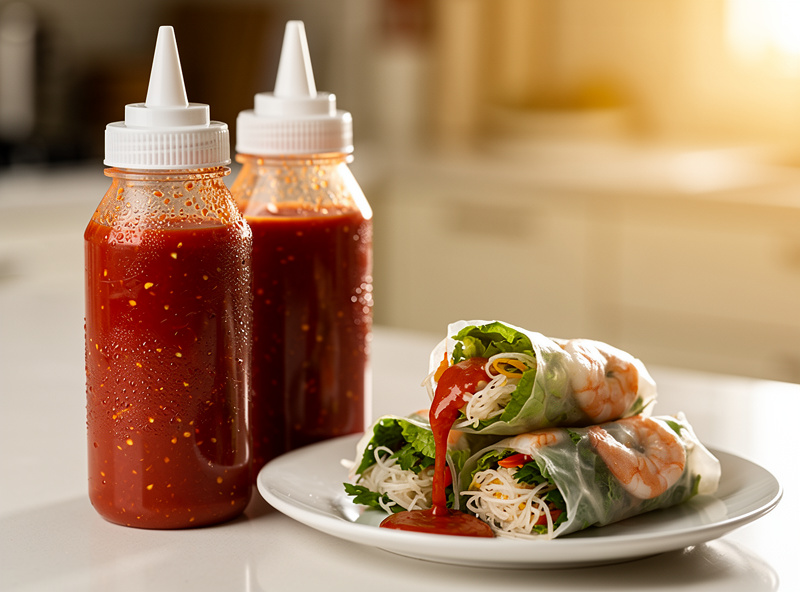
One detail worth getting right: the colour deepens for the first week or two in the bottle as the sauce settles, then holds. If yours looks slightly orange straight after blending, give it a few days before judging it — a true red-jalapeño sriracha matures into a richer red. Stored cold and out of light, the colour stays vivid far longer than a sauce left on a sunny counter.
Fermented vs Quick Sriracha: What You Gain
It is worth knowing what the ferment actually buys you, because a quick cooked sriracha is genuinely faster. The table below compares the two approaches across the factors that matter when you decide which to make.
| Factor | Fermented Sriracha | Quick (Cooked) Sriracha |
|---|---|---|
| Time to bottle | 14–21 days ferment + blend | About 1 hour |
| Flavour depth | Deep, complex, garlicky-umami | Bright, simpler, vinegar-forward |
| Garlic character | Mellowed and savoury | Sharper, more raw |
| Shelf stability | Stable at pH ≤3.4; fridge best for quality | Stable from vinegar + cook |
| Probiotic / live | Live if uncooked | Cooked, not live |
| Effort | Low active time, long wait | Higher active time, no wait |
Troubleshooting Your Sriracha
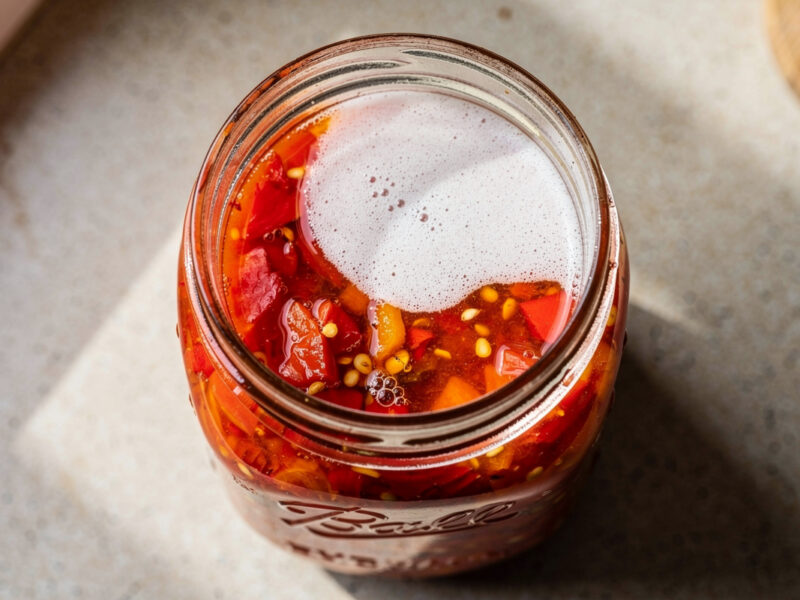
Two issues come up most. A white film on the surface during fermentation is usually kahm yeast — harmless. Skim it off, push the mash back under the brine, and continue; the sauce underneath is fine. Fuzzy, raised, or coloured patches are mold, and that batch goes in the bin. Telling the two apart on sight is a core fermentation skill, and the photo reference is in my hot sauce mold guide.
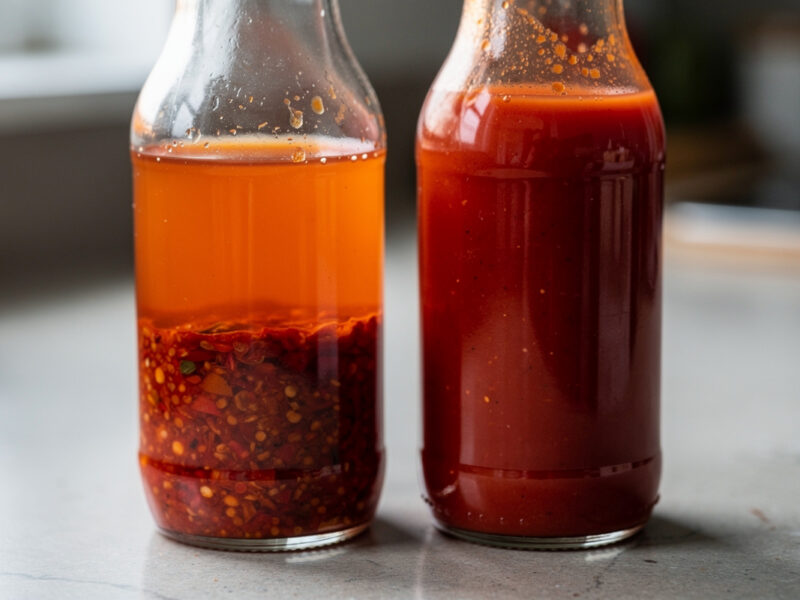
The other common complaint is a sauce that is too thin or separates in the bottle. Thinness is a straining-or-reducing fix as above; separation, where a watery layer rises to the top, is normal for an uncooked sauce with no stabiliser — just shake before use, or blend in a tiny amount of xanthan gum to hold it together permanently. If the flavour is flat, it almost always needs more salt or acid, not more heat.
Frequently Asked Questions
What peppers are used in real sriracha?
Authentic sriracha uses red, fully ripe jalapenos for medium heat and deep red colour. Red Fresno or red serrano peppers are good substitutes, slightly fruitier or hotter respectively. Always use red ripe peppers; green ones make a muddy, vegetal sauce.
How long does fermented sriracha take to make?
Plan on 14 to 21 days of fermentation at around 20°C, plus about 30 minutes to blend, sweeten, and bottle. The active work is minimal; most of the time is the mash quietly souring under its weight while lactobacillus builds the flavour.
Is homemade fermented sriracha shelf stable?
Yes, if you verify the finished sauce at pH 3.4 or below with a calibrated meter. Below 4.0 it is technically shelf stable, but 3.4 gives margin under the 4.6 botulism line. Most people still refrigerate it to preserve colour and flavour.
How do I make my sriracha thick like the bottle?
After blending, strain out excess liquid through a fine-mesh strainer to concentrate the sauce, or gently reduce it over low heat to drive off water. A pinch of xanthan gum also thickens and prevents separation without cooking out the fermentation brightness.
Why is my fermented sriracha separating?
Separation is normal for an uncooked sauce with no stabiliser; a watery layer rises while the pepper solids settle. Shake before use, or blend in a small amount of xanthan gum to hold it together permanently. It is a texture issue, not a safety problem.
Can I leave out the sugar in fermented sriracha?
You can, but sugar is part of what defines sriracha’s tangy-sweet balance, and a small amount also feeds the early ferment. Reduce it if you prefer a sharper sauce, but cutting it entirely moves the result away from classic sriracha toward a plain pepper sauce.
Related Guides on FermentFoundry
- Fermented Hot Sauce: The Complete Home Brewer Guide
- Best Peppers for Hot Sauce: Jalapeño to Ghost
- How to Thicken Hot Sauce
- Fermented Hot Sauce pH: Safe Shelf-Stable Levels
- How to Make Fermented Hot Sauce (Beginner Pepper Mash)

About Kenny Nyhus Fadil
A home fermenter documenting brines, bubbles, and the occasional moldy tragedy.