Fermented Hot Sauce: The Complete Home Brewer Guide

Fermented hot sauce makes commercial vinegar-based supermarket hot sauce taste like a flavour shadow of the real thing. After four years of running fermented mash batches every summer from my garden peppers, my pantry now holds 14 bottles of fermented hot sauce in five distinct heat-and-flavour profiles — total annual cost under 18 dollars in salt and bottles, total annual peppers from garden essentially free. The depth of flavour from a 3-week lacto-ferment of fresh peppers is the kind of thing you cannot buy because no commercial producer can age product that slowly and ship it before the brand changes hands.
This guide is the full system: which peppers ferment cleanest, the salt math that hits the safety window without flattening flavour, the mash-versus-brine decision that decides texture and aging timeline, the daily care routine for the 21-day fermentation, and the blend-strain-bottle finish that turns a fermented mash into a stable hot sauce that ages for years in the fridge. Hot sauce is the most rewarding ferment in my kitchen because the per-bottle output is small (300-500 ml) but each bottle lasts months and tastes nothing like anything you can buy.
Why Fermented Beats Vinegar-Based Hot Sauce
Vinegar-based hot sauce (most supermarket bottles) preserves peppers and chillies in acetic acid, producing a sharp clean heat with limited complexity. Fermented hot sauce uses lactic-acid bacteria to slowly transform peppers, garlic, and salt into a complex umami-and-fruit base before any acid is added. The two products are structurally different beverages — the fermented version carries a noticeably wider flavour-compound range, lower harsh acidity, and a deeper mouth-feel that vinegar pickling cannot produce.
| Method | Time to Bottle | Flavour Depth | Shelf Life | Cost per 250ml | Best For |
|---|---|---|---|---|---|
| Vinegar-quick (raw blend + vinegar) | 1 hour | Sharp, one-dimensional | 3-6 months | $1.50-3.00 | Immediate use, garden surplus |
| Lacto-mash, short ferment | 14 days | Mild umami, fruity | 6-12 months refrigerated | $0.80-1.20 | Gateway fermented sauce |
| Lacto-mash, full ferment | 21-30 days | Deep umami, layered, integrated | 2+ years refrigerated | $0.80-1.20 | Year-round household use |
| Lacto-brine, whole peppers | 14-21 days then blend | Bright tang, fresh pepper note | 12-18 months | $1.00-1.50 | Single-pepper showcase sauces |
| Aged fermented (oak barrel) | 3-12 months | Whisky-like, smoky complexity | 3+ years | $2.50-5.00 | Special-occasion small batch |
| Hot honey crossover | 2-4 weeks | Sweet-fermented heat | 2+ years | $3-5 (honey cost) | Wing glaze, charcuterie |
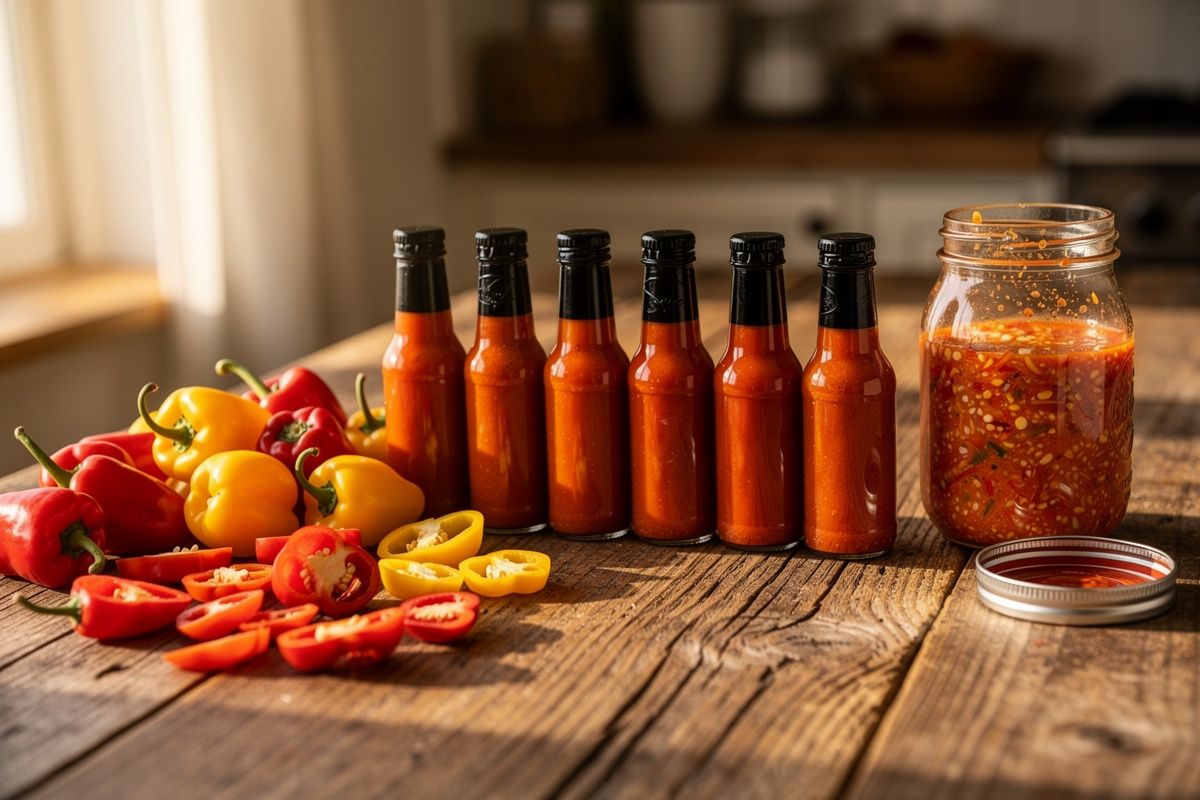
My personal split: lacto-mash full ferment for the daily-use bottles (Habanero-Mango, Smoked Jalapeño, and Mixed-Garden are the three running labels in my fridge), and one annual aged batch in a small American oak barrel for special-occasion use. The vinegar-quick method is what I make when summer peppers come in faster than I can process — a quick stop-gap to clear the harvest, with the fermented version following 3 weeks later. The detailed fermented-mash protocol is documented in my how to make fermented hot sauce.
Picking Your Peppers and Heat Level
The pepper choice decides everything about the final sauce. Different varieties bring different combinations of heat, fruit, smoke, and pepper-character. My standard list after four years: Aji Limon (citrus heat, medium-high), Cayenne (clean heat, medium), Fresno (mild sweet heat, beginner-friendly), Habanero (tropical fruit, very high heat), Jalapeño (vegetal mild heat, smoke-friendly), Scotch Bonnet (sweet floral high heat, similar to Habanero), Serrano (clean medium heat, kitchen workhorse), and one annual experiment with whatever new variety the garden produced.
Heat math matters. A useful Scoville guideline by category: mild (Bell, Anaheim, Poblano, 0-1500 SHU), medium (Fresno, Jalapeño, Cayenne, 2500-50000 SHU), hot (Serrano, Aji, Tabasco, 10000-100000 SHU), very hot (Habanero, Scotch Bonnet, 100000-350000 SHU), brutal (Ghost, Reaper, Trinidad Moruga, 800000-2200000 SHU). Stick to the medium-to-hot range for first ferments; the very-hot and brutal categories produce sauces most households cannot use up before flavour fade.
Ripeness matters as much as variety. Fully red-or-yellow ripe peppers ferment cleanly and produce vibrant sauces. Green-stage peppers (jalapeños picked early, for example) produce greener-tasting, more vegetal sauces with sharper heat — interesting but different. My rule: harvest at the colour-shift point where the bottom third of the pepper has turned to mature colour. That gives you maximum sugar (food for lactobacillus) without the over-ripeness that brings unwanted bitterness.
The Salt Percentage Math for Hot Sauce
Hot sauce ferments at meaningfully higher salt than vegetable lacto-ferments — 3.5-5 percent by total weight of peppers plus water plus aromatics. The reason: the pepper sugars are concentrated and the ferment runs more aggressively than sauerkraut or kimchi; the higher salt keeps the pace controlled and the flavour clean. Below 3 percent the ferment tends toward harsh, fast acidification with off-notes; above 5.5 percent the lactobacillus stalls before pH drops to safe levels.
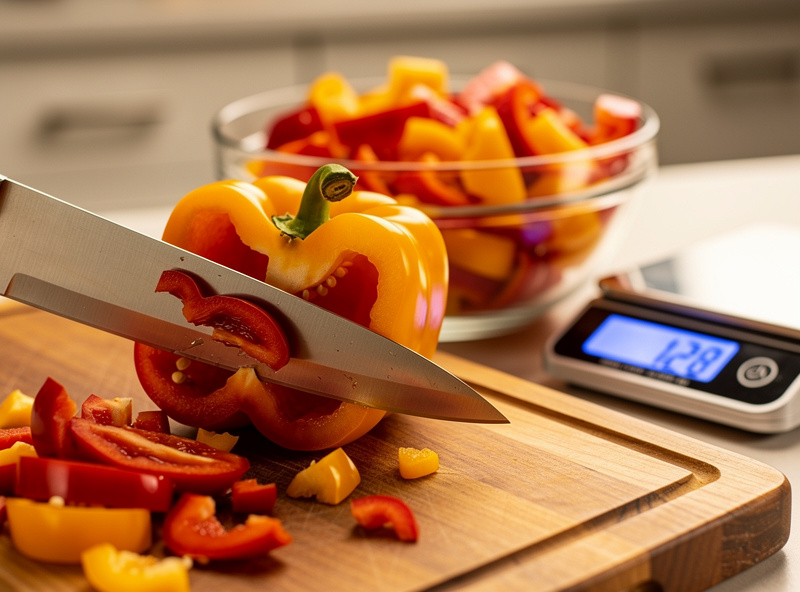
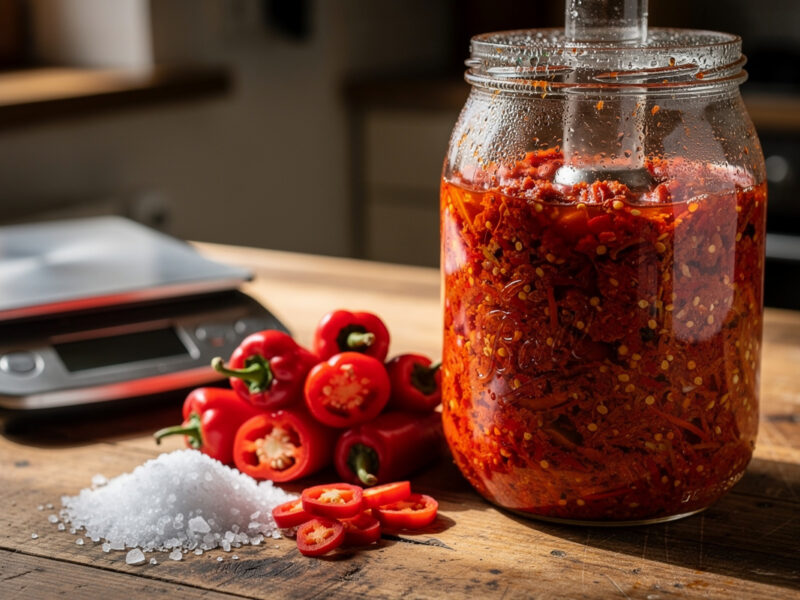
For a 1-kilogram mash batch I use: 800 grams chopped peppers (with seeds removed if I want milder heat, seeds retained if I want full heat), 100 grams chopped onion, 30 grams minced garlic, 70 grams filtered water (to provide some moisture for the mash), 40 grams unrefined salt (4 percent of total 1000-gram weight). Process in a food processor to chunky paste, transfer to a 1.5-litre wide-mouth jar with airlock lid, leave at 18-22 C for 21 days. The same salt-math discipline I use for hot sauce transfers from my broader lacto-fermentation guide; only the specific percentage shifts up slightly for high-sugar pepper substrates.
Salt type matters less than the percentage but only within reason. Use unrefined sea salt, kosher salt, or pure pickling salt. Avoid iodised table salt (iodine inhibits lactobacillus), avoid salt with anti-caking agents. The salt-percentage discipline that decides hot sauce safety is the same one that decides safety in my homemade sauerkraut guide and homemade kimchi guide.
Mash Method vs Brine Method
Two methods cover most hot sauces. Mash method: chop or process peppers into a chunky paste with salt, ferment as a thick mash, blend smooth after fermentation. Brine method: pack whole or halved peppers into a jar with a 3.5-5 percent salt brine, ferment as a brine pickle, blend at the end with some of the brine for moisture. Each produces a different texture and flavour profile.
Mash method is denser, more concentrated, and develops more umami depth because the broken cell walls release more sugars and pepper compounds immediately. The mash also requires less daily skimming because the salted peppers form a self-protecting top layer. My default hot sauce method is mash because the resulting concentrated paste blends to a thicker, more spoonable consistency.
Brine method is brighter, fresher, and preserves the individual pepper character better. The brine itself becomes useful — strained off after fermentation, the brine is an excellent pickling liquid, marinade, or last-minute heat addition to soups. Brine method works particularly well for showcasing single-pepper varieties (Aji Limon brine method captures the citrus note better than Aji mash, for example).
Fermentation Timeline and Daily Care
Days 1-3: visible CO2 production starts, bubbling becomes noticeable, mash colour shifts slightly. Days 4-7: active fermentation, mash may rise and need to be pushed back down daily, bright fruity aroma develops. Days 8-14: fermentation slows, mash drops slightly in volume, deeper umami notes develop alongside the fruity ones. Days 14-21: slow finish, mash stabilises, flavour integrates. By day 21 the mash should taste fully developed — tangy, deep, complex, no harsh notes.
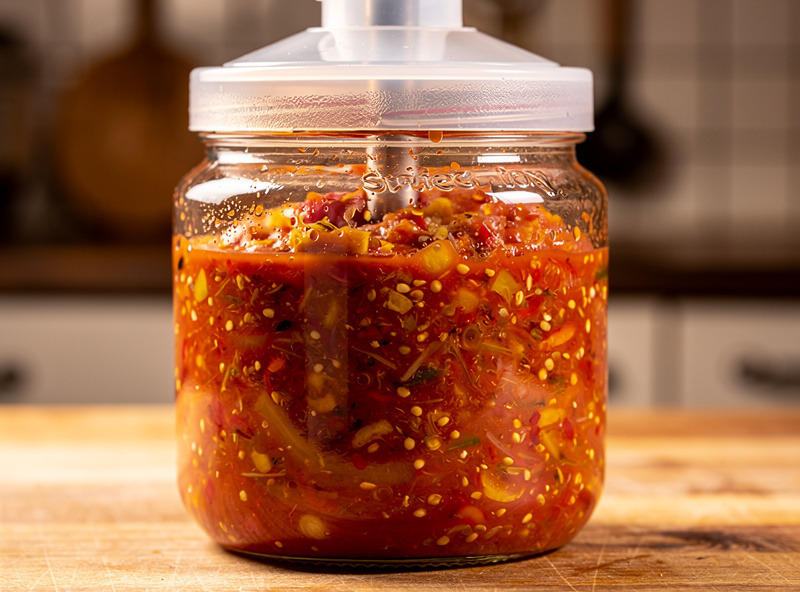
Daily care: check the jar every morning for the first week. Look for active CO2 bubbling (healthy, day 2-5), surface mold or unusual film (problem — diagnose carefully), and proper submersion of the mash below the brine (push down with a clean spoon if it has risen). If using a non-airlock lid, “burp” the jar daily by briefly opening it to let CO2 escape — pressure can build sharply during days 3-5 and a fully sealed jar without an airlock can crack or pop the lid.
Temperature window is 18-22 C. Cooler (16-18) extends to 28-35 days and produces deeper flavour; warmer (24-26) compresses to 14-18 days but risks harsh acidity. My summer batches in a 24 C kitchen run 14-16 days; winter batches in an 18 C basement run 25-28 days. The mold-versus-kahm-yeast diagnosis for surface anomalies during this phase uses the same visual ID skill as my fermented hot sauce mold guide — the photo set there is the reference I send to friends who text panicked photos of their first hot sauce batches.
Blending, Straining, and Bottling
After 21 days of fermentation, the mash is ready to blend into hot sauce. The procedure: drain the mash through a fine mesh strainer over a bowl (save the brine — it is an excellent stand-alone hot brine for splashing on tacos), transfer the solids to a blender, blend on high for 90-120 seconds until completely smooth, slowly add reserved brine while blending to reach the consistency you want (thinner for Tabasco-style, thicker for Cholula-style).
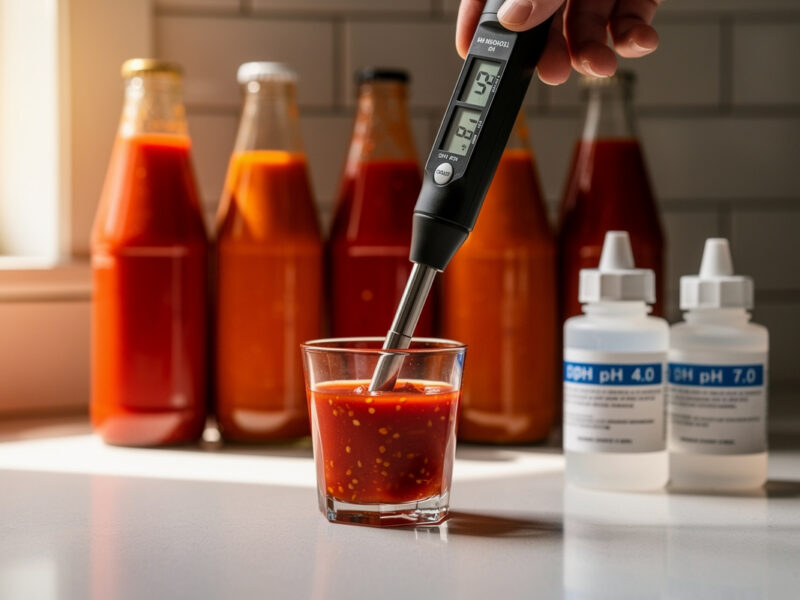
Optional acid adjustment: after blending, taste the sauce. If it needs more brightness, add 2-4 percent (by weight of final sauce) of apple cider vinegar or white wine vinegar. The vinegar both brightens the flavour and adds a safety margin toward the 4.6 acidified-food pH ceiling even if your fermentation did not fully complete on its own. The FDA classifies anything packaged at or below pH 4.6 as an acidified food (21 CFR Part 114), and the rules that apply once you bottle to sell are summarized in Penn State Extension’s acidified-foods guidance. Most of my sauces get a small vinegar add — typically 15-25 grams of vinegar per 500-gram batch.
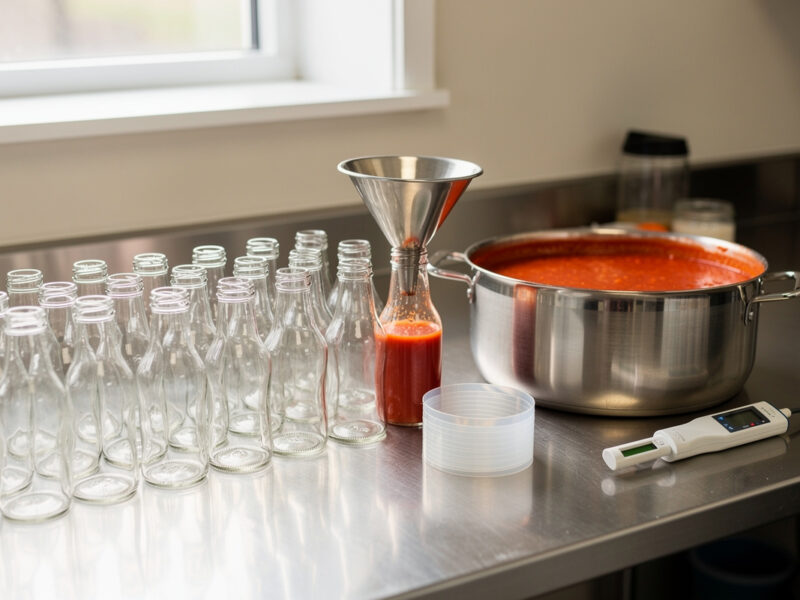
Bottle into dark amber or clear glass with tight caps. Avoid metal lids touching the sauce — the acid corrodes the metal coating over months and the sauce picks up off-flavours. Plastic-lined caps or a small disc of plastic wrap as a barrier between sauce and metal solve this. Label every bottle with date, peppers used, and a heat score (1-10 personal scale). Fridge storage extends shelf life to 2+ years; counter storage is fine if the pH is verified at or below 4.6 with a pH meter or test strips.
Aging and Flavour Development
Fermented hot sauce continues developing flavour for months after bottling. The cold-storage transformation: at week 1 the sauce tastes sharp and integrated but with some rough edges; at month 1 the sharpness has rounded off and the umami has deepened; at month 3 the sauce is at peak — the rough edges are gone, the heat is integrated with the fruit and salt, and the flavour is “finished” in the way good aged cheese is finished.
For longer aging, a small oak barrel transforms hot sauce into something distinctive. A 1-litre charred American oak barrel (40-70 dollars) holds hot sauce well, develops a smoky woody note over 6-12 months, and produces small-batch “aged” hot sauce that pairs beautifully with grilled meats. The barrel works for hot sauce the same way it works for vinegar (covered in my home vinegar making guide) — slow controlled oxygen exposure and wood-compound infusion.
The flavour-deepening principle through cold storage is the same one I apply to aged kimchi, and the same principle curingchamber.com covers for home cheese aging. Slow controlled microbial activity at low temperatures produces depth that fast room-temperature processes cannot replicate. The same labelling discipline (date, batch, age) that I apply to the sauerkraut pantry rotation applies to fermented hot sauce — knowing whether a bottle is 1 month or 6 months old changes how it pairs with food.
Troubleshooting: Surface Film, Off-Smells, Texture
Three common hot sauce problems cover most beginner failures. Surface film: thin papery white film is kahm yeast (cosmetic, skim and continue); fuzzy raised coloured patches are mold (discard). The detailed diagnostic photo set is in fermented hot sauce mold safety, with cross-application to kahm yeast guide — the same visual ID skill works across vinegar, sauerkraut, kimchi, kombucha, and hot sauce.
Off-smells beyond the normal tangy-fruity pepper smell usually trace to: under-salting (under 3.5 percent total weight — bacterial spoilage before lactobacillus dominates), too-warm fermentation (over 26 C — yeast pathways shift toward alcohol and off-notes), or low-quality peppers (over-ripe, partially-rotten, or dusty store-bought peppers carrying surface microflora). The fix is preventive: weigh salt, ferment at 18-22 C, use fresh garden or farmers’-market peppers.
Texture problems split between watery (over-extracted by too-aggressive blending or too much brine added back — reduce brine ratio next batch) and gritty (under-blended, seeds intact — blend longer and strain through finer mesh). Gritty texture from intact seeds is a flavour issue beyond just mouthfeel — pepper seeds can carry bitter compounds. I always remove seeds before fermentation for milder peppers (Bell, Poblano, Fresno) and leave them in for hotter peppers where the seed bitterness adds character.
My Four-Year Hot Sauce System
One annual late-summer batch of 5 mash jars when garden peppers come in waves (typically late August through September), one winter batch of frozen-pepper mash from the freezer overflow, and one annual aged barrel batch in October. Total annual hot sauce production: roughly 14 bottles at 350 ml each, which covers household use and produces enough surplus to gift 3-5 bottles at year-end.
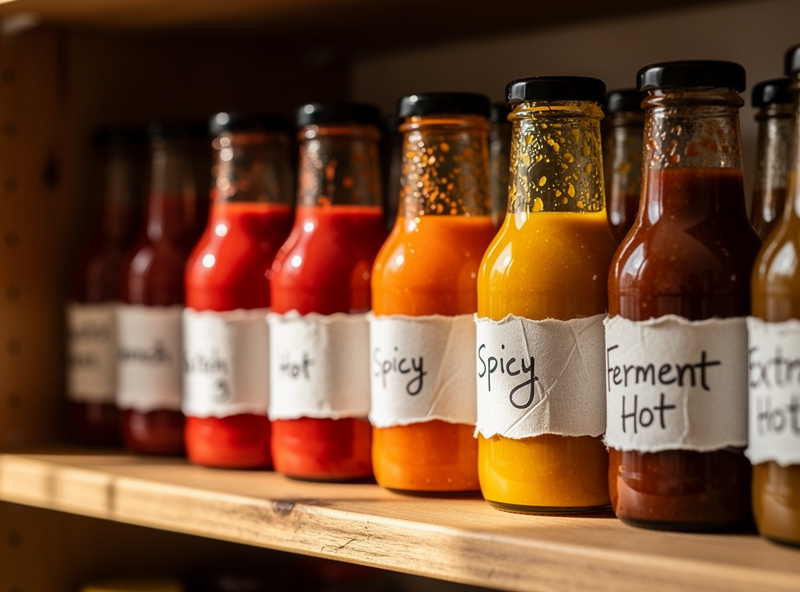
Total annual cost: about 18 dollars in salt, vinegar, and bottles. The peppers come from the garden essentially free. The equipment was bought once and amortised across years: 1.5-litre wide-mouth jars (already in stock), silicone airlock lids (already in stock for kombucha and sauerkraut), a blender (already in the kitchen), and amber bottles with plastic-lined caps (about 12 dollars per 12-pack of 250-ml flip-top bottles). The full equipment context is in my fermentation equipment guide.
For a beginner’s first fermented hot sauce, my recommendation is: 500 grams of fresh ripe Fresno or Jalapeño peppers (medium heat, beginner-friendly), 50 grams chopped onion, 15 grams minced garlic, 35 grams filtered water, 24 grams unrefined salt (4 percent of total 600-gram weight), processed to chunky paste, fermented in a 1-litre wide-mouth jar with silicone airlock lid at 20 C for 18 days, blended smooth, optional 10 grams vinegar at finish, bottled into two 250-ml flip-tops. Total cost for two bottles of homemade fermented hot sauce: under 6 dollars. The lessons from that first batch transfer to every other ferment in the kitchen — see the broader framework in my lacto-fermentation guide and the closely-related sister hub homemade kimchi guide.
Frequently Asked Questions
What salt percentage should I use for fermented hot sauce?
Three and a half to five percent salt by total weight of peppers, aromatics, and added water. For a 1-kilogram batch use 35-50 grams of unrefined sea salt or kosher salt. The percentage is meaningfully higher than vegetable lacto-ferments because pepper sugars are concentrated and the fermentation runs aggressively; the higher salt keeps the pace controlled and the flavour clean.
How long does fermented hot sauce need to ferment?
Twenty-one days at 18-22 C is the standard. Cooler kitchens (16-18 C) extend to 28-35 days with deeper flavour. Warmer (24-26 C) compresses to 14-18 days but risks harsh acidity. Taste-test from day 14 onward; the sauce is ready when the rough vegetal pepper notes have transformed into integrated tangy-fruity-umami complexity with no harsh edges.
Should I use mash method or brine method for hot sauce?
Mash method (chopped peppers fermented as a paste with salt) produces denser, more umami-rich, more concentrated sauce — best for daily-use bottles. Brine method (whole peppers in salt brine) produces brighter, fresher, more pepper-forward sauce — best for showcasing single-pepper varieties. Most home fermenters prefer mash; try brine after 2-3 successful mash batches.
Why is there white film on top of my fermenting hot sauce?
Almost certainly kahm yeast — a thin papery harmless film. Skim it off with a clean spoon, push the mash back under the brine, and continue fermenting. The sauce underneath is fine. If the surface growth is fuzzy and raised in any colour (pink, blue, green, black), that is actual mold and the batch should be discarded for safety.
Do I need to add vinegar to fermented hot sauce?
Optional for taste, useful for safety. Properly fermented hot sauce typically reaches pH well below 4.6 — the threshold below which Clostridium botulinum cannot grow, per FDA 21 CFR 114 — from lactobacillus alone, and is shelf-stable refrigerated. Adding 2-4 percent vinegar at the blend stage brightens the flavour and provides extra pH safety margin for room-temperature storage. Most commercial fermented hot sauces include some vinegar for both reasons.
How long does fermented hot sauce keep in storage?
Two-plus years refrigerated in glass bottles with non-metal-contact caps. The flavour deepens for the first 3 months and then stabilises for the long haul. Counter storage is safe if the final pH is verified at or below 4.6 and the bottles are kept out of direct sunlight. Discard if you ever see mold inside the bottle or smell sulphur — those signal contamination at the cold-storage stage.
Hot Sauce Deep-Dive Guides
This hub covers the whole process; each guide below goes deep on one part of it. Start here, then drill into whichever stage you are working on.
- Best Peppers for Hot Sauce — jalapeño, habanero, and ghost compared on heat, flavour, and how each ferments.
- Pepper Mash Fermentation Method — the no-brine technique that makes a thicker, more concentrated sauce, explained in depth.
- Fermented Sriracha Recipe — a homemade red-jalapeño-and-garlic sriracha that beats the bottle.
- Fruit Fermented Hot Sauce — mango, pineapple, and peach pairings, plus managing the gassy fruit ferment.
- How to Thicken Hot Sauce — xanthan gum, reduction, and arrowroot, with exact ratios.
- Hot Sauce Separation Fix — why a sauce separates, how to tell it from spoilage, and the permanent fix.
- Fermented Hot Sauce pH Levels — the safe ranges for shelf stability and how to test and adjust.
- Bottling Hot Sauce for Sale — the acidified-food rules, pH proof, and labelling behind selling legally.
Related Guides on FermentFoundry
- How to Make Fermented Hot Sauce at Home (Beginner Pepper Mash)
- Fermented Hot Sauce Mold: Is It Safe? When to Scrape vs Toss
- Lacto-Fermentation for Vegetables: The Complete Home Guide
- Home Vinegar Making: The Complete Guide from Mother to Bottle
- Fermentation Equipment: The Complete Home Brewer Toolkit

About Kenny Nyhus Fadil
A home fermenter documenting brines, bubbles, and the occasional moldy tragedy.