How to Thicken Hot Sauce: Xanthan, Arrowroot, Reduction

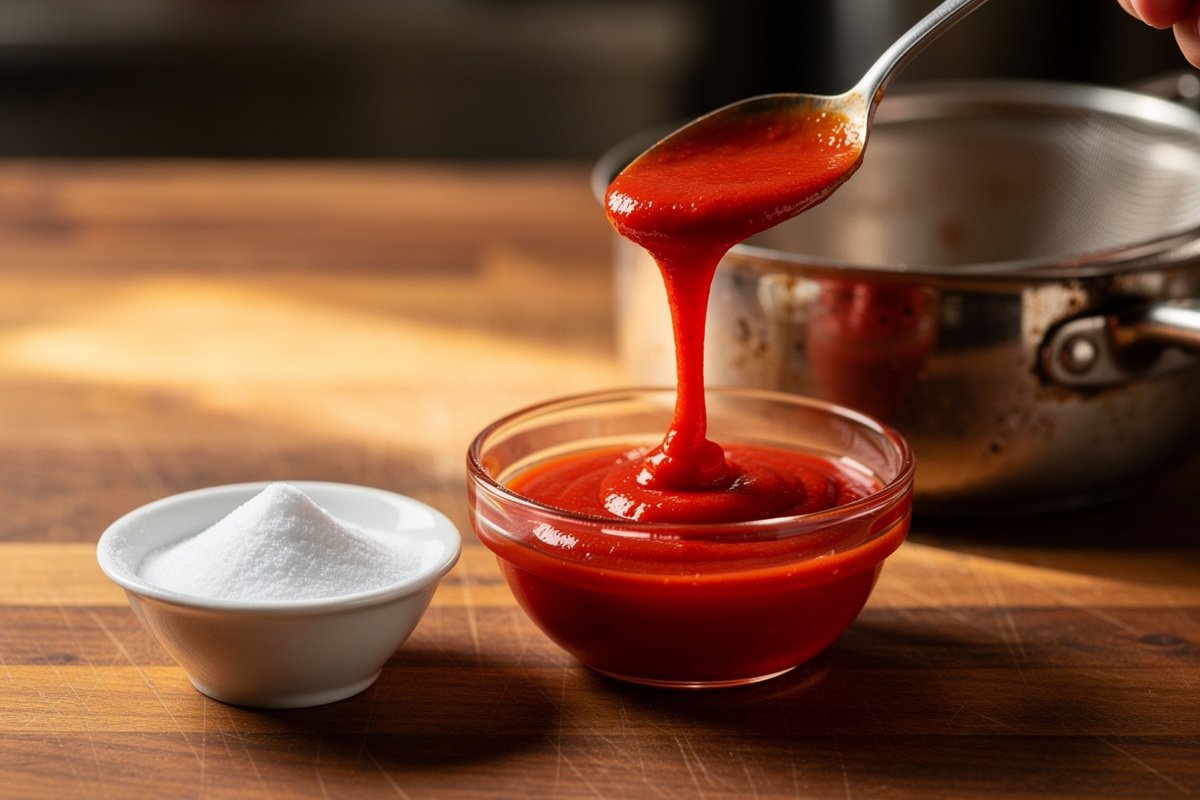
To thicken hot sauce you have three reliable tools: xanthan gum for an instant, no-cook fix, reduction for concentrated flavour, and starches or pectin when you want body with a glossy finish. The fastest and most professional is xanthan gum — a quarter teaspoon blended into a cup of sauce takes a watery pourable sauce to a clinging, bottle-worthy texture in seconds.
I have thickened dozens of batches of fermented hot sauce, and the method you pick depends on whether the sauce is raw or cooked and how much you care about preserving the live ferment. This guide covers each method, the exact ratios, and which one suits which sauce. It sits alongside the texture work in my complete fermented hot sauce guide.
Disclosure: FermentFoundry is reader-supported. As an Amazon Associate I earn from qualifying purchases made through links in this article, at no extra cost to you. I only point to ingredients and gear I actually use in my own kitchen.
Why Hot Sauce Comes Out Thin in the First Place
Most homemade hot sauce is thin because peppers are roughly 90% water, and a fermented mash adds brine on top of that. When you blend and strain, you are left with a flavourful but watery liquid that runs straight off food instead of clinging to it. Thickening is about either removing water or adding something that holds the water in suspension.
That distinction matters because it splits the methods into two families. Reduction and straining physically remove water, concentrating both texture and flavour. Xanthan gum, starch, and pectin add a binder that thickens without changing the volume much. For a raw, live fermented sauce, the no-cook binders win because they keep the fermentation brightness intact, while reduction means a light cook. The same separation issue I cover in my hot sauce separation guide is the flip side of this — a properly thickened sauce also stops separating.
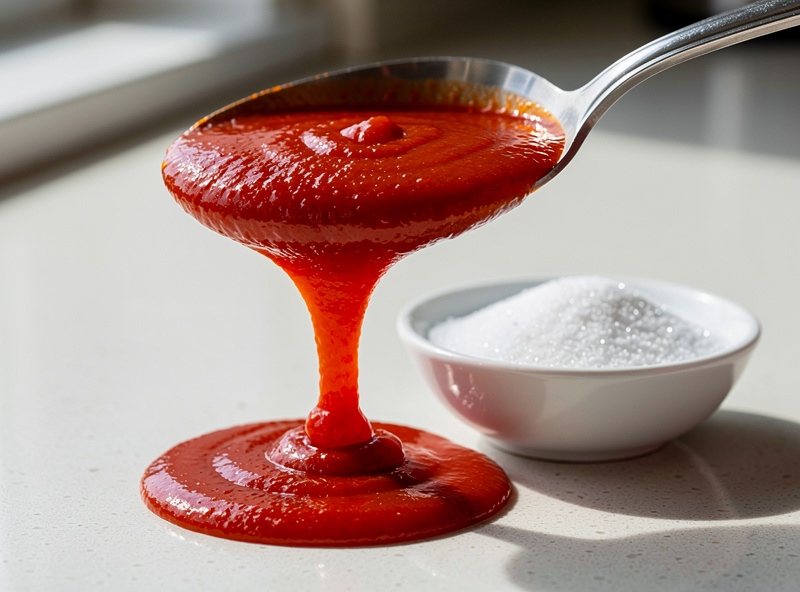
Method 1: Xanthan Gum (The No-Cook Standard)
Xanthan gum is what most commercial hot sauce companies use, and for good reason: it thickens cold, needs only a tiny amount, and holds the sauce together permanently so it never separates. The dose is small — about 0.1 to 0.3% of the sauce weight, which works out to roughly a quarter teaspoon per cup of sauce. Start low; it is easy to overdo.
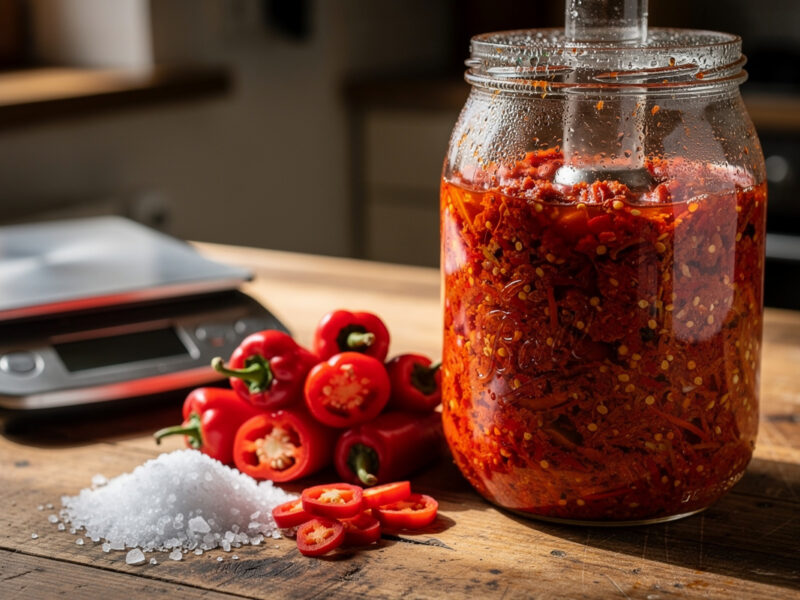
The technique is the whole game. Add the xanthan gum while the blender is running so it disperses instead of clumping into gel beads. A high-speed or immersion blender makes dispersal much easier than stirring by hand. Blend the sauce, then with the motor going, sprinkle in the powder a pinch at a time and let it run 30–60 seconds. The sauce thickens as it sits, so wait a minute before deciding it needs more. Too much xanthan makes a slimy, snotty texture that no amount of blending fixes, so under-dose and build up. This is the method I reach for on any raw fermented sauce I want to keep live.
Method 2: Reduction (Concentrated Flavour)
Reduction means simmering the sauce gently to evaporate water, which thickens it and intensifies the flavour at the same time. It is the only method that makes the sauce taste more of itself, because you are concentrating the peppers rather than diluting them with a binder. A sauce reduced by a third becomes noticeably thicker and deeper.
The cost is that reduction is a cook, so it kills the live cultures and softens some of the bright, fresh fermentation notes. Keep the heat low and stir often — high heat scorches the pepper solids and turns the sauce bitter. I use reduction on sauces I am already cooking or on a batch where deep, mellow flavour matters more than keeping it raw. It pairs especially well with fruit-based sauces, where the natural sugars and pectin help the body along, as in my fruit hot sauce guide.
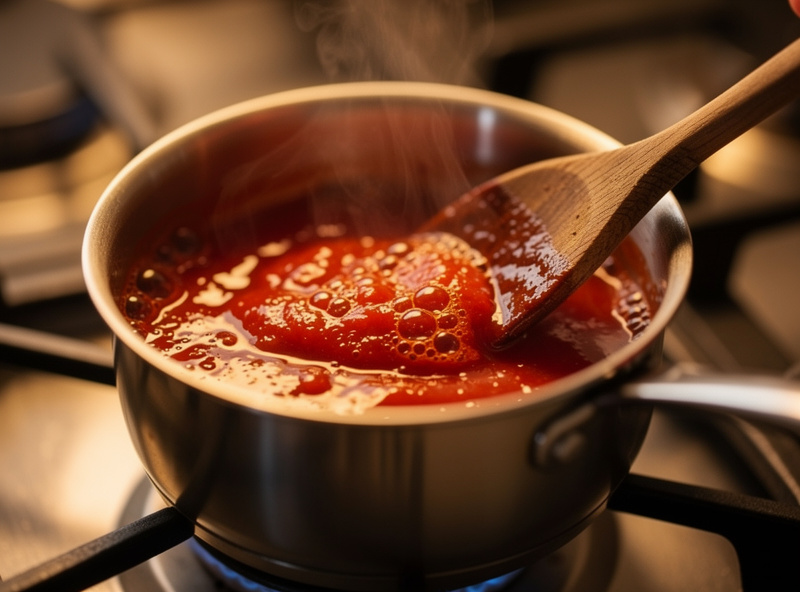
Method 3: Starch, Arrowroot, and Pectin
Starches give body with a glossy finish but require cooking. Arrowroot and cornstarch both work as a slurry — mix a teaspoon with a little cold water, stir into the warm sauce, and heat briefly until it thickens and clears. Arrowroot gives a cleaner, more transparent gloss than cornstarch and tolerates acidity better, which makes it the better choice for hot sauce.
Pectin is the other option, the same gelling agent used in jams. A small amount of low-methoxyl pectin thickens an acidic sauce nicely and suits high-fruit recipes. The catch with all three is that they need heat to activate, so like reduction they cook off the live ferment. They also continue to set as the sauce cools, so stop while it still looks slightly thin. For a raw sauce, skip these and use xanthan; for a cooked sauce where you want a smooth, glossy body, arrowroot is my pick.
Hot Sauce Thickener Comparison
Here is how the methods stack up on the factors that actually decide which to use — whether it cooks the sauce, how much you need, and the texture it produces.
| Method | Cooks the Sauce? | Amount | Texture Result | Best For |
|---|---|---|---|---|
| Xanthan gum | No | ~0.25 tsp per cup | Smooth, clinging, stable | Raw / live sauces |
| Reduction | Yes | Reduce by 1/4–1/3 | Thick, concentrated, deep | Maximum flavour |
| Arrowroot | Yes | ~1 tsp slurry per cup | Glossy, clear body | Cooked smooth sauces |
| Cornstarch | Yes | ~1 tsp slurry per cup | Glossy, slightly opaque | Quick cooked sauces |
| Pectin | Yes | Small, per package | Jam-like set | High-fruit sauces |
| Straining / less liquid | No | Remove brine | Naturally thicker | Any sauce, no additives |
The No-Additive Route: Solids and Vegetables
You can thicken hot sauce with nothing but technique. The simplest move is to strain off less liquid when you blend, or to strain the blended sauce through a fine-mesh strainer and add the brine back only until you reach the consistency you want, reserving the rest as a stand-alone hot splashing brine. More pepper solids in the blend equals a thicker sauce.
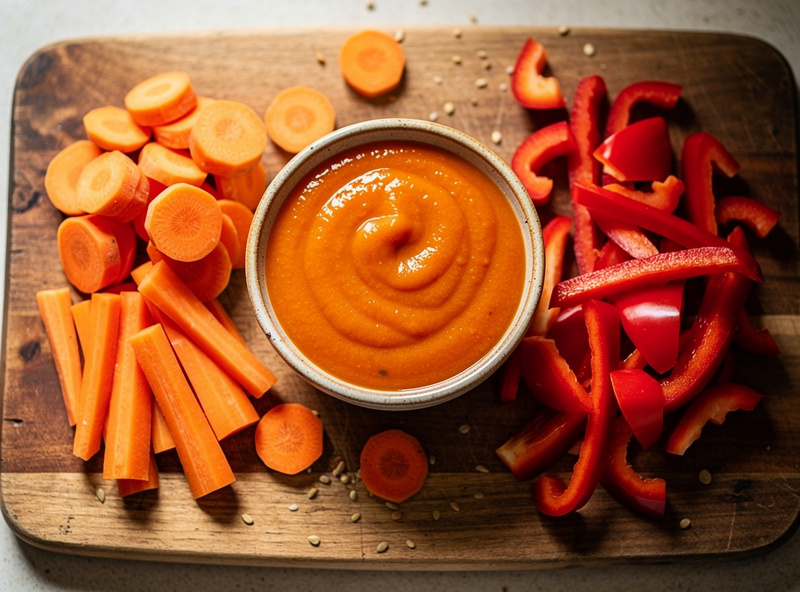
The other natural route is blending in a starchy or pulpy vegetable. A small amount of cooked carrot, roasted bell pepper, or even a little tomato adds body, sweetness, and a smoother mouthfeel without any isolated additive. Carrot is the classic — it is what gives many Caribbean-style sauces their thick, clinging texture. Blend it in before you strain, and adjust the salt and acid afterward since the extra volume dilutes both. This keeps the sauce raw if the vegetable is added cold, though a quick blanch makes carrot blend smoother.
Common Thickening Mistakes
The most frequent error is overdosing xanthan gum, which produces a slimy, gummy texture that cannot be undone — always start with less than you think and build up after letting it rest. The second is reducing over high heat, which scorches and embitters the sauce; low and slow is the only way. The third is adding starch directly to hot sauce instead of as a cold slurry, which makes lumps.
A subtler mistake is thickening too early. If you thicken before the sauce has finished settling and you have made your final salt and acid adjustments, the binder locks in a texture you may then dilute when you tune the flavour. I always get the taste and pH right first, and treat thickening as the very last step before bottling.
One safety note: thickening does not change the pH, so it does not make an unsafe sauce safe. Thicken after you have verified the sauce sits at or below the shelf-stable target in my hot sauce pH guide, and never use thickness as a proxy for preservation. Texture is about mouthfeel; acidity is about safety, and they are entirely separate jobs.
Frequently Asked Questions
What is the best thickener for hot sauce?
Xanthan gum is the best all-around choice. It thickens cold without cooking, needs only about a quarter teaspoon per cup, and holds the sauce together permanently so it never separates. It is what most commercial hot sauce companies use for exactly these reasons.
How much xanthan gum do I use to thicken hot sauce?
Use roughly 0.1 to 0.3% of the sauce weight, about a quarter teaspoon per cup. Add it with the blender running so it disperses, then wait a minute as it thickens before adding more. Too much creates a slimy texture that cannot be fixed.
How do I thicken hot sauce without cooking it?
Use xanthan gum or strain off excess liquid. Both keep the sauce raw and preserve the live fermentation. Blending in cold pulpy vegetables like carrot also adds body without heat. Avoid starches and reduction if keeping the sauce live matters to you.
Is arrowroot or cornstarch better for hot sauce?
Arrowroot is better. It gives a cleaner, more transparent gloss, tolerates the acidity of hot sauce better than cornstarch, and does not turn cloudy. Both require cooking as a cold-water slurry stirred into the warm sauce until it thickens.
Why is my thickened hot sauce slimy?
You used too much xanthan gum. It creates a stringy, snotty texture above roughly 0.3% by weight, and it cannot be reversed once blended in. The fix is prevention: under-dose, let the sauce rest a minute to thicken, then add more only if needed.
Does thickening hot sauce make it safe to store?
No. Thickening changes only the texture, not the pH, so it does nothing for safety. Always verify the sauce sits at pH 3.4 or below with a calibrated meter for shelf storage, then thicken separately. Acidity preserves; thickness only improves mouthfeel.
Related Guides on FermentFoundry
- Fermented Hot Sauce: The Complete Home Brewer Guide
- Hot Sauce Separation: Why It Happens and How to Prevent It
- Fermented Sriracha Recipe: Homemade Rooster Sauce
- Fermented Hot Sauce pH: Safe Shelf-Stable Levels
- Fruit Fermented Hot Sauce: Mango, Pineapple, and Peach

About Kenny Nyhus Fadil
A home fermenter documenting brines, bubbles, and the occasional moldy tragedy.