Fruit Fermented Hot Sauce: Mango, Pineapple, Peach

A fruit fermented hot sauce balances the heat of peppers against the sweetness of mango, pineapple, or peach, and the lacto ferment ties them together into something rounder and more complex than a fresh blender sauce. The classic is mango-habanero: tropical fruit, floral heat, and a tang that only fermentation gives. The method is the same 3% salt mash as any hot sauce — the fruit just changes the balance and speeds the ferment.
I make a mango-habanero batch every summer when the habaneros come in, and fruit sauces have become some of my favourites for how the sweetness softens serious heat. This guide covers the best fruit-and-pepper pairings, the few things fruit changes about the ferment, and how to keep it safe. It builds on the core method in my complete fermented hot sauce guide.
Disclosure: FermentFoundry is reader-supported. As an Amazon Associate I earn from qualifying purchases made through links in this article, at no extra cost to you. I only point to gear I actually use in my own kitchen.
Why Fruit Works So Well in Hot Sauce
Fruit brings three things to a hot sauce: sweetness that balances capsaicin heat, natural sugars that feed a vigorous ferment, and pectin that adds body. The sweetness is the key — sugar is the most effective counter to chilli burn, which is why a mango-habanero sauce can carry far more heat than a plain pepper sauce while still tasting approachable.
Fermentation does something a fresh fruit salsa cannot: it deepens the fruit. The lactobacillus converts some of the sugar to lactic acid, which trades raw sweetness for a tangy, complex sweet-sour balance and pushes the fruit’s aroma forward. A fermented mango sauce tastes more intensely of mango than a fresh one. The trade-off is that the extra sugar makes the ferment faster and gassier, which is the one real adjustment fruit demands — covered below. Habanero is the natural partner here for its apricot-citrus aroma, which I detail in my best peppers for hot sauce guide.
The Best Fruit and Pepper Pairings
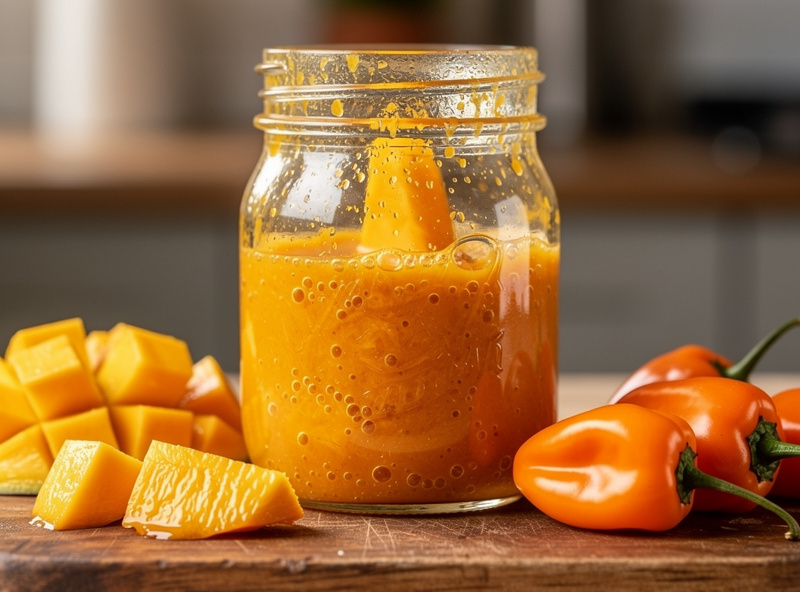
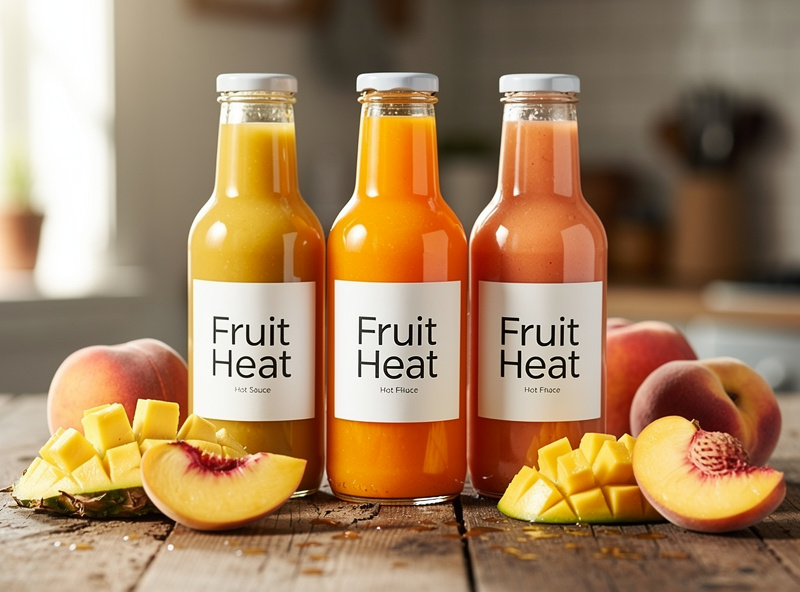
The reliable pairings match a fruit’s character to a pepper’s heat and aroma. Mango with habanero is the benchmark — sweet, tropical, floral, and hot. Pineapple with habanero or jalapeño gives a brighter, more acidic sauce that needs less added vinegar. Peach with ghost pepper or scotch bonnet makes a deep, almost barbecue-like sauce.
Other combinations worth making: pineapple-jalapeño for a mild crowd-pleaser, apricot-scotch bonnet for a Caribbean profile, and apple or pear with cayenne for an autumn sauce. The rule is to match sweetness to heat — the hotter the pepper, the more fruit sugar you want to balance it. A 50/50 fruit-to-pepper ratio is a good starting point for a medium-hot sauce; push toward 60/40 fruit for something sweeter and more approachable. Whatever the ratio, the salt is still calculated at 3% of the total combined weight of fruit and peppers together.
A Mango-Habanero Recipe to Start From
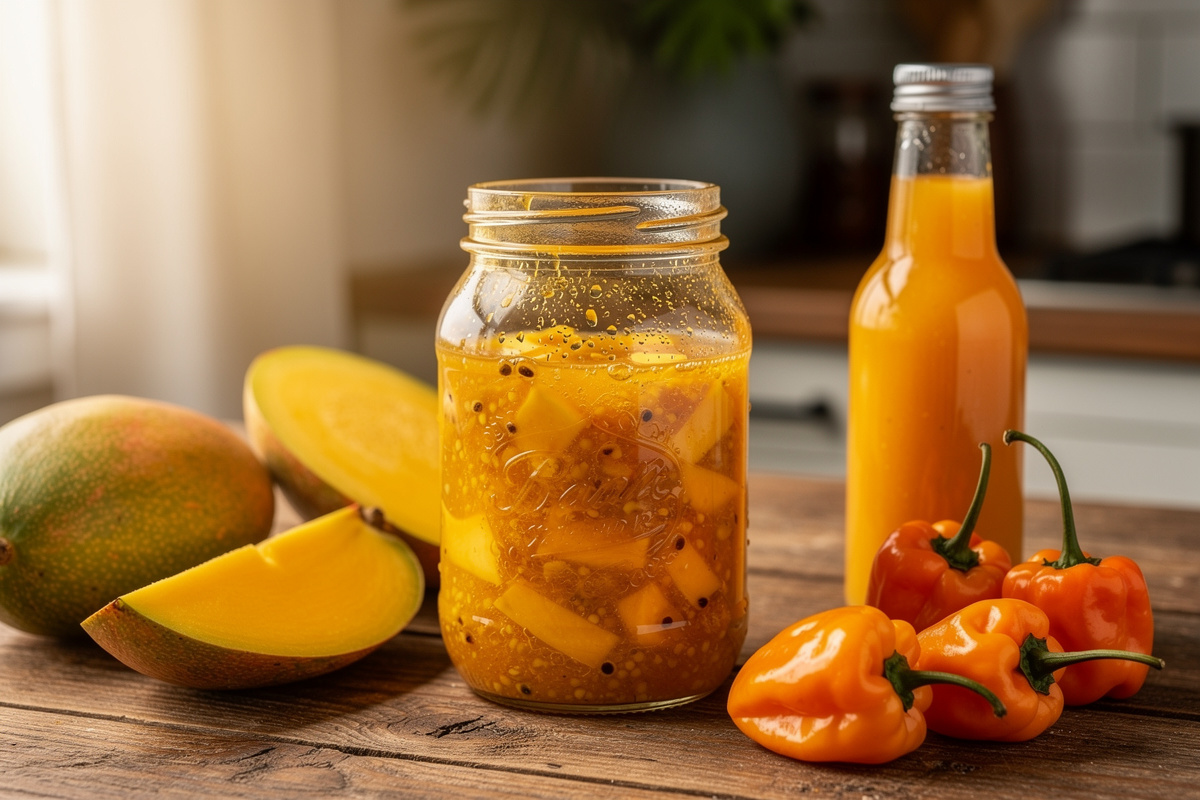
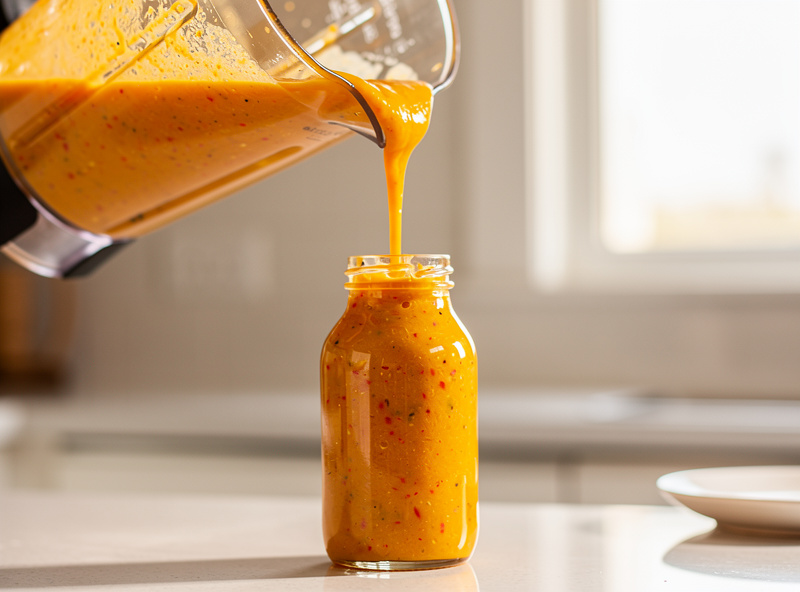
Weigh 300 g ripe mango flesh, 300 g orange habaneros (stemmed), and calculate 3% salt of the combined 600 g — about 18 g of non-iodised salt. Roughly chop, blend into a coarse mash with the salt, and pack into a jar with headspace. Because fruit ferments fast and gassy, leave more headspace than usual and use an airlock or burp the lid daily.
Keep the mash submerged with a glass fermentation weight and ferment at around 20 °C. Fruit sauces finish faster than plain pepper mashes — often 7–14 days rather than the full three weeks — because the abundant sugar gives the lactobacillus more to work with. Watch for the bubbling to slow, then blend smooth, balance with a little vinegar, and check the pH. The faster timeline is the main practical difference from the standard beginner pepper mash.
Managing the Extra Gas and Sugar
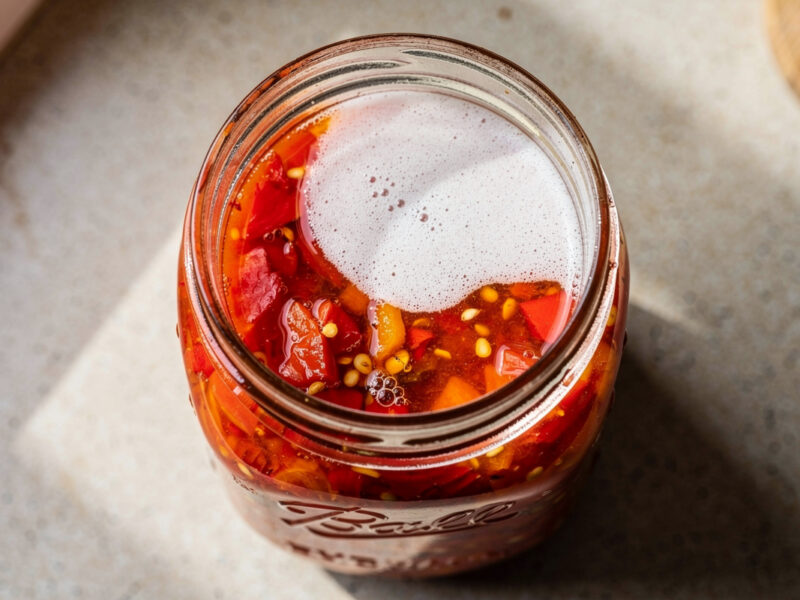
The one thing fruit genuinely changes is gas production. All that sugar means a far more active ferment, more carbon dioxide, and a real risk of a jar overflowing or a sealed lid building dangerous pressure. This is the single most common fruit-sauce mistake, and the fix is simple: use an airlock lid, leave generous headspace, and stand the jar on a plate.
A silicone airlock lid lets the CO2 escape while keeping oxygen out, which is exactly what a gassy fruit ferment needs. If you use a plain lid, you must burp it at least once a day for the first week. The sugar also means the ferment can occasionally start producing alcohol or turn fizzy if it runs too long — pull a fruit sauce promptly once the vigorous bubbling settles rather than letting it run for weeks like a kraut.
Fruit Hot Sauce Pairings at a Glance
Here are my go-to combinations with their heat level, flavour direction, and a note on each ferment, all based on batches run at 3% salt and 20 °C.
| Fruit + Pepper | Heat Level | Flavour Direction | Ferment Note |
|---|---|---|---|
| Mango + habanero | Hot | Tropical, floral, classic | Fast, very gassy — airlock |
| Pineapple + jalapeño | Mild–medium | Bright, tangy, approachable | Acidic, needs less vinegar |
| Pineapple + habanero | Hot | Sharp, sweet, aromatic | Fast and bright |
| Peach + ghost | Very hot | Deep, jammy, barbecue-like | Pull early, ghost breaks down |
| Apricot + scotch bonnet | Hot | Caribbean, fruity, floral | Pectin gives natural body |
| Apple/pear + cayenne | Medium | Autumnal, mellow, sweet | Steady, moderate gas |
Texture, Sweetness, and Finishing
Fruit sauces are naturally thicker than pepper-only sauces because of the pectin and pulp, which is part of their appeal — a mango sauce clings beautifully with no additives. If you want it even thicker, a gentle reduction concentrates both the fruit and the body, and works especially well here since the fruit sugars deepen as they cook. The full range of options is in my how to thicken hot sauce guide.
On sweetness: the ferment eats some of the fruit’s sugar, so a finished fruit sauce is less sweet than the raw fruit suggests. Taste at the blend stage and add a little honey, sugar, or extra fresh fruit if you want to push it back toward sweet. Balance with vinegar for tang and salt for depth. Then, as with every sauce, verify the pH before bottling — fruit sugars can buffer the acidity slightly, so a fruit sauce is exactly the kind that benefits from a meter check rather than an assumption.
Keeping a Fruit Sauce Safe
Fruit does not change the safety rules, but it makes the pH check more important. The added sugars can let a ferment stall slightly higher than a plain pepper mash, and the sweetness can mask a sauce that has not acidified enough. Always measure with a calibrated digital pH meter: a fruit sauce headed for room-temperature storage needs to hit pH 3.4 or below, the same shelf-stable target as any sauce in my hot sauce pH guide. With fruit in the mix I take a second reading a day after blending, because the sugars and pulp can shift the equilibrium pH slightly as the sauce settles.
If a fruit sauce reads above target, add vinegar at the blend stage until it comes down — the brightness actually complements fruit sauces well. Because of the higher sugar and the gas, I keep most of my fruit sauces in the fridge regardless of pH, where they hold their vivid colour and fresh fruit aroma for six months to a year. A fruit sauce is the one I am least likely to leave on a warm shelf, simply because cold keeps that fresh-fruit character that makes it worth making.
Frequently Asked Questions
What is the best fruit for fermented hot sauce?
Mango is the classic, paired with habanero for a sweet, floral, tropical sauce. Pineapple gives a brighter, more acidic result, and peach makes a deep, jammy sauce with hot peppers. Match sweeter fruit to hotter peppers so the sugar balances the burn.
How is fermenting fruit hot sauce different from pepper-only?
Fruit adds sugar, which makes the ferment faster and much gassier, so it finishes in 7 to 14 days instead of three weeks and needs an airlock or daily burping. The fruit also adds natural body and sweetness that balances the heat.
What salt ratio do I use for fruit hot sauce?
Calculate salt at 3% of the total combined weight of fruit and peppers together, weighed on a scale. The fruit counts toward the weight just like the peppers do. A 50/50 fruit-to-pepper ratio is a good starting point for a medium-hot sauce.
Why is my fruit hot sauce overflowing the jar?
The fruit sugar drives a vigorous, gassy ferment that produces lots of carbon dioxide. Leave extra headspace, use a silicone airlock lid, and stand the jar on a plate. With a plain lid, burp it at least once a day for the first week.
Is fruit fermented hot sauce shelf stable?
It can be, if you verify pH 3.4 or below with a meter, but fruit sugars can buffer acidity and let a ferment stall higher, so the check matters more here. Many people refrigerate fruit sauces regardless to preserve the fresh fruit colour and aroma.
Can I use frozen or canned fruit?
Frozen fruit works well and is often riper than fresh, so it ferments cleanly once thawed. Canned fruit is less ideal because it is cooked and often packed in syrup, which throws off the salt and sugar balance. Fresh or frozen ripe fruit gives the best result.
Related Guides on FermentFoundry
- Fermented Hot Sauce: The Complete Home Brewer Guide
- Best Peppers for Hot Sauce: Jalapeño to Ghost
- How to Thicken Hot Sauce: 3 Proven Methods
- Fermented Hot Sauce pH: Safe Shelf-Stable Levels
- How to Make Fermented Hot Sauce (Beginner Pepper Mash)

About Kenny Nyhus Fadil
A home fermenter documenting brines, bubbles, and the occasional moldy tragedy.