Sauerkraut Salt Percentage: 2% vs 2.5% vs 3% Brine, Tested

For sauerkraut, 2% to 2.5% salt by the weight of your cabbage is the reliable sweet spot — and 2% is where I default. At 2% the ferment is lively and the kraut tastes balanced; at 2.5% it sours a little slower and keeps more crunch; at 3% it gets noticeably salty and sluggish, which is useful for warm rooms but rarely what you want. The number that actually matters is salt as a percentage of cabbage weight, measured on a scale — never tablespoons.
This is the one sauerkraut variable I treat with real precision, because salinity is doing two jobs at once: it sets the flavor, and it sets your margin of safety. Too little salt and you lean on luck and temperature to keep spoilage organisms at bay; too much and you slow your Lactobacillus to a crawl and end up with kraut that tastes like the sea. Across the brines I have run — same cabbage, same crock, only the salt percentage changed — the band between 2% and 2.5% is where good kraut lives almost every time.
Let me show you exactly what changes as you move through 2%, 2.5%, and 3%, where the safe floor sits, and how to hit your chosen percentage to the gram.
What “salt percentage” actually means
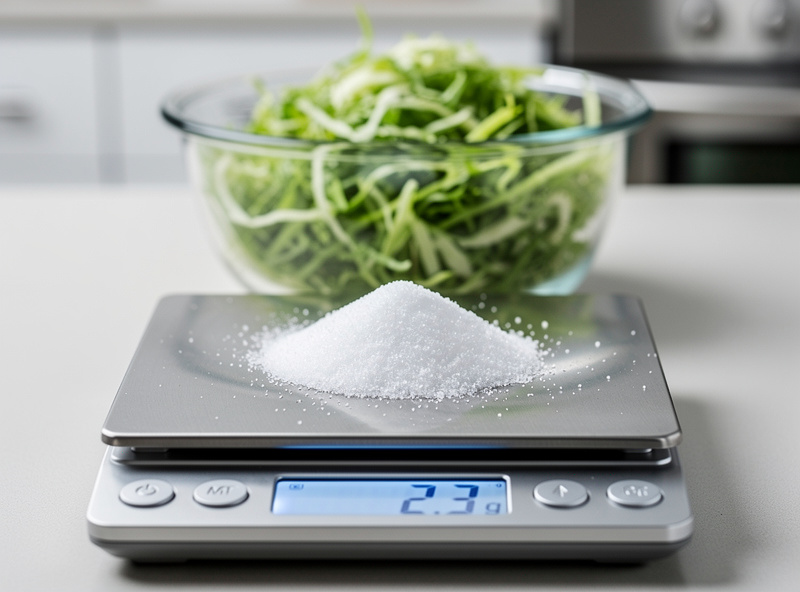
When fermenters say “a 2% kraut,” they mean salt equal to 2% of the cabbage’s weight. Weigh the shredded cabbage, multiply by 0.02, and that is your salt in grams. For 1,000 g of cabbage, a 2% kraut needs 20 g of salt; a 2.5% kraut needs 25 g; a 3% kraut needs 30 g. That is the whole calculation.
This is a dry-salt percentage — you salt the shredded cabbage directly and it makes its own brine, rather than dissolving salt into a separate volume of water. (Brined ferments like whole pickles use a brine percentage instead, which is a different calculation.) For mass-fermented cabbage, dry-salting by cabbage weight is the method, and it is why the scale is non-negotiable: a tablespoon of salt can weigh anywhere from 10 to 18 grams depending on the salt, so volume measurements quietly throw your percentage off by 50% or more.
2% vs 2.5% vs 3%, side by side
Here is how the three percentages actually behave once they are in the crock:
| Salt % | g salt per 1,000 g cabbage | Ferment speed | Texture & flavor | When I use it |
|---|---|---|---|---|
| 2% | 20 g | Lively, fastest of the three | Crisp, balanced, clean sour | My default, cool-to-normal rooms |
| 2.5% | 25 g | Slightly slower | Extra crunch, a touch saltier | Warmer rooms, longer ferments, summer |
| 3% | 30 g | Noticeably sluggish | Firm but distinctly salty | Hot kitchens, or when I want to slow things right down |
The pattern is consistent: more salt means a slower, firmer, saltier kraut. Salt suppresses microbial activity across the board, so a higher percentage holds back not just spoilage organisms but your beneficial Lactobacillus too — which is exactly why 3% ferments drag. The trade-off is that the higher salt and slower acidification preserve more of the cabbage’s crunch, because the pectin-softening enzymes also work more slowly. That is the lever you are pulling: speed and brightness at 2%, structure and salt-forward keeping at 3%.
Why I default to 2%
For everyday kraut in a Swedish kitchen that sits at cool room temperature most of the year, 2% is the percentage I reach for. It ferments briskly enough to get ahead of any spoilage in the first couple of days, it produces a bright, clean sourness, and it never tastes salty — it tastes like sauerkraut. I move up to 2.5% in the warmer months or whenever I am fermenting somewhere that runs above about 22°C, because the extra salt buys me a slightly slower, safer, crunchier ferment when warmth would otherwise rush it.
I only go to 3% deliberately: a genuinely hot kitchen, or a large crock I want to ferment slowly and cold-store long. At 3% the kraut is firm and keeps beautifully, but you taste the salt, so it is a preservation choice, not a flavor one.
The safe floor — and why I won’t go below it
You can ferment cabbage below 2%. Some recipes push to 1.5% for a faster, brighter, lower-salt kraut, and 1.5% is the floor I treat as safe for a normal countertop ferment. Below that, the math stops being comfortable. Salt is your protection in the critical first 24 to 48 hours, before the Lactobacillus has produced enough lactic acid to drop the pH into genuinely safe territory. The lower the salt, the more you are relying on cool temperatures, scrupulous cleanliness, and keeping everything submerged to bridge that early gap.
So here is my honest line: stay between 1.5% and 2.5% for normal kraut, default to 2%, and reach for 2.5% to 3% when the room is warm. Don’t drop under 1.5% on a warm counter chasing low sodium — that is where you trade away the safety margin that makes sauerkraut one of the most forgiving ferments there is. If you want the deeper reasoning on the salt itself and which salts to use, I cover that in my guide to the best salt for sauerkraut.
How to hit your percentage exactly
- Shred the cabbage into a bowl on the scale, with the bowl tared.
- Read the cabbage weight in grams.
- Multiply by your target: ×0.02 for 2%, ×0.025 for 2.5%, ×0.03 for 3%.
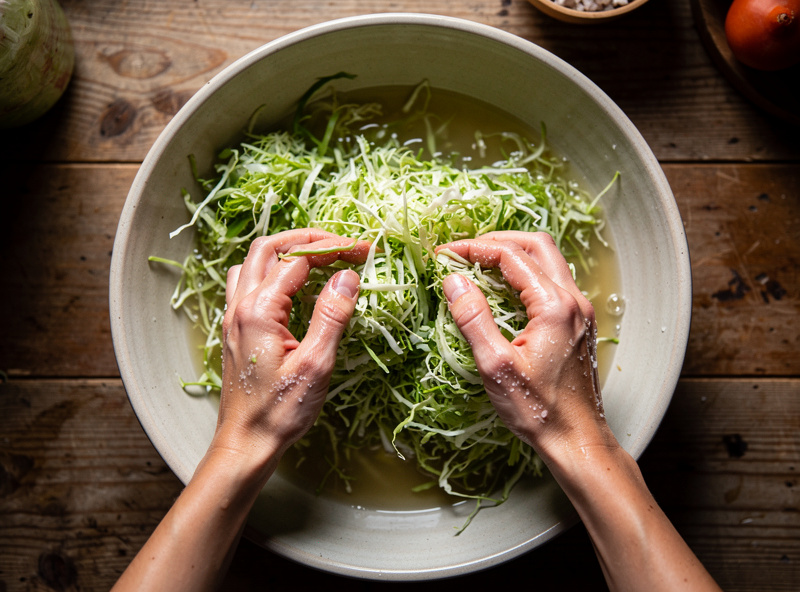
- Weigh out that exact mass of salt and massage it in.
- Let it brine. Within an hour or two the cabbage should be sitting under its own liquid. If it isn’t, top up with a brine made at the same percentage so you don’t dilute the batch.
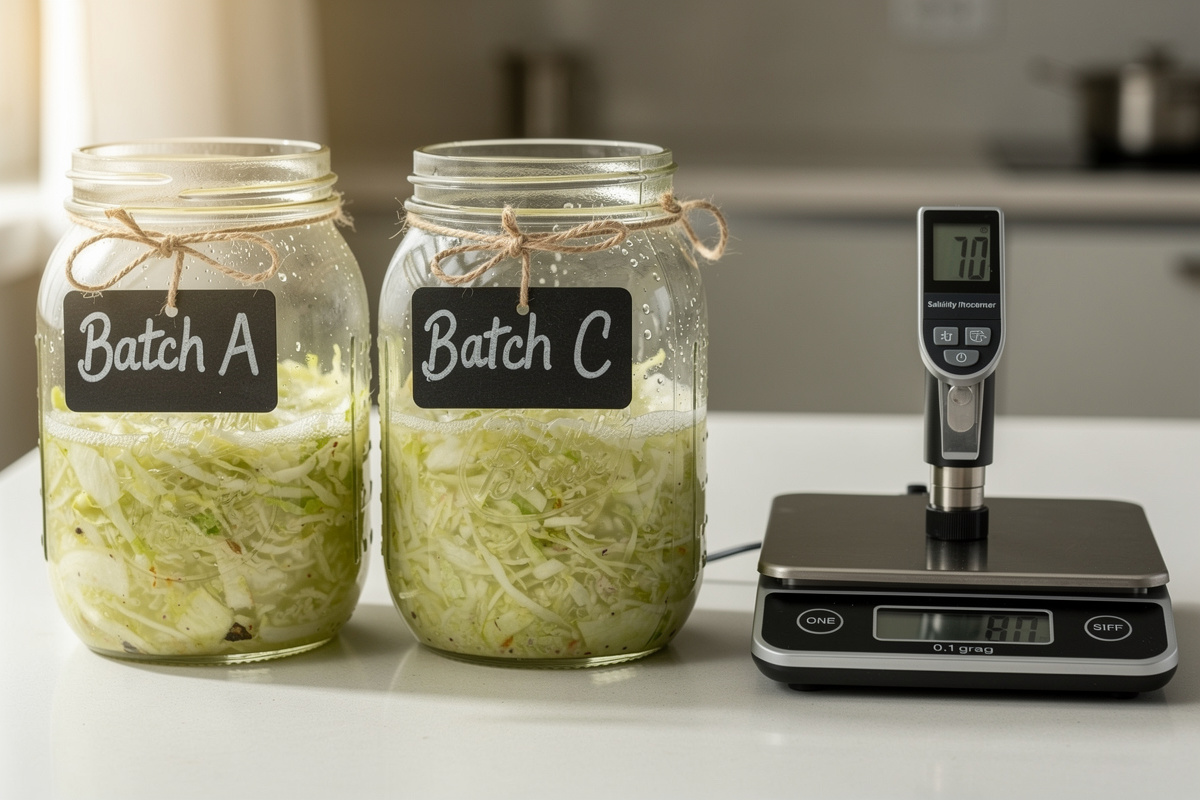
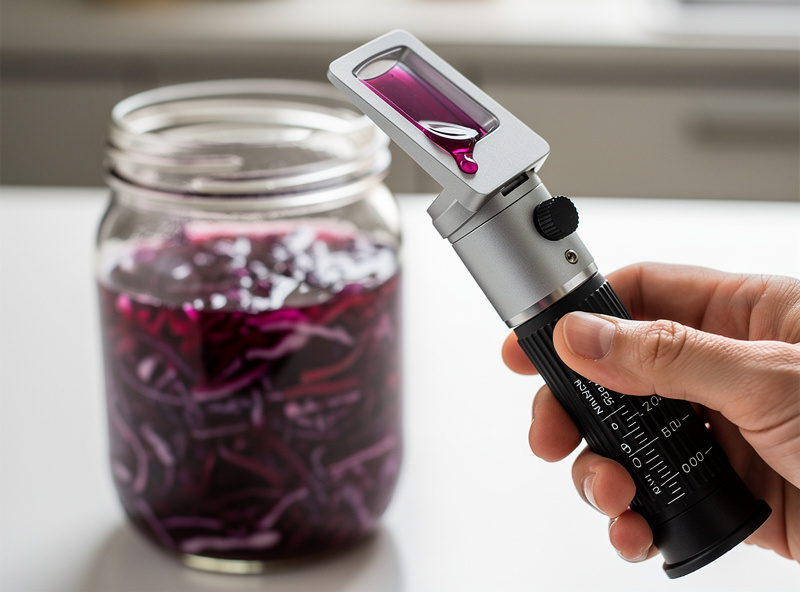
The two tools that make this airtight are a 0.1 g digital kitchen scale for the salt-to-cabbage math and, if you like to verify your brine the way I do, a salinity refractometer that reads brine percentage directly. The scale is essential; the refractometer is the nerd’s confirmation tool.
Disclosure: those are Amazon affiliate links. If you buy through them I may earn a small commission at no extra cost to you. I only point at tools I actually use on my own bench.
Adjusting for temperature
Salt and temperature are the two dials that control ferment speed, and they trade against each other. A warm room speeds everything up, so I nudge salt up (toward 2.5%) to slow it back into a controlled range and protect the crunch. A cool room slows things down, so 2% keeps a healthy pace without going sluggish. If you want to go deeper on how long different percentages and temperatures take to reach a kraut you’ll enjoy, that is the subject of its own discussion — but the rule of thumb is simple: warmer room, a little more salt; cooler room, a little less.
What is the best salt percentage for sauerkraut?
Two percent to 2.5% of the cabbage’s weight is the reliable sweet spot, and 2% is a great default. At 2% the kraut ferments briskly and tastes balanced; 2.5% sours a little slower and keeps more crunch, which suits warmer rooms. Three percent works for hot kitchens or long cold storage but tastes distinctly salty.
How do I calculate the salt for a 2% sauerkraut?
Weigh your shredded cabbage in grams and multiply by 0.02. For 1,000 grams of cabbage, that is 20 grams of salt. For 2.5% multiply by 0.025 (25 grams), and for 3% multiply by 0.03 (30 grams). Always weigh the salt rather than measuring by tablespoon, since salts vary hugely in density.
What is the lowest safe salt percentage for sauerkraut?
About 1.5% by weight is the practical floor for a normal countertop ferment. Salt protects the batch in the first day or two before the bacteria drop the pH into safe territory. Below 1.5% you rely much more heavily on cool temperatures and cleanliness, which is risky on a warm counter. Staying at 2 to 2.5% is the dependable choice.
Does more salt make sauerkraut crunchier?
Yes, somewhat. Higher salt slows the enzymes that soften cabbage pectin, so a 2.5% or 3% kraut tends to hold its crunch longer than a 2% batch. The trade-off is a slower ferment and a saltier flavor, so most people land at 2 to 2.5% for the best balance of texture and taste.
Why is my sauerkraut too salty?
You most likely used too much salt for the cabbage weight, often because you measured by volume rather than by weight. A tablespoon of dense salt can be nearly double a tablespoon of flaky salt. Switch to weighing your salt at 2 to 2.5% of the cabbage weight. An over-salted batch will still be safe and can be rinsed lightly before eating.
Can I just use a brine instead of dry-salting?
For shredded sauerkraut, dry-salting by cabbage weight is the standard method because the cabbage makes its own brine. A separate brine is used for whole or chunky vegetables that will not release enough liquid on their own. If you do need to top up a dry-salted kraut, make the top-up brine at the same percentage so you do not dilute the batch.

About Kenny Nyhus Fadil
A home fermenter documenting brines, bubbles, and the occasional moldy tragedy.
Keep Bubbling
Sauerkraut Juice: What It Is and Why I Never Pour It Down the Drain
How to Store Sauerkraut: Fridge, Cellar, and Long-Term Keeping