Gochugaru: The Korean Chili Flakes That Make or Break Your Kimchi

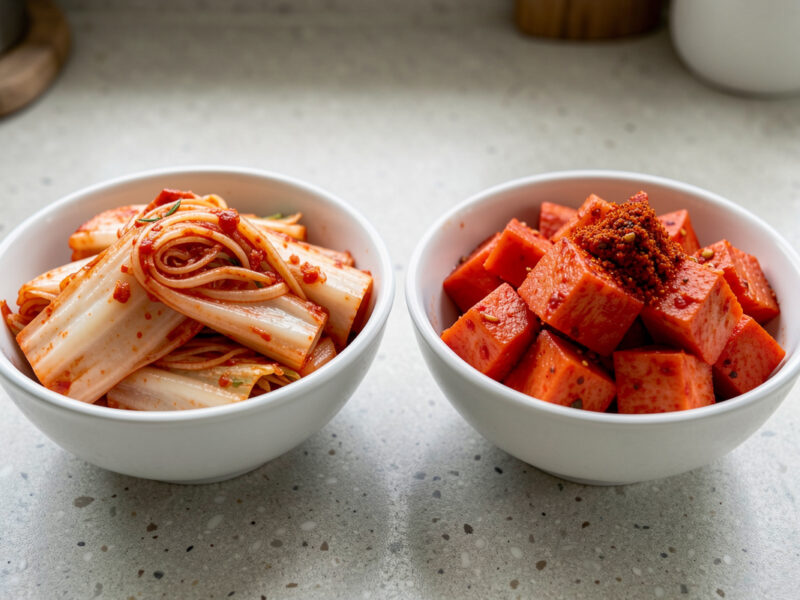
If one ingredient decides whether your kimchi tastes like the real thing or like spicy salted cabbage, it is gochugaru. I have run perhaps 250 kimchi batches over four years, and the single biggest jump in quality came not from a better cabbage or a longer ferment but from finally buying proper Korean gochugaru and learning how to store it. Good gochugaru is fruity, smoky, and sweet under the heat; bad or stale gochugaru is just sharp and flat. This guide is everything I have worked out about sourcing it, judging it by eye, storing it so it keeps its aromatics, and using it across the kimchi I make every week.
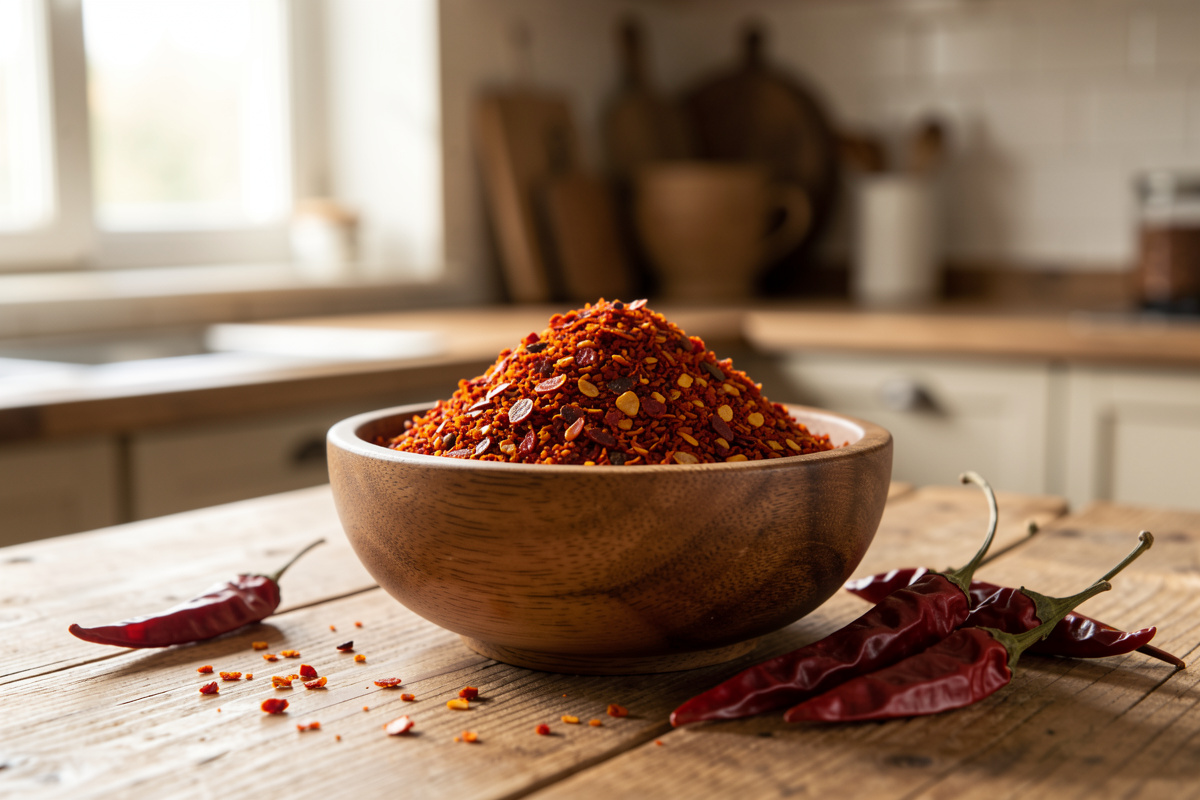
Gochugaru is sun-dried Korean chilli, deseeded and coarse-ground to a flake that sits between powder and crushed-pepper. It is the colour and a large part of the flavour of baechu kimchi and almost every other red kimchi in the Korean repertoire. Get it right and the rest of the paste falls into place; get it wrong and no amount of garlic, ginger, or fish sauce will rescue the batch.
What Gochugaru Actually Is
Gochugaru (고춧가루) translates roughly to “chilli powder,” but the texture is the giveaway: it is a coarse flake, not a fine dust. The chillies are typically a Korean variety grown for kimchi, sun-dried (taeyangcho is the premium sun-dried grade), then ground after the seeds and stems are removed. Removing the seeds is part of why good gochugaru reads as warm-fruity rather than punishingly hot — the seeds and pith carry much of the harsh capsaicin bite.
The flavour profile that matters for kimchi is a balance of three things: a moderate, building heat rather than an instant burn; a fruity, almost sun-dried-tomato sweetness; and a faint smokiness from the drying. Supermarket “red pepper flakes” — usually Italian-style crushed chilli with seeds left in — deliver heat and almost none of that fruit or smoke. They are not a substitute, only an emergency stand-in, and the difference in the finished kimchi is dramatic.
Coarse vs Fine Grind: Which to Buy
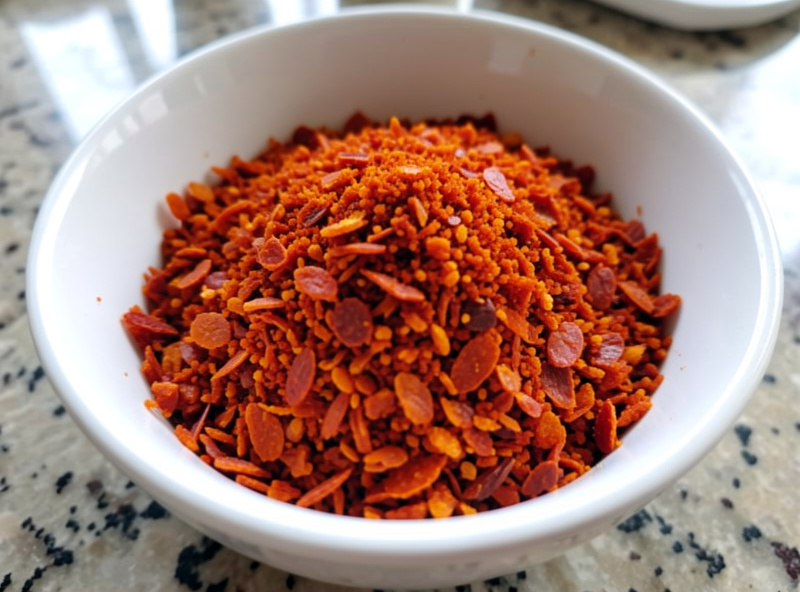
Gochugaru comes in two main grinds, and the choice changes how your kimchi looks and how the paste behaves. Coarse grind (gulgeun-gochugaru) is the standard for kimchi: the flakes coat the cabbage in visible specks, hydrate into the rice porridge to make a clinging paste, and give the finished kimchi its classic flecked appearance. Fine grind (goun-gochugaru) is closer to a powder and is used for sauces, gochujang, and soups where you want the colour to dissolve smoothly without visible flakes.
For all the kimchi I make — baechu, kkakdugi, mul kimchi, chonggak — I use the coarse grind. If a recipe calls for a smoother paste, you can pulse coarse gochugaru briefly in a spice grinder, but you cannot make fine grind coarser. Buying coarse is the safer default. Some shops sell a medium grind that splits the difference; that works fine for kimchi too.
How to Judge Gochugaru Quality by Eye
You can read a great deal about a bag of gochugaru before you taste it. The first signal is colour: fresh, high-quality gochugaru is a vivid red-orange, not a dull brick-brown. Brown tones mean the chillies were either heat-dried at too high a temperature or the bag has aged and oxidised. The second signal is the feel — good gochugaru is slightly oily and tacky to the touch from natural capsicum oils, not bone-dry and dusty. The third is aroma: open the bag and you should get a sweet, fruity, faintly smoky chilli smell. A musty, papery, or flat smell means it has lost its volatiles.
On the bag itself, “taeyangcho” (sun-dried) is a quality marker worth paying for, and Korean-grown is generally better than Chinese-grown for the specific kimchi flavour profile, though good Chinese-grown gochugaru exists. Expect to pay roughly 8 to 15 dollars for a 500-gram bag from a Korean grocery. Cheaper bags at the same size are usually older stock, finer dust, or seed-heavy.
Storing Gochugaru So It Keeps Its Aromatics
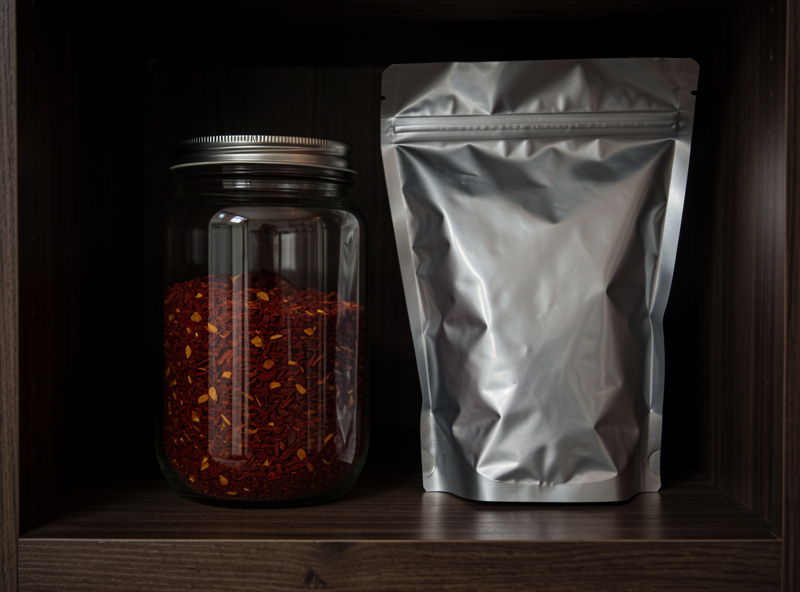
This is where most home cooks lose flavour without realising it. Gochugaru is volatile — its fruit and smoke notes degrade with heat, light, and air over a few months on a warm shelf. The fix I settled on years ago is simple: I keep my working gochugaru in an airtight container in the freezer, and decant a small jar’s worth into the pantry for the week. The freezer holds the aromatics almost indefinitely; the flakes do not clump because there is no moisture to freeze, and you use them straight from frozen with no thawing.
If freezing is not practical, an airtight opaque container in a cool dark cupboard is the next-best option, but plan to use the bag within a few months. The enemy is a clear bag clipped shut on a shelf above the stove — warm, lit, and half-open, which strips the fruit notes within weeks and leaves you with flat heat. An airtight glass storage jar for the pantry portion plus the freezer for the bulk bag is the setup I use.
As an Amazon Associate I earn from qualifying purchases. Links are to product searches, not specific listings, and add no cost to you.
How Much to Use in Kimchi
Gochugaru quantity is a flavour-and-colour decision, not a food-safety one — the salt and the brine handle safety, so you can dial the chilli to taste without risk. As a working baseline for baechu kimchi, I use roughly 80 grams of coarse gochugaru per 1.5-kilogram head of napa cabbage in the paste. That gives a medium-bright red and a moderate, building heat. Scale up toward 100-120 grams for a hotter, deeper-red batch, or down toward 50-60 grams for a mild kimchi the whole household will eat.
One technique that matters: add the gochugaru to the cooled glutinous rice porridge first and let the paste rest 30 to 60 minutes before mixing in garlic, ginger, and fish sauce. The flakes hydrate and bloom during that rest, turning the paste from grainy and dull to silky and deep red. Skipping the bloom is a common reason home kimchi looks pale and tastes thin even with plenty of gochugaru in it.
Substitutes When You Cannot Get Gochugaru
If you genuinely cannot source gochugaru, the honest answer is that the result will not taste like Korean kimchi — but you can still make something good. The closest single substitute is a blend: mostly a mild deseeded chilli flake (Aleppo pepper is the best match for the fruity-smoky profile) with a small fraction of cayenne or hot paprika to lift the heat, plus a pinch of smoked paprika for the smoke note. Aleppo pepper alone gets you surprisingly close in flavour, just milder and less red.
What does not work well is plain crushed red pepper flakes (too sharp, too seedy) or standard chilli powder (which contains cumin and other spices that read wrong in kimchi). If gochugaru is available at all, buy it — a good bag lasts a long time in the freezer and there is no real equal. You can grab a bag of coarse Korean gochugaru online if your local grocers do not stock it.
Frequently Asked Questions
Is gochugaru the same as gochujang?
No. Gochugaru is dried coarse-ground Korean chilli flakes — a single dry ingredient. Gochujang is a fermented paste made from gochugaru plus glutinous rice, fermented soybeans, and salt. Kimchi paste uses gochugaru, not gochujang; adding gochujang to kimchi makes it gummy and overly sweet and is not traditional.
How hot is gochugaru?
Gochugaru is moderate, not fiery — roughly 4,000 to 8,000 Scoville units for typical kimchi-grade flakes, building rather than instant. The deseeding keeps the burn manageable, which is why you can use 80 grams in a kimchi batch and still taste fruit and smoke rather than just heat.
How long does gochugaru last?
Sealed in the freezer it keeps its aroma for a year or more with little loss. In an airtight container in a cool dark cupboard, use it within about three to four months before the fruity and smoky notes fade and only flat heat remains. Light, heat, and air are what degrade it.
Can I substitute red pepper flakes for gochugaru?
Only in an emergency, and the kimchi will taste noticeably different — sharper, seedier, and without the fruity-smoky depth. A better stand-in is Aleppo pepper with a pinch of smoked paprika and a little cayenne for heat. If gochugaru is available at all, buy it; there is no true equal.
Should I buy coarse or fine gochugaru?
Buy coarse (gulgeun-gochugaru) for kimchi. It coats the cabbage in visible flecks and hydrates into a clinging paste. Fine grind is for sauces, gochujang, and soups where you want the colour to dissolve. You can grind coarse finer at home, but you cannot make fine grind coarser.
Related Guides on FermentFoundry
- Homemade Kimchi: The Complete Guide from Cabbage to Stew
- Easy Napa Cabbage Kimchi Recipe for Beginners
- Kimchi Mold vs Safe White Film: Photo ID Guide

About Kenny Nyhus Fadil
A home fermenter documenting brines, bubbles, and the occasional moldy tragedy.
Keep Bubbling
Easy Napa Cabbage Kimchi Recipe for Beginners (Step-by-Step)
How Long Does Kimchi Last? Safe Sour vs Actually Spoiled