Kimchi Pancake (Kimchijeon): The Best Use for Sour Kimchi

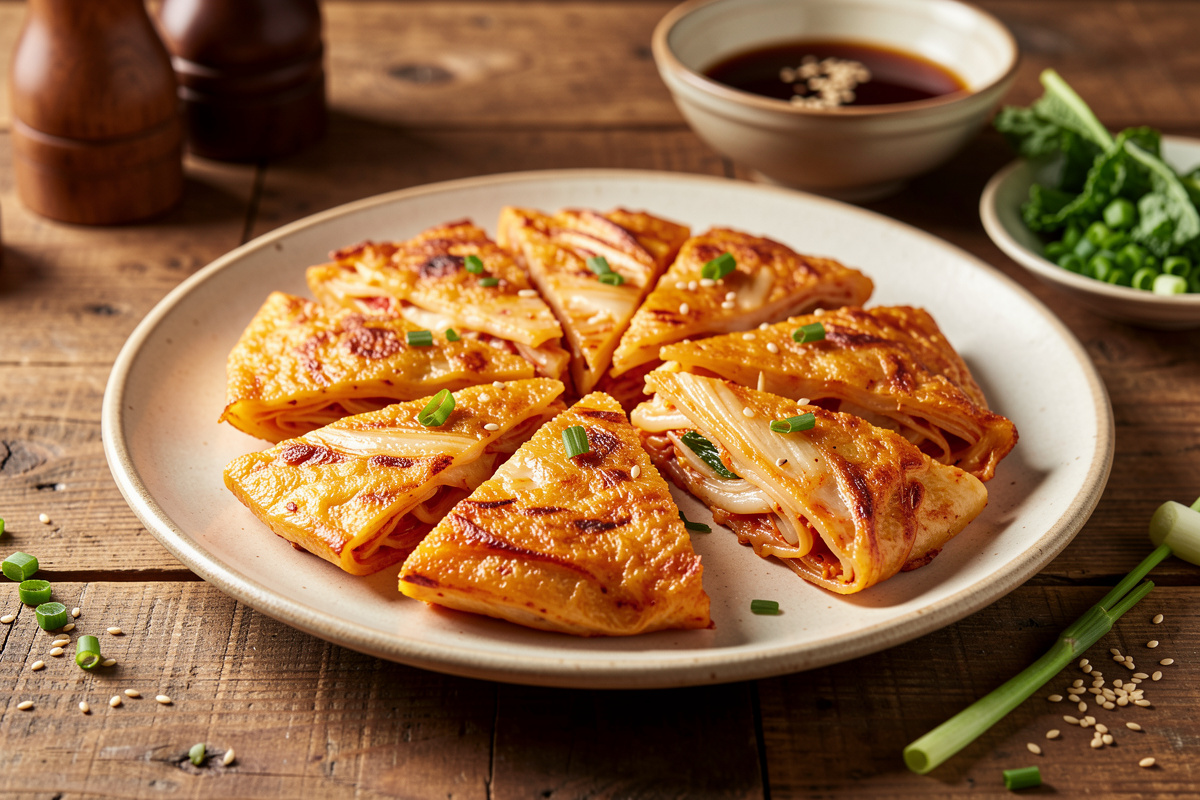
Kimchijeon — kimchi pancake — is the dish that taught me to stop throwing out over-sour kimchi. When a jar of baechu ages past the point where it is pleasant to eat raw, it becomes the single best ingredient for this crisp, savoury, slightly tangy pancake. The sourness that makes aged kimchi too sharp on rice is exactly what makes a kimchi pancake taste deep and balanced. This is the recipe I make most weeks from whatever has gone too far back in the fridge, and the technique that gets it genuinely crisp at the edges instead of soft and floppy.
It is fast — fifteen minutes from jar to plate — needs almost nothing besides flour and sour kimchi, and is the perfect use for the aged kimchi that my guide to kimchi shelf life describes as cooking-grade. If your kimchi has turned too sour to eat straight, do not toss it. Make this.
Why Sour Kimchi Is the Right Kimchi
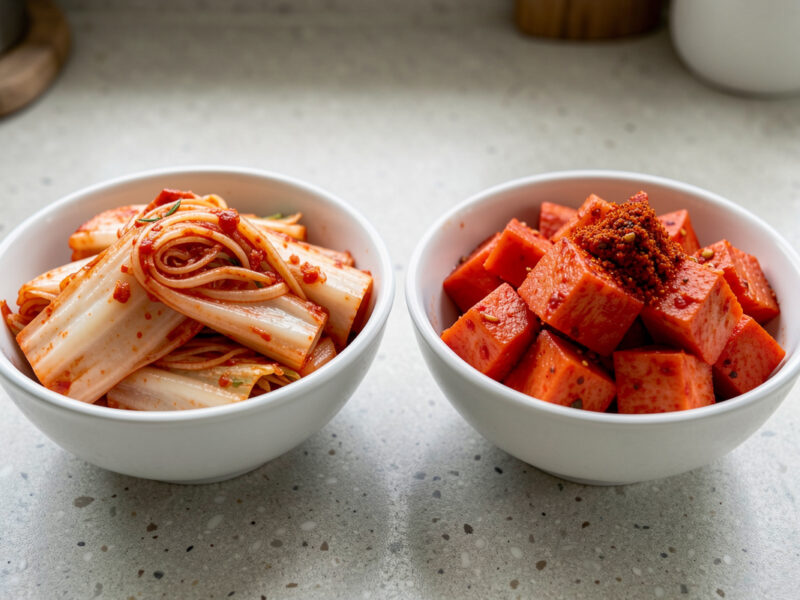
Young, crunchy kimchi makes a mediocre pancake — its flavour is too mild to come through the batter and frying, and its crunch works against the texture you want. The cut of your kimchi also plays a role: the mak vs pogi kimchi guide explains how the quick-cut mak style ages differently from whole-leaf pogi and which is better suited for cooking. Aged, sour kimchi is the opposite: its concentrated, deep, tangy flavour stands up to the cooking, and its softened texture folds into the batter instead of fighting it. The general rule in my kitchen is that kimchi over about a month old, and especially anything that has gone aggressively sour, is destined for the pan rather than the plate.
The acidity also does something useful to the pancake itself — it brightens the flavour and cuts the richness of the frying oil, which is why a kimchi pancake made with properly sour kimchi tastes balanced rather than greasy. Squeeze the chopped kimchi gently to remove excess brine before mixing it in (reserve a spoonful or two of that brine — it goes back into the batter for flavour and colour).
The Batter: Simple and Thin
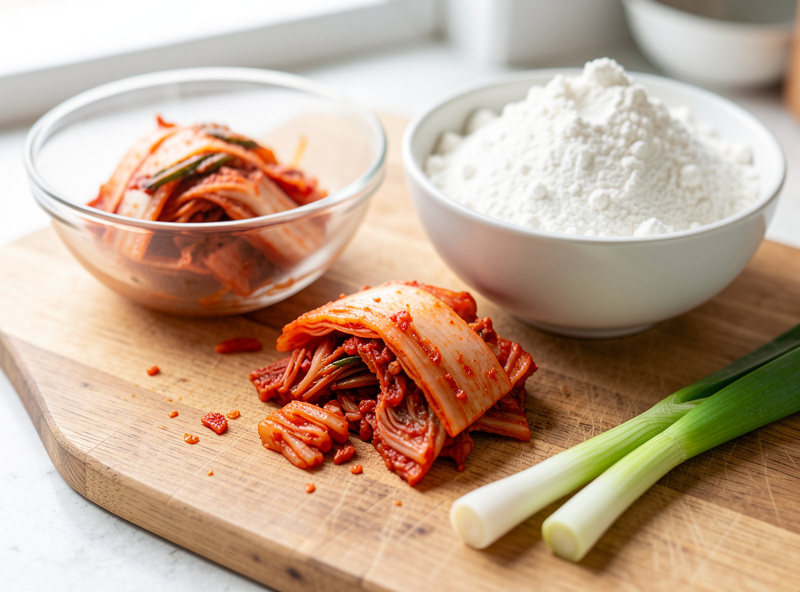
The batter is deliberately minimal so the kimchi is the star. For two pancakes I use roughly one cup of chopped sour kimchi, half a cup of plain flour (or a Korean buchim/frying mix for extra crispness), about half a cup of cold water plus the reserved kimchi brine, one finely sliced scallion, and a teaspoon of the kimchi’s own juice for colour. No egg is needed, though a small one makes a slightly more tender pancake. The batter should be thin enough to spread but thick enough to bind the kimchi — looser than you might expect, closer to a crepe batter than a thick pancake one.
The single most important batter rule: use cold water, and do not over-mix. Cold water and minimal mixing keep the gluten from developing, which is what gives you a crisp, lacy pancake instead of a chewy, bready one. Mix just until the flour disappears; a few small lumps are fine. Some cooks add a tablespoon of cornstarch or rice flour to the wheat flour for extra crunch, which I do when I want the edges shatteringly crisp.
Frying It Crisp
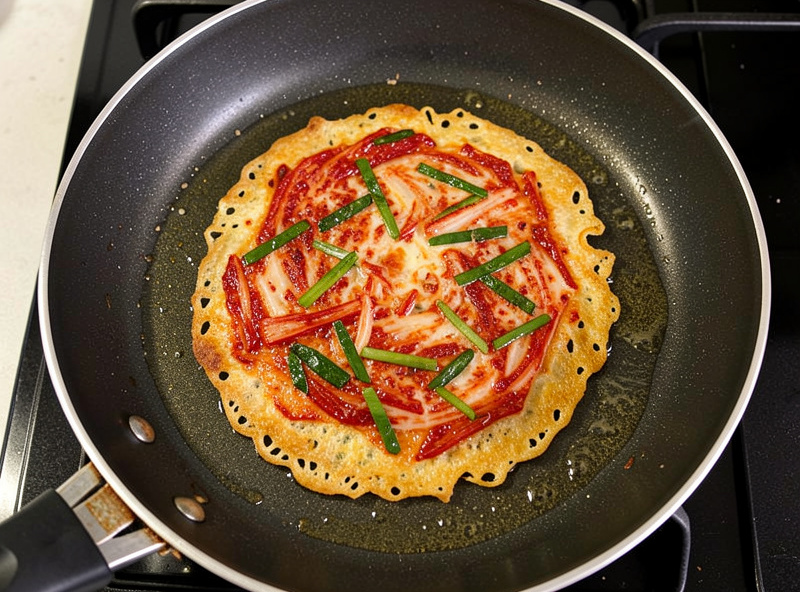
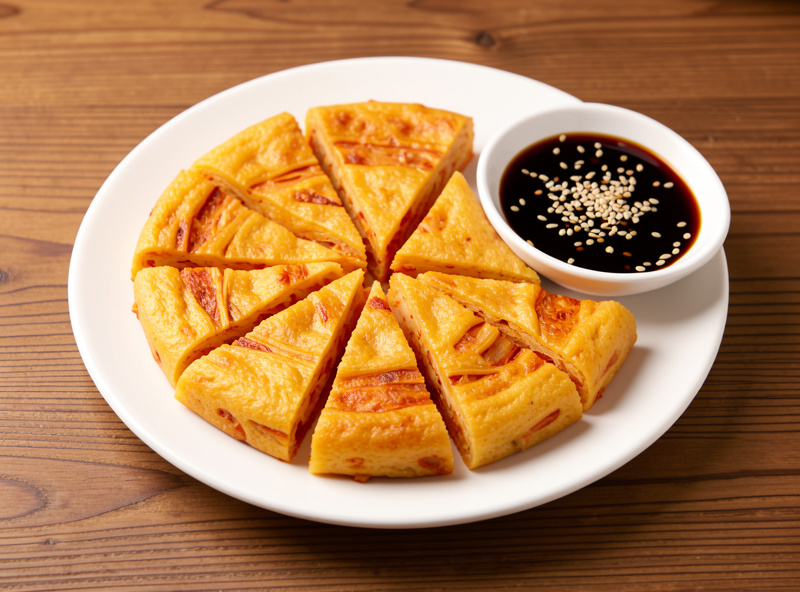
Crispness is all in the pan technique. Heat a generous amount of neutral oil in a nonstick or well-seasoned pan over medium-high heat until it shimmers — too little oil and the pancake steams instead of fries. Pour the batter in and spread it thin with the back of a ladle; thin is crisp, thick is soft. Let it cook undisturbed until the underside is deep golden and the edges look lacy and set, two to three minutes, before flipping once.
After the flip, press the pancake down gently with a spatula to get full contact with the pan, and consider drizzling a little more oil around the edge — that edge oil is what crisps the rim. Cook the second side another two to three minutes until golden. Resist the urge to flip repeatedly; one confident flip gives the best crust. Slide onto a cutting board, cut into wedges with kitchen scissors (the Korean way), and serve immediately while crisp.
The Dipping Sauce
A kimchi pancake wants a sharp, salty dipping sauce to balance it. The standard is soy sauce cut with rice vinegar — roughly two parts soy to one part vinegar — with a pinch of gochugaru, a few drops of sesame oil, and a little sliced scallion or a sprinkle of toasted sesame seeds. A tiny bit of sugar rounds it out. Mix it while the pancake fries so it is ready the moment the wedges hit the board.
If the kimchi was very sour, go a little heavier on the soy and easier on the vinegar in the sauce, since the pancake itself is already bringing acidity. The sauce is not optional — it is what turns a good kimchi pancake into the dish people remember.
Variations Worth Trying
Once the basic kimchijeon is reliable, it takes additions well. A handful of thinly sliced pork belly laid into the batter as it fries makes a heartier pancake. Chopped squid or small shrimp turn it toward a haemul-style seafood pancake. A little grated potato in the batter adds chew and helps it hold together. For a richer version, crumble some firm tofu through the batter. The constant across all of them is the sour kimchi base and the thin, crisp frying — everything else is flexible.
Kimchijeon is also one of the best ways to use the sour kimchi I deliberately age for cooking, alongside kimchi jjigae (stew) and kimchi fried rice. If you want to push that aged kimchi into a long-simmered dish, the kimchi jjigae stew recipe is the next step. Between those three dishes, no jar of kimchi ever goes to waste in my kitchen no matter how sour it gets — which is the whole point of learning to cook with aged kimchi rather than fearing it.
Frequently Asked Questions
What kind of kimchi is best for kimchi pancake?
Aged, sour kimchi — ideally over a month old or anything that has turned too sharp to eat raw. Its concentrated tangy flavour stands up to frying and its softened texture folds into the batter. Young crunchy kimchi makes a mild, less satisfying pancake, so save the sour jars for this dish.
How do I make kimchi pancake crispy?
Use cold water and barely mix the batter to limit gluten, spread it thin in the pan, and fry in plenty of hot oil over medium-high heat. Flip only once, press down for full pan contact, and drizzle a little oil around the edge to crisp the rim. Adding cornstarch or rice flour boosts crunch.
Do I need egg in kimchi pancake?
No. A traditional kimchijeon is just sour kimchi, flour, water, and scallion — no egg required, and egg-free versions fry up crisper. A small egg makes a slightly more tender pancake if you prefer, but it is optional, which also makes the basic recipe naturally vegan-friendly.
What is the dipping sauce for kimchi pancake?
Soy sauce and rice vinegar in roughly a two-to-one ratio, with a pinch of gochugaru, a few drops of sesame oil, sliced scallion or sesame seeds, and a little sugar to balance. If the kimchi was very sour, use more soy and less vinegar since the pancake already brings acidity.
Can I use the kimchi brine in the batter?
Yes — reserve a spoonful or two of the brine when you squeeze the chopped kimchi, and add it to the batter for extra flavour and red colour. Just account for its saltiness and go easy on any added salt. The brine is part of what gives a kimchi pancake its depth.
Related Guides on FermentFoundry
- Homemade Kimchi: The Complete Guide from Cabbage to Stew
- How Long Does Kimchi Last? Storage and Spoilage Guide
- Gochugaru: The Korean Chili Flakes That Make or Break Your Kimchi
- Kkakdugi: Crunchy Korean Cubed Radish Kimchi Recipe

About Kenny Nyhus Fadil
A home fermenter documenting brines, bubbles, and the occasional moldy tragedy.
Keep Bubbling
Vegan Kimchi: How to Make It Taste Real Without Fish Sauce
Kimchi Jjigae: The Sour-Kimchi Stew, Done Right