Fermented Green Beans Recipe: Crunchy Dilly Beans

Fermented green beans, the classic “dilly beans,” ferment in a 3 to 3.5% salt brine over 5 to 10 days and come out garlicky, dill-forward, and properly snappy. Whole beans packed tight with dill and garlic are one of the most forgiving lacto ferments there is, and on my pH meter the brine reliably lands between 3.4 and 3.8 once it finishes.
I started fermenting beans because the water-bath canned version always went limp, and the difference is night and day. A lacto bean keeps its squeak because nothing ever gets heated. Here is the brine I run, why the beans need a touch more salt than carrots, and how to stop the one failure that turns a jar to mush.
What Is the Best Brine Ratio for Fermented Green Beans?
Use a 3 to 3.5% brine for fermented green beans: 30 to 35 grams of non-iodized salt per liter of water. Beans sit slightly higher on the salt scale than kraut or carrots because they are low in natural sugars and benefit from a firmer, slower ferment that protects their structure.
I weigh the salt against the water on a 0.1-gram scale and stir until it fully dissolves before pouring. Whole beans pack densely and trap air pockets, so I tap the jar on the counter to settle them and release bubbles, then top up the brine to cover. Getting the ratio right matters more here than in a kraut, because beans have no shredded surface area to release their own liquid; the brine is the entire fermentation medium. If you want the deeper logic on why 3% behaves differently from 2%, my salt percentage breakdown walks through the trade-offs.
How Do You Pack Dilly Beans So They Stay Crunchy?
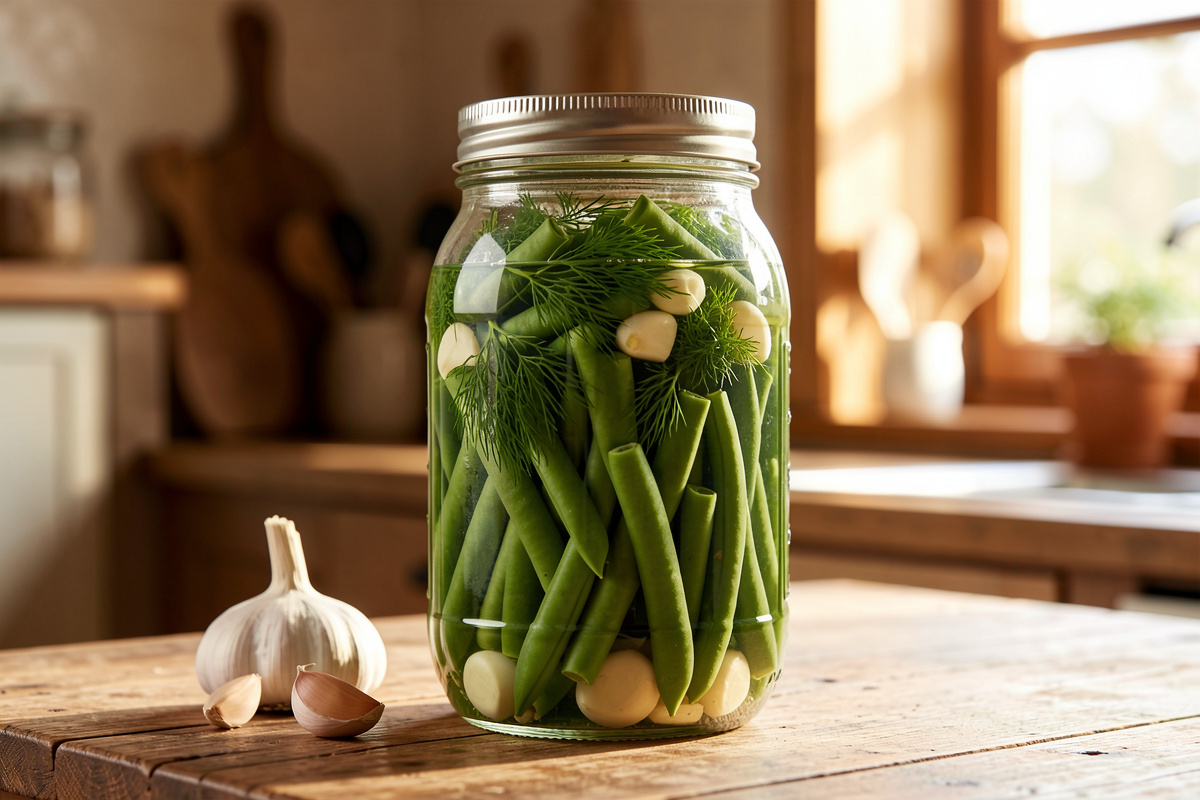
Pack green beans vertically and tightly so they support each other and stay submerged, and add a tannin source to keep them crisp. I stand the beans upright in a wide-mouth jar, wedge garlic and dill into the gaps, and drop in a grape leaf or a pinch of loose black tea for tannins.
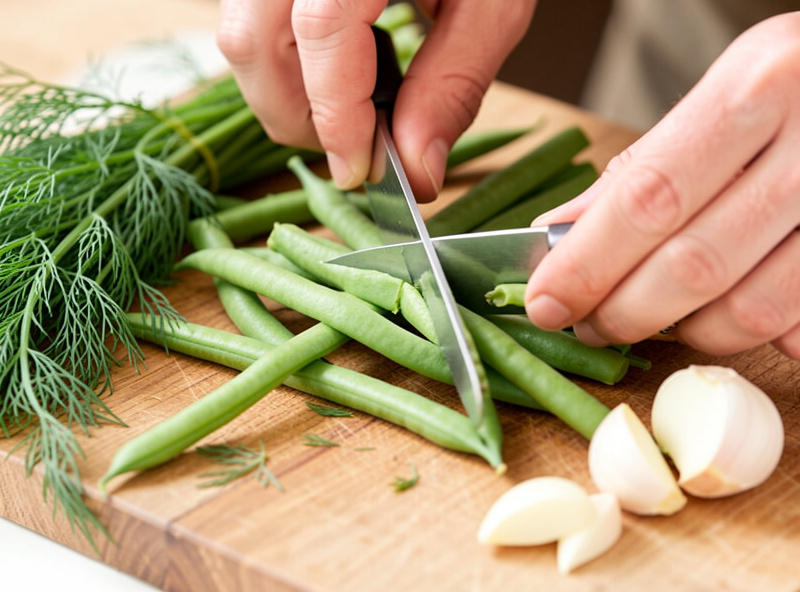
Trim the beans to fit below the shoulder of the jar with about 2.5 cm of headspace, and leave them whole. Cutting beans into segments exposes more interior and speeds softening. The vertical pack does double duty: it looks sharp and it physically keeps the beans under the brine line, which is the single biggest factor in avoiding surface yeast. Tannins genuinely work across vegetables; I cover the full mechanism, including which leaves and teas actually help, in my guide on keeping lacto ferments crunchy.
The aromatics are flexible. My standard dilly jar per liter of brine: 3 to 4 garlic cloves, 2 generous dill heads (or a tablespoon of dill seed), and an optional half-teaspoon of chili flakes or a few black peppercorns. This is the same backbone I use when I drop fermented garlic into a mixed jar, building on the brine method from my lacto-fermented garlic guide.
Here is the exact build I scale up and down. For a 1-liter (quart) wide-mouth jar I use roughly 300 to 350 grams of trimmed beans, which leaves room for the aromatics and about 500 to 600 ml of 3% brine to cover. I scale the salt to the total water, not to the beans, so a half-gallon jar with double the beans still gets brine mixed at the same 30 grams of salt per liter. Cold tap water that is heavily chlorinated can stall the start, so I let mine sit out for an hour or use filtered water. None of this is fussy once you do it twice, and weighing rather than guessing is what makes the jar repeatable batch after batch through the summer bean glut.
How Long Do Green Beans Take to Ferment?
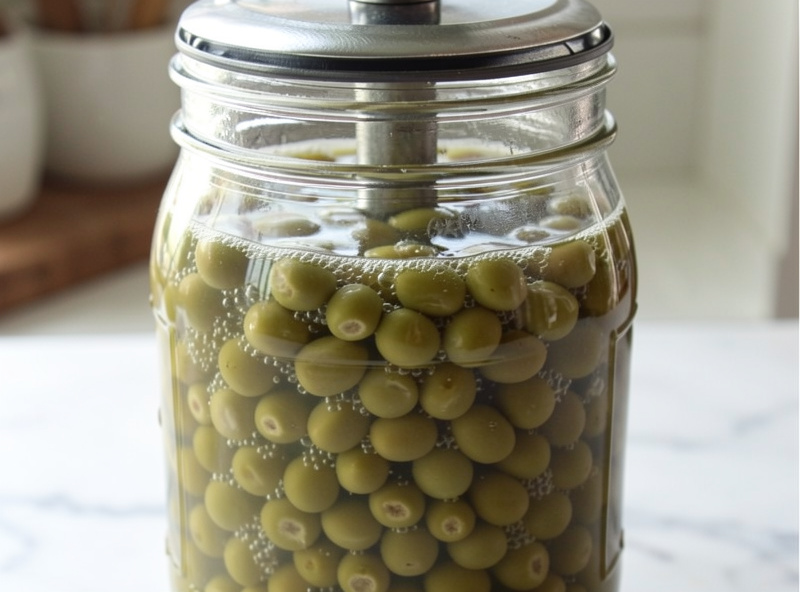
Green beans take 5 to 10 days at 20 to 22°C to reach a pleasant tang, with most jars hitting their stride around day 7. They ferment a little slower than carrots because of the lower sugar content, so do not panic if bubbling is quiet for the first two or three days.
I taste a bean from day 5. When it reads sour-and-garlicky and still snaps cleanly, the jar goes to the fridge. Beans are easy to over-ferment into a dull, soft, overly funky version, so I err on the early side and let them mellow further in cold storage. Temperature is the dial that moves this window the most: a warm 24°C kitchen can finish a jar in four or five days, while a cool 16°C pantry stretches it past two weeks, and the cooler, slower ferment almost always holds a better snap. I keep my bean jars out of direct sun and away from the stove for that reason, and I write the start date on the lid in grease pencil so I am tasting against real elapsed days rather than guessing.
| Method | Texture | Tang | Shelf life |
|---|---|---|---|
| Lacto-fermented (this recipe) | Snappy, alive | Sour, complex | 4-6 months fridge |
| Vinegar quick-pickle | Firm but flat | Sharp, one-note | 1-2 months fridge |
| Water-bath canned | Soft, cooked | Mild | 12+ months pantry |
Why Did My Fermented Green Beans Go Slimy or Mushy?
Slimy or mushy beans usually come from too-warm a room, brine that was too weak, or beans that floated above the brine. A 3% brine, fermentation under 22°C, and a weight holding the beans down prevent nearly all of it. Slime specifically points to the wrong bacteria taking hold in under-acidified brine.
The first batch I ever ruined floated half the beans above the brine; the exposed tips went soft and grew a film while the submerged half were perfect. A glass fermentation weight fixed it permanently. If the whole jar turns ropy and smells off rather than cleanly sour, discard it; a healthy bean ferment smells sharp, garlicky, and appetizing, never rotten.
How Do You Know Fermented Beans Are Safe to Eat?
Fermented green beans are safe once the brine acidifies below pH 4.6, the botulism floor, and a finished dilly bean sits comfortably around pH 3.4 to 3.8. Cloudy brine, a clean sour smell, and gentle bubbling all confirm the lactic acid bacteria have acidified the jar.
You do not need a meter to ferment safely, though I check one on borderline jars. The reliable safety levers are correct salt, full submersion, and room-temperature fermentation away from sunlight. As with every vegetable ferment, a thin white surface film is harmless kahm yeast to be skimmed, while fuzzy colored growth is mold and means the batch goes out.
What Do You Serve Dilly Beans With?
Dilly beans are a snacking and garnish ferment first: they go straight from the jar into a Bloody Mary or a martini, onto an antipasto board, or chopped into a potato or tuna salad for a sour-garlicky lift. The squeak is the whole point, so I serve them cold and never cook them, which would undo the texture I worked to protect.
In my kitchen a quart of dilly beans rarely lasts past two weeks once it hits the fridge. I lean on them through the summer bean glut as the fast, hands-off way to preserve a heavy harvest without canning, and the leftover brine becomes a sharp, garlicky base for a quick vinaigrette or the starter splash for the next jar. They sit naturally alongside the rest of the garden ferments, the same rhythm I follow across the whole lacto-fermentation calendar when the beds come in all at once.
Recommended Gear for Fermented Green Beans
Beans need to stay packed and submerged, so the gear that matters is about pressure and weight. A glass fermentation weight holds the vertical pack under the brine, and a tall wide-mouth mason jar lets you stand the beans upright so they support each other. I run a silicone airlock lid on bean jars because their dense pack outgasses hard in the first few days.
Disclosure: the product links above are Amazon affiliate links. If you buy through them I may earn a small commission at no extra cost to you. I only recommend gear I use in my own fermentation kitchen.
Frequently Asked Questions
Why are my fermented green beans slimy?
Slime means the brine never acidified properly, usually from too little salt, too warm a room, or beans floating above the brine. Use a 3% brine, ferment under 22C, and weigh the beans down. If the whole jar is ropy and smells off, discard it.
Do you have to blanch green beans before fermenting?
No. Do not blanch them. Heat softens the beans and kills the surface bacteria that drive the ferment. Use raw, fresh, firm beans straight from washing and trimming for the best crunch and a reliable start.
How long do fermented dilly beans last?
After fermenting and refrigerating, dilly beans keep good quality for 4 to 6 months. They remain safe longer because of their acidity, but the snap gradually fades and the flavor deepens with time.
Can you ferment frozen green beans?
It works poorly. Freezing ruptures the cell walls, so thawed beans ferment into a soft, limp texture. Fermentation is one of the few cases where fresh raw beans clearly beat frozen ones.
What is the white sediment at the bottom of the jar?
That cloudy white layer is dead yeast and lactic acid bacteria settling out, and it is completely normal in a healthy ferment. It is not mold. Mold appears on the surface as fuzzy, raised, colored growth, not as bottom sediment.

Keep Fermenting
- Lacto-Fermentation for Vegetables: The Complete Home Guide
- Fermented Carrots Recipe with Ginger
- Sauerkraut Salt Percentage: 2% vs 2.5% vs 3% Brine, Tested
- Lacto-Fermented Pickles That Stay Crunchy
- How to Lacto-Ferment Garlic: Honey vs Brine Methods

About Kenny Nyhus Fadil
A home fermenter documenting brines, bubbles, and the occasional moldy tragedy.
Keep Bubbling
Fermented Carrots Recipe with Ginger (Crunchy + Tangy)
How to Lacto-Ferment Garlic: Honey vs Brine Methods