Fermented Beets Recipe with Horseradish (Earthy + Sharp)

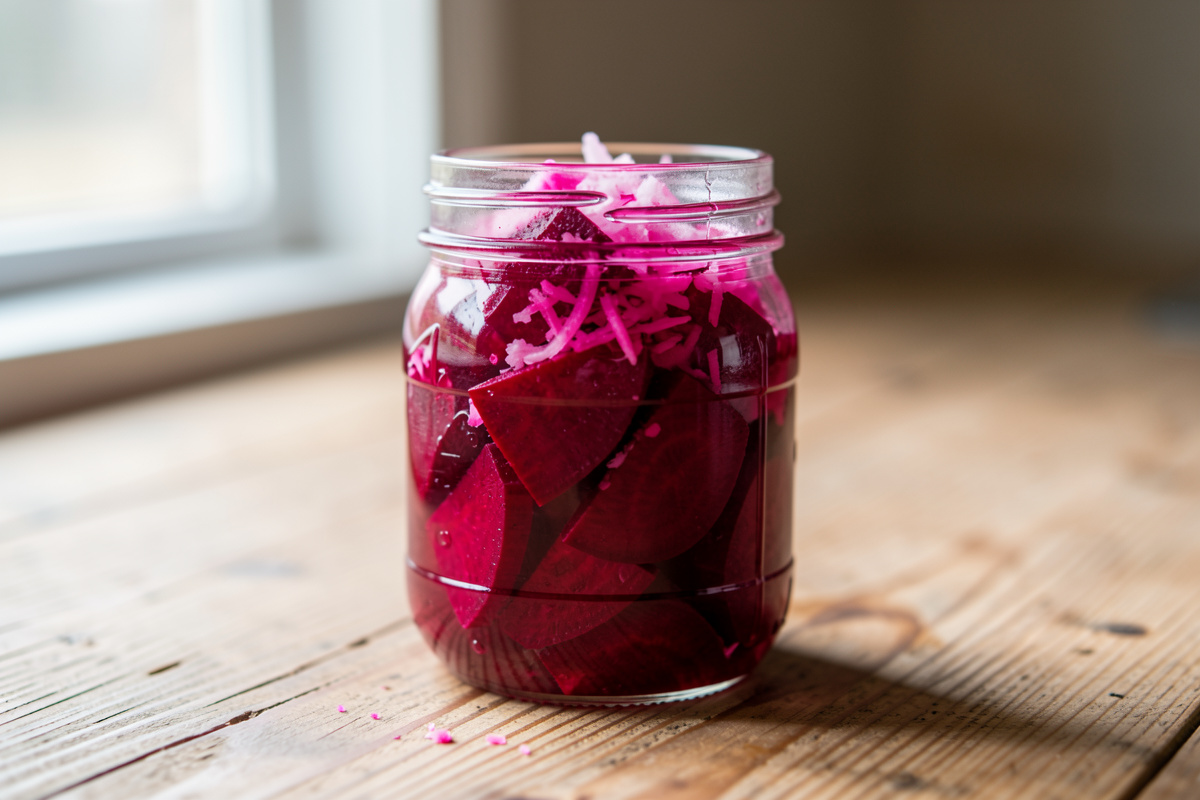
Fermented beets with horseradish ferment in a 2 to 2.5% brine over 7 to 14 days, finishing earthy, tangy, and bracingly sharp. Beets are the sweetest root I ferment, so they sour slowly and reward patience: on my pH meter a finished jar lands around pH 3.6 to 3.9, and the horseradish keeps the whole thing from tasting flat.
This is the jar that produces two things at once, the beets themselves and beet kvass, the deep magenta brine you drink. I run beets at a slightly lower salt than beans because their sugar feeds a vigorous ferment, and the trick with sugary roots is knowing when sour tips into boozy. Here is the brine, the timing, and the horseradish ratio that actually works.
What Salt Ratio Works Best for Fermented Beets?
Use a 2 to 2.5% brine for fermented beets: 20 to 25 grams of non-iodized salt per liter of water. Beets are high in natural sugar, which fuels a fast, active ferment, so I keep the salt moderate to let the lactic acid bacteria do their work without stalling, while still protecting against spoilage.
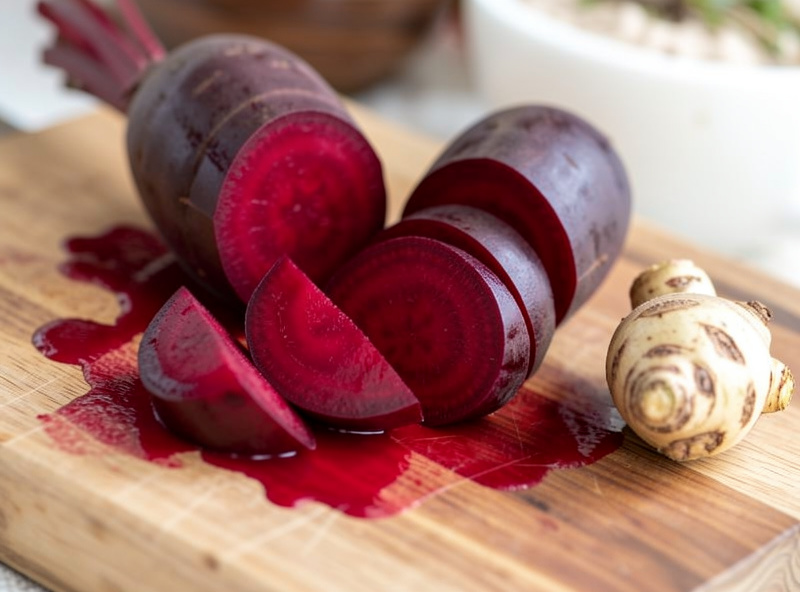
I weigh salt against water on a 0.1-gram scale and dissolve it fully. Raw beets are dense and can be peeled or left scrubbed with skin on; I peel them because the skin can carry grit and a slightly woody note. Cut into roughly 1.5 to 2 cm wedges or thick coins so the brine penetrates evenly without the pieces turning to paste. Uniform pieces matter more here than with most vegetables, because a dense raw beet ferments from the outside in; mix tiny shreds with fat chunks and the small bits go to mush while the big ones are still raw at the core. For a 1-liter wide-mouth jar I pack roughly 400 to 450 grams of beet wedges, wedge in the horseradish and a couple of garlic cloves, then top with about 500 ml of 2.5% brine to cover, mixing the salt to the total water rather than to the beets so the jar lands at the same concentration every time. The salt logic mirrors what I cover in my salt percentage guide: more sugar wants a touch less salt than a lean vegetable, or the ferment drags.
How Much Horseradish Do You Add to Fermented Beets?
Add 1 to 2 tablespoons of freshly grated horseradish per liter of brine for a clear, sinus-clearing sharpness that mellows as it ferments. Fresh horseradish loses heat the longer it sits, so I add it generously knowing the bite will soften over two weeks into a warm, rounded pungency.
Grate it just before packing; pre-jarred horseradish is preserved in vinegar and behaves differently in a lacto ferment. If you cannot get the fresh root, a thumb of ginger or a few garlic cloves gives a different but equally good aromatic spine. The beets take on the horseradish color and aroma beautifully, and the brine becomes a peppery kvass. This is the same aromatic-layering instinct I use dropping garlic into mixed jars, building on my lacto-fermented garlic methods.
How Long Do Beets Take to Ferment?
Beets take 7 to 14 days at 20 to 22°C, noticeably longer than carrots or beans because their sugar drives a slower, deeper acidification. I usually pull them at day 10 to 12, when the wedges are tender-firm and the brine reads sharply sour rather than sweet.
Taste from day 7. Early on the brine is sweet and barely sour; as the lactic acid builds it turns dry and tangy. Once you like it, refrigerate. Left too long and warm, sugary beets can start producing a faint alcohol note as yeasts join the party, which is a sign to cold-crash sooner next time.
| Style | Cut | Ferment time | Result |
|---|---|---|---|
| Beet wedges + horseradish | 1.5-2 cm wedges | 10-14 days | Firm, earthy, sharp (my default) |
| Beet kvass (drink) | 2-3 cm chunks | 5-7 days | Light, salty-sour tonic brine |
| Grated beet relish | Coarse grate | 4-6 days | Fast, soft, condiment texture |
What Is Beet Kvass and Can You Drink the Brine?
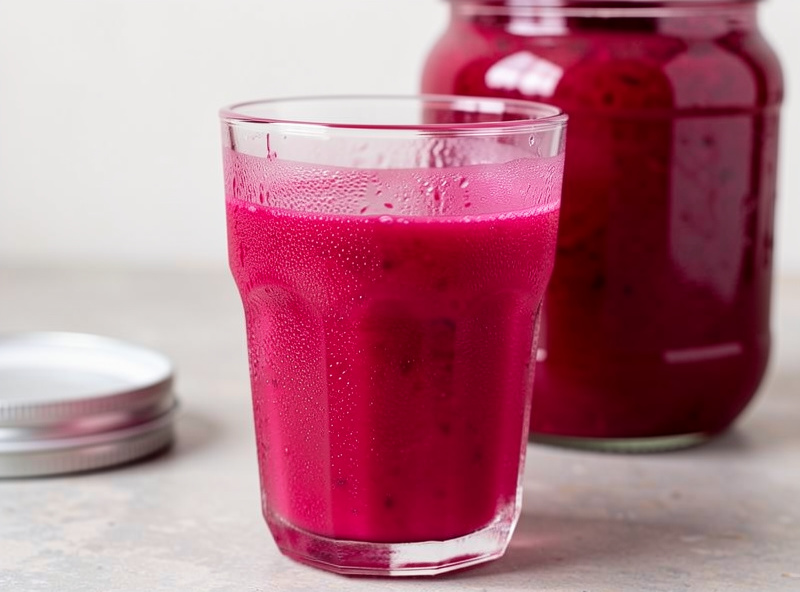
Beet kvass is the deep red, salty-sour brine left from fermenting beets, and yes, you drink it, usually diluted or straight as a savory shot. It is simply the liquid side of the same ferment, an earthy, mineral-tasting brine that doubles as a base for borscht, salad dressing, or a cold tonic.
I treat kvass as the bonus, not the goal: a beet jar gives me crunchy wedges to eat and a jar of brine to sip and cook with. To make kvass specifically, use larger chunks and a shorter 5 to 7 day ferment so the beets stay raw and the brine stays light. This is food and flavor, not medicine; I make no health claims about it, only that it tastes good cold on a hot day and seasons a soup like nothing else.
How Do You Keep Fermented Beets From Going Wrong?
Keep beets submerged, ferment under 22°C, and refrigerate before the sugars run to alcohol. The two common failures are surface kahm yeast on exposed beets and an over-long warm ferment turning yeasty. A glass weight and a fridge solve both. As always, the beets must acidify below pH 4.6 to be safe, and a healthy jar passes that easily by day 7.
The first beet jar I let run three weeks on a warm shelf came out faintly fizzy and boozy, drinkable but not what I wanted. Now I cold-crash sugary roots earlier. A thin white film is harmless kahm yeast to skim; fuzzy colored growth is mold and the batch goes out. Trust the smell: clean earthy-sour is good, anything rotten or solvent-sharp is not.
What Do You Eat Fermented Beets With?
Fermented beets earn their keep on a plate: I fold the wedges into goat-cheese salads, lay them over rye with butter and a sharp cheese, chop them into a grain bowl, or eat them cold straight from the jar when the horseradish bite is at its peak. The earthy-sour-sharp combination cuts through anything rich, which is why a beet jar lives in my fridge alongside the kraut crock through the cold months.
The brine pulls double duty in the kitchen long after the beets are gone. A splash of the magenta kvass turns a vinaigrette electric, sharpens a bowl of cold borscht, and seasons a pan sauce with an earthy acidity that plain vinegar cannot match. I rarely pour any of it down the drain, and when a jar of beets is running low I top it back up with fresh wedges and a little more 2.5% brine to keep a rolling supply going through the winter, the same continuous rhythm I keep with the rest of my lacto-fermentation jars.
Recommended Gear for Fermented Beets
Beets stain everything and ferment vigorously, so two tools earn their place. A set of glass fermentation weights keeps the wedges under the magenta brine where they will not oxidize, and a 0.1-gram kitchen scale dials the brine to a repeatable 2.5%. For the kvass, a few swing-top bottles store the brine and let you carbonate it lightly if you want.
Disclosure: the product links above are Amazon affiliate links. If you buy through them I may earn a small commission at no extra cost to you. I only link gear I actually use.
Frequently Asked Questions
Do you peel beets before fermenting?
Peeling is optional. I peel mine because the skin can carry grit and a woody note, but well-scrubbed unpeeled beets ferment fine and the surface microbes help start the batch. Either way, cut them into wedges so the brine penetrates evenly.
Why are my fermented beets fizzy or boozy?
Beets are sugary, so a warm, long ferment lets yeasts produce a little alcohol and fizz alongside the lactic acid. It is usually still safe, but to avoid it, ferment under 22C and refrigerate once the brine tastes properly sour, around day 10 to 12.
Can you drink beet fermentation brine?
Yes. The brine is beet kvass, a salty-sour earthy liquid you drink diluted or as a small shot, and use as a base for borscht and dressings. It is food and flavor, not medicine, so enjoy it for taste rather than any health claim.
How long do fermented beets last?
Fermented beets keep good quality for 4 to 6 months refrigerated. Their acidity keeps them safe well beyond that, but the texture slowly softens and the flavor deepens. Keep them submerged in their brine in the fridge.
Can I use pre-grated jarred horseradish?
It is not ideal. Jarred horseradish is preserved in vinegar, which behaves differently in a lacto ferment than fresh grated root. Use freshly grated horseradish for the cleanest result, or substitute ginger or garlic for a different aromatic.
Is the white film on fermented beets dangerous?
A thin, flat white film is kahm yeast, which is harmless. Skim it and push the beets back under the brine. Fuzzy, raised, or colored growth such as green, black, or pink is mold, and that means you discard the batch.
Related Guides
- Lacto-Fermentation for Vegetables: The Complete Home Guide
- Fermented Carrots Recipe with Ginger
- Fermented Green Beans Recipe: Crunchy Dilly Beans
- Sauerkraut Salt Percentage: 2% vs 2.5% vs 3% Brine, Tested
- Lacto-Fermented Pickles That Stay Crunchy

About Kenny Nyhus Fadil
A home fermenter documenting brines, bubbles, and the occasional moldy tragedy.
Keep Bubbling
Dry Salting vs Brining Vegetables: When to Use Each Method
Lacto-Fermented Salsa Recipe: Tangy, Probiotic, Fresh