Cultured Dairy Guide: Yogurt, Kefir & Cultured Butter at Home

A cultured dairy guide comes down to two dials: temperature and the culture you pitch. Get those right and milk reliably becomes yogurt, kefir, sour cream, or cultured butter. Most home dairy fails on temperature drift, not technique — a 6°C swing changes everything.
I run cultured dairy the way I run every ferment in my kitchen: by measurement, not by folklore. A thermometer in the milk, a calibrated pH meter on the finished curd, and a 0.1 g scale for any salting. Across the batches I’ve cultured — thermophilic yogurt held at 43°C, mesophilic sour cream left on the counter overnight, kefir grains turning a jar fizzy in a day — the same small family of bacteria does all the work. This guide maps that whole family, shows you which dial matters for each one, and links out to the deeper how-to for every member.
What “Cultured Dairy” Actually Means
Cultured dairy is milk or cream acidified by lactic acid bacteria. The bacteria eat lactose and excrete lactic acid, the pH falls, casein proteins coagulate, and you get the thickness, tang, and keeping quality we call yogurt, kefir, or cultured cream. It is the same Lactobacillus-dropping-pH chemistry that runs a sauerkraut crock or a curing salami — just on milk sugar instead of cabbage or meat.
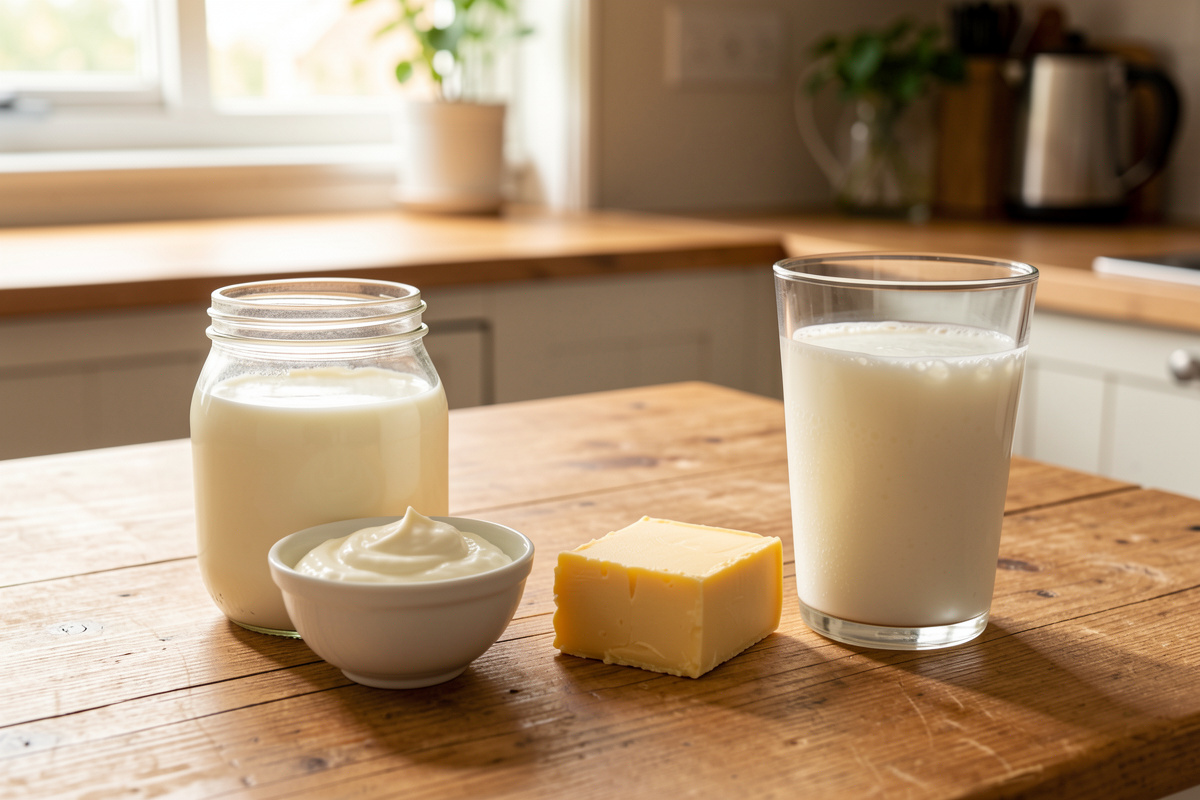
That single idea unifies a confusing-looking shelf of products. Yogurt, sour cream, creme fraiche, filmjölk, buttermilk, and cultured butter are not six unrelated recipes. They are the same process run on different fats, at different temperatures, with slightly different bacterial casts. Once you see the pattern, you stop memorising recipes and start steering a process.
The Two Dials: Temperature and Culture
Everything in cultured dairy splits into two camps by the temperature its bacteria prefer. Thermophilic cultures (yogurt) work hot, around 40–45°C, and need a held warm environment. Mesophilic cultures (sour cream, creme fraiche, filmjölk, buttermilk, kefir) work at ordinary room temperature, roughly 20–26°C, and need nothing but a counter. Picking the wrong temperature for a culture is the single most common reason a batch goes thin, slow, or sour in the wrong way.
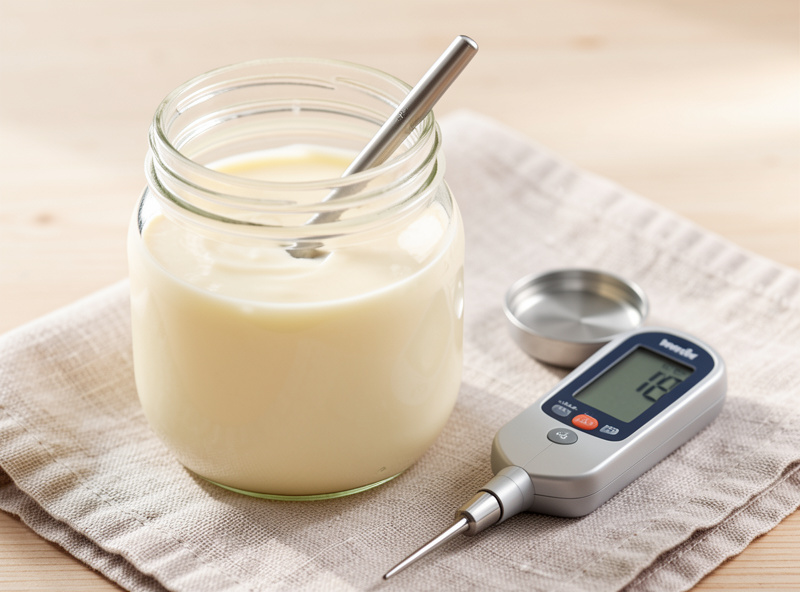
The culture is the second dial. A yogurt culture is essentially two heat-loving species, Lactobacillus delbrueckii subsp. bulgaricus and Streptococcus thermophilus. A mesophilic culture is built on Lactococcus lactis with flavour strains like Leuconostoc for that buttery, diacetyl note in sour cream and cultured butter. Kefir is the outlier: not a powder but a living grain — a symbiotic gel of dozens of bacteria and yeasts that you reuse forever. I keep a milk kefir grain stash going alongside my mesophilic powders precisely because it needs no re-buying.
Choosing Your Milk
Fat content sets the body; processing sets the reliability. Whole milk (around 3.5% fat) gives the thickest yogurt and the creamiest kefir; skim works but stays loose. For sour cream you want light cream near 18–20% fat, for creme fraiche heavy cream at 30%+ , and cultured butter starts from the highest-fat cream you can buy. The fat is what carries flavour and what your bacteria texturise.
Use pasteurised milk for predictable results. Pasteurisation clears the field so your chosen culture wins instead of competing with whatever the raw milk carried. The one milk to avoid is ultra-filtered or ultra-pasteurised (UHT) for yogurt — the harsh heat treatment denatures proteins differently and many home batches set poorly. I keep a probe thermometer in the pot whenever I scald milk, because the scald step (heating yogurt milk to ~82°C and cooling back to 43°C) is what gives a thick, spoonable set rather than a watery one.
The Cultured Dairy Family at a Glance
Here is the whole family on one bench. Read it as a map: the temperature column tells you whether it needs a warm incubator or just your counter, and the culture column tells you what to pitch.
| Cultured Dairy | Base | Culture Type | Temperature | Time | Reusable Culture? |
|---|---|---|---|---|---|
| Yogurt | Whole milk | Thermophilic | 43°C / 110°F | 4–12 hrs | Yes (backslop ~3–5 times) |
| Greek yogurt | Yogurt, strained | Thermophilic | 43°C then chill | +2–8 hrs strain | Via the parent yogurt |
| Sour cream | Light cream ~18–20% | Mesophilic | 22°C / 72°F | 12–24 hrs | Yes (backslop) |
| Creme fraiche | Heavy cream 30%+ | Mesophilic | 22°C / 72°F | 12–24 hrs | Yes (backslop) |
| Filmjölk | Whole milk | Mesophilic (ropy) | 20°C / 68°F | 18–24 hrs | Yes (backslop indefinitely) |
| Cultured butter | Cultured heavy cream | Mesophilic, then churn | 22°C culture, churn cold | 12–18 hrs + churn | Via the cultured cream |
| Dairy kefir | Whole milk | Grain (bacteria + yeast) | 20–25°C / 68–77°F | 18–36 hrs | Yes (grains, forever) |
Yogurt: The Thermophilic Workhorse
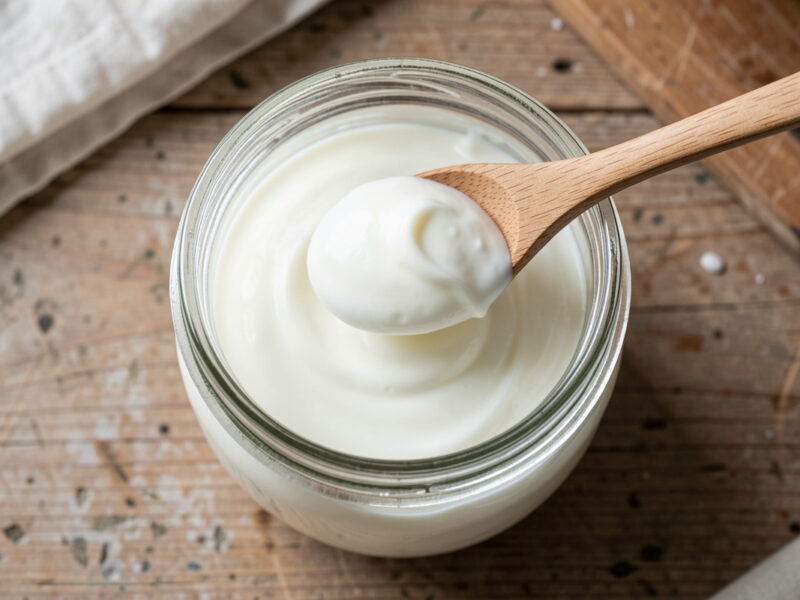
Yogurt is the gateway cultured dairy and the one most people scald their teeth on temperature with. Hold the inoculated milk at 43°C for 4–12 hours; shorter is milder, longer is tarter. Below 38°C the thermophilic bacteria sulk and the set goes slack; above 46°C you start killing them. The single biggest upgrade for a beginner is a stable heat source — an oven light, a cooler of warm water, or a dedicated yogurt maker — rather than chasing the temperature with a towel.
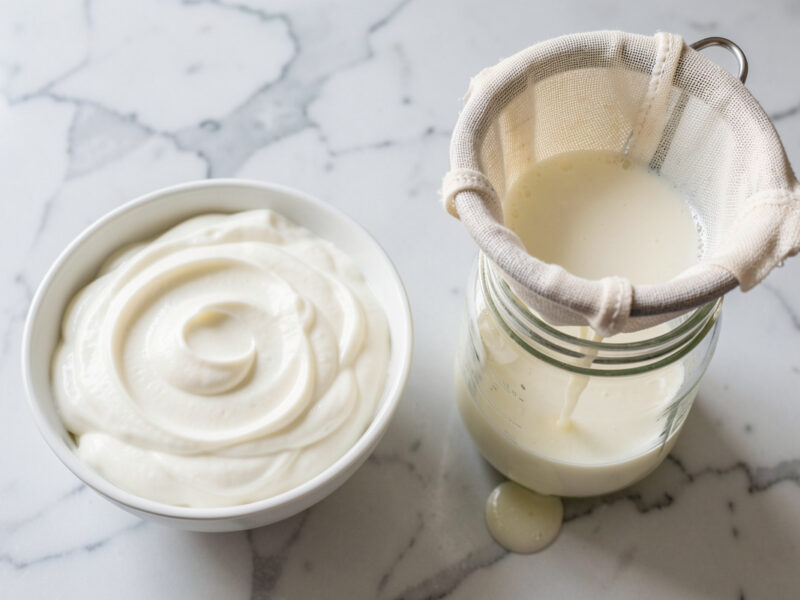
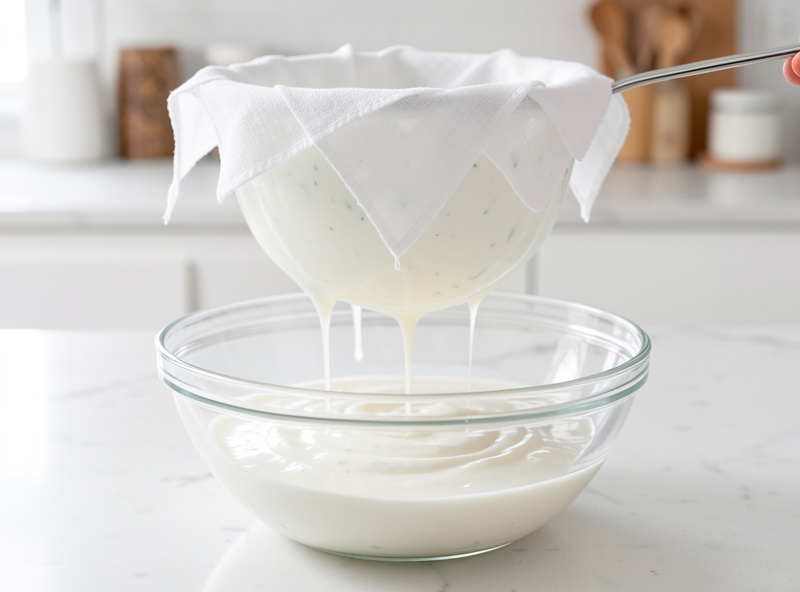
Once you can set a reliable plain yogurt you have two doors open. Strain it for thick, high-protein Greek yogurt, or hold back a few spoonfuls to backslop the next batch instead of buying culture. I cover the full method in the homemade yogurt guide for beginners, and the straining and whey-handling details in the Greek yogurt straining guide. Get yogurt working and the rest of this family is just temperature variations on a theme you already understand.
Mesophilic Cultured Cream: Sour Cream, Creme Fraiche, Filmjolk
This is the lazy person’s cultured dairy, and I mean that as the highest praise. Mesophilic cultures work at room temperature with no incubator — you pitch the culture, cover the jar, and walk away for a day. Sour cream, creme fraiche, cultured buttermilk, and the Swedish filmjölk on my counter are all the same mesophilic process on different fats.
The differences are mostly fat percentage and bacterial nuance. Sour cream uses lighter cream and lands tangy and spoonable; creme fraiche uses heavy cream and stays pourable-to-thick with a rounder, nuttier flavour that won’t split when you boil it in a sauce. Filmjölk uses whole milk and a ropy strain that gives it a gently viscous, drinkable body that is breakfast in half of Sweden. Each one backslops — save a spoon to start the next batch. The full methods live in the sour cream and creme fraiche guide and the filmjölk and Nordic cultured dairy guide.
Cultured Butter: Where Cream Becomes Two Foods
Cultured butter is the most rewarding step up because it stacks two transformations. First you culture heavy cream exactly like creme fraiche — mesophilic bacteria, room temperature, 12–18 hours — which builds the diacetyl flavour compounds that make European-style butter taste of more than fat. Then you churn that cultured cream cold until the fat globules clump and the buttermilk breaks free. You end up with two foods from one cream: tangy cultured butter and real cultured buttermilk for pancakes or your next mesophilic batch.
The food-safety angle here is simple: keep the cultured cream below 26°C while it cultures, then chill it hard before churning. Cold fat clumps; warm fat smears. I walk through churning by stand mixer, jar-shaking, and the washing step that determines shelf life in the cultured butter homemade guide.
Dairy Kefir: The Grain-Based Outlier
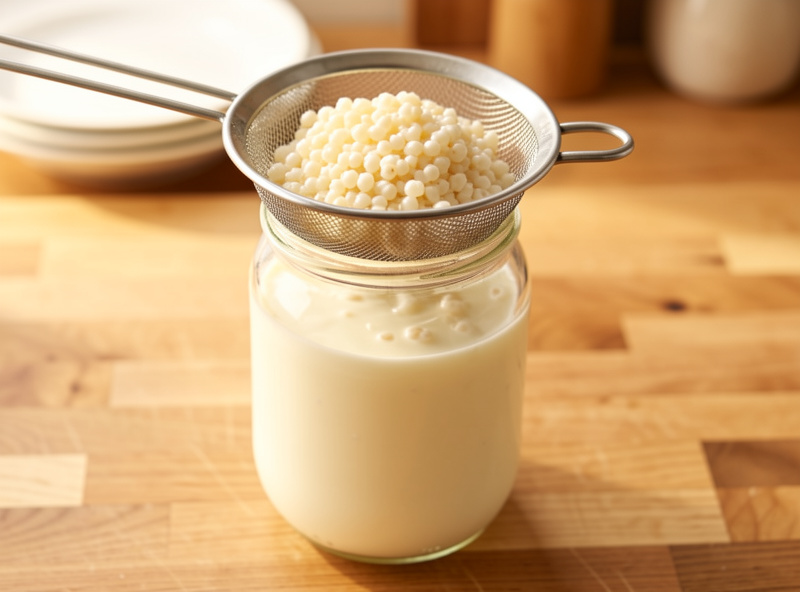
Kefir breaks the powder-culture pattern in the best way. Instead of a single-use sachet, you keep living kefir grains — a rubbery, cauliflower-looking symbiotic colony of bacteria and yeast — that you strain out and reuse forever. Drop the grains in milk, leave them at room temperature for a day, strain, and you have a tangy, faintly effervescent drink with more microbial diversity than any powdered culture can offer. The grains grow, so you end up giving them away. My own worst kefir mistake was leaving a jar at 28°C through a Swedish summer heatwave and forgetting it for three days — it came back yeasty, sharp, and slightly boozy, the grains stressed and sluggish for a fortnight afterward. Now I move the jar somewhere cooler the moment the kitchen climbs past 25°C.
Because kefir contains yeast as well as bacteria, it ferments faster and produces a trace of carbonation and a whisper of alcohol (typically well under 1% in a normal 24-hour ferment) — harmless, but worth knowing. I keep both milk and water kefir grains going; the milk side gets the full treatment in the dairy kefir complete guide, with the focused recipe in my milk kefir making guide and the dairy-free cousin in the water kefir guide.
Food Safety With Cultured Dairy: Calm and Accurate
Cultured dairy is one of the safest things you can ferment, and the reason is the pH meter. As lactic acid bacteria work, the pH falls from milk’s neutral ~6.7 down into the low 4s — yogurt typically lands around 4.4 and finished kefir near 4.2–4.6. That acidity is precisely what inhibits the pathogens that worry people. Below roughly pH 4.6, the spoilage and pathogen risk that exists in neutral milk simply isn’t the same conversation. This is why a successful culture is a self-defending food.
The practical rules: start from pasteurised milk, work with clean (not sterile) equipment, pitch enough active culture so acidification is fast, and refrigerate once set. Trust your senses afterward — cultured dairy should smell clean-tart and pleasant. The clear warning sign is fuzzy or coloured mould on the surface (pink, black, blue, green, fuzzy white): that means toss it, the same call I make on any ferment. A smooth, sharp, yogurty smell with a clean surface is the sign of a culture that won. When I want to confirm rather than guess, I read it on the meter — see my notes on choosing a pH meter for fermentation.
Equipment That Earns Its Place
You can make every cultured dairy in this guide with a jar, a thermometer, and a strainer. But three tools turn it from guesswork into a process. A reliable probe or instant-read thermometer is non-negotiable for yogurt — it is the difference between a thick set and a watery one. A 0.1 g kitchen scale matters once you start salting cultured butter or measuring culture precisely. And a pH meter is the optional-but-clarifying tool that turns “I think it’s done” into a number.
For thermometers, a basic instant-read covers everything here — you can compare options with a probe thermometer search on Amazon. For repeatable yogurt, mesophilic and thermophilic direct-set dairy cultures save you hunting for the right live yogurt to backslop from. And when you graduate to reading acidity directly, a digital pH meter is the tool that has settled more “is it ready?” arguments in my kitchen than anything else. As an Amazon Associate I earn from qualifying purchases.
Whatever vessel you use, clean it well — cultured dairy doesn’t need sterile gear, but it does need clean. My approach to that is in the guide on how to clean and sanitise fermentation equipment, and if you’re deciding between jars and dedicated vessels, the fermentation vessel comparison applies here too.
The Wider Cultured Dairy World: Skyr, Labneh, Viili, Buttermilk
The seven foods in the table above are the spine of home cultured dairy, but the family tree branches further, and every branch is a variation on the same two dials. Once you understand thermophilic versus mesophilic, every “exotic” cultured dairy becomes legible.
Skyr is the Icelandic cousin of Greek yogurt: a thermophilic culture (often with a rennet trace) incubated and then strained hard, landing even thicker and higher in protein than strained yogurt. Labneh is yogurt salted and strained until it becomes a spreadable cheese — the same straining skill from the Greek yogurt method, just taken further and seasoned. Viili is filmjölk’s Finnish relative, a mesophilic ropy culture that grows a faintly stretchy, custard-like body and is famously beginner-proof because it tolerates a wide temperature window. Cultured buttermilk — the thick, tangy kind you buy for baking, not the thin liquid left from churning — is simply mesophilic-cultured low-fat milk, and it doubles as a ready-made mesophilic starter for sour cream.
I mention these not to send you chasing twelve cultures, but to make the point this whole guide rests on: cultured dairy is a small set of techniques wearing many cultural names. Learn to hold 43°C, learn to leave a mesophilic jar on the counter overnight, and learn to strain — and you can make almost any of them.
Troubleshooting: Reading What Went Wrong
Most cultured dairy failures trace back to one of four causes, and each leaves a recognisable signature. Reading the signature is faster than re-reading a recipe, and it is the habit that separates someone who follows instructions from someone who runs a process.
Thin, watery yogurt almost always means the temperature dropped below the thermophilic comfort zone or you skipped the protein-denaturing scald. Hold 43°C steadily and scald the milk to ~82°C first. A batch that never thickened at all usually means a dead or weak culture — old store yogurt with no live cultures, expired powder, or chlorinated tap water exposure killing the bacteria. Off, yeasty, or alcoholic smells in something that shouldn’t be fizzy (yogurt, sour cream) point to wild yeast contamination or far too long a ferment; in kefir, mild yeastiness is normal. A separated batch — curds floating on a pool of clear whey — is over-fermentation: the pH dropped too far and the proteins squeezed out their water. It is usually still safe; just over-tart. Pull the next batch earlier.
The one signature that ends the conversation is mould: raised, fuzzy, coloured growth (pink, blue, green, black, or fuzzy white) on the surface. That is not kahm and not normal — discard the batch, the same call I make on a kraut crock or a kombucha vessel. A smooth, glossy surface with a clean, sharp, dairy smell is a culture that did its job.
Storing, Backslopping, and Keeping Cultures Alive
Finished cultured dairy keeps for one to three weeks refrigerated, getting tangier as the surviving bacteria slowly keep working in the cold. Yogurt and Greek yogurt hold around two weeks; cultured butter, once well washed, keeps for weeks and freezes for months; kefir is best fresh but stores fine for a week. The colder your fridge, the slower the drift, which is why I cold-crash anything I want to hold at its current tartness.
The real economy of cultured dairy is that you rarely buy culture twice. Backslopping — saving a portion of one batch to start the next — works directly for yogurt, sour cream, creme fraiche, filmjölk, and buttermilk. The practical limits differ: yogurt backslops cleanly for roughly three to five generations before the bacterial balance drifts and you re-seed from fresh culture, while filmjölk and viili can be carried on essentially forever. Kefir is the ultimate version of this — the grains grow, so you finish with more culture than you started, and the only problem becomes finding people to give grains to.
If you need to pause, most cultures survive a fridge holiday. A jar of kefir grains will sit dormant in fresh milk in the fridge for a couple of weeks; a mesophilic backslop keeps a week or two cold before it needs feeding. For longer breaks, kefir grains can be dried or frozen with some loss of vigour. This reuse loop is exactly why I treat cultures like the living tools they are — the same way I keep a sourdough starter and a vinegar mother going year-round rather than re-buying them.
Frequently Asked Questions
What is the difference between yogurt and kefir?
Yogurt is made with thermophilic bacteria held warm at about 43C and sets into a spoonable gel. Kefir is made with reusable grains containing both bacteria and yeast, ferments at room temperature, and is a thinner, drinkable, faintly fizzy liquid with more microbial diversity.
Do I need a yogurt maker to culture dairy at home?
No. Yogurt needs a stable warm spot near 43C, which an oven light or a cooler of warm water provides. Every mesophilic cultured dairy here, including sour cream, creme fraiche, filmjolk and kefir, cultures at ordinary room temperature with no special equipment at all.
Is homemade cultured dairy safe?
Yes, when you start from pasteurised milk and let it acidify properly. As the bacteria work, pH falls from about 6.7 to the low 4s, which inhibits pathogens. Use clean equipment, pitch active culture, refrigerate once set, and discard any batch showing fuzzy or coloured mould.
Can I reuse the culture from one batch to start the next?
Yes. Yogurt, sour cream, creme fraiche and filmjolk can all be backslopped by saving a few spoonfuls of the finished batch to inoculate the next. Yogurt backslopping stays reliable for roughly three to five generations; kefir grains and filmjolk can be carried on indefinitely.
What milk makes the best cultured dairy?
Whole pasteurised milk gives the thickest, creamiest results across yogurt and kefir, while higher-fat creams are needed for sour cream, creme fraiche and cultured butter. Avoid ultra-pasteurised or UHT milk for yogurt, as the harsh heat treatment often produces a weak, watery set.
Why did my yogurt come out runny?
The most common cause is temperature drift below 38C during incubation, which stalls the thermophilic bacteria. Other causes are skipping the scald step that heats yogurt milk to about 82C first, using UHT milk, or too short an incubation. Hold a steady 43C for at least four hours.
Related Guides
- Homemade Yogurt Guide for Beginners
- Greek Yogurt Straining at Home
- Cultured Butter Homemade Guide
- Sour Cream and Creme Fraiche Guide
- Filmjolk and Nordic Cultured Dairy
- Dairy Kefir Complete Guide

About Kenny Nyhus Fadil
A home fermenter documenting brines, bubbles, and the occasional moldy tragedy.