Crock Moat Mold and Hard-Water Scale: Keep the Seal Clean

A water-sealed crock’s moat grows mold because it is a warm, still puddle you top up and forget, and it chalks with scale because tap water leaves calcium behind every time it evaporates. Neither touches your ferment directly — the moat is the airlock, sealed off from the food — but a slimed or scaled channel stops sealing, and a moat that stops sealing lets oxygen to the surface. Clean it with a brush, baking soda, and an acid descale.
This is the maintenance job almost nobody does, because almost nobody looks. The moat sits hidden under the lid’s skirt for the entire three-to-six-week run, quietly evaporating and re-topping, out of sight and out of mind. I top mine up on a schedule and I still have opened the channel after a long kraut run to find a chalk ring at the old waterline and a spot or two of something fuzzy. It is normal, it is fixable, and understanding it is the difference between a crock that seals reliably and one that mysteriously lets air in mid-batch. For where this fits in the bigger picture, start with the fermentation crock care and cleaning guide.
Why Does a Crock’s Water Moat Grow Mold and Scale?
The moat grows mold because it holds standing water at room temperature with limited airflow — ideal conditions for airborne mold spores and yeast to settle and colonize — and it scales because hard water deposits calcium and magnesium at every evaporation line. One is biological, one is mineral, and a neglected moat usually has both.
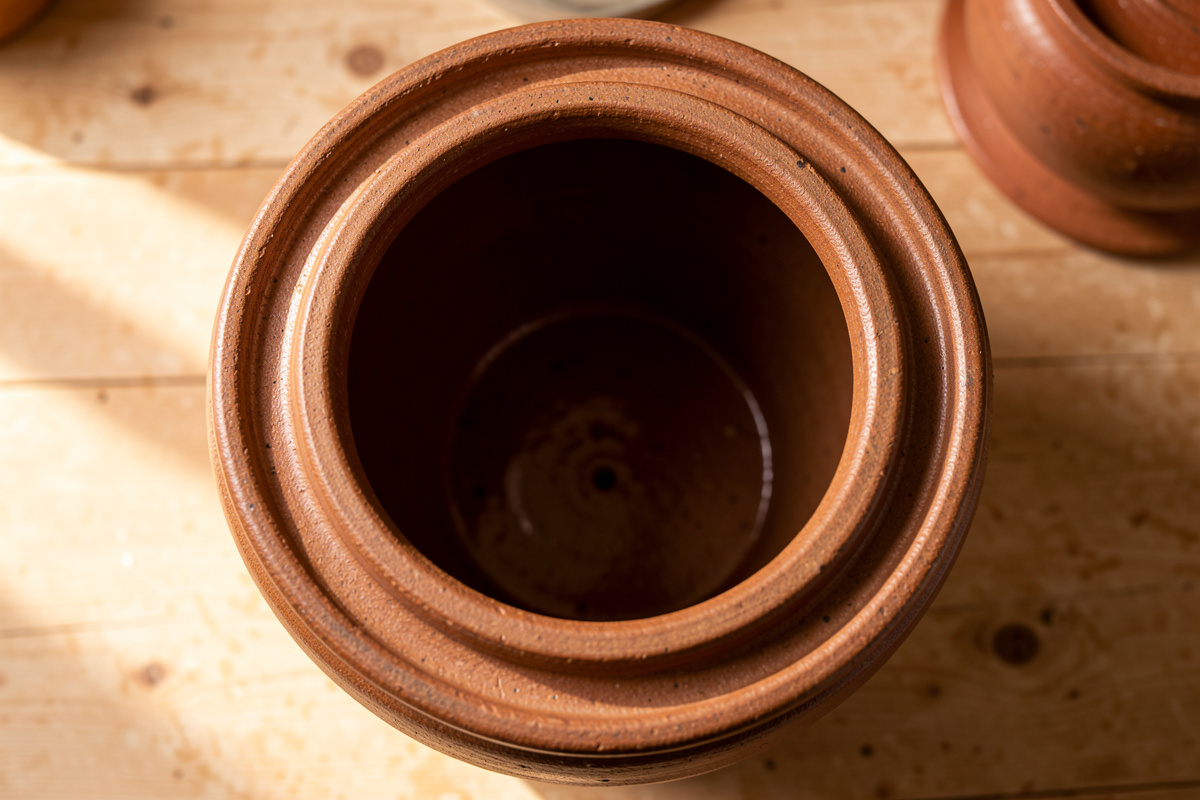
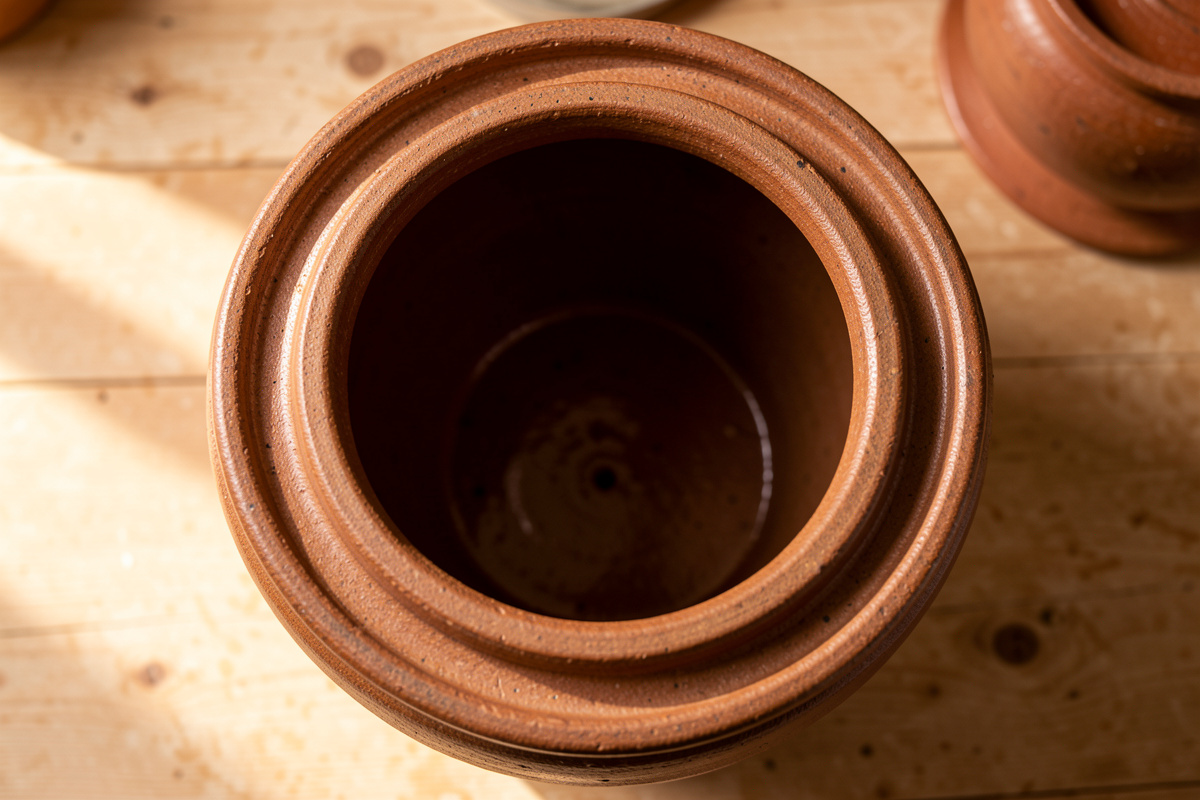
The water-seal design is genuinely clever: the lid’s skirt hangs down into a water-filled channel, and that water forms an airlock that lets fermentation CO2 bubble out while keeping oxygen from getting back in. The catch is that the sealing water is a small, still, warm reservoir, and warm still water is what mold and kahm yeast want. Over a long ferment it also evaporates, and as it does, dissolved minerals concentrate and deposit as a chalky ring — the same way a kettle scales. My tap runs moderately hard on the test strips I keep for cross-checking brine readings, so I see scale build faster than a soft-water fermenter would. Both problems are cumulative and both are cosmetic to the seal until they get bad enough to roughen the channel or clog it, at which point the seal degrades. That is when a clean, anaerobic ferment can catch an unexpected kahm bloom on the surface — the air got in through a moat that stopped doing its job.
Is It Kahm Yeast or Mold in the Moat?
Kahm yeast in the moat looks like a thin, flat, white or cream film or a faint cloudiness on the water; mold looks fuzzy, raised, and colored — green, blue, black, or pink. Kahm is harmless and wipes away; mold means you empty, scrub, and descale the whole channel before refilling. Telling them apart on sight is the same skill you use on the ferment surface itself.
Because the moat is sealed off from the food, neither one is an emergency for the batch the way surface mold on the ferment would be — but a colonized moat is a dirty moat, and a dirty moat seals poorly and can eventually let spores near the lid gap. So I treat any growth as a signal to clean. Here is the field guide I use:
| Sign | Kahm yeast | Mold |
| Texture | Flat, thin film or haze | Fuzzy, raised, dusty |
| Color | White to cream | Green, blue, black, pink |
| Pattern | Even sheet or cloudiness | Distinct spots or colonies |
| Smell | Faintly yeasty | Musty, off |
| Action | Wipe out, refresh water | Empty, scrub, descale, refill |
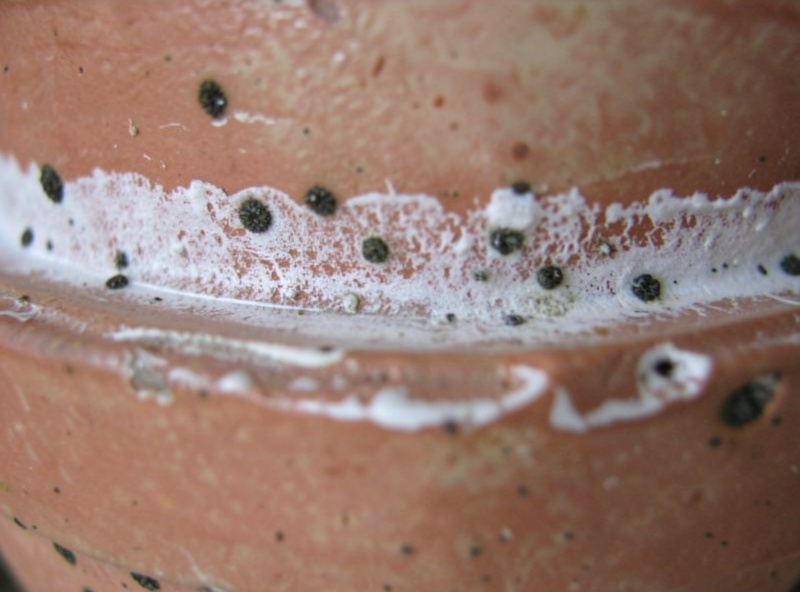
The identification logic is identical to reading a ferment surface, which I cover in the broader context of the care hub: flat and white means skim-and-continue, fuzzy and colored means deal with it properly. In the moat the stakes are lower because it is not your food, but the habit of correct ID is worth keeping sharp.
How Often Should You Change the Moat Water?
Change the moat water every one to two weeks during an active ferment, and more often in warm weather — every few days when the kitchen is above about 24°C, because heat speeds both evaporation and microbial growth. Always top up before the level drops enough to break the seal. The goal is never letting the water sit long enough to colonize or the level fall enough to admit air.
Two failures happen when people forget the moat. The obvious one is evaporation: the level drops, the skirt is no longer submerged, and the airlock is broken — now oxygen reaches the ferment and you get surface kahm or worse on what should have been a clean anaerobic batch. The subtler one is staleness: water that sits untouched for six weeks in a warm room is water that grows a film. My rule is a weekly moat check written into the same routine as tasting the ferment — I lift the lid, look at the channel, top up or fully change as needed, and set it back. In high summer I check every few days. Some people add a little salt or a splash of vinegar to the moat water to slow growth; I keep it simple with fresh plain water changed often, because a clean schedule beats a chemical crutch. Whatever you do, do not let it go dry — a broken seal mid-ferment is the one moat failure that actually costs you a batch.
How Do You Clean a Moldy or Scaled Moat?
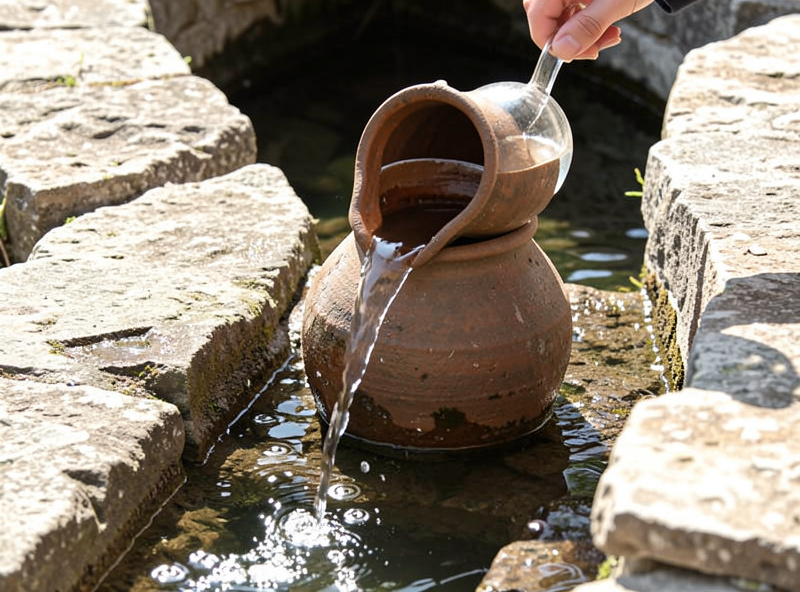
Empty the moat completely, scrub the channel with a small brush and a baking-soda paste to lift mold and grime, then descale any hard-water ring with white vinegar or a citric-acid solution, rinse, and refill with fresh water. On a badly neglected channel the whole job takes about ten minutes; done routinely it takes two.
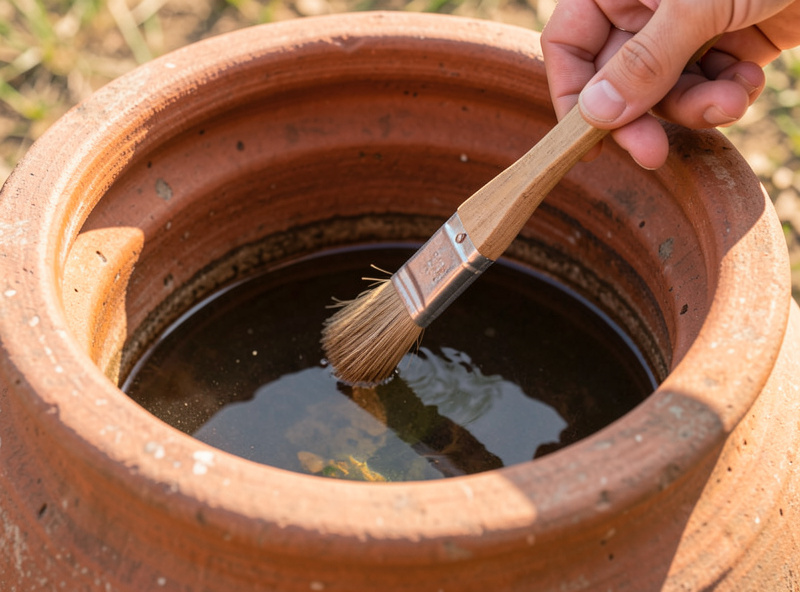
Work in order. First tip out the old water and wipe the channel dry with a cloth so you can see what you are dealing with — scale reads white and chalky, mold reads as distinct fuzzy spots. Make a stiff baking-soda paste and work it around the full channel with a narrow bottle brush or an old toothbrush, getting into the corner where the channel meets the wall, because that crevice is where growth hides. The paste’s mild abrasion and alkalinity lift biological grime and loosen residue. Rinse, then look again: any remaining white chalk is mineral scale, and that needs acid, not baking soda. A small brush that actually fits the channel is the whole trick here — I keep a dedicated narrow detail brush for moats and airlock parts so it never crosses over to anything that touches food.
As an Amazon Associate I earn from qualifying purchases.
How Do You Descale Hard-Water Buildup in the Channel?
Descale a moat by soaking or wiping the channel with plain white vinegar or a citric-acid solution — both are mild food-safe acids that dissolve calcium and magnesium scale without harming the glaze. Let the acid sit five to ten minutes on stubborn chalk, then brush, rinse, and refill. Acid works because scale is a mineral deposit; only dissolving it removes it.
Hard-water scale is the buildup baking soda cannot touch, because you are fighting mineral chemistry, not grime. The U.S. Geological Survey classifies water hardness by dissolved calcium and magnesium, and the harder your supply, the faster that chalk ring returns — soft-water fermenters can go a season between descales, while I do the moat roughly monthly. For a channel I can flood, I pour in enough vinegar to cover the scale and let it work; for one I cannot, I wet a cloth or paper towel with citric-acid solution and drape it against the ring to hold the acid in contact. Either way, rinse thoroughly afterward so no acid taste carries into the next batch — though since the moat water never contacts the food, this matters less here than it does inside the crock. The same descaling logic applies to the glass and ceramic weights, which chalk up the same way; that routine is in cleaning glass and ceramic fermentation weights.
How Do You Keep the Moat Clean Between Top-Ups?
Keep a moat clean with three habits: change the water on a schedule instead of only topping up, wipe the channel every time you have the lid off, and never store the crock with water sitting in the moat. Prevention is a two-minute weekly wipe; remediation is a ten-minute scrub-and-descale you only earn by neglect.
The between-batch step is the one people miss most, and it is the one that creates the worst moat problems. When a ferment finishes and the crock goes into storage, any water left in the channel becomes a stagnant reservoir that colonizes over weeks — I have pulled a “clean” stored crock off the shelf and found a musty moat ring that formed entirely during storage. So the last thing I do before a crock goes away is empty and dry the moat completely, which is part of the full routine in storing a crock between batches so it stays fresh. During a run, the habit is simply to look: every time the lid is off to taste or check the ferment, glance at the channel, wipe it, and top up. A moat you look at weekly never becomes a moat you have to rescue. For the promptness that keeps the crock interior just as clean, see how to clean a stoneware fermentation crock without soap residue — same principle, different part of the vessel.
Does mold in the crock moat mean my ferment is contaminated?
Not directly. The moat water is the airlock seal and is separated from the food, so growth in the channel does not automatically reach your ferment. But a colonized or scaled moat seals poorly, and a broken seal lets oxygen to the surface, which can cause surface kahm or mold on the ferment itself. Treat moat growth as a signal to clean and to check the seal.
How often should I change the water in a fermentation crock’s moat?
Every one to two weeks during an active ferment, and every few days in warm weather above about 24 degrees Celsius, because heat speeds both evaporation and microbial growth. Always top up before the level drops enough to break the airlock seal. Never let the moat run dry mid-ferment.
What is the white chalky buildup in my crock’s moat?
That is hard-water scale, a deposit of calcium and magnesium left behind as the moat water evaporates. It is harmless but cumulative, and it roughens the channel over time. Remove it with a mild food-safe acid such as white vinegar or a citric-acid solution, which dissolves mineral scale that baking soda cannot.
Can I put salt or vinegar in the moat water to stop mold?
Some fermenters add a little salt or a splash of vinegar to slow growth in the moat, and it can help. But the more reliable fix is simply changing the water on a schedule so it never sits long enough to colonize. A clean routine beats a chemical crutch, and it avoids any change to how the airlock behaves.
Should I empty the moat before storing my crock?
Yes, always. Water left in the moat during storage becomes a stagnant reservoir that grows a musty film and mold ring over weeks. Empty and fully dry the channel before the crock goes on the shelf, and store the crock dry so nothing has standing water to colonize.
Further Reading
- Fermentation Crock Care & Cleaning: The Complete Guide
- How to Clean a Stoneware Fermentation Crock Without Soap Residue
- Cleaning Glass and Ceramic Fermentation Weights
- Storing a Crock Between Batches So It Stays Fresh

About Kenny Nyhus Fadil
A home fermenter documenting brines, bubbles, and the occasional moldy tragedy.
Keep Bubbling
Fermentation Equipment: The Complete Home Brewer Toolkit
Fermenting Hydroponic Greens: Why Hydroponic Lettuce and Kale Need a Different Salt Ratio