Clean a Stoneware Fermentation Crock Without Soap Residue

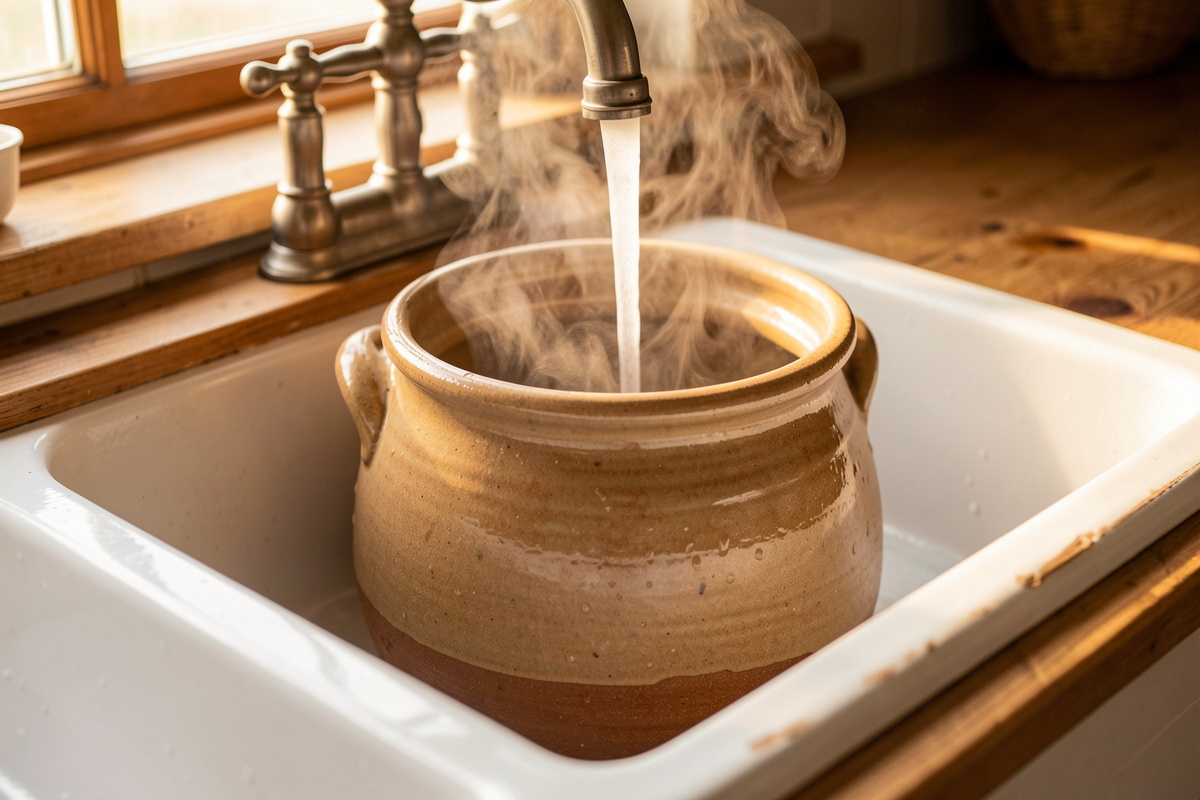
Clean a stoneware fermentation crock with the hottest tap water you can handle, a stiff brush, and zero dish soap — the glazed interior is non-porous enough that hot water and scrubbing lift kraut and pickle residue completely, while soap wicks into the unglazed rim and foot and taints your next batch. For a stuck ring, a baking-soda paste replaces soap without the film. Total time: about five minutes.
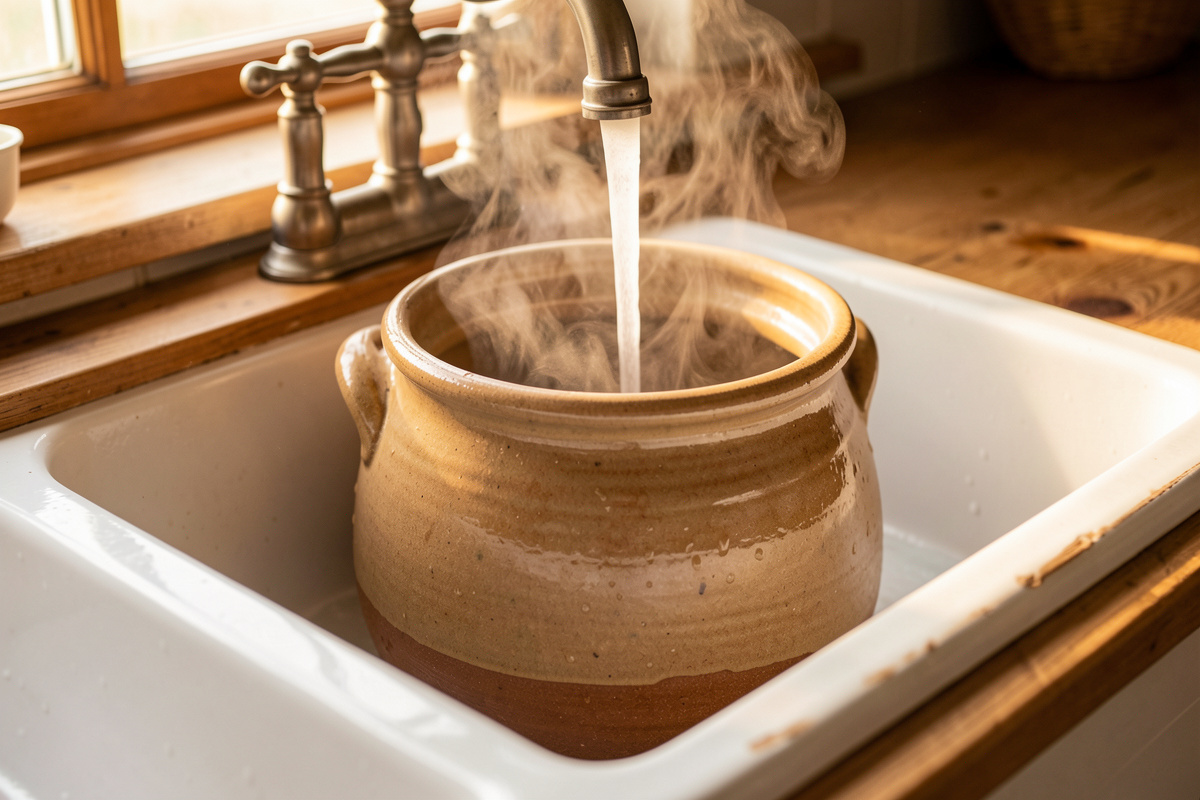
I clean my crocks this way because I ruined a batch learning why it matters. Years ago I scrubbed a fresh kraut crock with dish soap, rinsed it until I was sure it was clean, and spent the next three weeks watching a perfectly good cabbage ferment develop a faint soapy back-note that fought the lactic sourness the whole way down. The crock was spotless. The problem was invisible, and it was in the clay. This is the method I have run ever since across my German-style water-sealed crock, my open-top stoneware crock, and a shelf of Mason jars — the same logic scales to all of them. For the full maintenance system this fits into, see the fermentation crock care and cleaning guide.
Why Does Soap Ruin the Next Batch in a Stoneware Crock?
Soap ruins the next batch because a stoneware crock is two materials, not one: a glass-smooth glazed interior that rinses clean, and porous unglazed fired clay at the rim, the foot ring, and inside any glaze hairline. Detergent is a surfactant — it soaks into that porous clay, where plain rinsing never fully removes it, and then it leaches back out into your brine as a soapy off-flavor.
The chemistry is not mysterious. Surfactants are designed to cling and to lower surface tension, which is exactly what lets them penetrate a porous surface and resist rinsing. Fired stoneware bisque has real porosity anywhere it is not glazed — that is why an unglazed crock foot will darken with a water ring and why the rim absorbs smell. Put soap on it and you are loading a slow-release reservoir of detergent right where the next batch’s brine sits. Because a lacto ferment is acidic and salty, it pulls that residue back out over weeks. You taste it as a flat, slightly soapy note under the sourness — subtle enough that most people blame the cabbage.
Hot water and mechanical scrubbing do not have this problem because they work on the glaze, which is fired glass with effectively no porosity. Kraut residue, brine salts, and pickle films sit on that surface and lift off with heat and friction alone. You do not need a surfactant to clean glass, and you do not want one anywhere near porous clay you are going to ferment in again.
What Do You Actually Need to Clean a Crock?
You need three things: very hot water, a stiff brush that reaches the bottom, and a box of baking soda for the occasional residue ring. That is the entire kit. Everything else — citric acid for scale, a soft cloth for stubborn stains — is a specific-problem add-on, not part of the routine after-batch clean.
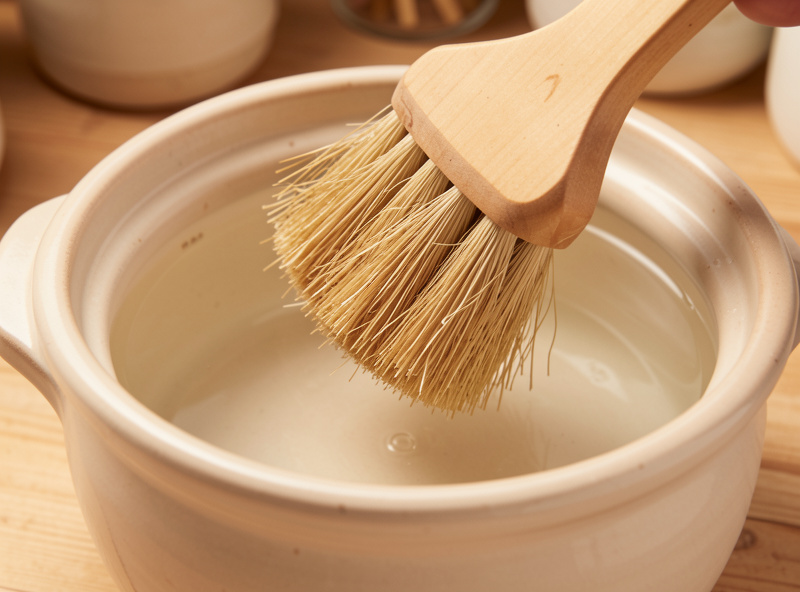
The brush matters more than people expect. A natural-bristle or firm nylon brush with a long handle lets you scrub the interior and the bottom curve with real pressure; a flimsy sponge folds and skates over residue. What you must avoid is a metal or coarse green scouring pad on the glossy glaze — over time it micro-scratches the surface, hazing it and giving the next batch’s residue something to grip. Save any abrasive for a baking-soda paste worked with a soft cloth, which cuts residue without scratching. I keep a dedicated stiff long-handled brush and a box of baking soda right at the sink so the clean happens the moment a crock empties, not three days later when the residue has dried to cement.
As an Amazon Associate I earn from qualifying purchases.
How Do You Clean a Stoneware Crock Step by Step?
Work in five steps: scrape out solids, pre-rinse with warm water, scrub the interior and rim under the hottest water you can stand, address any residue ring with a paste, then final-rinse until the water runs clear and slick-free. The whole thing takes about five minutes on a crock you clean promptly and closer to fifteen on one you let dry out.
Start by scraping every scrap of vegetable matter into the compost — leftover cabbage or chili solids are what dried residue is made of, so getting them out first saves scrubbing later. Pre-rinse with warm (not yet hot) water to loosen the brine film; going straight to scalding water on a cold crock is a small thermal-shock risk on heavy stoneware, so I warm it up first. Then run the water as hot as your hands tolerate and brush the entire interior in overlapping strokes, paying attention to the bottom curve where sediment settles and the shoulder just below the rim where the brine line leaves a film. Brush the rim and the lid’s mating edge too — those get skipped constantly and they are exactly where residue and smell live.
The sensory tell for “clean” is tactile, not visual. A truly clean glaze squeaks slightly under a wet fingertip and feels frictionless. If it feels the least bit slick, slippery, or filmy, there is residue — or worse, soap someone used before you — still on it, and you keep going. Rinse thoroughly with hot water, running it over the rim and letting it sheet off the interior. When the runoff is clear and the surface squeaks, the crock is clean. Dry it fully before storage, which is its own step covered in the care hub — a damp crock in a cupboard is how the smell problems start.
How Do You Remove a Stuck-On Residue Ring?
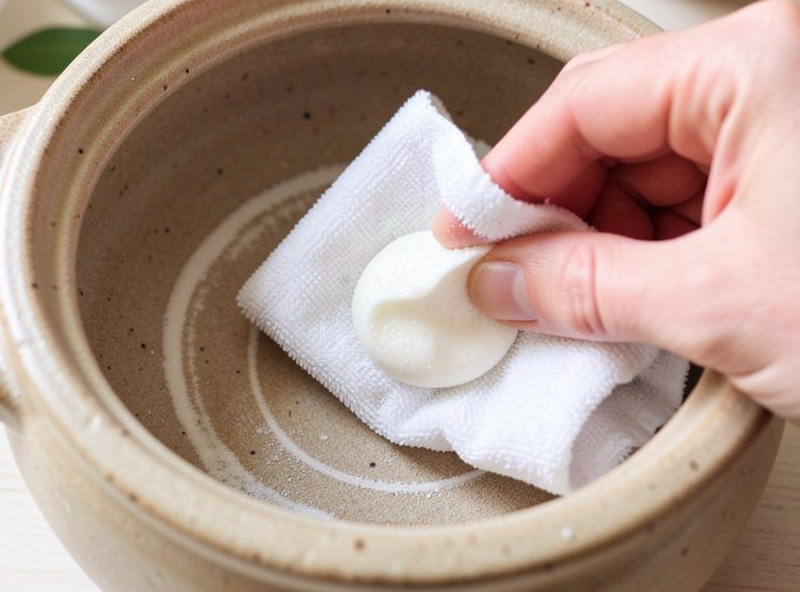
For a dried brine ring or a stubborn film the brush won’t lift, make a thick paste of baking soda and a little water, spread it on the ring, let it sit five to ten minutes, then scrub with a soft cloth or the brush. Baking soda is a mild abrasive and a mild alkali — it does the mechanical and chemical work soap would, and it rinses off a food surface completely.
The ring forms at the old brine line, where evaporation concentrated salts and vegetable sugars into a hard band, and on a crock you did not clean promptly it can be genuinely stuck. The paste beats scrubbing dry because the moisture rehydrates the residue while the mild abrasive gives your cloth grip. For a ring that also carries hard-water scale — a chalky white component you can feel — switch to a citric-acid or white-vinegar wipe after the paste, because scale is a mineral deposit that an acid dissolves and an alkali does not. That mineral side of crock cleaning, especially in the water moat, gets its own full treatment in crock moat mold and hard-water scale. Whatever you use, rinse until the surface squeaks clean again — the same tactile test ends every method.
What About the Lid, Rim, and the Weights?
The lid, rim, and fermentation weights sit in the same brine as the crock interior, so they carry the same residue and the same smell — clean them in the same session with the same hot-water-and-brush method, and never assume a rinse is enough on the porous parts. A spotless crock with a filmy lid is still a dirty vessel at the next batch.
The rim and the lid’s mating edge are the highest-value spots to scrub because they are porous clay and they are where a smell sets in first — garlic, chili, and over-ripe kraut funk soak into that unglazed band and carry over. Give them a firm brush and, if a smell lingers, the deodorizing routine in removing stubborn smells from jars, lids, and crocks. The weights — glass or ceramic — spend the whole ferment submerged and pick up haze and scale; I clean them right alongside the crock, with the material-specific steps in cleaning glass and ceramic fermentation weights. Doing the whole kit as one job is the habit that keeps flavors from ever crossing between batches.
How Do You Know the Crock Is Actually Clean?
You know a crock is clean by feel and by smell: the wet glaze squeaks and feels frictionless under a fingertip, and a dry crock smells of nothing — no residual sourness, no garlic, no soap. If either test fails, it is not clean yet, regardless of how it looks. A visual check alone misses the two things that ruin a batch: invisible surfactant film and set-in smell.
This is where the measurement mindset pays off. I treat a crock like the bench equipment it is — the same way I trust a calibrated pH meter over a guess about whether a brine is safe, I trust the squeak test over a glance. A crock that passes both the tactile and the smell check goes into storage bone-dry and comes out ready for the next batch with no surprises. The one that felt “clean enough” but slightly slick is the one that gives you a mystery off-flavor two weeks into a ferment you cannot un-ruin. Five honest minutes at the sink, ending with your finger on the glaze, is the cheapest insurance in fermentation. For safe-handling context on home fermentation equipment generally, the National Center for Home Food Preservation is my go-to reference, and the FDA covers food-contact and glaze-safety guidance worth reading if your crock is old or imported.
Can I ever use soap on a stoneware fermentation crock?
It is best avoided entirely. Soap is a surfactant that wicks into the crock’s porous unglazed rim and foot, where rinsing never fully removes it, and then leaches into your next batch as a soapy off-flavor. Hot water and a stiff brush clean the non-porous glaze completely without that risk, so there is no reason to introduce soap at all.
How do I know if there is still soap residue in my crock?
Use the squeak test. A truly clean, rinsed glaze squeaks slightly under a wet fingertip and feels frictionless. If the surface feels slick, slippery, or filmy, there is residue or surfactant still on it. Keep rinsing with hot water until it squeaks clean and smells of nothing.
What removes a dried brine ring from a crock?
Make a thick paste of baking soda and a little water, spread it on the ring, let it sit five to ten minutes, then scrub with a soft cloth or brush. If the ring also feels chalky from hard-water scale, follow with a white-vinegar or citric-acid wipe, since acid dissolves mineral scale that baking soda cannot. Rinse until the surface squeaks clean.
Should I use hot or cold water to clean a stoneware crock?
Warm first, then hot. Pre-rinse a cold crock with warm water to loosen the brine film and avoid thermal shock on heavy stoneware, then scrub under the hottest water you can handle. Heat is what lifts brine salts and vegetable residue off the glaze without any soap.
Related Reading
- Fermentation Crock Care & Cleaning: The Complete Guide
- Crock Moat Mold and Hard-Water Scale: Keeping the Seal Clean
- Cleaning Glass and Ceramic Fermentation Weights
- Storing a Crock Between Batches So It Stays Fresh

About Kenny Nyhus Fadil
A home fermenter documenting brines, bubbles, and the occasional moldy tragedy.
Keep Bubbling
Salinity Refractometer vs Kitchen Scale: Measuring Brine Strength
How to Calculate a Salt Brine Percentage by Weight With a Scale