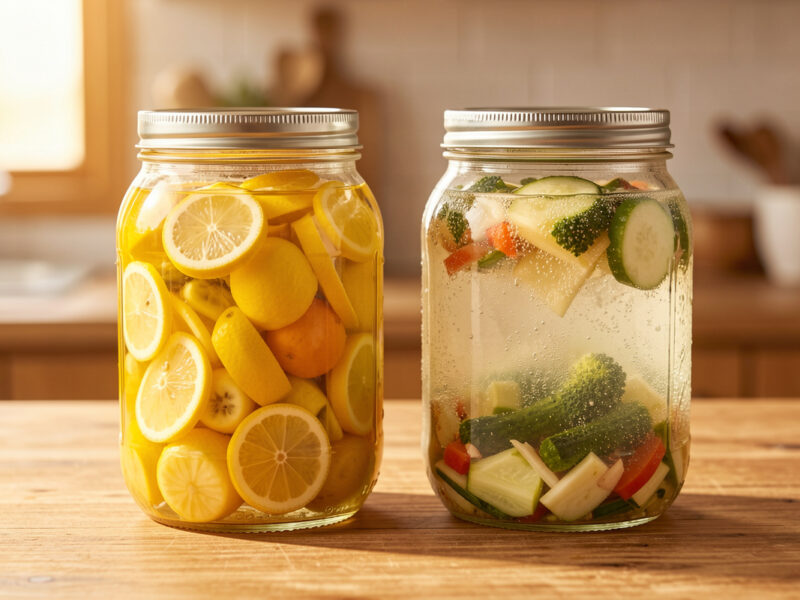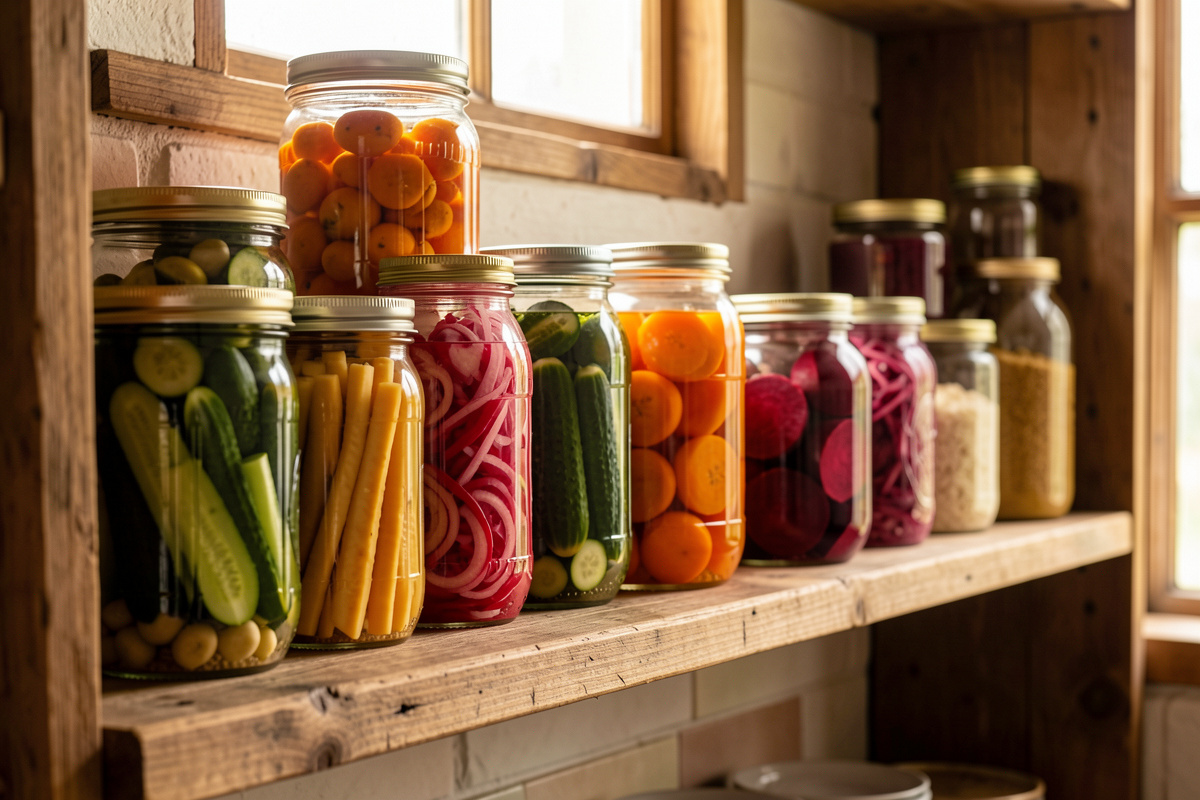
Pickling and Brined Vegetables: The Complete Guide

Pickling is preservation by acid: you drop a vegetable into a vinegar brine strong enough to push its pH below 4.6, and at that acidity the bacteria that spoil food and the one that makes you sick (Clostridium botulinum) cannot grow. That single number, pH 4.6, is the line every safe pickle lives under, and on my meter a properly made vinegar pickle sits well below it at 3.2 to 3.8.
I run a fermentation room, not a single jar on the counter, and pickling is the workhorse that fills the gap between what the garden gives me in July and what I want to eat in January. But vinegar pickling is a different animal from the lacto-fermented vegetables I also keep going. In a ferment, Lactobacillus makes the acid for you, slowly, over days. In a vinegar pickle, you add the acid directly and the jar is sour the moment you seal it. This guide is about that second road — the vinegar one — measured the way I measure everything: by weight, by percentage, and with a calibrated pH meter when it matters.
What Pickling Actually Means
Pickling is any method that preserves food in an acidic medium. The fast, modern definition most of us mean is vinegar pickling: vegetables packed into a brine of vinegar, water, salt, and usually sugar and spices. The acid does the preservation, and it does it instantly — there is no culture, no waiting for fermentation, no living organism to feed.
This matters because it changes where the risk lives. A fermented pickle is safe because Lactobacillus drops the pH for you and crowds out everything else; the danger there is under-salting and letting the wrong things grow before the acid builds. A vinegar pickle is safe because you added enough acid up front. The danger there is the opposite: diluting the vinegar too far, so the finished jar never gets sour enough. Both roads end at the same place — a pH under 4.6 — but they get there differently, and confusing the two is how people get hurt. If you want the cultured version, I cover it separately in my lacto-fermentation guide for vegetables; this page stays on vinegar.
For a deeper side-by-side of the two methods — flavor, texture, shelf life, and which one to reach for — read quick pickling vs lacto fermentation. The short version: vinegar pickling is faster, more forgiving, and tastes sharp and clean; fermentation is slower, funkier, and gives you live cultures.
The Two Pickling Roads: Quick Pickles vs Canned Pickles
Inside vinegar pickling there are two further paths, and choosing wrong is the most common beginner mistake I see. Refrigerator (quick) pickles are made cold or with a warm brine, never processed, and live in the fridge for one to two months. Canned pickles are sealed in jars and water-bath processed so they are shelf-stable for a year or more.
The difference is not flavor — it is whether the jar leaves the fridge. A refrigerator pickle can use a gentler brine because the cold is doing half the preservation work. A canned pickle has nothing protecting it but the acid, so the brine math is non-negotiable and you must follow a tested recipe to the letter. I make far more refrigerator pickles than canned ones, simply because they are crunchier and I have the fridge space. The full comparison lives in refrigerator pickles vs canned pickles.
| Factor | Refrigerator (Quick) Pickles | Canned (Shelf-Stable) Pickles |
|---|---|---|
| Preservation | Acid + refrigeration | Acid alone (heat-sealed) |
| Vinegar requirement | 5% acidity recommended, flexible | 5% acidity, never diluted below the tested recipe |
| Processing | None | Water-bath canner, timed |
| Shelf life | 1 to 2 months, refrigerated | 12+ months, pantry; refrigerate after opening |
| Texture | Crunchier (no heat processing) | Softer (heat penetrates the vegetable) |
| Best for | Small batches, fast turnaround, crunch | Big harvests, gifting, year-round storage |
| Risk if done wrong | Spoils in the fridge, you can see and smell it | Seal fails or under-acid jar sits at room temp — real hazard |
The Acid Dial: Why 5% Vinegar and pH 4.6 Matter
Here is the one rule you cannot bend: use vinegar labeled 5% acidity, and for any pickle that will sit at room temperature, the finished product must reach pH 4.6 or lower. Most commercial distilled white and cider vinegars are exactly 5% — it is printed on the label as “5% acidity” or “50 grain.” Some artisan and homemade vinegars are weaker and unlabeled, which makes them lovely for salad and unsafe for canning.
The 4.6 figure is not arbitrary. Clostridium botulinum, the spore that produces botulinum toxin, cannot grow below pH 4.6. That is the entire reason vinegar pickling is safe: you acidify the vegetable past the point where the dangerous organism can function. The 4.6 acidified-foods threshold and the tested water-bath processing times I follow both come from the National Center for Home Food Preservation. On my pH meter I aim lower than the legal floor — a target of 4.0 or below — because beets, onions, and dense vegetables can buffer the brine and pull the pH up as they sit. A little headroom is cheap insurance.
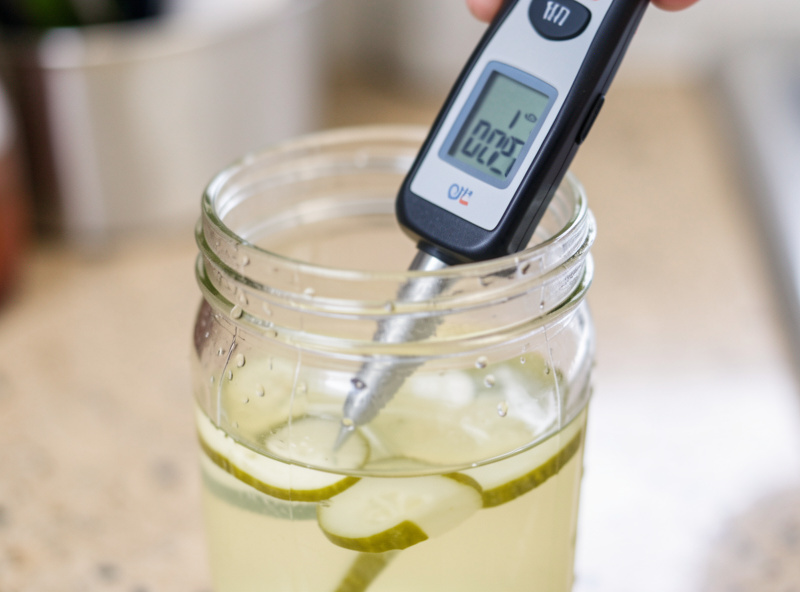
If you are pickling for the fridge only, you have more room — the cold suppresses growth and you will see spoilage long before it becomes dangerous. But if a jar is going on a shelf, follow a tested canning recipe and never reduce the vinegar to “tone it down.” Cut the sourness with sugar or water-then-refrigerate, never by weakening the acid in a shelf-stable jar.
Building a Pickling Brine
A vinegar pickling brine has four levers: vinegar, water, salt, and sugar. The classic quick-pickle ratio is 1 part vinegar to 1 part water by volume, with roughly 1 tablespoon of salt and 1 to 2 tablespoons of sugar per cup of liquid. That 1:1 split keeps the brine well under pH 4.6 while softening vinegar’s bite with water.
Salt in a vinegar pickle is for flavor and crunch, not preservation — that is the acid’s job — so I weigh it but I am not protecting a safety floor the way I am with sauerkraut. Use pickling or canning salt, not table salt: the anti-caking agents in table salt cloud the brine, and iodine can darken vegetables. Sugar balances the sourness and, in styles like bread and butter, becomes the whole point. I keep a full breakdown of the numbers — by vegetable, by style, for fridge versus canning — in pickling brine ratios.
One thing the lacto world taught me carries straight over: dechlorinate your water. Chlorinated tap water will not hurt a vinegar pickle’s safety the way it stalls a ferment, but it can throw off flavor and clarity. I use filtered water for brine and it costs me nothing.
Picking and Prepping the Vegetables
The best pickle starts before the brine. For cucumbers, you want pickling varieties — Kirby and similar — which are short, bumpy, thin-skinned, and unwaxed, with dense flesh and small seed cavities. Slicing cucumbers from the salad aisle are bred for fresh eating and go limp and hollow in brine. I grow my own when the season lines up; the rest of the year I buy whatever is firm, small, and unwaxed.
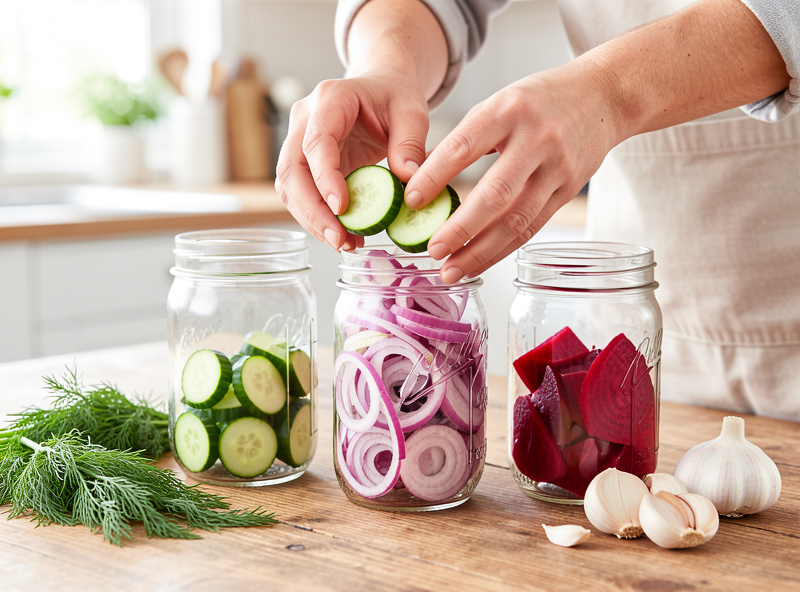
Two prep steps matter more than people expect. First, trim the blossom end — the end opposite the stem — by about a sixteenth of an inch. That end carries an enzyme that softens pickles from the inside out, and trimming it is the single cheapest crunch insurance there is. Second, get your vegetables cold and pack them tight; a crowded jar holds its shape better and keeps everything submerged. For a full walk-through on selecting and prepping cucumbers specifically, see my guide to pickling cucumbers.
The Crunch Problem
Soft pickles are the number-one complaint, and the causes are all controllable. Heat is the enemy of crunch: every degree of processing softens the cell walls, which is exactly why refrigerator pickles out-crunch canned ones. Beyond skipping heat, three levers help. Tannins firm up pectin — a couple of fresh grape, oak, or bay leaves, or a pinch of loose black tea, in each jar. Calcium reinforces cell walls — food-grade calcium chloride (sold as Pickle Crisp) is the modern, reliable version, far safer than the old slaked-lime method. And cold: an ice bath on the cut vegetables before packing keeps them firm.
The crunch tricks are the same ones I rely on for crisp fermented pickles, just deployed in a vinegar context. The mechanism — protecting pectin and cell walls — does not care whether the acid came from a bottle or from Lactobacillus.
One more lever that gets overlooked: the cut. Thicker slices and whole spears hold crunch far better than thin coins, because there is more flesh to resist the brine and less surface area for the acid to soften. When I want a guaranteed-crisp jar I cut spears; when I want fast flavor penetration and do not mind a softer bite, I go with coins. And no matter the cut, keep the vegetables under the brine — I use a small glass weight or a folded grape leaf to hold a stubborn floating spear down, because anything riding above the liquid softens and grows film first.
Equipment Worth Owning
You can pickle with jars and a saucepan, but a few tools earn their shelf space. A 0.1 gram kitchen scale so you can weigh salt and stop guessing. A pH meter or at minimum pH strips, so a shelf-stable batch is a measured fact and not a hope. Wide-mouth Mason jars in quart and pint sizes. And if you are canning, a proper water-bath canner with a rack — a deep stockpot works in a pinch as long as the jars are covered by an inch of boiling water and sit off the bottom.
For brine work specifically, a salinity refractometer is a nice-to-have rather than a need, since salt is not the safety dial in vinegar pickling. The pH meter is the tool that matters here. I would buy a digital pH meter for food before I bought almost anything else for a pickling bench. As an Amazon Associate I earn from qualifying purchases.
Spices, Aromatics, and Building Flavor
Once the safety math is settled, flavor is where pickling gets fun, and it is almost impossible to get wrong because spices do not change the acidity. The classic dill pickle leans on fresh dill heads, garlic, and whole yellow mustard seed. A “kosher dill” adds more garlic and often a pinch of dill seed alongside the fronds. Bread and butter pickles pivot to turmeric, celery seed, and mustard seed over a sweet brine. Beets want warm spices — clove, allspice, cinnamon stick, a little onion.
I toast and add whole spices rather than ground ones, for two reasons: ground spice clouds the brine and makes it muddy, and whole spice releases flavor slowly so a jar keeps developing for a week or two. Garlic is worth a warning — raw garlic in an acidic brine can turn blue or green from a harmless reaction between its sulfur compounds and trace minerals. It is cosmetic and safe, but if it bothers you, blanch the cloves for thirty seconds first. Hot pepper, bay, peppercorns, and coriander all play well; the only spice I use sparingly is anything pre-ground, because clarity is part of a good-looking jar.
A Basic Refrigerator Pickle, Start to Finish
Here is the workflow I use most, scaled to a single quart jar. Wash and trim a pound of small pickling cucumbers, cutting off a sixteenth of an inch from the blossom end, and slice into spears or coins. Pack them upright and tight into a clean quart jar with two smashed garlic cloves, a fresh dill head, and a teaspoon of yellow mustard seed. For the brine, bring to a simmer one cup of 5% distilled white vinegar, one cup of filtered water, one tablespoon of pickling salt, and one tablespoon of sugar, stirring until the salt and sugar dissolve.
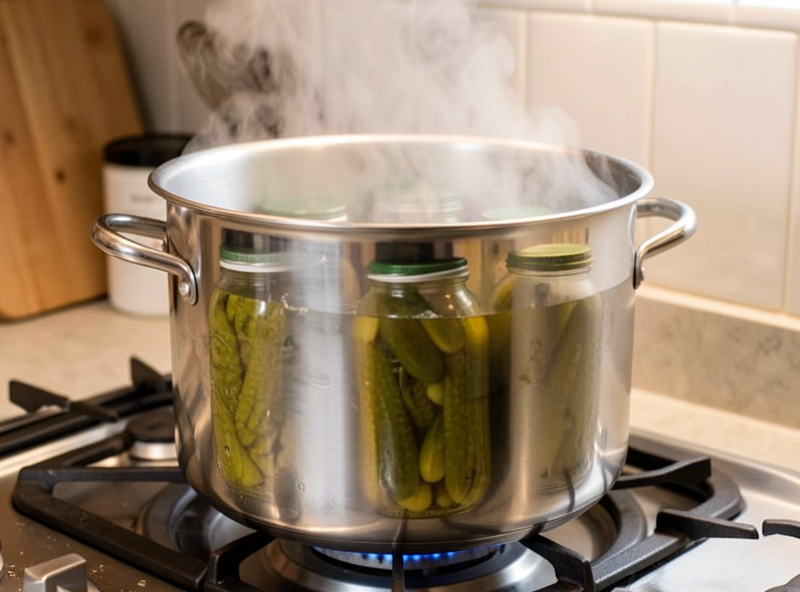
Pour the hot brine over the cucumbers, leaving about half an inch of headspace and making sure everything is submerged — air-exposed vegetables are where film and softness start. Let the jar cool on the counter, then cap it and move it to the fridge. It is edible in twelve hours, genuinely good at two to three days, and best inside the first month. If I am making a shelf-stable version of the same jar, I switch to a tested canning recipe, leave the correct headspace, and process in a boiling-water bath for the time the recipe specifies for my jar size and altitude — never improvising the time or the vinegar level.
Common Problems and Fixes
Cloudy brine is usually harmless — table salt, hard water, or the natural sediment from spices and garlic. If the pickles still smell and taste clean and the jar was made correctly, cloudiness alone is cosmetic. Slippery, foul-smelling brine with a soft mushy pickle is spoilage; toss it. A white film on a refrigerator pickle is most often kahm yeast, harmless but a sign your vegetables drifted above the brine; fuzzy, raised, colored growth is mold and means the jar goes in the bin.
Hollow pickles come from cucumbers that were too big or sat too long after harvest. Shriveled pickles usually mean the brine was too sweet or too salty and pulled water out too fast — dial the sugar and salt back. And if a canned jar fails to seal, do not re-process days later; refrigerate it and eat it as a quick pickle within a couple of weeks.
Frequently Asked Questions
Is vinegar pickling the same as fermentation?
No. Vinegar pickling adds acetic acid directly from vinegar, so the jar is sour and preserved immediately. Fermentation relies on Lactobacillus bacteria to produce lactic acid over days. Both end below pH 4.6, but one is added acid and the other is grown acid.
What pH do pickles need to be safe?
Any pickle stored at room temperature must reach pH 4.6 or lower, the point below which Clostridium botulinum cannot grow. I target 4.0 or below on my meter for a safety margin, since dense vegetables can buffer the brine upward as they sit.
Can I reduce the vinegar to make pickles less sour?
Not in a shelf-stable canned recipe. The vinegar is the only thing keeping a pantry jar safe, so it must stay at the tested level of 5 percent acidity. To soften sourness, add sugar instead, or make refrigerator pickles where the cold provides backup.
Why are my homemade pickles soft instead of crunchy?
Heat is the main culprit, which is why canned pickles soften and refrigerator pickles stay crisp. Trim the blossom end, add tannins like grape or bay leaves, use calcium chloride (Pickle Crisp), keep vegetables cold, and use firm pickling-variety cucumbers rather than salad cucumbers.
What kind of vinegar should I use for pickling?
Use vinegar labeled 5 percent acidity, which most distilled white and cider vinegars are. Distilled white gives a clean, sharp result and clear brine; cider vinegar adds mellow fruitiness. Avoid unlabeled artisan vinegars for canning, since weak acidity makes a shelf-stable jar unsafe.
How long do homemade pickles last?
Refrigerator pickles keep one to two months in the fridge. Properly water-bath canned pickles are shelf-stable for at least a year unopened, then need refrigeration after opening. Texture is best in the first few months either way.
Related Guides in This Cluster
- Quick Pickling vs Lacto Fermentation — added acid versus grown acid, and when to use each.
- How to Pick and Prep Pickling Cucumbers — varieties, the blossom-end trick, and prep for crunch.
- Bread and Butter Pickles — the sweet-tangy classic, by the numbers.
- Pickling Brine Ratios — vinegar, water, salt, and sugar for every style.
- Pickled Beets at Home — cooking, acidifying, and packing earthy beets safely.
- Refrigerator Pickles vs Canned Pickles — texture, shelf life, and which method fits you.
And from elsewhere on the bench: if you would rather grow the acid than add it, start with the lacto-fermentation guide or the crunch-focused lacto-fermented pickles. To make your own pickling vinegar from scratch, see the home vinegar making guide.

About Kenny Nyhus Fadil
A home fermenter documenting brines, bubbles, and the occasional moldy tragedy.