Sugar Ratios for Shrubs: Balancing Sweet and Sour

The standard shrub ratio is 1:1:1 by weight — equal parts fruit, sugar, and vinegar — but the sugar is the dial you actually turn to balance a shrub, and it shifts with how sweet or tart your fruit is. Sweet peak-season fruit can drop toward 3 parts sugar for 4 of fruit; mouth-puckering fruit like cranberry wants the full 1:1 or slightly more. Get this one number right and every shrub you make is balanced; get it wrong and even perfect fruit tastes cloying or sharp.
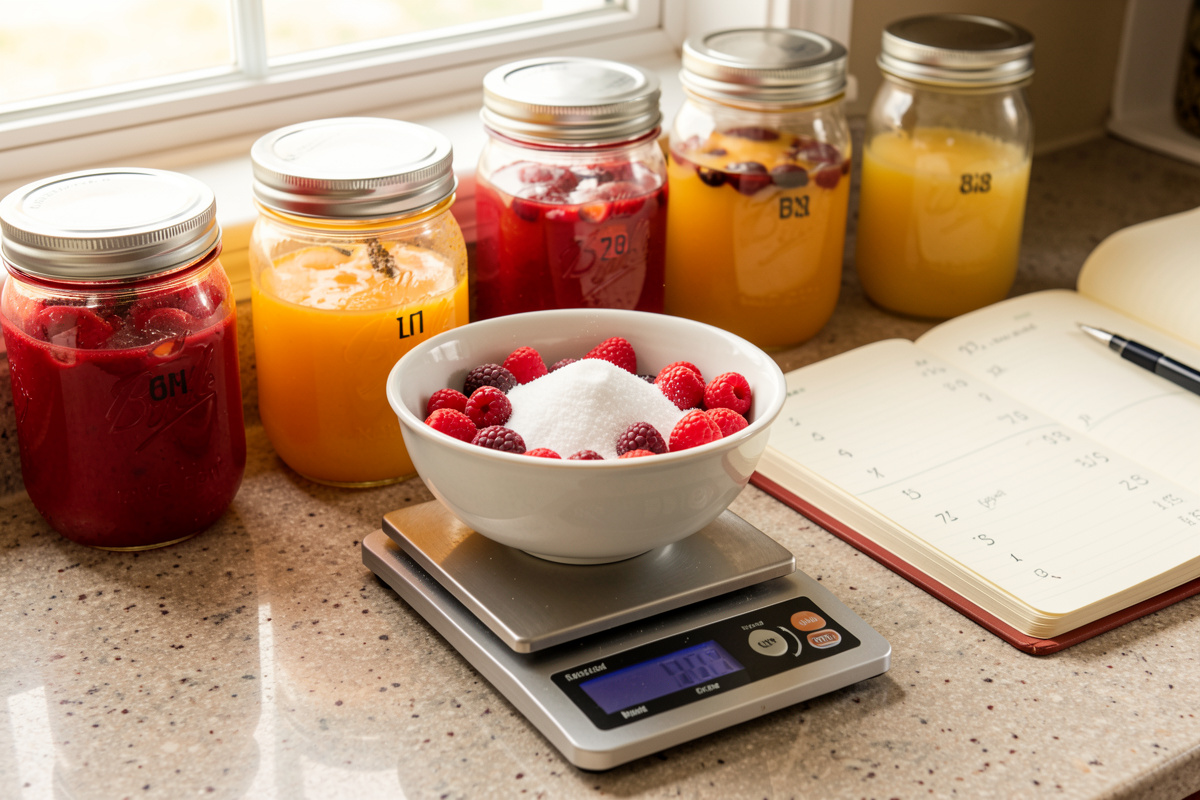
This is the single ratio that makes or breaks the drink, and it’s why the 0.1 gram scale is the most important tool on my bench for shrub work. Sugar isn’t just sweetness — it’s body, mouthfeel, yield from the maceration, and part of the preservation. I’ve watched a gorgeous raspberry shrub come out thin and sour because the sugar was eyeballed low, and I’ve made syrups so heavy they buried the fruit. Here’s how I set the ratio by fruit, by sweetener, and by how I plan to serve it, so you can hit balance on purpose instead of by luck.
What Is the Standard Shrub Sugar Ratio?
The baseline is equal weights of fruit, sugar, and vinegar — 1:1:1 measured on a scale, not by volume. For a typical batch I use 300 grams of fruit, 300 grams of sugar, and roughly 300 milliliters of vinegar added after maceration. That produces a balanced concentrate that reads about pH 2.9 to 3.1 on my meter and cuts beautifully at 1 part shrub to 4 parts soda water — comfortably below the pH 4.6 floor the FDA’s acidified foods guidance sets for pathogen safety, which is why the sugar can vary without ever compromising the acid that keeps it.
Weight matters because volume lies. A cup of whole raspberries and a cup of sugar are wildly different masses, and a shrub built by the cup wanders all over the place. By weighing, I can reproduce a shrub I liked six months ago exactly, and I can adjust one variable at a time. The 1:1:1 starting point comes from the classic colonial shrub formula and it’s genuinely a good default — most fruit lands in balance there. Everything below is how to move off that baseline on purpose. For where this fits in the wider category, the complete drinking-vinegar guide has the map.
How Does Fruit Sweetness Change the Ratio?
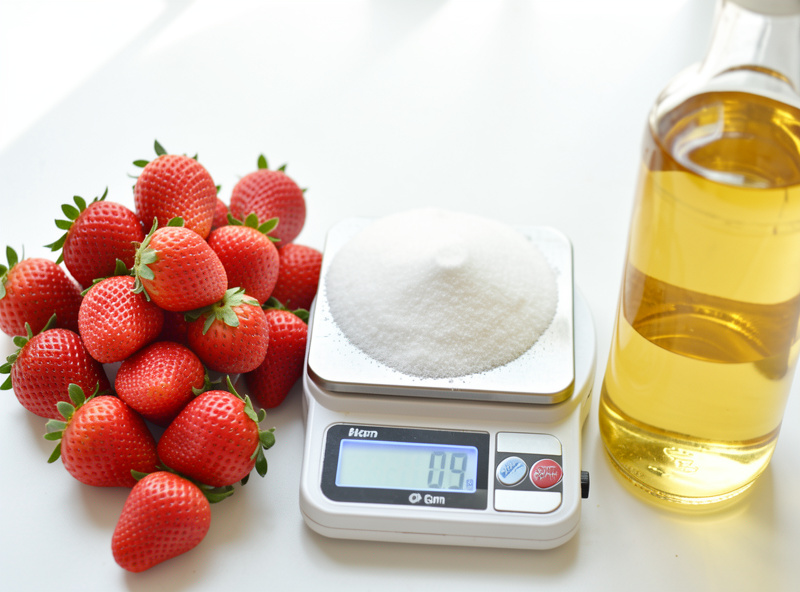
Sweeter fruit needs less sugar; tart fruit needs the full measure or more. The goal is a finished concentrate that’s balanced sweet-tart on its own before dilution, so you scale the sugar to the fruit’s natural sugar and acid. Here’s where I start for the fruit I make most, adjusting from the 1:1 baseline.
| Fruit | Sugar per 300 g fruit | Ratio | Why |
|---|---|---|---|
| Ripe strawberry | 240 g | 4:3 fruit to sugar | High natural sugar, low acid |
| Raspberry | 300 g | 1:1 | Balanced sweet and tart |
| Blueberry | 270 g | 10:9 | Sweet but low-acid, needs some tart left |
| Peach or plum | 300 g | 1:1 | Sweet flesh, moderate acid |
| Rhubarb | 330 g | 10:11 | Very tart, low sugar |
| Cranberry | 340 g | 10:11+ | Extremely tart and astringent |
These are starting points, not commandments — taste the maceration syrup before you add vinegar and nudge from there. A useful trick: the syrup should taste slightly too sweet on its own, because the vinegar you add next drops it back toward balance. If the pre-vinegar syrup already tastes balanced, the finished shrub will read sour. This is exactly the adjustment that separates a shrub matched to its fruit from a one-ratio-fits-all batch, and it’s why I keep notes on every fruit I run.
Does the Sweetener Type Matter?
Yes — white sugar is neutral and lets the fruit lead, but honey, maple, turbinado, and brown sugar each add their own flavor and change how the maceration behaves. Honey in particular is less soluble cold and can slow the sugar’s draw, so a honey shrub sometimes needs a gentle warm-through or an extra day of maceration to yield properly.
White sugar is my default when I want the fruit front and center — a strawberry shrub should taste of strawberry, not molasses. I reach for honey or maple when I want the sweetener to be part of the flavor story, like a fig-and-honey or an apple-maple shrub. Turbinado and brown sugar add a light caramel note that suits stone fruit. The one thing to watch is that these alternatives vary in sweetening power and moisture, so if you swap them in, weigh to the same mass as the sugar you’re replacing and then taste-adjust. Because the sweetener is dissolving into and preserving the fruit, don’t cut it drastically to make a “healthier” shrub — too little sugar and the maceration yields poorly and the concentrate won’t keep as long.
How Does Sugar Affect Dilution and Serving?
The more sugar in your concentrate, the further you can dilute it before it goes thin and sharp — a syrupy 1:1 shrub happily takes 1:4 or even 1:5 with soda water, while a leaner low-sugar shrub is best at 1:3. Sugar is body, and body is what lets a small pour of concentrate flavor a big glass.
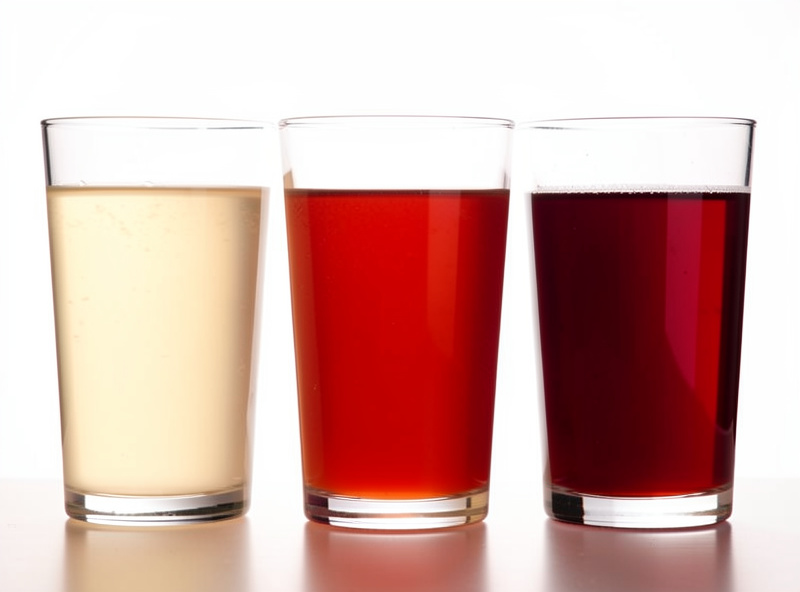
My default serve is 30 ml of concentrate in 120 ml of cold sparkling water — a 1:4 pour — but I adjust to the specific shrub. A rich, sweet strawberry concentrate I’ll stretch to 1:5; a lean, tart rhubarb one I’ll keep at 1:3 so it doesn’t read as sour water. If you plan to use a shrub mostly in cocktails, where other ingredients add sweetness, you can run the concentrate a touch leaner. If it’s going straight into soda water for the kids, build it a little sweeter. The point is that the sugar ratio and the serving ratio are two ends of the same decision — set them together. This is a different balance than a switchel, which is mixed at drinking strength in one step rather than as a concentrate.
What Happens If You Get the Ratio Wrong?
Too little sugar and the shrub tastes thin and aggressively sour, yields poorly from the fruit, and keeps a shorter time; too much and it’s cloying, syrupy, and buries the fruit under sweetness. Both are fixable, which is the good news — a shrub is forgiving once you know which way to push.
The mistake I made most often starting out was under-sugaring in an instinct to keep it “not too sweet,” then wondering why the shrub was harsh and the fruit gave up so little juice. If a finished concentrate is too sour, stir in a little simple syrup or honey until it balances. If it’s too sweet and heavy, add a splash more vinegar to pull it back and thin it. And if the maceration barely yielded any liquid, the sugar was almost certainly too low to draw the juice out — next batch, bump it up. Because the vinegar sets the acidity and the sugar sets the balance against it, these two levers are all you need. The cold-versus-hot method guide covers the maceration mechanics that turn this ratio into an actual bottle of shrub.
Can You Use a Refractometer to Dial Sugar Precisely?
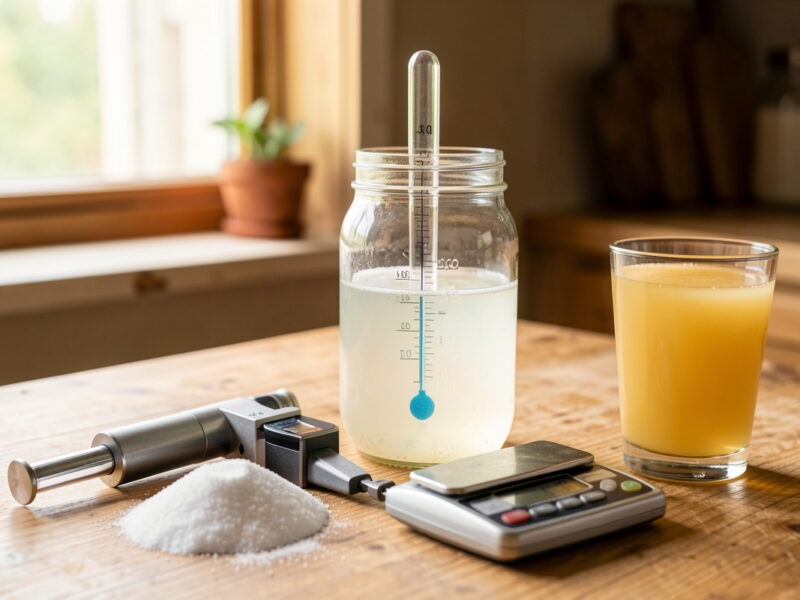
Yes — a refractometer reads the sugar concentration of your syrup in degrees Brix, which turns “taste it and guess” into a repeatable number. I keep a refractometer on the bench for kombucha and brines, and it does the same job here: a drop of shrub syrup on the prism tells me exactly how sweet the concentrate is, so I can match last summer’s raspberry batch to the digit instead of from memory. Most balanced shrub concentrates land somewhere around 40 to 55 Brix before dilution, depending on the fruit.
This is the measurement lens that makes shrub-making reproducible rather than folkloric. If a shrub I love reads 48 Brix, I can rebuild it to 48 Brix regardless of how sweet this year’s fruit happened to be — adding a touch more sugar to under-ripe fruit or a touch less to a sugar-heavy batch to hit the same target. You don’t need a refractometer to make a great shrub; the scale and your palate are enough. But if you’re the kind of maker who wants to nail the same drink every time, Brix is the tool that closes the loop between the sugar you weigh in and the balance you taste out. It’s the same logic I bring to every ferment on the bench: numbers make the result you liked repeatable.
How Do You Scale a Shrub Batch Up or Down?
Because the recipe is a ratio, scaling is just arithmetic — hold the proportions and multiply. A half-batch is 150 grams of fruit, 150 grams of sugar, and 150 milliliters of vinegar; a big garden-glut batch might be 1,500 grams of each. The balance doesn’t change with size, which is the quiet advantage of building by weight instead of by “a cup or so.”
Two practical notes when you scale up. First, larger batches macerate a little slower because the fruit-to-surface ratio shifts, so give a big jar an extra day and stir it more often to keep the sugar moving. Second, taste and adjust on the finished concentrate the same way you would on a small batch — a bigger volume doesn’t forgive a wrong ratio, it just multiplies it. When cabbage-patch season overlaps with a berry glut and I’m running kilos of fruit at once, I still weigh every component and still taste the syrup before the vinegar goes in. The ratio scales; the discipline shouldn’t relax.
What is the best sugar to vinegar ratio for a shrub?
Start with equal weights of fruit, sugar, and vinegar, a 1 to 1 to 1 ratio measured on a scale. The vinegar volume roughly matches the syrup you draw off after maceration. Sweet fruit can drop to about three parts sugar for four parts fruit, while tart fruit wants the full sugar or slightly more. Taste the syrup before adding vinegar and adjust.
Can I reduce the sugar in a shrub to make it healthier?
You can reduce it modestly, but not drastically. Sugar draws the juice from the fruit, gives the concentrate body, and contributes to its keeping quality. Cut it too far and the maceration yields poorly, the shrub tastes thin and harsh, and it spoils faster. A better route to a less sweet drink is to dilute a properly made concentrate with more sparkling water.
Should I weigh or measure shrub ingredients by volume?
Weigh them. Volume is unreliable for fruit and sugar because whole berries pack differently than granulated sugar, so a shrub built by the cup wanders in balance batch to batch. Weighing on a scale, ideally one accurate to 0.1 grams, lets you reproduce a shrub exactly and adjust one variable at a time.
How much sugar for a tart fruit like cranberry?
Tart, astringent fruit like cranberry wants the full 1 to 1 sugar ratio or slightly more, around 340 grams of sugar per 300 grams of fruit. Very sour fruit needs enough sugar to bring the finished concentrate back into balance so it is not punishing once the vinegar is added. Taste the syrup and add sugar until it reads slightly too sweet before the vinegar goes in.
Related Articles
- Shrubs, Switchel and Drinking Vinegars: The Complete Guide
- How to Make a Fruit Shrub: Cold vs Hot Method Compared
- Using Your Vinegar Mother to Build Drinking Vinegars
- Switchel: The Original Ginger-Vinegar Refresher

About Kenny Nyhus Fadil
A home fermenter documenting brines, bubbles, and the occasional moldy tragedy.
Keep Bubbling
Best Bottles for Fermented Soda: Swing-Top vs Plastic vs Glass
Controlling Sugar and Carbonation in Natural Sodas