Shrubs, Switchel and Drinking Vinegars: The Complete Guide

A drinking vinegar is any sweet-tart syrup built on vinegar and thinned with water or soda to sip. The whole family — fruit shrubs, ginger switchel, and tonics drawn straight off a vinegar mother — runs on one idea: acid plus sugar plus fruit makes a concentrate that keeps for months in the fridge and turns a glass of plain sparkling water into something you actually want to drink. I keep four or five going at any time on the shelf next to my Acetobacter mother.
I came to shrubs sideways. I have a live vinegar mother that’s been working for months, and once you have more raw vinegar than salad dressing can absorb, the drink format is the obvious next move. What surprised me is how little folklore there is here and how much measurable craft. Get the sugar-to-vinegar-to-fruit ratio wrong and a shrub is either cloying or mouth-puckering; get it right and it’s balanced enough that guests ask what’s in it. This guide is the map of the whole category — every format, the numbers behind each one, and links out to the deep-dive on each technique.
What Exactly Is a Drinking Vinegar?
A drinking vinegar is a diluted, sweetened, acidified beverage concentrate — usually 5 to 20 percent vinegar by volume in the finished glass, sweetened enough to round off the acid, and often carrying fruit, herb, or spice flavor. It is not medicine and it is not a health tonic. It is a preservation-and-flavor trick that predates refrigeration, and it tastes like summer in a glass.
The category splits into three working formats. A shrub is fruit macerated with sugar, then cut with vinegar (or the reverse) to make a fruit-forward syrup. Switchel is the outlier — no fruit maceration at all, just vinegar, a sweetener like molasses or honey, ginger, and water, historically drunk cold in the hay fields. A drinking vinegar in the narrow sense is a lighter tonic built directly from a good raw vinegar or your own mother, sweetened and flavored but thinner than a shrub syrup. All three share the same backbone: Acetobacter already did the hard part turning alcohol into acetic acid, and you’re just making that acid delicious.
The reason this matters to a fermenter specifically is that a shrub is downstream of everything else on the bench. The vinegar can be your own, brewed from a mother off leftover wine or hard cider. The fruit can be garden overflow. The result is high-acid and self-preserving, which means it lives in the same low-risk zone as a finished lacto pickle: below pH 3.5, nothing dangerous is setting up house.
Shrub, Switchel, or Vinegar Tonic: Which Should You Make?
Pick by what you have and how much patience you’re carrying that week. A shrub wants ripe fruit and two to four days. Switchel wants nothing but pantry staples and an hour. A straight drinking vinegar off your mother wants a working Acetobacter culture and the willingness to taste as you go. Here’s how the four common formats compare across the dials I actually care about.
| Format | Base acid | Fruit? | Typical sugar | Ready in | Fridge life |
|---|---|---|---|---|---|
| Cold-method fruit shrub | Vinegar added after maceration | Yes, macerated | 1:1 fruit to sugar by weight | 2 to 4 days | 4 to 6 months |
| Hot-method fruit shrub | Vinegar added to cooked syrup | Yes, cooked | 1:1 fruit to sugar by weight | Same day, chilled | 3 to 4 months |
| Switchel | Cider vinegar | No | Molasses or honey, to taste | 1 hour to overnight | 2 to 3 weeks |
| Drinking vinegar off a mother | Your live raw vinegar | Optional infusion | Light, 1:4 or less | Days to weeks | Indefinite, it’s vinegar |
| Kombucha vinegar tonic | Over-fermented kombucha | Optional | Light | Use existing brew | Months, refrigerated |
If you’re brand new, start with a cold-method berry shrub — it’s the most forgiving and the most rewarding. If you keep a mother going, the drinking-vinegar route is the one that makes your whole vinegar operation earn its shelf space. I move between all of them depending on the season and what the garden is throwing off.
How Does a Shrub Actually Work?
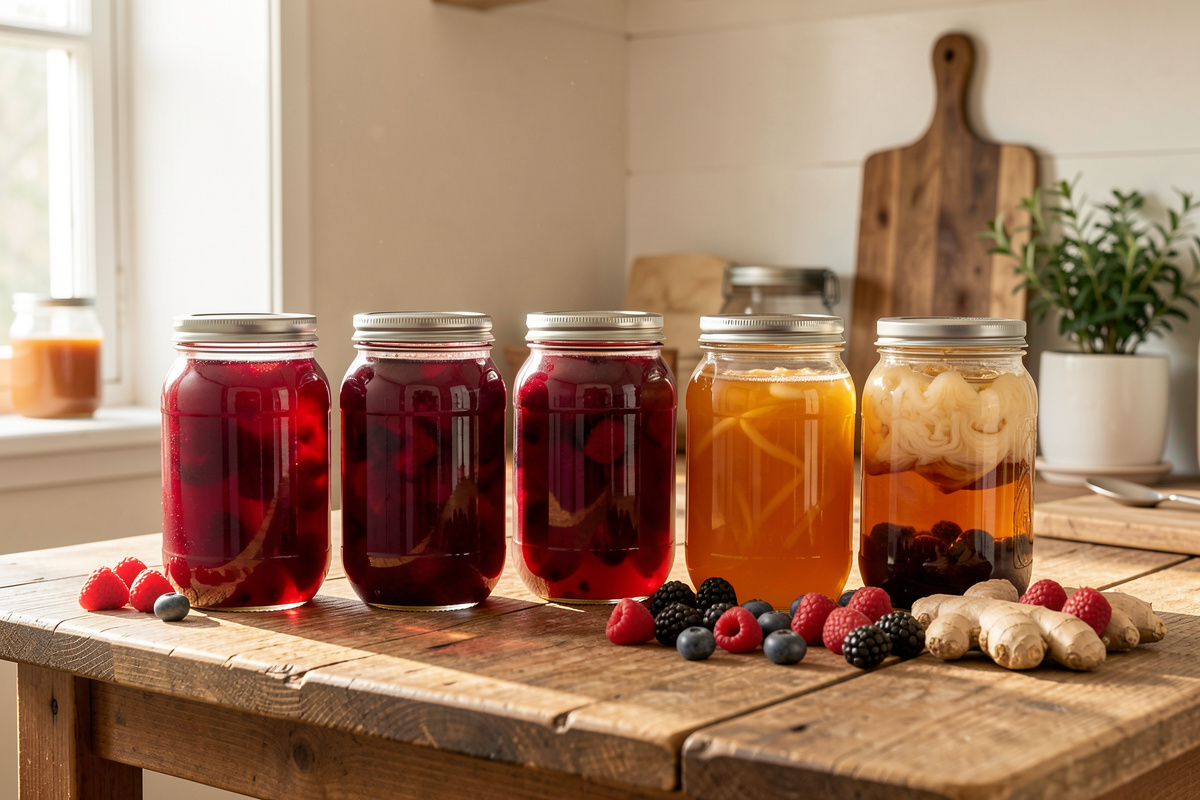
A shrub works because sugar pulls water and flavor out of fruit by osmosis, and vinegar then stabilizes that fruit syrup at an acidity where microbes can’t grow. Over two to four days on the counter, sugar draws the fruit’s juice into a ruby liquid, and the acetic acid locks it in. That’s the entire mechanism — osmosis plus acidification, no fermentation step of its own.
The measurement lens is what separates a good shrub from a guessed one. I weigh fruit and sugar on a 0.1 gram scale and start at a 1:1 ratio by weight — 300 grams of raspberries, 300 grams of sugar. Then I add vinegar roughly equal to the volume of syrup I pull off, which lands the finished concentrate somewhere around pH 2.8 to 3.2 on my meter. That’s tart on its own and perfect once you cut it 1 part syrup to 4 parts soda water. The acid isn’t just flavor; below pH 3.5 you’ve built a preservation environment as robust as any lacto pickle in my fermentation fridge.
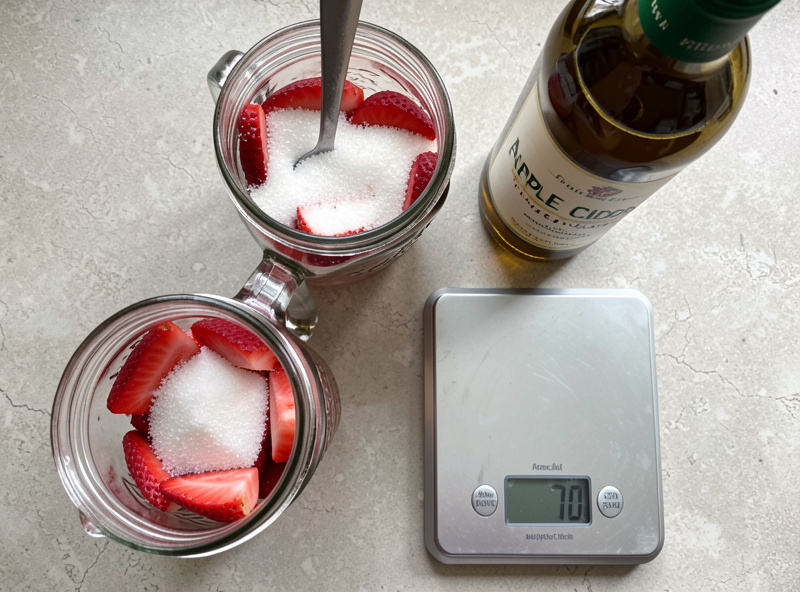
The sensory tell that a maceration is working: after a day, the sugar is mostly dissolved, the fruit has gone pale and slumped, and the liquid smells bright and winey — not boozy, not off, just intensely of the fruit. If it ever smells solvent-like or shows fuzzy growth, that’s a rare failure and you toss it, but at shrub acidity that essentially never happens. The far more common mistake, and one I made early, is straining too soon: give the sugar the full time to draw or you leave a third of your yield stuck in the fruit.
Cold Method vs Hot Method: Which Should You Use?
The cold method keeps fruit raw and macerates over days for a fresher, brighter flavor; the hot method cooks fruit into a syrup for speed and a deeper, jammier profile. Neither is wrong — they’re different tools. I reach for cold when the fruit is delicate and peak-season (raspberries, strawberries, stone fruit) and hot when the fruit is firm, tart, or I need the shrub finished tonight.
Cold preserves volatile aromatics that heat drives off, so a cold raspberry shrub tastes like the berry patch. Hot extracts more from stubborn fruit — think rhubarb, cranberry, quince — and gives you a shelf-stable syrup the same afternoon. The tradeoff is that cooked shrubs lose a little top-note sparkle and, in my experience, keep a month or two less than a cold-macerated one. I walk through both start to finish, with the exact timings and the straining trick, in the deep-dive on how to make a fruit shrub with the cold versus hot method compared.
One thing both methods share: the vinegar goes in cool. Even in the hot method I let the fruit syrup drop below hand-warm before adding vinegar, because boiling off acetic acid weakens both the flavor and the preservation. If you only take one habit from the cold-versus-hot walkthrough, make it that one.
What Vinegar Should You Start With?
Start with a clean, unflavored vinegar in the 5 percent acidity range — raw unfiltered apple cider vinegar is the classic shrub base, and it’s what I hand every beginner. As you get comfortable, the vinegar itself becomes a flavor lever: white wine vinegar for delicate fruit, red wine vinegar for dark berries, rice vinegar for a softer, rounder shrub, sherry vinegar when you want depth.
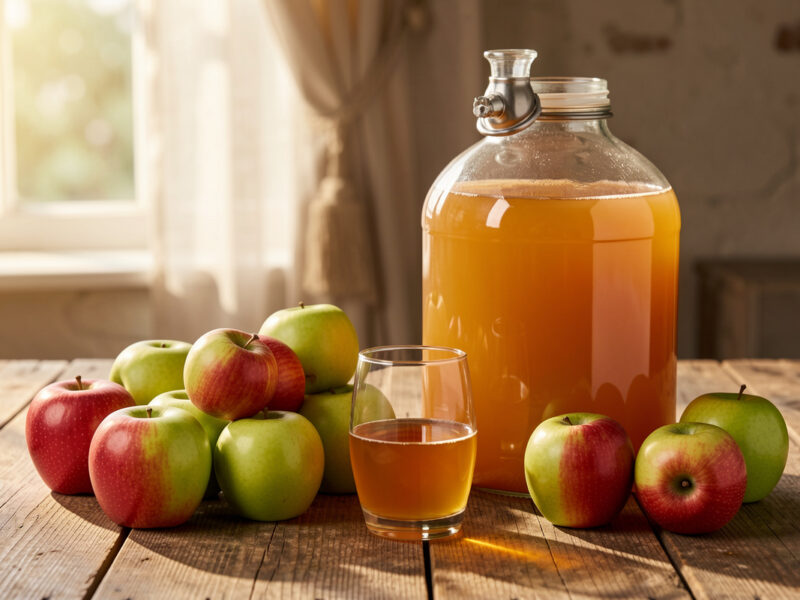
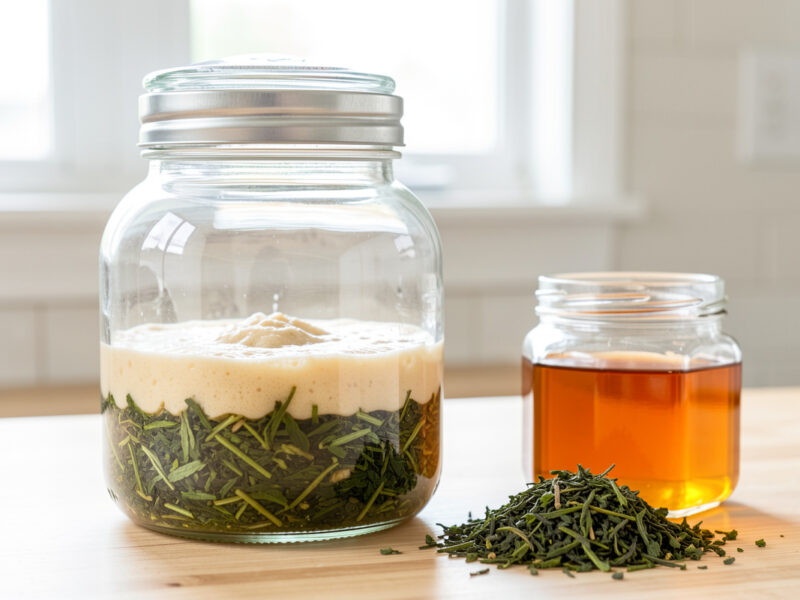
The advanced move — and the reason a fermenter has an edge here — is building drinking vinegars straight from your own mother. I keep a live vinegar mother that’s been going for months, back-slopped off leftover wine and the tails of hard cider batches. Raw vinegar off a working mother carries a live Acetobacter character that pasteurized supermarket bottles have cooked out. It’s softer, more complex, and it’s essentially free. I lay out how to draw off, sweeten, and infuse that raw vinegar into a sippable tonic in using your vinegar mother to build drinking vinegars. If you don’t have a mother yet, that piece also covers how a shrub habit is the perfect reason to start one.
A quick safety note on homemade vinegar: only drink it once it’s fully soured and testing acidic. A finished raw vinegar sits around pH 2.4 to 3.4. If you’re pulling young vinegar that’s still sweet and only lightly sour, it hasn’t dropped far enough to be a reliable drinking base — let the mother finish its work. I check every batch on a calibrated pH meter before it goes anywhere near a glass, and the mother tonic guide shows exactly where that line sits.
How Much Sugar Does a Shrub Need?
A standard shrub runs a 1:1:1 ratio — equal weights of fruit, sugar, and vinegar — but that’s a starting point, not a law. Sweet fruit at peak ripeness can drop to 3:4 sugar; tart fruit like cranberry or green apple wants the full 1:1 or a touch more to keep the acid drinkable. The sugar isn’t only sweetness — it’s body, mouthfeel, and part of the preservation.
The way I dial it is by measuring, not tasting blind. Sugar concentration sets how syrupy the concentrate is and how far you can cut it before it goes thin and sharp. Too little sugar and even a great fruit reads as sour vinegar water; too much and it coats the glass and buries the fruit. Because this is the single ratio that makes or breaks the drink, I gave it its own breakdown — by fruit type, by vinegar strength, and by how you plan to serve it — in sugar ratios for shrubs: balancing sweet and sour. That piece is where the 0.1 gram scale really earns its place on the bench.
Honey, maple, turbinado, and molasses all work in place of white sugar, but each shifts both flavor and viscosity, and honey in particular can slow the sugar’s draw. The sugar ratio guide covers those swaps and how to compensate so your maceration still yields properly.
What Is Switchel and Why Is It Different?
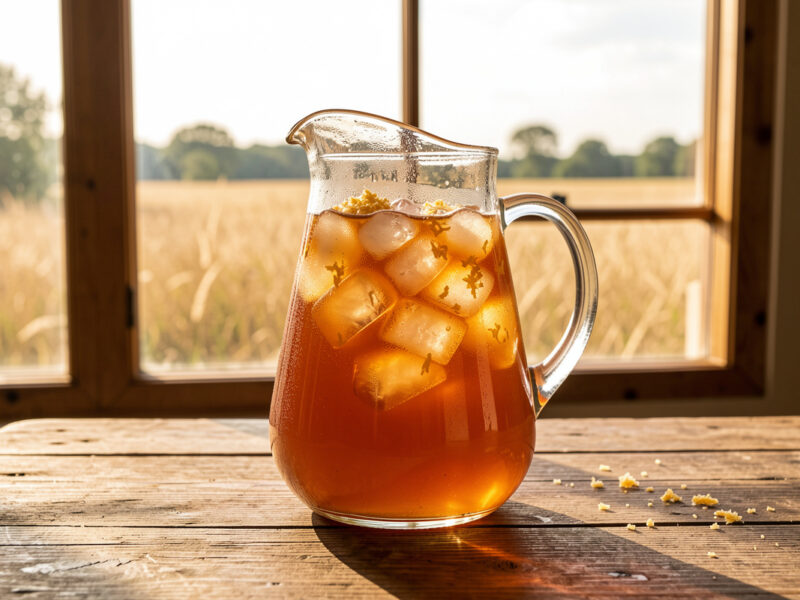
Switchel is the ancestor of the modern sports drink — vinegar, ginger, a dark sweetener like molasses or honey, and water, historically drunk cold by farmhands during haying season. It carries no macerated fruit, which makes it the fastest drinking vinegar you can make: stir it together, let the ginger steep an hour or overnight, and drink. It’s tart, warming, and genuinely refreshing on a hot day.
What makes switchel different from a shrub is that the flavor comes from infusion, not osmosis. There’s no waiting for sugar to pull juice from fruit — you’re steeping fresh grated ginger in an acidified sweet water. That also means it doesn’t keep like a shrub concentrate; switchel is a make-and-drink beverage that holds two to three weeks refrigerated rather than months. I keep a jar going all summer and treat it as the hydration drink it historically was. The full recipe, the molasses-versus-honey question, and how hard to lean on the ginger are in switchel: the original ginger-vinegar refresher.
Which Fruits and Herbs Pair Best?
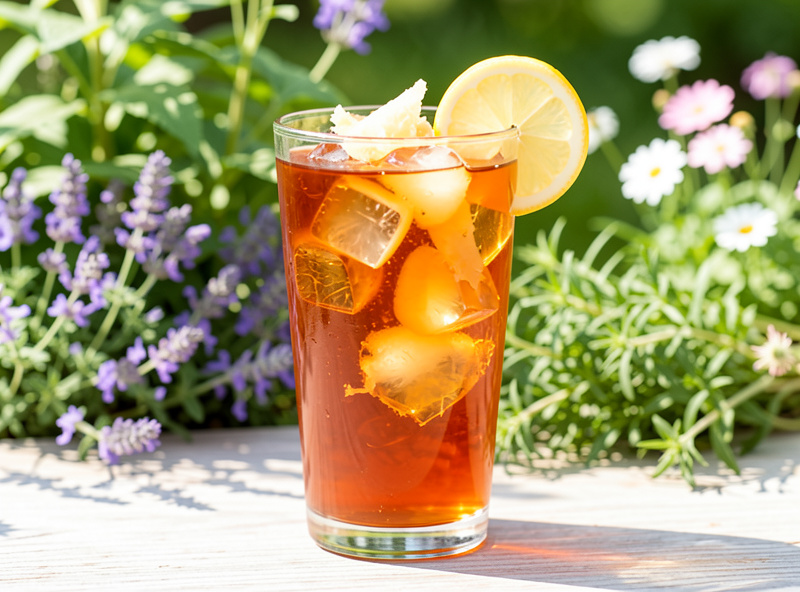
The best shrub pairings balance a dominant fruit against a supporting herb or spice so neither wins outright — strawberry with black pepper and basil, raspberry with thyme, blueberry with lemon and sage, cucumber with mint and dill. The vinegar sits underneath all of it as the acid spine. Once you understand which fruit carries and which herb accents, you stop following recipes and start composing.
My rule of thumb from the brines and infusions I’ve run: use herbs at a whisper. A shrub concentrate steeps for days, and a heavy hand on rosemary or sage turns medicinal fast. I add hardy herbs (thyme, rosemary, bay) to the maceration and delicate ones (basil, mint) near the end or at serving. Ginger and warm spices — star anise, clove, black peppercorn — cross beautifully between shrubs and switchel. I catalog the pairings that consistently work, the ones that fight, and the herb-timing that keeps them clean in best fruit and herb pairings for vinegar-based drinks. Cabbage-patch and berry-row overflow from a raised bed is exactly the raw material this is built for — the garden and the shrub jar are the same supply chain.
Are Drinking Vinegars Safe? The pH Numbers That Matter
Yes — drinking vinegars are among the safest things you can make at home, because they live well below the pH where pathogens survive. The hard number is 4.6: below that, Clostridium botulinum and its neighbors can’t grow. Vinegar sits at 2.4 to 3.4, and a finished shrub concentrate lands around 2.8 to 3.2 on my meter. You are nowhere near the danger zone; the acid is the safety system.
That said, “safe” depends on actually being acidic. The one way to get a drinking vinegar wrong is to under-acidify — using too little vinegar, or a homemade vinegar that hasn’t finished souring. If you build a low-sugar, low-vinegar fruit infusion and let it sit warm, you’ve made a fruit steep, not a shrub, and now the acid isn’t guaranteed. My rule: enough vinegar that the finished concentrate is unmistakably tart and, if I’m using my own vinegar, a meter reading under 3.5 before it counts as a drinking base. This is the same Lactobacillus-and-acid logic that keeps a sauerkraut crock safe, just driven by Acetobacter instead — the sauerkraut crock and the shrub jar are running acid preservation at different addresses.
Two honest caveats. First, these are food-and-flavor drinks, not remedies — I make no health claims for them and neither should any label. Second, straight undiluted drinking vinegar is hard on tooth enamel and a sensitive stomach; always dilute, which you’d want to for taste anyway. For the external science on acidity and safe preservation, the FDA’s acidified foods guidance defines that 4.6 pH line, and the National Center for Home Food Preservation is the reference I point people to for home-scale acid preservation.
How Long Do Shrubs Keep, and How Should You Store Them?
A cold-method fruit shrub concentrate keeps four to six months refrigerated in a sealed bottle; hot-method versions run three to four; switchel is a two-to-three-week drink. The acid does the preserving, cold storage does the rest, and glass with a tight cap keeps oxygen and stray aromatics out. Many shrubs actually improve for the first week or two as the vinegar’s edge mellows and the fruit and acid marry.
The signs a shrub has finally turned are obvious and rare: a flat, dull flavor, visible mold (fuzzy and raised, not the harmless cloudiness of a live vinegar), or a fizzy, yeasty pop that means residual sugar started fermenting. That last one is the most common and the least dangerous — usually it just means it wasn’t quite acidic enough or got warm. I go through the storage vessels I trust, the labeling habit that saves you guessing, and exactly what each spoilage sign means in how long do shrubs last and how to store them. Swing-top bottles are my default, and I explain why in that piece.
How Do You Actually Drink Them?
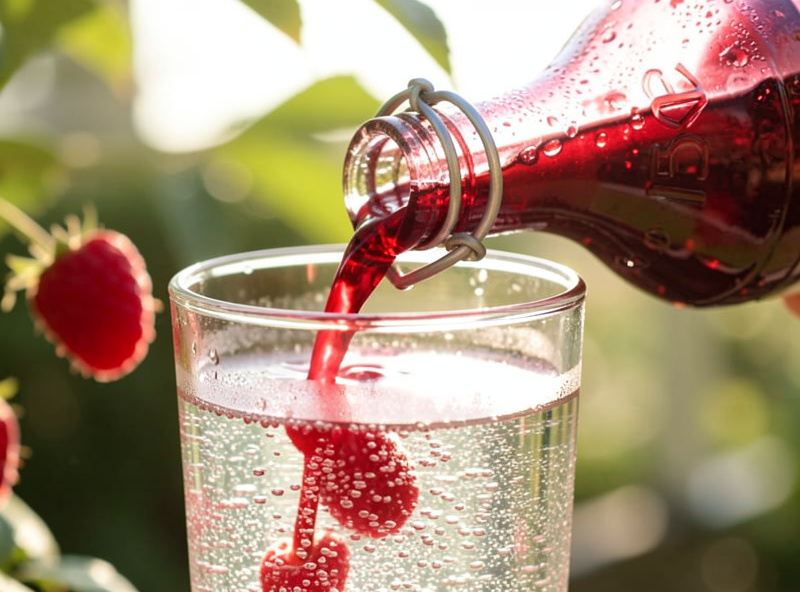
Start at 1 part shrub concentrate to 4 parts liquid and adjust to taste. Sparkling water is the default and best showcase — the carbonation lifts the aroma and the acid reads as bright rather than sour. Still water works, cold-brew tea works, and a shrub is a genuinely great non-alcoholic cocktail base or a real one, since the acid balances spirits the way citrus does.
My standard summer pour: 30 ml of raspberry-thyme shrub, 120 ml of cold soda water, ice, a sprig of whatever herb went into the maceration. For switchel I skip the dilution math and drink it closer to full strength over ice, because it’s already a beverage rather than a concentrate. Keep a bottle of concentrate and a bottle of soda water in the door of the fridge and you’ve replaced every sugary canned drink in the house with something you built off your own vinegar.
The gear list stays short. You need a scale, jars for maceration, fine strainer or nut-milk bag, and swing-top bottles for the finished concentrate. If you want to stock the basics in one go, a set of swing-top glass bottles and a decent 0.1 gram kitchen scale cover ninety percent of it — the scale is non-negotiable, because the whole method here is ratios by weight.
As an Amazon Associate I earn from qualifying purchases.
Where to Go From Here
If you want a single starting move: make a cold-method berry shrub this week, 1:1:1 by weight, cut it 1:4 with soda water, and taste what balanced sweet-tart actually is. Then decide which direction pulls you — faster and simpler toward switchel, or deeper and more self-sufficient toward building drinking vinegars off your own mother. Every one of those paths has its own guide below. What I’d tell my past self is to weigh everything and trust the acid; once you do, this stops being folklore and becomes the most reliable, lowest-risk thing you make all summer.
What is the difference between a shrub and a switchel?
A shrub is fruit macerated with sugar and then cut with vinegar to make a fruit-forward syrup that keeps for months. Switchel carries no macerated fruit at all. It is vinegar, a sweetener like molasses or honey, ginger, and water, steeped for an hour or overnight and drunk within a couple of weeks. Shrubs are concentrates. Switchel is a finished drink.
Are homemade drinking vinegars safe?
Yes. Vinegar sits at pH 2.4 to 3.4 and a finished shrub concentrate lands around 2.8 to 3.2, well below the 4.6 pH line where pathogens can grow. The acid is the safety system. The only way to get one wrong is to under-acidify by using too little vinegar or a homemade vinegar that has not finished souring. Always confirm the base is unmistakably tart before drinking.
How long does a shrub last in the fridge?
A cold-method fruit shrub concentrate keeps four to six months refrigerated in a sealed glass bottle. Hot-method shrubs keep three to four months. Switchel is a shorter-lived drink at two to three weeks. Many shrubs actually improve for the first week or two as the vinegar edge mellows and the fruit and acid marry together.
What ratio should I use for a shrub?
Start with equal weights of fruit, sugar, and vinegar, a 1 to 1 to 1 ratio measured on a scale. Sweet peak-season fruit can drop to three parts sugar for four parts fruit, while tart fruit like cranberry wants the full sugar or slightly more. Serve the finished concentrate at roughly 1 part shrub to 4 parts sparkling water and adjust from there.
Can I make a shrub from my own vinegar mother?
Yes, and it is the best reason to keep a mother going. Raw vinegar drawn off a live Acetobacter mother carries a softer, more complex character than pasteurized supermarket vinegar. Only use it once it has fully soured and tests acidic, under about pH 3.5. Young vinegar that is still sweet has not dropped far enough to be a reliable drinking base.
Keep Building
- How to Make a Fruit Shrub: Cold vs Hot Method Compared
- Sugar Ratios for Shrubs: Balancing Sweet and Sour
- Switchel: The Original Ginger-Vinegar Refresher
- Using Your Vinegar Mother to Build Drinking Vinegars
- Best Fruit and Herb Pairings for Vinegar-Based Drinks
- How Long Do Shrubs Last and How to Store Them

About Kenny Nyhus Fadil
A home fermenter documenting brines, bubbles, and the occasional moldy tragedy.