Jun Tea Recipe Guide: The Green Tea and Honey Ferment

This jun tea recipe guide covers the green-tea-and-honey ferment often called the champagne of kombucha. Jun uses a dedicated culture to ferment green tea sweetened with honey, finishing in 4 to 7 days — far faster than kombucha — into a light, floral, fine-bubbled drink. On my meter a finished jun lands near pH 3.2, the same safe acidity I target for any tea ferment.
I keep a honey-fed jun culture separate from my black-tea kombucha SCOBY, because the two adapt to different food and should not be swapped casually. Jun is the drink I reach for when I want something more delicate than kombucha: lower in sharpness, lighter on the palate, and quicker to turn around. This guide gives the ratio, the timeline, and the safety numbers that keep it right.
What Jun Tea Actually Is
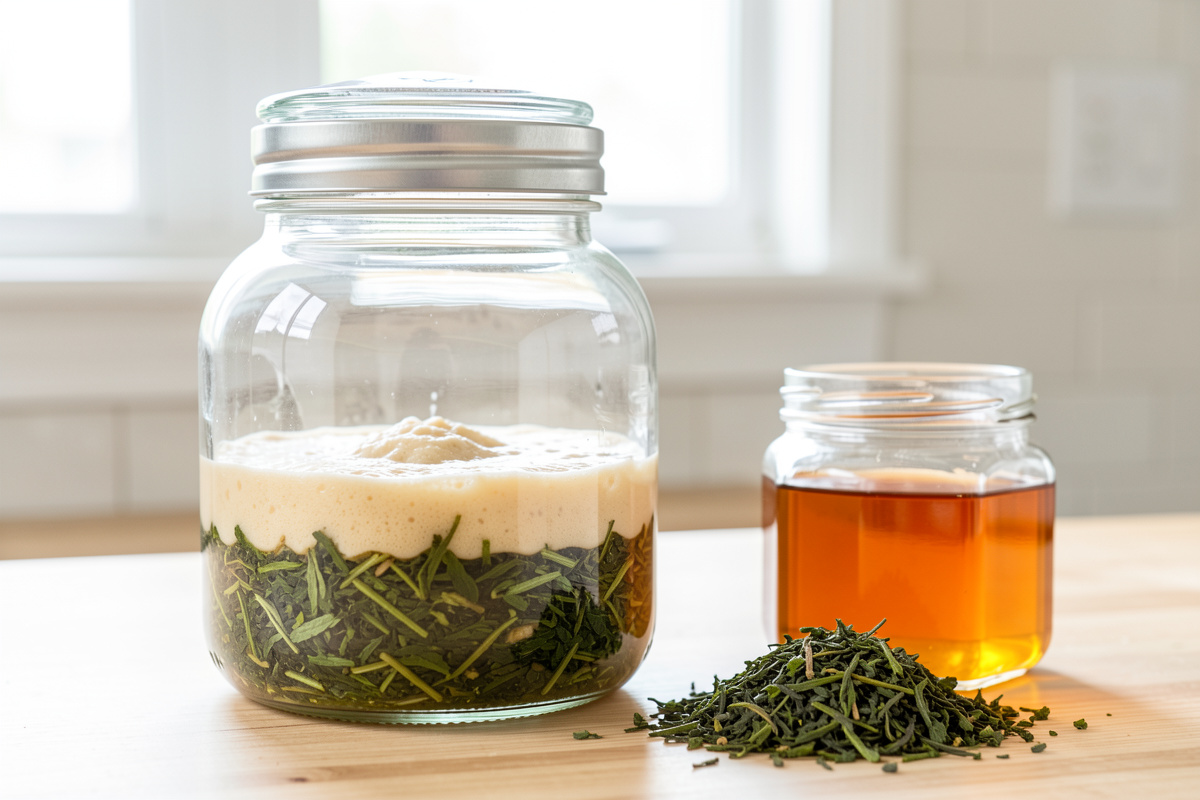
Jun is a fermented tea made with green tea and honey instead of kombucha’s black tea and cane sugar. It is driven by a jun culture — a SCOBY-like mat of bacteria and yeast adapted to thrive on honey at cooler temperatures. The result ferments faster and tastes lighter and more floral than kombucha, with a finer, more wine-like carbonation. It is its own drink, not merely kombucha with substitutions, because the culture has acclimated to the honey-and-green-tea environment over generations.
If you want the cultural and historical background of how jun differs from a standard brew, the companion piece on jun kombucha explained covers the lore; this guide is the hands-on recipe. Either way, treat the honey here as a flavor and a culture choice, not a health claim — the jun culture out-competes anything in raw honey, which is why raw honey is safe to use.
The Jun Tea Recipe and Ratios
My base ratio for one liter is roughly two teaspoons of green tea and about 60 grams of honey, plus the jun culture and a generous splash of mature starter liquid from a previous batch. Brew the green tea cooler than you would black tea — just off the boil, around 80 degrees Celsius — because boiling water scorches green tea into bitterness. Steep, remove the leaves, then let the sweetened tea cool to room temperature before the culture ever touches it; heat above body temperature will kill the jun mat.
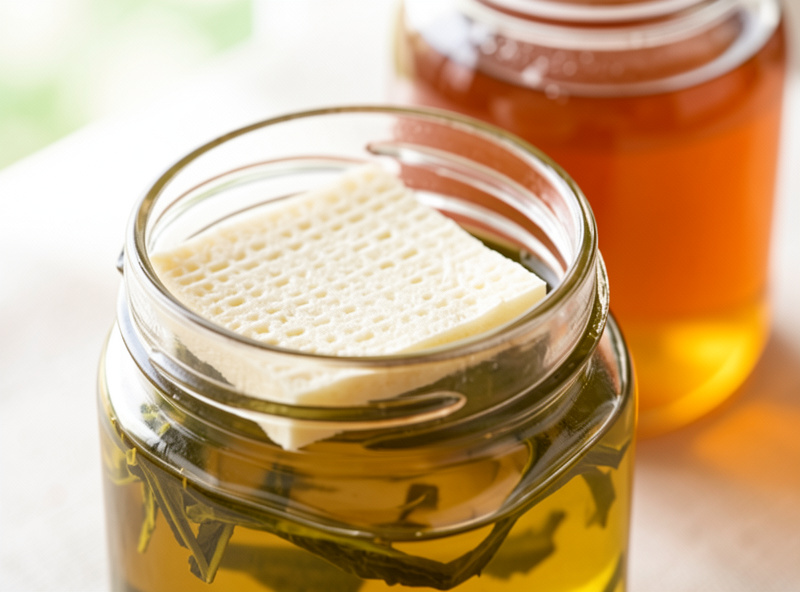
Once cool, combine the sweet tea with the starter liquid in a wide-mouth jar, add the jun culture, and cover with a tight-woven cloth secured with a band. The starter liquid is not optional; its acidity protects the young batch while the culture gets to work, exactly as it does in kombucha. Use good loose green tea rather than dust-grade bags for the cleanest flavor. As an Amazon Associate I earn from qualifying purchases.
Fermentation Timeline and the Second Ferment
Jun is fast. At room temperature the first ferment usually finishes in 4 to 7 days, against kombucha’s one to three weeks, because the culture works efficiently at cooler temperatures. Start tasting on day three. It is ready when the sweetness has dropped and a clean, light tartness comes through; over-ferment it and it turns toward vinegar, which is useful but no longer jun. The cooler your room, the slower it runs, so adjust by taste rather than by the calendar.
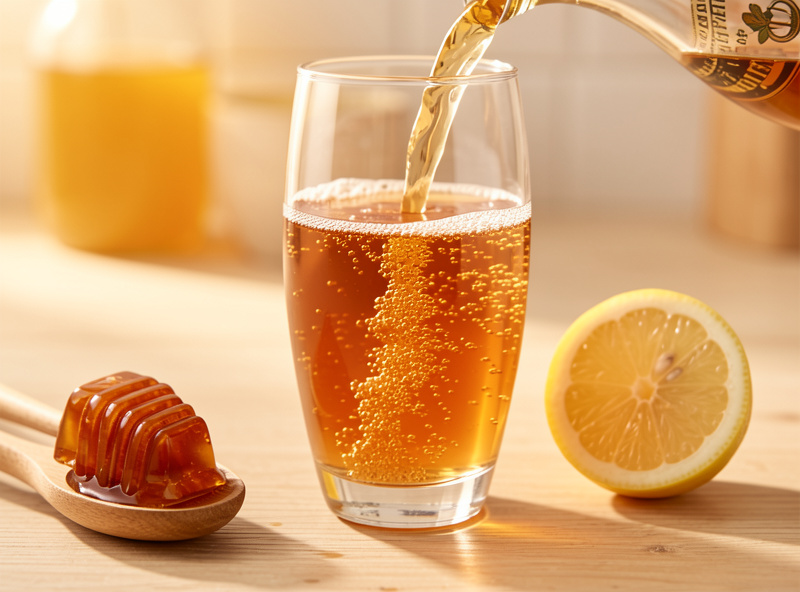
For carbonation, bottle the finished jun with a teaspoon of honey or a little fruit per bottle, seal in swing-top bottles, and leave one to three days at room temperature before refrigerating. Jun naturally carbonates fine and fast, producing the champagne-like bubble it is known for. Watch the pressure as with any second ferment — keep a plastic tester bottle and chill everything once it firms up. The flavoring logic mirrors the ideas in my guide on second-fermentation flavor.
Choosing Your Green Tea and Honey
Jun rewards good ingredients more than kombucha does, because its flavor is delicate enough that cheap inputs show through. For tea, a plain sencha or a quality loose green is my default; grassy, vegetal greens give the cleanest jun, while smoky or heavily scented teas fight the honey. Avoid flavored or oiled teas for the brewing stage — save aromatics for the second ferment, where they belong. Dust-grade tea bags work in a pinch but muddy the final cup.
Honey choice shifts the character noticeably. A light wildflower or clover honey keeps jun bright and floral; a darker, stronger honey like buckwheat pushes it toward a heavier, almost malty drink. I stay with mild honeys for everyday jun and save the bold ones for occasional experiments. Whatever you choose, keep it consistent batch to batch so your culture stays adapted to one food source, the same principle that keeps any culture stable. The honey is also why jun cannot simply share a kombucha SCOBY’s cane-sugar diet without a transition period.
Jun vs Kombucha: Which to Brew
If you already brew kombucha and wonder whether jun is worth a separate culture, the answer depends on what you want in the glass. Jun is lighter, more floral, finer in bubble, and faster — a week start to finish against kombucha’s two to three. Kombucha is bolder, more vinegary, cheaper to feed since cane sugar costs less than honey, and more forgiving of warm rooms. Neither is better; they are different drinks for different moods.
I run both because the cultures and the brewing rhythm overlap so cleanly that a second jar is almost no extra work. If you are choosing just one to start, kombucha is the more economical and robust entry, covered fully in the kombucha brewing guide, and jun is the upgrade you graduate to once you want something more refined. Many fermenters keep a jun culture specifically for when they want a special-occasion drink that feels closer to sparkling wine than to vinegar.
Jun Tea Safety: The pH That Matters
Jun’s safety works exactly like kombucha’s: the culture drives the pH down into acidic territory that protects the brew. I target a finished pH of 4.2 or below, and 4.6 is the hard floor no tea ferment should sit above. On my meter a healthy jun reads around 3.2 once finished, comfortably acidic. The starter liquid you add at the beginning is the front-line protection, keeping the batch acidic before the culture has fully colonized it. My full reasoning lives in the kombucha pH guide, which applies one-for-one to jun.
A new culture sometimes forms a thin, pale film as it builds — that is the developing mat, not mold. Real mold is fuzzy, raised, and colored, and it means discarding the batch and the culture. With enough starter liquid and a clean jar, mold is rare. The judgment of film-versus-mold is the same one covered in the kahm yeast guide.
Troubleshooting Jun
If your jun ferments too slowly, the room is likely cold or the culture is young; jun tolerates cool better than kombucha but still slows below 18 degrees Celsius. A batch that tastes flat and oddly sweet after a week usually had too little starter or a weak culture — add more mature starter next time. If it races to vinegar in three days, your room is warm; ferment cooler and taste earlier. A jun that will not carbonate in the second ferment was bottled with no residual honey to feed it or sealed in a leaky bottle.
Store a jun culture like a kombucha SCOBY: in a hotel of its own acidic brew at room temperature, never the fridge, where cold stalls it and invites mold. Keep the honey coming and the green tea cool, and a jun culture will run for years. Because jun and kombucha cultures diverge over time, I keep them in separate hotels and never feed one the other’s food.
Frequently Asked Questions
What is the difference between jun and kombucha?
Jun ferments green tea and honey, while kombucha ferments black tea and cane sugar. Jun uses a culture adapted to honey, works at cooler temperatures, finishes in 4 to 7 days versus one to three weeks, and tastes lighter, more floral, and finer in bubble.
Can I use a kombucha SCOBY to make jun?
You can start with one, but it must adapt to honey and green tea over several batches, and the result is not true jun until it has acclimated. For the authentic light, floral character, use a dedicated jun culture and keep it separate from your kombucha SCOBY.
Is raw honey safe in jun tea?
Yes. The jun culture rapidly acidifies the brew and out-competes anything in raw honey, and the finished drink sits near pH 3.2, well below the safety floor. Raw honey is the traditional choice and gives jun its characteristic floral flavor.
How long does jun tea take to ferment?
The first ferment typically takes 4 to 7 days at room temperature, much faster than kombucha. Start tasting on day three and pull it when the sweetness drops and a clean tartness appears. A short second ferment of one to three days adds carbonation.
Why is my jun tea not fizzy?
Usually it was bottled with no residual honey to feed the second ferment, the bottle seal leaks, or the room is too cold. Bottle while lightly sweet, add a teaspoon of honey per bottle, and seal in a swing-top bottle for one to three days at room temperature.
Related Guides
- Fermented Drinks Beyond Kombucha: The Complete Guide
- Jun Kombucha: The Green Tea and Honey Brew Explained
- Kombucha pH Guide: Safe Levels and Fixes
- Water Kefir Guide for Beginners
- Best Tea for Kombucha

About Kenny Nyhus Fadil
A home fermenter documenting brines, bubbles, and the occasional moldy tragedy.
Keep Bubbling
Fermented Drinks Beyond Kombucha: The Complete Guide
Milk Kefir Making Guide: Thick, Tangy Kefir in 24 Hours