Fermented Drinks Beyond Kombucha: The Complete Guide

A fermented drinks guide that goes past kombucha starts with one idea: most home sodas are just a sugar source, a culture, and a pH that drops below 4.2. On my meter, every drink in this guide finishes between pH 3.0 and 3.8, and most carry under 1% ABV. Master those two numbers and the rest is flavor.
I keep a kombucha SCOBY hotel and a vinegar mother running year-round, but the cabinet next to them is busier: water kefir grains, milk kefir grains, a honey-fed jun culture, and a ginger bug that I back-slop every few days. These are the fizzy, living drinks that get overlooked because kombucha sucks up all the attention. This guide is the map to all of them — what culture each one needs, how long it takes, where the real safety line sits, and which spoke guide to read when you commit to one.
What Counts as a Fermented Drink (and What Makes It Safe)
A fermented drink is any sweetened liquid where a live culture eats sugar and produces acid, CO2, and a trace of alcohol. The safety mechanism is acidity: as Lactobacillus and the resident yeasts work, pH falls, and below 4.6 the botulism organism cannot grow. Every finished drink here lands well under that floor.
That single fact reframes the fear most beginners carry. These drinks are among the lowest-risk ferments you can make, because they start aerobic, acidify fast, and stay sour. The genuine hazards are mundane: an over-carbonated bottle that becomes a glass grenade, a culture that has actually grown mold, and the slow alcohol creep in a warm, long ferment. I measure pH on every new culture I bring in, then trust the souring after that. If you want the tool that earns its place here, see my notes on the best pH meter for fermentation.
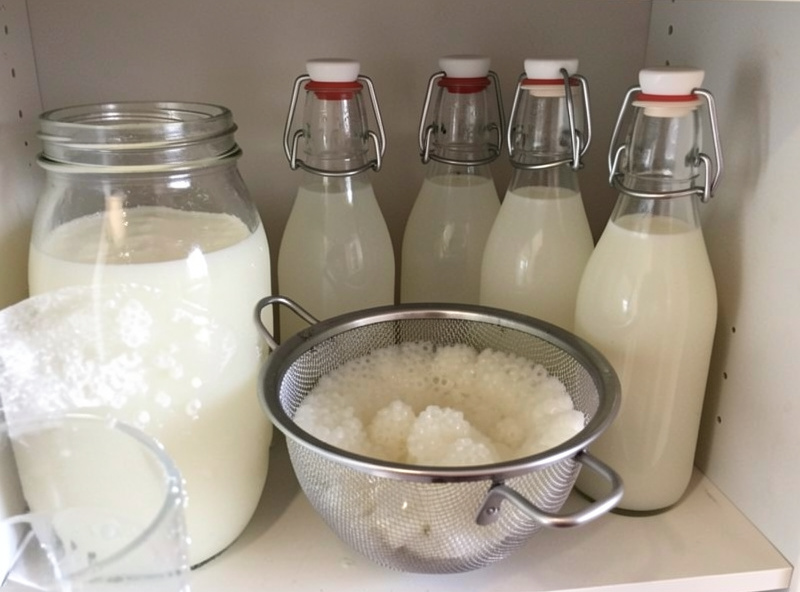
The Six Drinks Beyond Kombucha, Compared
The fastest way to choose is by culture type and base liquid. Water kefir and jun give you the closest thing to a light, dry soda; milk kefir is a tangy drinkable yogurt; kvass and lacto-lemonade are savory-leaning lacto drinks; ginger beer is the bold, spicy one. Difficulty below reflects how forgiving each culture is, not how good the result tastes.
| Drink | Culture | Base | Ferment Time | Typical ABV | Difficulty |
|---|---|---|---|---|---|
| Water kefir | Water kefir grains | Sugar water | 24–48 hours | 0.5–1% | Easy |
| Milk kefir | Milk kefir grains | Whole milk | 12–24 hours | under 1% | Easy |
| Jun | Jun SCOBY | Green tea + honey | 4–7 days | under 1% | Moderate |
| Kvass (beet) | Wild lacto / whey | Beets + brine | 2–5 days | under 0.5% | Easy |
| Ginger beer | Ginger bug | Ginger + sugar | 3–7 days + F2 | 0.5–2% | Moderate |
| Lacto lemonade | Whey / brine starter | Lemon + sugar water | 2–3 days | under 0.5% | Easy |
Grain-Based Drinks: Water Kefir and Milk Kefir
The kefir grains are the gateway. They are self-propagating symbiotic colonies — you strain them out, drop them into fresh sugar water or milk, and they multiply. There is no SCOBY to manage and no long wait; a batch of water kefir is done in a day. Across the batches I have run, the grains roughly double every few weeks if you keep feeding them.
Water kefir is the bridge for anyone who finds kombucha too vinegary. It ferments a mineral-rich sugar water for 24–48 hours into a light, dry, faintly fruity base that takes a second ferment beautifully. My full water kefir guide for beginners walks the first batch end to end. Milk kefir is the dairy cousin: grains in whole milk, 12–24 hours on the counter, and you get a pourable, tart, effervescent drink thicker than buttermilk. The milk kefir making guide covers grain care, the slip-knot of over-fermenting, and how to handle a grain surplus. If you want to start, live water kefir grains rehydrate in a couple of days.
SCOBY-Style Drinks: Jun, the Honey Cousin of Kombucha
Jun is what happens when a kombucha-type culture adapts to green tea and honey instead of black tea and sugar. It ferments cooler and faster — 4 to 7 days against kombucha’s one to three weeks — and the result is lighter, more floral, and champagne-fine in the bubble. Treat the honey as a flavor and a culture choice, not a health claim; raw honey works because the jun culture out-competes anything in it.
The safety numbers track kombucha exactly: I brew to a target of pH 4.2 or below, and 4.6 is the hard floor no acidic drink should sit above. My jun tea recipe guide gives the ratio and the timeline; if you want the cultural background of how jun differs from a standard brew, the kombucha cluster has a companion piece on jun kombucha explained. Everything I know about acid safety in these drinks started with the kombucha pH guide.
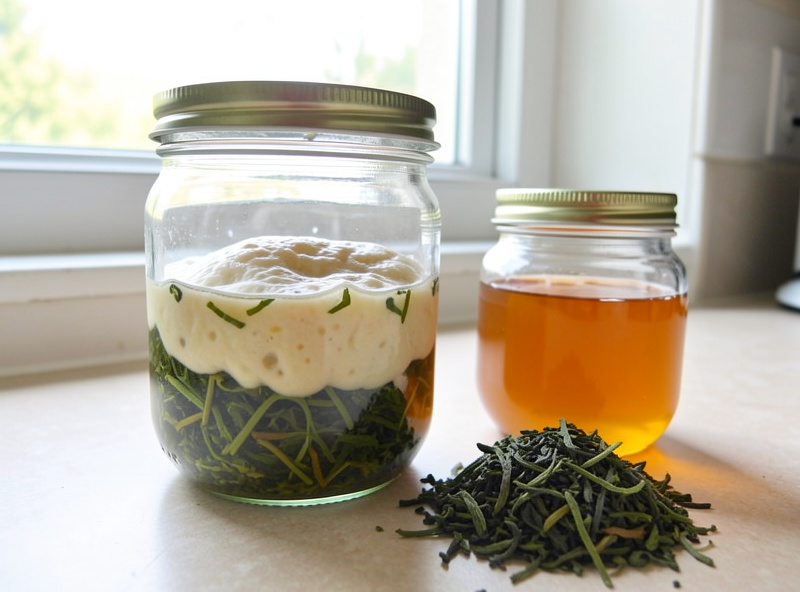
Lacto Drinks: Kvass and Lacto-Fermented Lemonade
Kvass and lacto-lemonade run on the same organism that drives my sauerkraut crock: Lactobacillus dropping the pH. Beet kvass is a savory, earthy, ruby tonic — chopped beets, a light brine, two to five days, and you have a sour drinking vinegar’s gentler relative. It is the easiest entry point because there is no culture to keep; the bacteria ride in on the vegetables. My kvass fermented drink guide covers both beet and the older bread style.
Lacto-fermented lemonade is the surprise hit at my table. You start a lightly sweetened lemon base with a spoon of whey or a little vegetable brine, leave it two to three days, and the lactobacillus turns flat lemonade into a bright, fizzy, complex soda that tastes nothing like the kitchen-counter version. The lacto-fermented lemonade guide has the starter options and the timing, which matters because this one ferments fast in a warm room.
The Bold One: Ginger Beer and the Ginger Bug
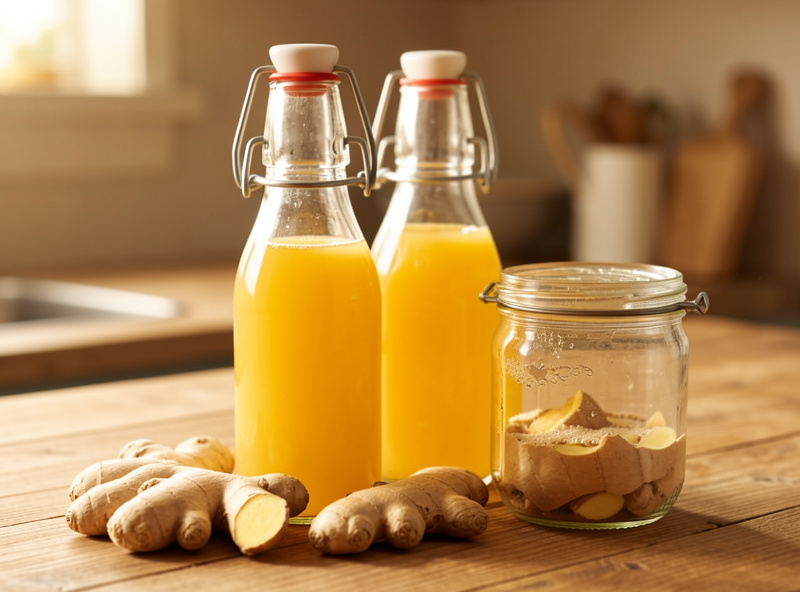
Ginger beer is where home brewers get hooked, and where the bottle-bomb risk is real. It starts with a ginger bug — a jar of grated ginger, sugar, and water that you feed daily until wild yeast and lacto colonize it and it fizzes. That bug seeds a sweetened ginger wort, and a second ferment in sealed bottles builds the aggressive carbonation ginger beer is known for. My ginger beer fermentation guide details the bug, the wort, and the bottle schedule.
This is the drink that needs respect on pressure. Wild ginger beer keeps eating sugar, so a bottle left warm for a week can build enough CO2 to shatter glass. I ferment the secondary in thick-walled swing-top bottles, keep one plastic tester bottle so I can feel the firmness, and refrigerate the moment it is hard. The same physics that makes a flat second ferment frustrating — covered in why kombucha goes flat — makes ginger beer dangerous if you ignore it. As an Amazon Associate I earn from qualifying purchases.
Equipment That Actually Earns Its Place
You can make every drink in this guide with jars you already own, but a handful of tools turn guesswork into a controlled process. Across the bench I run, four things matter more than the rest: a kitchen scale, swing-top bottles, a fine strainer, and — once you care — a pH meter.
The scale matters because sugar concentration drives both flavor and carbonation. I dose water kefir at roughly 60 grams of sugar per liter and a tablespoon of priming sugar per bottle for the second ferment; eyeballing that is how you end up with a flat batch or a bottle bomb. Swing-top bottles hold pressure where a screw-cap mason jar leaks it, which is why a second ferment in the right vessel is the difference between fizz and disappointment. A nylon mesh strainer keeps metal off live grains — I avoid prolonged reactive-metal contact with kefir grains and SCOBYs as a matter of habit, using a plastic or nylon strainer for the daily handling. None of this is expensive, and none of it is optional once you move past a single experimental jar.
| Tool | Why It Matters | Used For |
|---|---|---|
| 0.1 g kitchen scale | Sugar dose drives flavor and fizz | Every drink |
| Swing-top bottles | Holds CO2 pressure for second ferment | Water kefir, jun, ginger beer, lemonade |
| Nylon mesh strainer | Keeps grains off reactive metal | Both kefirs, ginger bug |
| pH meter or strips | Confirms the safety floor is cleared | Jun, kvass, troubleshooting |
| Wide-mouth jars | Aerobic first ferment, easy straining | Every drink |
First Ferment vs Second Ferment
Almost every drink here runs in two stages, and understanding the split clears up most beginner confusion. The first ferment (F1) is open or loosely covered: the culture eats the bulk of the sugar, the liquid sours, and it stays mostly aerobic. This is where safety is established — the pH falls and the drink becomes inhospitable to anything harmful. F1 is also where you taste for balance; pull it when it is still slightly sweet, because the second ferment will eat more sugar.
The second ferment (F2) is sealed and short. You bottle the soured drink with a little fresh sugar or fruit, cap it, and let the trapped CO2 build pressure for one to three days. This is where the fizz comes from and where flavor gets layered — ginger and lemon in a kefir, berries in a jun, more grated ginger in a ginger beer. The same F1/F2 logic I use for kombucha, including the flavoring ideas in my guide on second-fermentation flavor, transfers directly to water kefir and jun. The only rule that never bends: F2 builds pressure, so taste the bottle progress with a plastic tester and refrigerate before it over-builds.
What Feeds What: Sugars and Cultures
The cultures are pickier about sugar than people expect, and matching them is half of success. Water kefir grains want mineral content, so they thrive on whole or raw sugar and sulk on stripped-white sugar alone — I rotate in a pinch of unrefined sugar or a date to keep them fed. Jun specifically wants honey; feed a jun culture plain white sugar for a few cycles and it loses its character. Milk kefir grains eat lactose, so they only work in actual dairy — plant milks will not sustain the grains long-term, even if a single batch seems to thicken.
Ginger bugs and lacto starters are the least fussy: they run on whatever simple sugar you give them, which is why ginger beer and lacto-lemonade tolerate plain sugar fine. Chlorinated tap water is the one input that stalls all of them — chlorine and chloramine suppress the culture. I let tap water sit out overnight or use filtered water for any batch, the same habit that keeps my kombucha and vinegar cultures lively. If a previously vigorous culture goes quiet, suspect the water before you suspect the grains.
The Two Dials: pH and Carbonation
Every drink in this guide is controlled by the same two dials. pH is the safety dial: it should fall, and a finished drink that still reads above 4.2 either needs more time or has a sluggish culture. Carbonation is the pressure dial: it builds in any sealed vessel during a second ferment, and it is the only part of this hobby that can physically hurt you. I treat warm rooms as an accelerator on both — faster souring, faster pressure.
If a white film forms on a jar, it is almost always kahm yeast, not mold; I learned to tell them apart on sight, and you can too with the kahm yeast guide. Fuzzy, raised, colored growth means toss the batch. Flat white film means skim and carry on. That distinction saves more good drinks than any other single skill.
Troubleshooting Across All Six Drinks
Most problems are shared, and they trace back to one of three causes: a tired culture, the wrong temperature, or a sealed-vessel pressure issue. A drink that will not sour is almost always cold, underfed, or fighting chlorinated water; warm the room to the low 20s Celsius, feed fresh sugar, and switch to filtered water. A drink that sours too fast and turns harshly sharp is too warm — move it cooler and shorten the ferment. Across the batches I have run, a 5-degree swing in room temperature can halve or double the timeline.
No fizz after a second ferment usually means you bottled with no residual sugar to feed the F2, the cap is not airtight, or the room is too cold for the yeast to work. Excess fizz — gushers and bottle bombs — means too much priming sugar or too long at room temperature, and it is the only failure mode that is genuinely hazardous. The fix is the same plastic-tester-bottle discipline I use on ginger beer: when the tester feels rock-hard, everything goes in the fridge. A cloudy sediment at the bottom of any bottle is normal yeast and culture, not spoilage; it is the same lees you would decant off a vinegar.
If you smell nail-polish or solvent notes, the ferment ran hot and went too far into yeast-dominant territory; back off the temperature and shorten the next run. A genuinely off, putrid smell — distinct from sour or yeasty — paired with fuzzy growth is the rare case where you discard and start clean. In years of running these drinks, that outcome has been vanishingly rare, because the acidity does its job.
Keeping Your Cultures Alive Between Batches
The drinks are easy; the part people quit over is keeping a culture healthy when life gets in the way. Each one has a pause button. Water and milk kefir grains go dormant in the fridge — cover them in fresh sugar water or milk, cap loosely, and they hold for a few weeks between feedings. I bring grains back to room temperature and run two throwaway batches before trusting the next drink; the first batch after a cold rest is always sluggish.
A jun culture stores like a kombucha SCOBY: in a hotel of its own acidic brew at room temperature, never the fridge, where the cold stalls it and invites mold. The way I run my SCOBY hotel, covered in the SCOBY hotel guide, applies one-for-one to a jun mother. A ginger bug lives in the fridge between brews, fed a spoon of sugar and grated ginger once a week to keep the yeast ticking over. Lacto-lemonade and kvass keep no standing culture at all — you back-slop a little finished liquid into the next batch, or simply start fresh, which is part of why they are the lowest-commitment drinks on this list.
Choosing Your First Drink
If you want soda, start with water kefir — it is the fastest, most forgiving, and the closest to a commercial fizzy drink. If you came from kombucha and want something gentler and floral, brew jun. If you want a savory tonic and hate keeping cultures, make beet kvass this week with nothing but beets, salt, and water. If you have dairy and want a drinkable, probiotic-rich pour, milk kefir is a 24-hour project. And if you want the showpiece — the spicy, aggressively fizzy bottle that impresses everyone — commit to a ginger bug and brew ginger beer, just respect the pressure.
My honest path for a true beginner is water kefir first, then jun, then ginger beer once you trust your handling of carbonation. Lacto-lemonade and kvass slot in anywhere because they ask so little. Whatever you pick, read its spoke guide before you start a batch; the timing and starter details are where good drinks separate from flat ones.
How These Connect to the Rest of the Bench
None of this lives in isolation. The acid that preserves a beet kvass is the same Lactobacillus activity I rely on for the salt math in sauerkraut, and the Acetobacter that can sour a forgotten water kefir is the engine of my home vinegar. If you came here from kombucha, the full kombucha brewing guide is the parent of the jun method, and once you brew volume, the kegging and force-carbonation guide applies just as well to water kefir and ginger beer. Fermentation is a meta-skill: the same patience that watches a starter rise watches a ginger bug wake up.
The garden feeds straight into this cabinet, too. The beets that go into my best kvass and the ginger I keep on hand for bugs and beer come from the same growing habit; when the season lines up, the produce that would have gone into a kraut crock goes into a drink instead. A bumper crop of beets becomes a month of ruby kvass; a glut of lemons in winter becomes lacto-lemonade. Thinking of these drinks as one more outlet for the harvest — alongside the crock, the curing chamber, and the vinegar mother — is what turns six separate recipes into a single connected practice. Once the cultures are alive on your shelf, the marginal cost of the next batch is a spoon of sugar and three days of patience.
Frequently Asked Questions
Are fermented drinks alcoholic?
They carry a trace. Most home water kefir, jun, kvass, and lacto-lemonade finish under 1% ABV, similar to kombucha. Ginger beer can climb to 1-2% if a wild ferment runs long and warm, because the yeast keeps eating sugar.
Which fermented drink is easiest for a beginner?
Water kefir. The grains ferment a sugar water in 24 to 48 hours, there is no SCOBY to manage, and the result is a light, dry soda that takes second-ferment flavoring well. Beet kvass is a close second since it needs no kept culture at all.
Do I need a pH meter to make fermented drinks?
Not to start, but it removes the guesswork. These drinks self-acidify below the 4.6 botulism floor, so they are low risk. A meter confirms a finished drink sits near pH 3.0 to 3.8 and tells you when a sluggish culture has not soured enough.
Can fermented drinks make you sick?
Rarely, and almost never from spoilage, because the acidity protects them. The real hazards are over-carbonated bottles that can burst, and using a culture that has grown fuzzy colored mold. Flat white kahm yeast is harmless; skim it and continue.
What is the difference between kefir and kombucha?
Kefir uses self-propagating grains and ferments in roughly a day, while kombucha uses a SCOBY and takes one to three weeks. Water kefir tastes lighter and less vinegary than kombucha, which makes it a common next step for people who find kombucha too sour.
How do I carbonate a fermented drink safely?
Bottle the finished drink with a little added sugar in a strong swing-top bottle, leave it sealed at room temperature for one to three days, then refrigerate. Keep one plastic bottle as a pressure tester, and never leave ginger beer warm and sealed for a week.
Related Guides
- Water Kefir Guide for Beginners
- Milk Kefir Making Guide
- Jun Tea Recipe Guide
- Kvass Fermented Drink Guide
- Ginger Beer Fermentation Guide
- Lacto-Fermented Lemonade Guide

About Kenny Nyhus Fadil
A home fermenter documenting brines, bubbles, and the occasional moldy tragedy.