Why Is My Sourdough Bread Dense? 10 Causes and Fixes

Sourdough turns dense from ten causes: weak starter, insufficient bulk fermentation, over-proofing, poor gluten development, cold dough, low oven temperature, opening the oven mid-bake, low hydration, using all-purpose instead of bread flour, and skipping autolyse. Each cause has a specific fix that improves the next loaf.
Dense bread is one of three common failures (alongside flat and gummy); the full bake-system that prevents all three is in my home sourdough guide.
The first sourdough boule I ever baked could have been used as a doorstop. I had nurtured my starter for two weeks, obsessed over hydration percentages, and preheated the Dutch oven for an hour. The loaf came out of the oven looking beautiful — golden, scored, Instagram-ready — and when I sliced it, the crumb was so dense it barely had air pockets. That was the day I learned that fermentation time matters more than starter age, and that “watch the dough, not the clock” is the single most important sourdough rule. Here is everything I have fixed since.
The Three Types of “Dense” Sourdough
Dense sourdough breaks into three distinct failure modes: under-fermented (tight crumb but still firm bread), over-proofed (gummy texture and soft crumb), and weak gluten (flat dense loaves with poor structure). Each visual diagnosis points to different causes and different fixes.
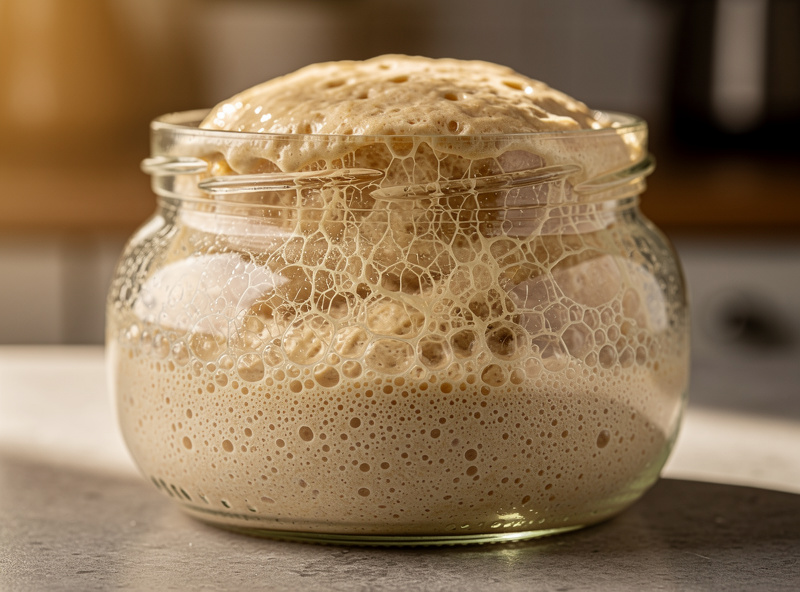
Diagnostic by visual:
- Under-fermented (tight crumb, firm dense): Small uniform tight holes throughout. Crumb feels firm and slightly chewy. Bread holds shape but feels heavy.
- Over-proofed (gummy texture): Crumb is soft and sticky-feeling. Holes are large but irregular and the dough above them collapses. Gummy when sliced.
- Weak gluten (flat loaves): Final loaves spread sideways instead of rising up. Crust is thin; structure is poor.
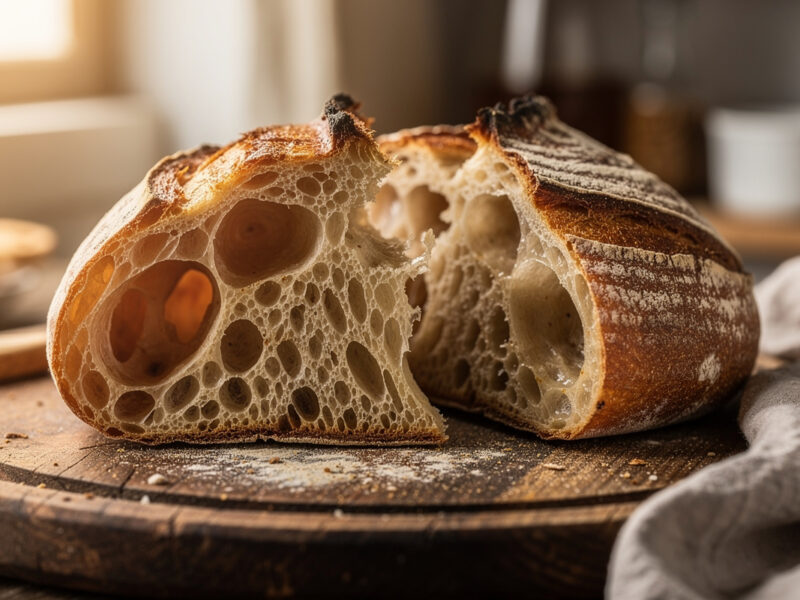
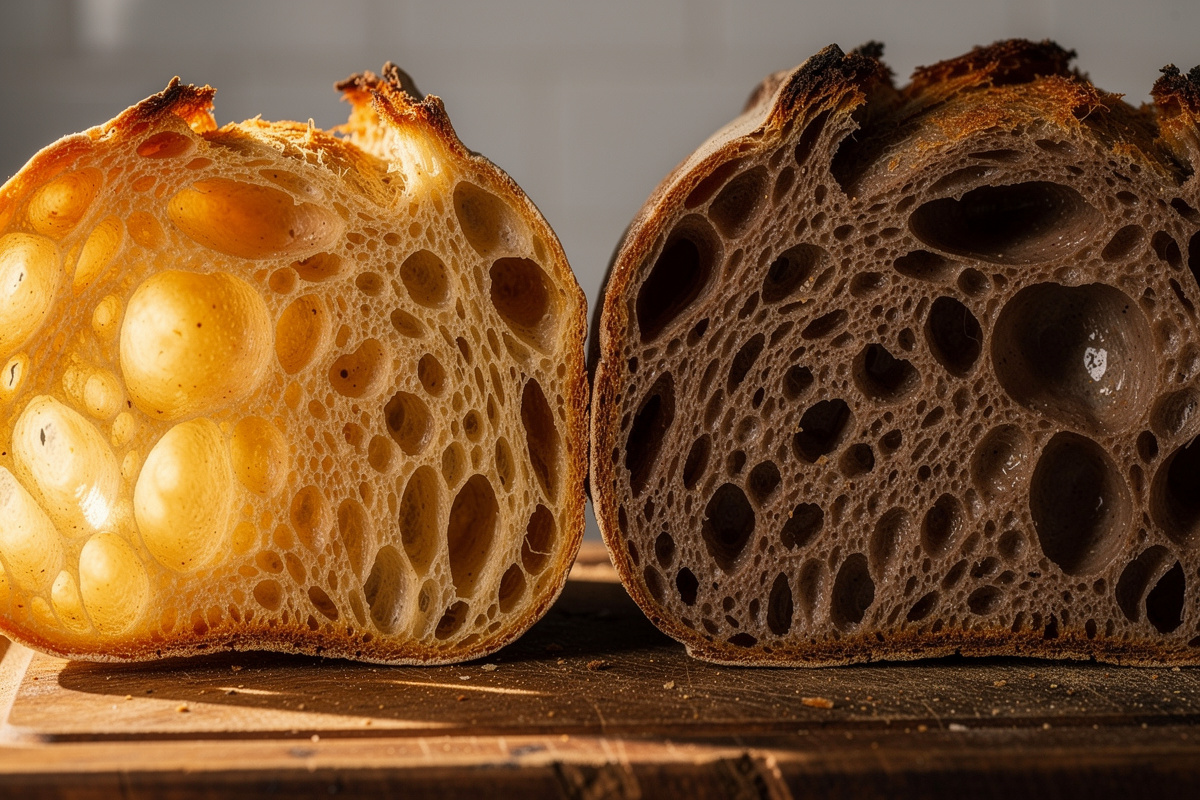
- Acceptable variation: Some “dense” sourdough is actually properly fermented but with finer crumb than the open-crumb Instagram aesthetic. Not all dense bread is failed bread.
Read about specific starter problems in our companion sourdough starter not rising guide.
The 10 Most Common Causes and Fixes
Ten causes account for nearly every dense sourdough complaint. Most loaves have 1-2 causes that combine; identifying which ones apply leads to specific fixes for the next bake.
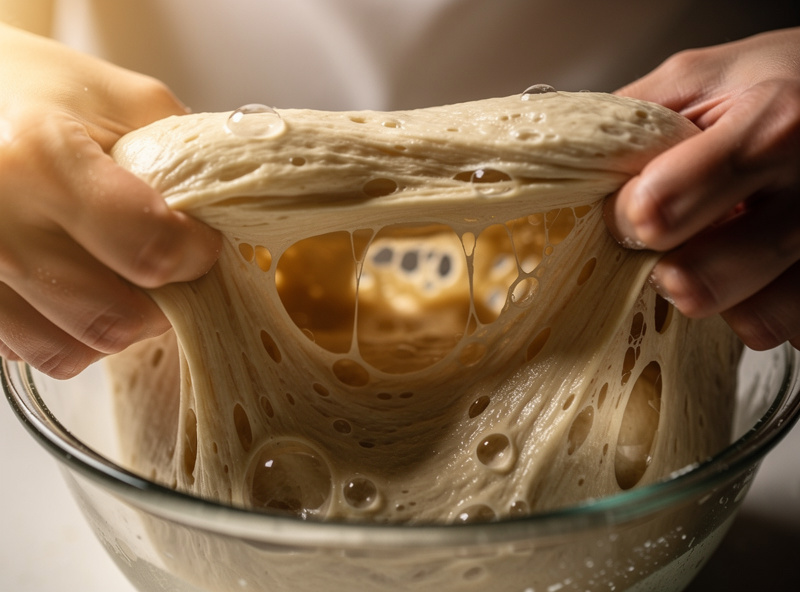
Research from the Journal of Cereal Science (2020) on sourdough gluten networks found that adequate gluten development during mixing and folding is the single strongest predictor of crumb structure — stronger even than fermentation time. The study documented that dough receiving 4+ stretch-and-fold cycles during bulk fermentation produced 30-40% more oven spring than dough folded only twice, because the folding reorganizes gluten strands into stronger networks capable of trapping fermentation gases.
Cause-by-cause breakdown:
- 1. Weak or under-active starter: Starter must double in 4-8 hours after feeding. If yours doesn’t, fix the starter before baking again. Use peak-active starter (not just-fed starter or hours-past-peak deflated starter).
- 2. Insufficient bulk fermentation: Bulk should be 4-8 hours at 75°F until dough has 50-100% rise. Cold kitchen extends this; warm kitchen shortens it. Watch the dough, not the clock.
- 3. Over-proofing past peak: Dough that has fully proofed once and starts collapsing produces gummy bread. Final proof should pass the poke test (gentle indent springs back slowly).
- 4. Insufficient gluten development: Stretch-and-fold every 30-45 minutes during bulk for the first 2-3 hours. Skipping these produces weak structure that cannot hold air.
- 5. Dough too cold during fermentation: Below 65°F bulk fermentation slows dramatically. Move to a warmer spot or extend bulk time significantly.
- 6. Oven too cold at bake start: Sourdough needs 475°F+ oven for proper oven spring. Fully preheat with the Dutch oven inside before adding dough.
- 7. Opening oven mid-bake: Lost steam during the first 20 minutes prevents oven spring. Don’t peek for the first 20 minutes minimum.
- 8. Hydration too low: Bread flour wants 70-78% hydration; lower produces dense bread. All-purpose wants 65-72% hydration.
- 9. Wrong flour type: All-purpose flour produces denser bread than bread flour. Switch to bread flour (12-13% protein) for open-crumb results.
- 10. Skipping autolyse: 30-60 minutes of flour-water rest before adding starter improves gluten development. Adds time but produces measurably better bread.
The starter problem is the single most-common underlying issue. Healthy starter that doubles reliably in 4-8 hours after feeding is the foundation; weak starter produces dense bread no matter how perfect every other variable is. Three tools made the biggest difference in my baking: a digital kitchen scale (measuring flour by weight instead of volume fixes hydration errors), an instant-read thermometer (dough temperature and internal bread temperature eliminate guesswork), and a flexible bench scraper for handling high-hydration dough without deflating it. Together these cost under $40 and remove the three biggest sources of variability in home sourdough.
Comparison Table: Symptoms to Causes
| Symptom | Most Likely Cause | Quick Fix |
|---|---|---|
| Tight uniform crumb, firm bread | Under-fermented bulk | Extend bulk by 1-2 hours |
| Gummy texture, soft crumb | Over-proofed final | Reduce proof by 30-60 min |
| Flat spread loaves | Weak gluten or starter | More stretch-folds; verify starter |
| Bread did not rise in oven | Cold oven start or weak starter | Preheat 475°F; test starter |
| Heavy chewy texture | Wrong flour type | Switch to bread flour |
| Tight crumb in middle, open at edges | Underbaked center | Extend bake 5-10 minutes |
| Pale crust, dense crumb | Oven too cold | Increase to 480-500°F |
Match the symptom to the cause; pick the fix; bake again. Most density issues resolve in 2-3 bakes once the diagnosis is correct.
The Recovery Bake: Saving Your Next Loaf
My most expensive mistake was baking 8 loaves for a holiday dinner — all from the same batch, all under-fermented because I rushed bulk fermentation to get them in the oven before guests arrived. Every loaf was dense. The flavor was excellent because the starter was healthy, but the texture embarrassed me. I learned that sourdough does not care about your dinner party schedule. Since then, I start my bulk fermentation the night before and let the dough tell me when it is ready. If it takes 6 hours because the kitchen is cold, it takes 6 hours. The bread is always better when I listen to the dough.
Once you’ve diagnosed the cause, plan the next bake with specific corrections. Single-variable changes are easier to track than multiple simultaneous changes; if you adjust 5 things at once and the bread improves, you don’t know which fix worked.
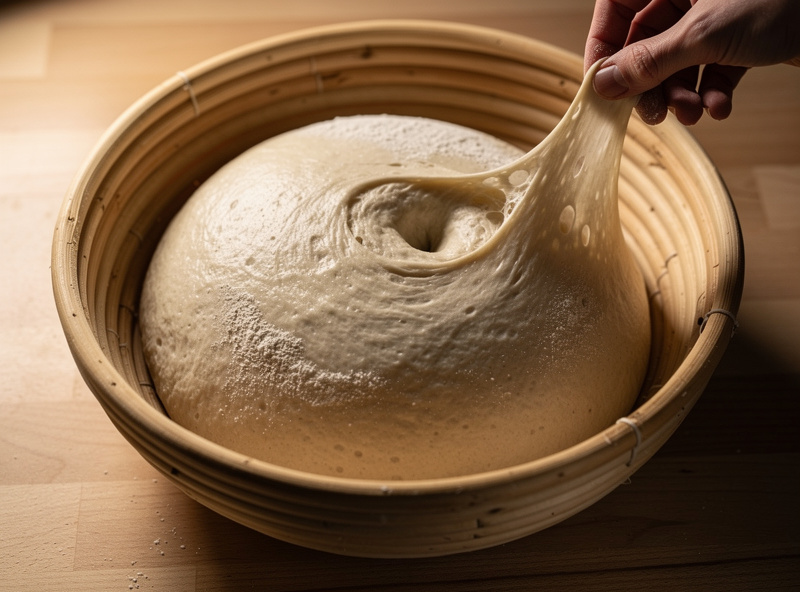
Recovery bake protocol:
- Verify starter doubles in 4-8 hours: Float test (small piece floats in water) confirms readiness.
- Use the watch-the-dough method: Bulk by visual rise (50-100%) not timer.
- Final proof: poke test: Gentle finger indent should spring back slowly. Springs back fast = under-proofed; doesn’t spring back = over-proofed.
- Preheat fully: Dutch oven inside at 475-500°F for 45-60 minutes before bake.
- Don’t peek: First 20 minutes are critical for oven spring.
- Bake to internal temperature: 205-210°F internal confirms doneness regardless of crust appearance.
- Rest 1+ hour before slicing: Cutting hot bread produces gummy crumb; cooled bread reveals true texture.
The “watch the dough not the clock” rule is the single biggest mindset shift between novice and intermediate sourdough bakers. Recipe-driven baking produces inconsistent results because dough behavior varies daily; observation-driven baking produces consistent results across temperature and humidity changes.
Dense sourdough stops being a problem the moment you stop guessing which variable is wrong. Diagnose by crumb: tight and uniform means under-fermented, gummy means over-proofed, flat means weak gluten. Fix one variable per bake. Document what changes. Within 3-4 loaves, the density will be gone — replaced by the open, springy crumb and crackling crust that makes sourdough worth the effort. The starter you have right now is capable of producing that bread. The difference between doorstop and bakery-quality is just the fermentation clock and your willingness to watch it.
Frequently Asked Questions
Why is my sourdough so dense and gummy?
Dense and gummy together usually means over-proofed final fermentation. The dough rose past peak and started collapsing, producing soft sticky crumb that feels gummy when sliced. Reduce final proof by 30-60 minutes; use the poke test (gentle indent should spring back slowly).
How do I know if my sourdough starter is strong enough?
Strong starter doubles in volume within 4-8 hours of feeding. Float test: drop a small piece in water; if it floats, starter is ready to bake with. If it sinks, feed and wait. Starter that doesn’t double reliably needs 2-3 days of consistent feedings to recover strength.
Should I use bread flour or all-purpose for sourdough?
Bread flour produces noticeably more open crumb. All-purpose works but expects denser results. Bread flour has 12-13 percent protein vs all-purpose at 10-11 percent; the additional gluten supports more rise and trapped air. King Arthur Bread Flour is the most-used hobbyist choice in the US.
How long should I bulk ferment sourdough?
4-8 hours at 75°F until dough has 50-100 percent rise. The wide range accommodates kitchen temperature variation; warm kitchens (78-82°F) bulk in 3-4 hours, cool kitchens (68°F) bulk in 6-8 hours. Watch the dough, not the clock.
What temperature should I bake sourdough at?
475-500°F for the first 20 minutes (oven spring), then 450°F for the remaining 25-30 minutes. The high initial temperature drives oven spring; the slightly lower temperature finishes the bake without burning the crust. Internal temperature of 205-210°F confirms doneness.
Why does my sourdough taste good but look dense?
Properly fermented sourdough develops complex flavor regardless of crumb structure. Some bakers consistently produce dense-crumb loaves that taste excellent because their starter is strong but their gluten development is lacking. Add more stretch-and-folds during bulk to improve crumb without affecting flavor.
Related Articles
- Sourdough Starter Not Rising? Rescue Guide
- Why Did My Sauerkraut Turn Mushy?
- Kahm Yeast Guide
- Flavor Kombucha in Second Fermentation
- Easy Napa Cabbage Kimchi Recipe

About Kenny Nyhus Fadil
A home fermenter documenting brines, bubbles, and the occasional moldy tragedy.