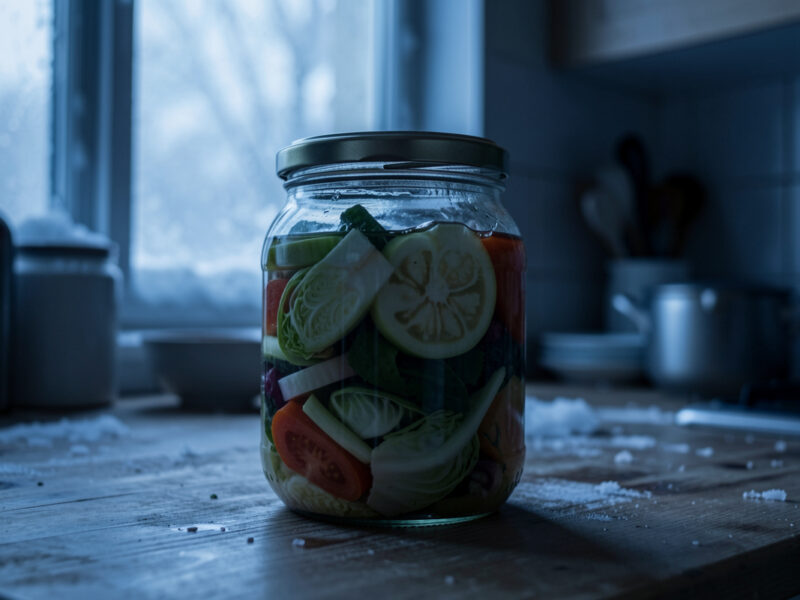
My Ferment Smells Bad: Normal Funk vs Genuinely Spoiled

Here’s the reassuring truth: a fermented vegetable is supposed to smell strong. Sour, sharp, sulfurous, funky — those are the aromas of a healthy batch, and they alarm nearly every beginner. Genuine spoilage smells different: putrid, rotting, decay rather than sour, and it comes paired with slime and a pH that never dropped. This guide teaches your nose the difference the way years at the crock taught mine.
I remember standing over my first big cabbage crock on day four, convinced I’d created something toxic. The smell coming off it was pure low-tide — rotten eggs and sulfur, strong enough to clear the kitchen. I nearly poured 4 kg of cabbage down the drain. I didn’t, and two weeks later it was the best sauerkraut I’d made. That batch taught me the most useful troubleshooting skill in fermentation: reading smell correctly, because the scary ones are usually the safe ones.
Why Do Fermented Vegetables Smell So Strong?
Fermentation is controlled microbial digestion, and digestion produces gas and volatile compounds — that’s the smell. Lactobacillus converts sugars into lactic acid (the clean sour note), while sulfur-containing compounds in brassicas break down into hydrogen sulfide and other volatiles. Strong aroma is the direct evidence that the microbes are working, not that anything has gone wrong.
The intensity scales with a few things: the vegetable (cabbage, broccoli, and other brassicas are the loudest; carrots and beets are mild), the temperature (warmer ferments smell more aggressive), and the stage (the vigorous first week is the smelliest, and it mellows as the batch matures). On my bench I’ve learned to expect a specific arc — pungent and a little offensive early, then rounding into a pleasant clean sourness by week two. If you understand that arc, you stop panicking at day four. The whole process these smells sit inside is laid out in my complete lacto-fermentation guide, and the master map of every symptom is the vegetable fermentation troubleshooting guide.
What Do Normal Fermentation Smells Actually Smell Like?
Normal ferment aromas cluster into four families, and all four are safe: clean lactic sourness (like plain yogurt or a good dill pickle), sulfurous cabbage funk (rotten-egg or cooked-broccoli notes from brassicas), yeasty or bready notes, and sharp garlicky pungency in kimchi and garlic ferments. None of these signal spoilage on their own.
Let me put words to each, because vocabulary is what lets you diagnose. The lactic note is the backbone — tangy, bright, a little mouth-watering. The sulfur note is the big scary one: cabbage, cauliflower, and broccoli release hydrogen sulfide as they ferment, and it reads as eggs or drains. It’s transient and blows off. The yeasty smell shows up when kahm yeast is present or the ferment is warm — bready, a touch beery. And the garlic-and-allium pungency in kimchi is loud by design; my kimchi crock announces itself from across the room and always has. The reliable through-line: every one of these can be sharp and off-putting while still being completely safe, because safety lives in the acid, not the intensity.
What Does a Genuinely Spoiled Ferment Smell Like?
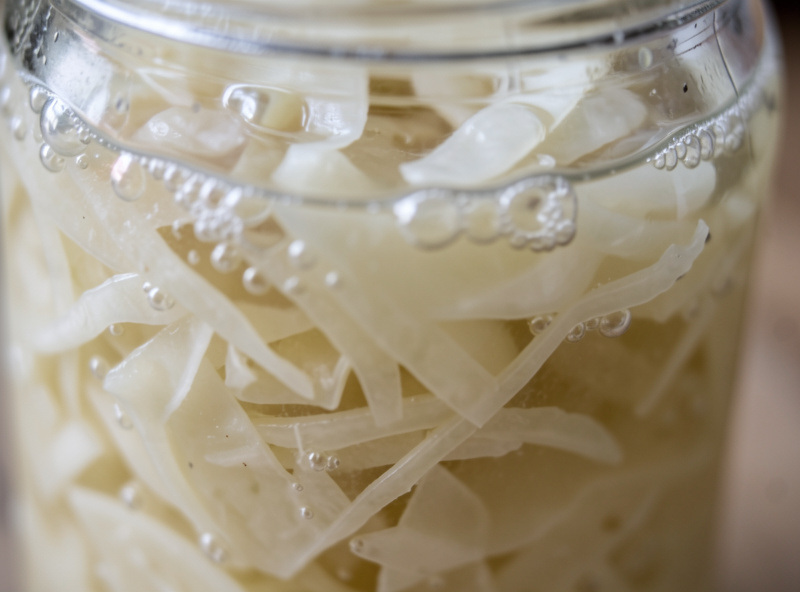
Real spoilage smells like rot, not sour. The tell is a putrid, decaying, garbage-like or cheesy-foot odor that makes you recoil in a “something died” way rather than a “wow that’s sour” way — and crucially, it arrives together with mushy or slimy texture and a batch that never turned acidic. Spoilage is the smell of the wrong microbes winning.
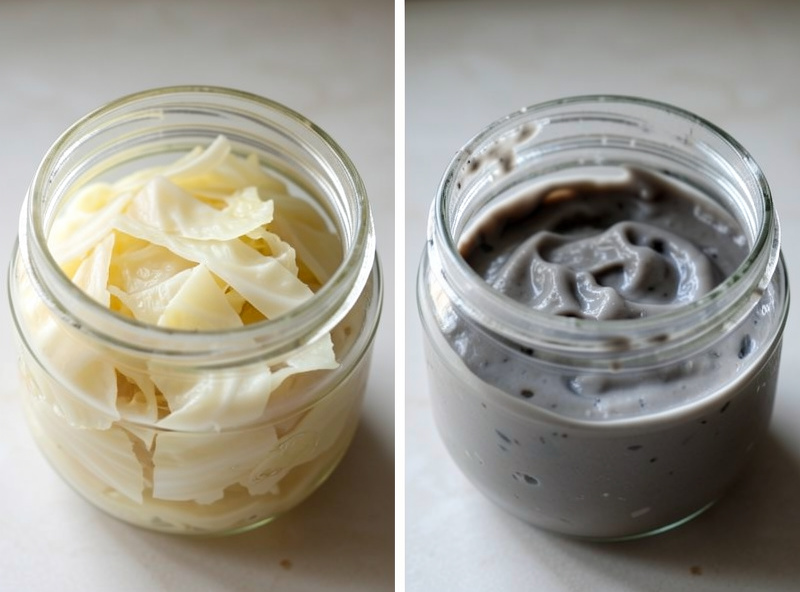
Practically, here’s how I tell them apart. A safe-but-strong ferment smells intensely sour or sulfurous, but under it there’s that clean lactic brightness, and the vegetables are still firm and the brine, though cloudy, is not ropy. A spoiled batch smells of active decay with no sour brightness underneath, the vegetables have gone soft and slippery, and the whole thing feels wrong in a way that’s hard to describe but easy to recognize once you’ve smelled it. Rotten fermentation almost always means the salt was too low or the batch sat too warm, so the spoilage bacteria outran the lactos. If a smell like that is riding on top of slime, don’t taste it to check — trust the nose and the texture together and toss it. Under-salted, warm, anaerobic vegetables are the one place real danger lives, which is why I never freelance the salt; my low-salt safety piece covers exactly how far down you can go.
The Rotten-Egg Sulfur Smell — Normal or Not?
For brassicas, a rotten-egg sulfur smell in the first week is almost always normal. Cabbage, kale, cauliflower, and broccoli are packed with sulfur compounds that release hydrogen sulfide during active fermentation. It’s pungent, it’s transient, and it dissipates as the batch matures — by week two or three it should be gone, replaced by clean sourness.
The nuance is timing and pairing. Sulfur early, fading over time, with firm vegetables and a dropping pH: normal, expected, safe. Sulfur that intensifies over weeks, or sulfur riding on slimy texture and no acidity: that’s spoilage, not the harmless kind. My cauliflower ferments are the worst offenders — the first few days genuinely smell like a blocked drain — but I’ve learned to let them ride, and they always resolve. If you’re fermenting in a small closed kitchen, this is a real quality-of-life issue; a water-sealed crock with the lid on contains far more of it than an open jar, one of several reasons I moved my brassica batches into a sealed stoneware crock years ago.
A Yeasty, Beery, or Alcohol Smell — What Does It Mean?
A yeasty or faintly alcoholic smell points to yeast activity, usually kahm yeast or a warm, sugary ferment where yeasts got a foothold alongside the lactic bacteria. It’s generally harmless but it’s a flavor and quality signal worth acting on — it often accompanies that flat white film on the surface and can muddy the taste if left unchecked.
When I catch a yeasty note, I check the surface for kahm — a flat, pale, sometimes wrinkly film — and skim it if it’s there. Then I look at my two levers: temperature and submersion. Yeasts love warmth and air, so cooling the batch and making sure everything is firmly under the brine with a weight starves them. A little yeastiness won’t hurt you, but left to run it can turn a crisp, clean ferment into something dull and slightly boozy. The full identification-and-prevention walk-through is in my kahm yeast guide, and if you’re unsure whether that surface film is yeast or something worse, mold vs kahm yeast settles it with photos.
How Do I Use pH to Settle the Smell Question?
When smell alone is ambiguous, the pH meter ends the argument. A vegetable ferment that has dropped below pH 4.6 is safe from pathogens by definition, and a finished batch should read 3.2–3.7. If a strange-smelling batch reads 3.5 and the vegetables are firm, it’s a strong, safe ferment. If it never got under 4.6, the smell is telling you the truth: it failed.
This is the core of how I run my whole bench — smell and texture raise the question, the meter answers it. I keep a calibrated pH meter as my primary tool and backup test strips for a quick cross-check, and taking a single reading has saved me from tossing good food more times than I can count. Standards bodies agree on where the line sits: the U.S. National Center for Home Food Preservation anchors safe fermented and pickled vegetables to acidity, and the CDC’s botulism guidance is why the 4.6 floor is non-negotiable for low-acid vegetables in an anaerobic environment. A meter is a modest investment for that peace of mind — I break down what actually matters in one in my guide to the best pH meter for fermentation.
How Can I Reduce Strong Fermentation Smells?
You can’t eliminate ferment smell — it’s a sign of success — but you can manage it. The three biggest levers are containment (a sealed vessel traps aroma), temperature (cooler ferments smell less and more slowly), and time (the worst smells belong to the first week and fade). Fermenting in a garage, cellar, or fermentation fridge moves the aroma out of your living space entirely.
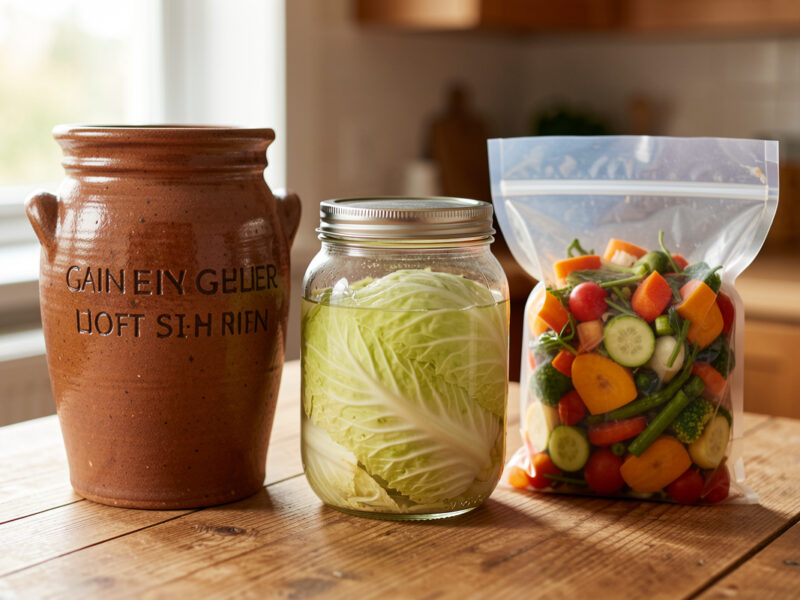
In practice, here’s my playbook. I run brassicas in a water-sealed stoneware crock with the lid on, which keeps the hydrogen sulfide contained far better than a cloth-covered jar. I keep smelly batches cool — a consistent 16–18°C both slows the aroma and, conveniently, produces firmer, better-flavored results. And I resist the urge to lift the lid constantly; every peek releases a fresh cloud and invites fruit flies besides. If a batch is genuinely overpowering the kitchen, the fermentation fridge or an unheated pantry is the answer. One thing I don’t do is try to mask a rotten spoilage smell — that odor is information, and the fix for real spoilage is the compost bin, not a candle.
Frequently Asked Questions
Is it normal for sauerkraut to smell like rotten eggs?
Yes, especially in the first week. Cabbage and other brassicas release sulfur compounds during active fermentation that smell like rotten eggs or cooked broccoli. It is transient and fades as the batch matures, usually gone by week two or three, replaced by a clean sour smell. It only signals trouble if it intensifies over time or comes with slimy texture and no acidity.
How can I tell a strong ferment from a spoiled one by smell?
A strong but safe ferment smells intensely sour or sulfurous but has a clean lactic brightness underneath and firm vegetables. A spoiled ferment smells like active rot or decay with no sour note, and it comes with soft, slimy vegetables. Spoilage usually means the salt was too low or the batch sat too warm. When unsure, check the pH.
My ferment smells yeasty or a little like alcohol — is that bad?
Usually not dangerous. A yeasty or faintly alcoholic smell points to yeast activity, often kahm yeast or a warm, sugary batch. Check the surface for a flat pale film and skim it, then cool the batch and keep everything submerged. Left unchecked it can dull the flavor, but it is a quality issue rather than a safety one.
Can a bad-smelling ferment still be safe to eat?
Often yes. Many normal fermentation smells are strong and off-putting while the batch is perfectly safe, because safety comes from acidity, not from a pleasant aroma. The exception is a putrid, rotting smell paired with slime and a pH that never dropped below 4.6. That combination means spoilage, and you should discard the batch.
Does the smell go away as the ferment ages?
Largely, yes. The most aggressive smells belong to the vigorous first week and mellow as fermentation slows and the flavors round out. Sulfur notes in particular fade almost completely. Refrigerating a finished batch slows everything further and settles the aroma into a clean, stable sourness.
Related Reading
Smell often travels with other symptoms worth knowing: if your vegetables also went hollow or soft, or if fruit flies are swarming the same crock, those have their own fixes. Smell is one symptom among many. For the full triage map, start at the vegetable fermentation troubleshooting guide. If that surface film has you worried, read mold vs kahm yeast and the kahm yeast guide. To prevent the spoilage smells for good, get the salt right with the fundamentals in the lacto-fermentation guide and settle every safety question with the right pH meter.

About Kenny Nyhus Fadil
A home fermenter documenting brines, bubbles, and the occasional moldy tragedy.
Keep Bubbling

Kahm Yeast: What It Is, How to Prevent It, When It Is Safe
Crock vs Jar vs Vacuum Bag: Which Fermentation Vessel Wins