Why Did My Pickles Go Hollow or Soft Inside?

Soft and hollow pickles are almost always texture failures, not safety failures — and they have two completely different causes. Softness happens during fermentation, driven by enzymes, warmth, or too little salt breaking down the cucumber’s cell walls. Hollowness usually happens before the cucumber ever hits the brine, baked in at the plant. Fix the right one and you get pickles that snap. Miss the distinction and you’ll chase the wrong problem forever.
I still wince about the batch that taught me this. A gorgeous haul of garden cucumbers, a classic dill brine, and ten days later I opened the jar to pickles the texture of wet paper — they didn’t crunch, they folded. Nothing was unsafe about them; the pH was a clean 3.4 and they smelled great. They were just ruined as pickles. Tracking down why turned into a genuine education in enzymes, blossom ends, salt, and tannins, and I haven’t made a mushy batch since.
Why Did My Fermented Pickles Turn Out Hollow or Soft?
Two separate mechanisms are at work. Soft, mushy pickles come from pectin-digesting enzymes (pectinases) that break down the firm cell structure — accelerated by warm fermentation temperatures and low salt. Hollow pickles come mainly from the cucumber itself: fruit that grew too fast, was over-mature, or sat too long after harvest often has hollow centers before you ever brine it.
Getting this split clear is the whole game. If your pickles are uniformly soft and slippery, you have an enzyme-and-conditions problem you can control with salt, temperature, tannins, and prep. If your pickles are firm-walled but hollow in the middle, you have a raw-material problem you solve at the cutting board and the garden, by choosing and using better cucumbers. Most “why are my pickles ruined” questions are actually one or the other, occasionally both. This is one entry in the broader vegetable fermentation troubleshooting guide, and it pairs closely with my texture-science piece on keeping fermented vegetables crunchy.
What Causes Fermented Pickles to Go Soft or Mushy?
The main driver is enzyme activity. Cucumbers — especially their blossom ends — carry pectinase enzymes that digest pectin, the glue holding plant cell walls firm. Warm fermentation supercharges those enzymes, and low salt fails to restrain them, so the two conditions most likely to give you mush are a hot kitchen and a weak brine. Mold and yeast growth on exposed pickles pile on more softening enzymes.
So softness is a conditions story, and you control the conditions. I ferment pickles cooler than kraut — I aim for a stable spot on the cool side of room temperature, which keeps those enzymes sluggish and the cucumbers firm. I salt them harder, in the 3.5–5% range by weight, well above the 2–2.5% I use for sauerkraut, because that extra salt directly restrains the softening enzymes and the spoilage organisms that carry more of them. And I keep everything under the brine with a glass weight, because a cucumber bobbing in the air grows the yeast and mold that accelerate the mush. The same softening logic drives kraut going limp too, which I cover in why sauerkraut turns mushy — different vegetable, same enzyme villains.
Why Are My Fermented Pickles Hollow Inside?
Hollowness is usually pre-existing. Cucumbers develop hollow centers in the field when they grow too rapidly, get over-mature on the vine, or experience irregular watering — the flesh can’t keep pace with the skin. Cucumbers also lose internal moisture and can develop voids if they sit for days between harvest and brining. A hollow pickle was very often a hollow cucumber before you started.
There’s a simple field test I use: drop questionable cucumbers in a bowl of water. Ones that float often have hollow air pockets inside and are best set aside for relish or spears rather than whole pickles; the ones that sink are dense and solid. Beyond that, the fixes are upstream. Pick or buy pickling-specific varieties, use them small and firm rather than large and mature, and brine them as soon after harvest as you can — the cabbage-and-cucumber-to-crock timing is exactly why I ferment straight from the garden when the season lines up. Fermentation gas can slightly enlarge an existing void, but it rarely creates a hollow in a solid, fresh cucumber. If yours are hollow, look at the raw material first.
Does Salt Concentration Affect Pickle Crunch?
Strongly. Salt does double duty for crunch: it draws water out of the cucumber by osmosis to firm the tissue, and it restrains the pectinase enzymes and spoilage microbes that cause softening. This is why fermented pickles want a higher brine than kraut — 3.5–5% salt by weight — and why under-salting is one of the most common reasons a batch goes limp.
I weigh everything on a 0.1 g kitchen scale and calculate the brine as a percentage of the total weight of water plus vegetables — never by the teaspoon, never by eye. That precision is the difference between a reliable crunch and a coin flip. Too little salt and the enzymes run wild; too much and you stall the ferment and get an unpleasantly salty, slow batch. The 3.5–5% window is the sweet spot for cucumbers specifically. If salt math is where you get lost, my salt and brine math guide works through every ferment type, and the numbers are the single most important variable you control. Get the salinity right and you’ve solved most of the softness problem before the jar is even sealed.
How Do Tannins Keep Fermented Pickles Crisp?
Tannins are the classic crunch insurance. They inhibit the pectinase enzymes that soften pickles, and they’re free — you add them by tucking a tannin-rich leaf or a pinch of black tea into the jar. Grape leaves, oak leaves, horseradish leaves, and bay leaves all work, as does a small amount of loose-leaf black tea, which is nothing but concentrated tannins.
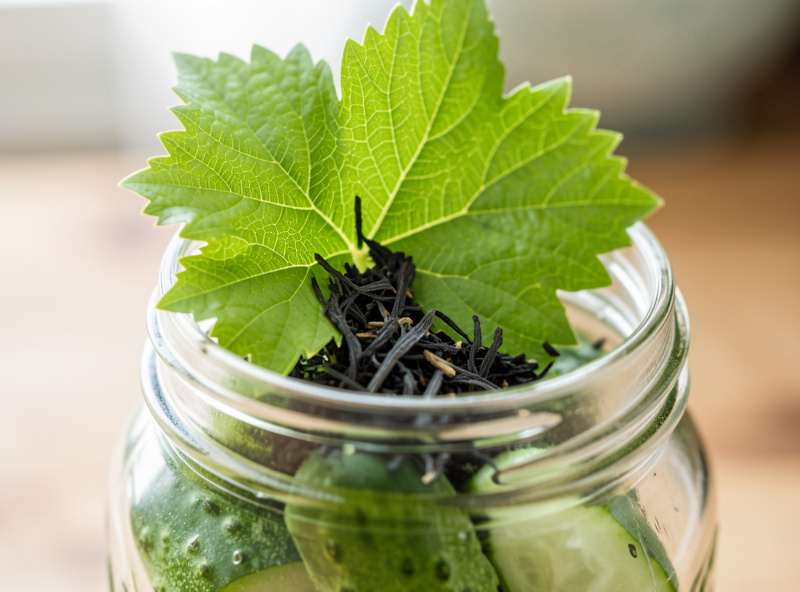
In my kitchen the reliable move is a single grape leaf laid over the cucumbers before the weight goes on, or about a quarter-teaspoon of black tea per quart jar if I’ve got no leaves. You don’t need much — too much tea and the pickles taste of it. This tannin trick is genuinely the difference-maker for me on borderline cucumbers, and I break down the full technique, including which leaves work best and how much to use, in lacto-fermented pickles that stay crunchy. Combine tannins with cool temperatures, correct salt, and a trimmed blossom end and mushy pickles basically stop happening. Recognizing this is well-established food-preservation practice, documented by preservation authorities like the U.S. National Center for Home Food Preservation and university extension programs such as Clemson’s Home & Garden Information Center.
The Blossom-End Problem, and How to Fix It
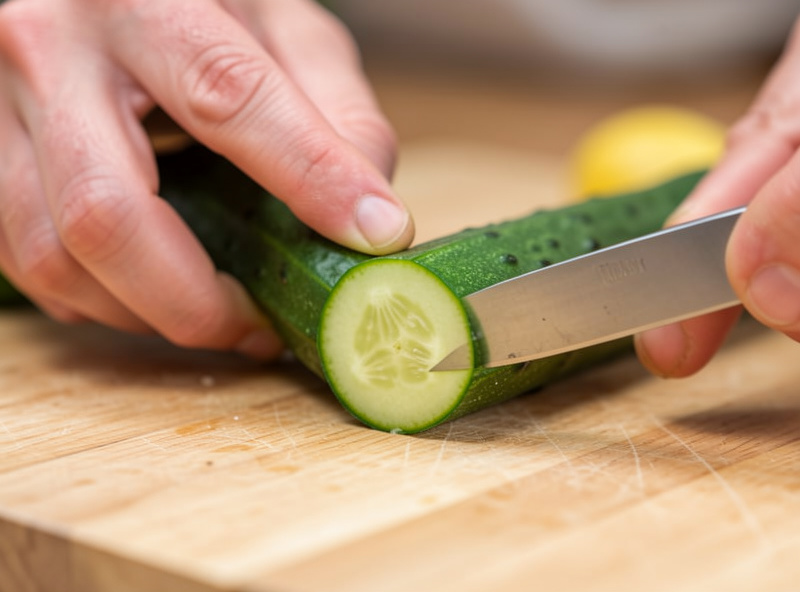
The blossom end of a cucumber — the end opposite the stem — concentrates the softening enzymes, and leaving it on is one of the most common causes of mushy fermented pickles. The single highest-value habit for crunch is trimming a thin slice, about 1.5 mm, off the blossom end of every cucumber before it goes in the jar. It removes the enzyme hotspot at the source.
This is the fix I wish I’d known before the wet-paper batch. Now it’s automatic: every cucumber gets a whisper trimmed off the blossom end, no exceptions. If you can’t tell which end is which, trim both — you lose nothing but a sliver. It costs seconds and it removes the highest concentration of the exact enzymes you’re fighting. Paired with a tannin leaf and correct salt, blossom-end trimming does most of the heavy lifting. It’s a small, unglamorous step, and it’s the one I’d tell any new pickle-maker to adopt first.
Are Soft or Hollow Pickles Safe to Eat?
Yes, in the great majority of cases. Softness and hollowness are quality problems, not safety problems, as long as the batch fermented properly — meaning it turned reliably sour and dropped below pH 4.6, ideally to 3.2–3.7. A soft pickle that smells cleanly sour and tested acidic is perfectly safe; it’s just disappointing to bite into.
The exceptions are the usual ones, and they apply to any ferment. If a soft, slimy batch also smells of rot rather than sourness and never acidified, that’s spoilage — the softness there is a symptom of the wrong microbes winning, not the enzyme story above. And any fuzzy, raised, colored mold on the surface means discard the batch, because in soft high-moisture pickles the mold’s filaments spread invisibly. I settle every one of these ambiguous cases with my calibrated pH meter: acidic and clean-smelling is safe to eat even when floppy. If yours reads properly sour, enjoy the soft pickles chopped into relish or tartar sauce, where crunch doesn’t matter and that clean lactic tang shines. And smell is often the first clue that something crossed from soft-but-fine into actually-spoiled — my guide to normal funk vs genuinely spoiled walks through the tell. Quiet jar with no bubbles but firm, souring pickles? That’s covered in no bubbles: is it even working.
Frequently Asked Questions
Why did my fermented pickles turn out soft and mushy?
Softness comes from pectinase enzymes breaking down the cucumber’s cell walls, sped up by warm fermentation and restrained by salt. The most common causes are fermenting too warm, using too little salt, leaving the blossom end on, or letting pickles float above the brine where yeast and mold add more softening enzymes. Cooler temperatures, 3.5 to 5 percent salt, tannins, and a trimmed blossom end fix it.
Why are my fermented pickles hollow inside?
Hollow centers are usually present before fermentation. Cucumbers develop hollows when they grow too fast, become over-mature, or sit too long after harvest. Float test suspect cucumbers — floaters often have air pockets and are best used for relish. Fermentation gas can slightly enlarge an existing void but rarely creates a hollow in a solid, fresh cucumber.
Are soft or hollow fermented pickles safe to eat?
Yes, in almost all cases. Softness and hollowness are texture problems, not safety problems, as long as the batch fermented properly and dropped below pH 4.6 with a clean sour smell. Discard only if the batch never acidified and smells of rot, or if fuzzy colored mold has grown on the surface.
Does trimming the blossom end really keep pickles crunchy?
Yes, it is one of the most effective steps. The blossom end concentrates the softening enzymes, so trimming a thin slice — about 1.5 millimeters — off that end removes the enzyme hotspot at the source. If you cannot tell which end is the blossom end, trim both. Combined with correct salt and tannins, it prevents most mushiness.
How do tannins keep fermented pickles crisp?
Tannins inhibit the pectinase enzymes that soften pickles. You add them by tucking a tannin-rich leaf — grape, oak, horseradish, or bay — or a small pinch of loose black tea into the jar. Use them sparingly; too much tea can flavor the pickles. Combined with cool temperatures and correct salt, tannins are excellent crunch insurance.
Keep Your Pickles Crisp
Texture is a solvable problem once you know the levers. Zoom back out to the vegetable fermentation troubleshooting guide for the full map, then dial in crunch with pickles that stay crunchy and the broader texture science of crisp ferments. Nail the salt behind it all with the salt and brine math guide.

About Kenny Nyhus Fadil
A home fermenter documenting brines, bubbles, and the occasional moldy tragedy.
Keep Bubbling
Spring, Filtered, or Distilled: Which Water for Water Kefir
Fermentation Crock Care & Cleaning: Complete Guide