No Bubbles in My Ferment: Is It Even Working?

No bubbles almost never means no fermentation. Bubbling is just carbon dioxide escaping fast enough to see, and it depends on temperature, how tightly your vessel is sealed, and how far along the batch is. A cool kitchen, a lid that lets gas leak silently, or a ferment past its vigorous phase can all be working perfectly with zero visible fizz. The real proof is cloudiness, sour taste, and a falling pH — not bubbles.
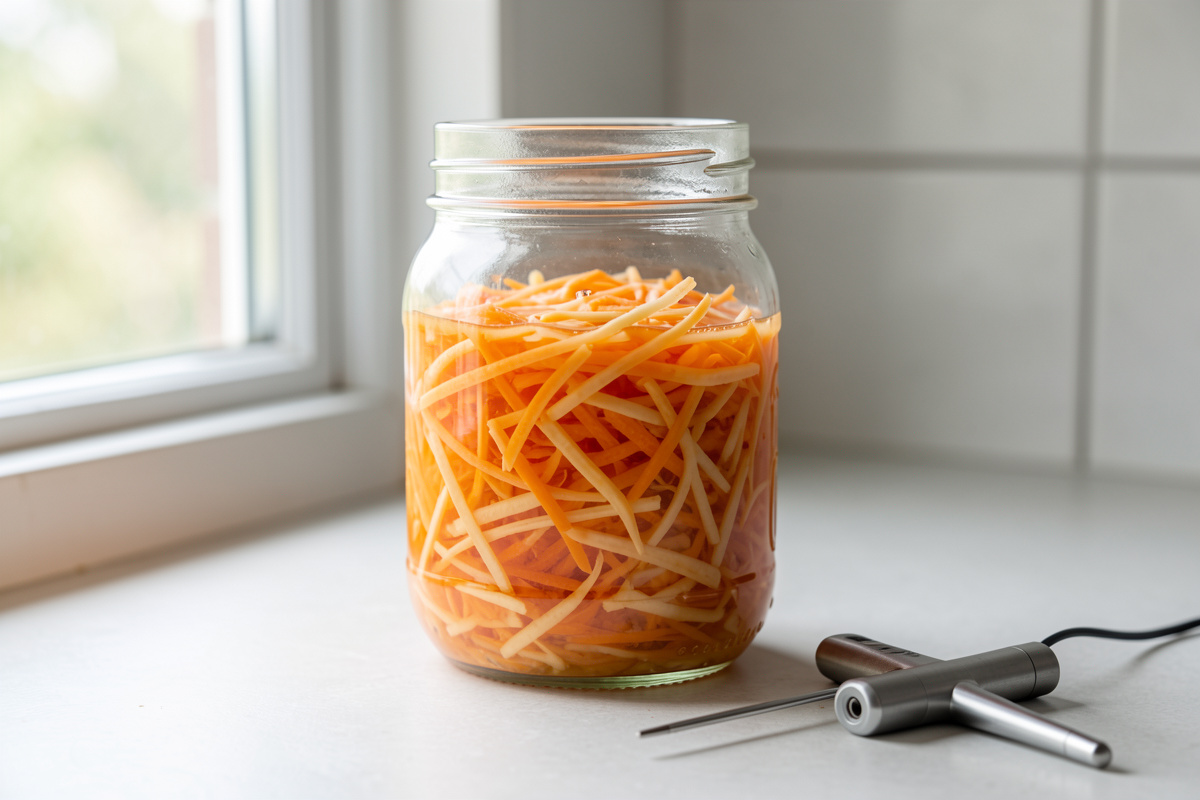
I learned this the expensive way. Early on I “rescued” a perfectly good jar of lacto carrots that hadn’t bubbled in two days — added fresh starter brine, moved it onto a warm radiator shelf, fussed with it constantly. All I accomplished was overheating a healthy ferment into a soft, dull batch. It had been fermenting fine the whole time; my cool kitchen just meant the gas was creeping out slowly through the airlock, one bubble every few minutes, invisible unless I stood and stared. Bubbles are the least reliable signal on the bench.
Do Bubbles Actually Mean Fermentation Is Working?
Bubbles are evidence of fermentation, but their absence is not evidence against it. When Lactobacillus ferments sugars it produces lactic acid plus carbon dioxide gas. That CO2 has to escape, and if it escapes quickly you see bubbles; if it escapes slowly or through a loose lid, you don’t. The gas is a byproduct — the actual work is the acid production you can’t see.
This matters because CO2 output is also front-loaded and heterofermentative-dependent. The most gas comes off during the vigorous phase, roughly days two through five at room temperature, and then it tapers sharply even though acidification keeps going for weeks. So a batch can bubble like a soda for three days, go completely quiet, and still be actively souring and improving. Judging a ferment by bubbles is like judging a fire by how much smoke you can see — related, but not the thing itself. The reliable indicators, which I’ll get to below, are what the brine looks like, what it tastes like, and what the meter reads. The whole process sits inside my complete lacto-fermentation guide, and this is one stop on the full vegetable fermentation troubleshooting guide.
How Does Temperature Control Whether You See Bubbles?
Temperature is the master dial for bubble activity. Microbial metabolism roughly doubles for every 10°C rise, so a ferment at a warm 24°C bubbles vigorously and finishes in a week, while the same batch at a cool 16°C produces gas so slowly you may never catch a bubble in the act — yet it ferments perfectly, just on a three-week timeline instead of one.
My kitchen runs cool for much of the year, and I’ve come to prefer it. Cold ferments are quiet — I rarely see dramatic bubbling in winter — but they produce firmer, more complex kraut and pickles, because the slow acid drop is gentler on cell walls. In summer the same crocks froth and hiss. If your ferment isn’t bubbling and the room is below about 18°C, that’s your whole answer: it’s working slowly. The fix, if you’re impatient, is a few degrees of warmth, not intervention. Just don’t overdo it; heat speeds gas but also softens texture and invites off-flavors, exactly the trade-off I blundered into with those carrots. A stable, moderate temperature beats a warm swinging one every time.
Is My Jar or Lid Hiding the Bubbles?
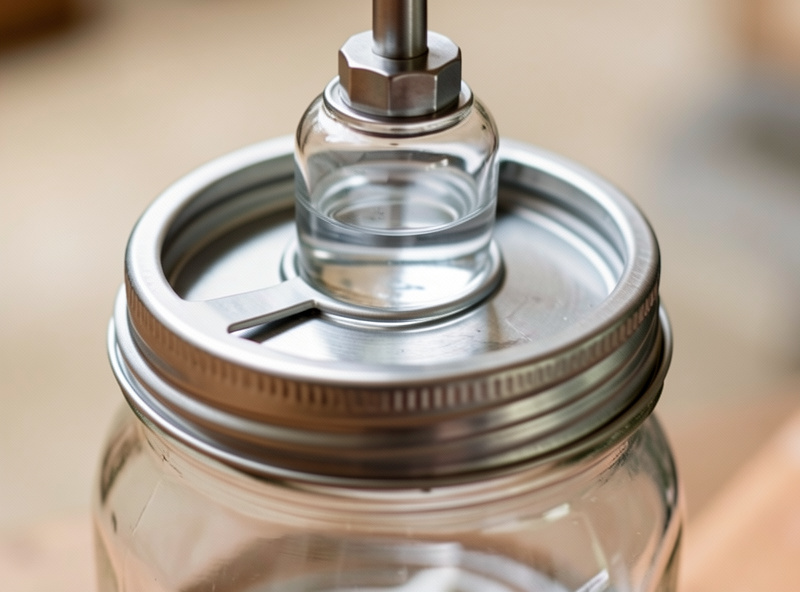
Very often, yes. The vessel and lid you chose determine whether escaping CO2 is visible at all. A jar with a loose lid or a cloth cover lets gas seep out continuously and silently — no bubble ever forms. A three-piece water airlock only bloops when pressure builds faster than it bleeds, which in a cool room may be almost never. A water-sealed crock hides the action entirely under its moat.
So “no bubbles” is frequently a lid story, not a ferment story. On a jar with a silicone waterless airlock — the Pickle-Pipe style one-way valves I use on Mason jars — gas releases in tiny puffs you’ll basically never see. On a three-piece airlock you might catch an occasional bubble through the water if you’re patient. If you genuinely want to see activity, a clear jar with a lightly-set lid at warm temperature will show it, but that’s a worse setup for actual results. I choose vessels for the quality of the ferment, not for the entertainment; my head-to-heads on airlock vs silicone lid and crock vs jar vs vacuum bag lay out the trade-offs. One warning: a fully gas-tight sealed jar with no airlock builds real pressure and can crack or pop — never seal a ferment airtight and walk away.
How Do I Confirm My Ferment Is Working Without Bubbles?
Use the three signals that don’t lie: sight, taste, and pH. A working ferment turns the brine cloudy and milky within a few days as Lactobacillus multiplies into the billions; it tastes progressively more sour; and its pH falls from a starting point around 5.5 toward 4.0 and below. Any one of these confirms activity better than bubbles ever could.
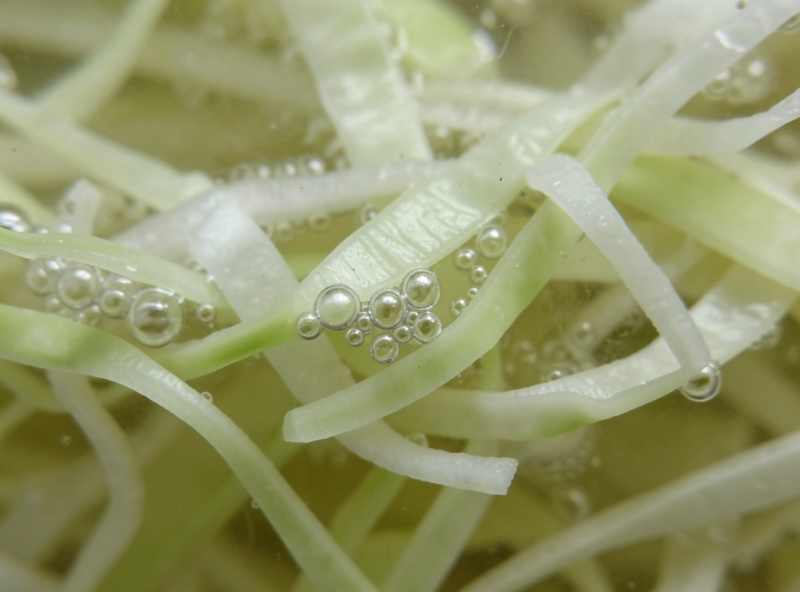
Here’s my routine when a jar looks suspiciously quiet. First I look: has the clear brine gone hazy and milky? That cloud is the culture blooming — the single most reliable early sign. Then I taste a little brine off a clean spoon: is it more sour today than yesterday? Souring means acid, and acid means it’s working. Finally, if I want certainty, I dip the pH meter. Watching the number drop from 5.5 to 4.2 over a few days is unambiguous proof, and it’s the same reading that later tells me the batch is safe. A calibrated meter is the tool that ends every “is it working?” and “is it safe?” question at once — I explain what actually matters in one in my guide to the best pH meter for fermentation. This is why food-safety authorities like the U.S. National Center for Home Food Preservation anchor fermented-vegetable safety to measured acidity, not to how lively a batch looks.
When Should I Actually Worry About No Bubbles?
Worry only when no bubbles is paired with no other sign of activity after several days in a warm room: brine still clear, no souring on the tongue, pH still up near 5. That combination — genuinely nothing happening at a temperature where something should — points to a real cause, usually killed or suppressed bacteria rather than a hidden-but-healthy ferment.
The usual culprits are heavily chlorinated water, salt so high it stalled the lactos, or a start that was contaminated before the culture could establish. Chlorine and especially chloramine in tap water are bacteria-killers by design, and they can knock back a ferment at its most vulnerable moment; I cover exactly what they do in does chlorinated tap water kill your ferment. Salt is the other lever — a little suppresses spoilage and helps, but far too much slows everything to a crawl. And if a batch smells like rot rather than developing sourness, that’s a different failure entirely; my piece on normal funk vs genuinely spoiled tells you when a quiet, off-smelling jar has actually gone wrong. But I want to be clear about the base rate: in years of fermenting, true “dead” batches are rare. The vast majority of no-bubble panics are cool kitchens and quiet lids.
How Do I Encourage a Sluggish Ferment to Get Going?
If a batch is genuinely slow to start — confirmed by no cloudiness and no souring after a few days — nudge it gently rather than forcing it. The safest single lever is a few degrees of warmth: move it somewhere stable around 20–22°C. Then verify the fundamentals that let the culture win: dechlorinated water, salt in the correct range, everything submerged.
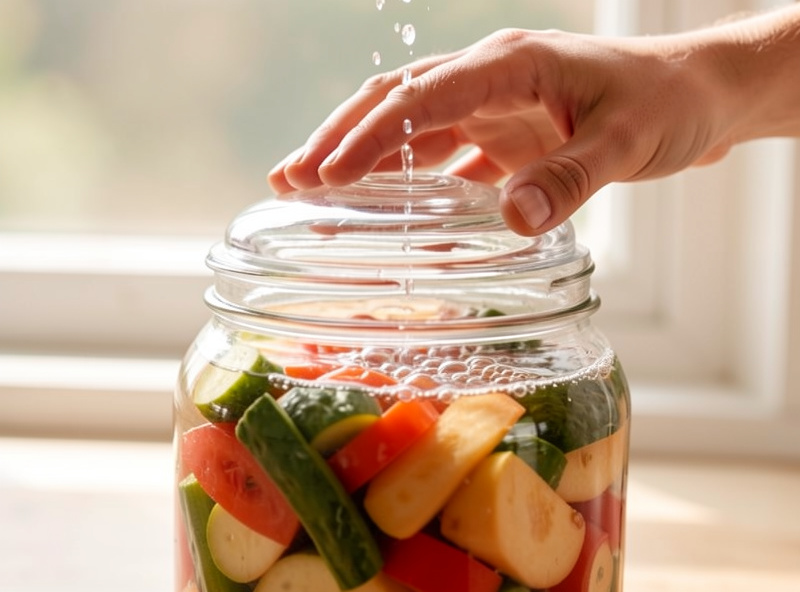
My checklist for a truly stalled jar is short. Warmth first — a consistent room-temperature spot, not a hot radiator, since I’ve already made the mistake of cooking a ferment soft with too much heat. Water second — if I used straight chlorinated tap, that’s a likely stall, and next time I filter or off-gas it. Salt third — I recalculate; if I over-salted, a measured dilution with dechlorinated brine can bring it back into range. Submersion fourth — pressing everything under the brine with a weight (see vegetables floating above the brine if yours keep surfacing) both protects against mold and keeps the anaerobic conditions the lactos need. A splash of live brine from an active batch can jump-start things, but it’s rarely necessary; wild lactic bacteria are already on the vegetables. Give a corrected batch two or three days and watch for the cloud. When it shows, you’re back in business.
Frequently Asked Questions
Is my ferment dead if there are no bubbles?
Almost certainly not. Bubbling is just carbon dioxide escaping fast enough to see, and it depends on temperature and how tightly the vessel is sealed. A cool kitchen or a loose lid can mean zero visible bubbles while the ferment works perfectly. Confirm activity by checking whether the brine is cloudy, the taste is souring, and the pH is dropping.
How long until a ferment starts bubbling?
At warm room temperature, usually one to three days. At cooler temperatures around 16°C, you may see little or no bubbling for a week or more, and the batch can finish without ever bubbling visibly. Most gas is produced during the vigorous phase of days two through five, then it tapers even as souring continues for weeks.
Why did my ferment bubble at first and then stop?
That is normal. Carbon dioxide output is front-loaded — the most gas comes off in the first few days, then drops sharply as the vigorous phase ends. Acidification continues long after the bubbling stops, so the batch keeps souring and improving even though it has gone quiet.
Does an airlock stop me from seeing bubbles?
Often, yes. A silicone waterless valve releases gas in tiny puffs you will basically never see. A three-piece water airlock only bloops when pressure builds faster than it bleeds, which in a cool room can be almost never. A water-sealed crock hides the activity under its moat entirely. No visible bubbles through these setups is expected.
When should I actually worry that my ferment is not working?
Worry only when no bubbles is combined with no other activity after several days in a warm room — clear brine, no souring, and a pH still near 5. That points to a real cause such as chlorinated water, too much salt, or contamination. If the brine is clouding or the taste is souring, it is working regardless of bubbles.
Further Reading
Bubbles are one clue among several. Return to the vegetable fermentation troubleshooting guide for the full symptom map, or dig into the related questions: is your quiet jar actually smelling off or just funky, and could chlorinated tap water have stalled the start? To pick a vessel that matches how you like to work, compare an airlock against a silicone lid.

About Kenny Nyhus Fadil
A home fermenter documenting brines, bubbles, and the occasional moldy tragedy.
Keep Bubbling
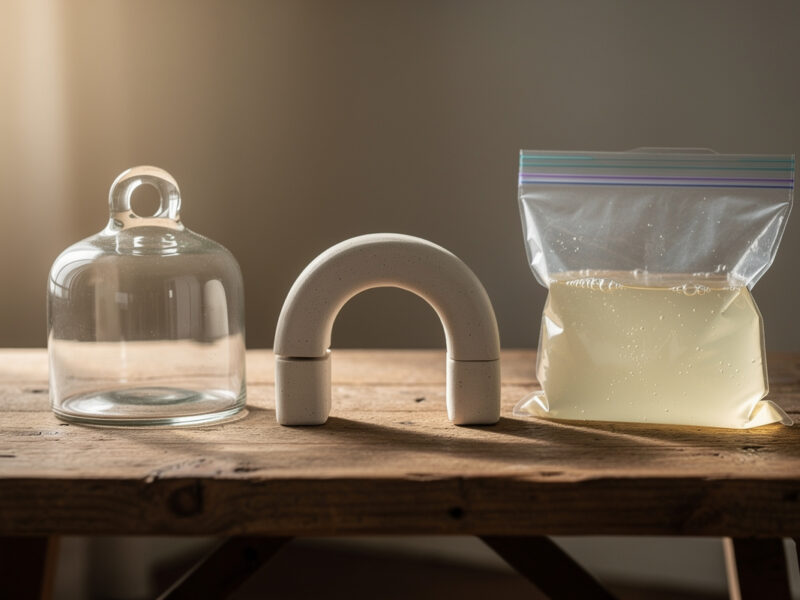
Fermentation Weights: Glass vs Ceramic vs Ziplock Bag Compared
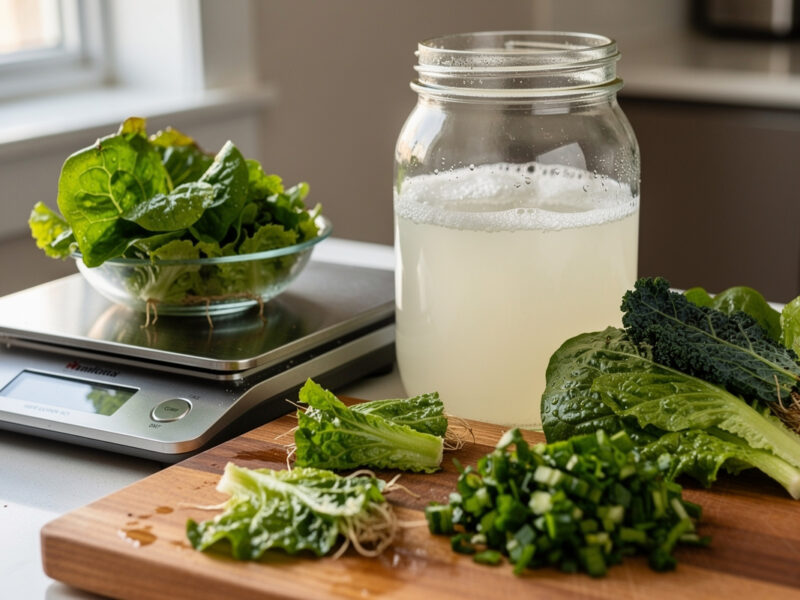
Fermenting Hydroponic Greens: Why Hydroponic Lettuce and Kale Need a Different Salt Ratio