Cleaning Glass and Ceramic Fermentation Weights

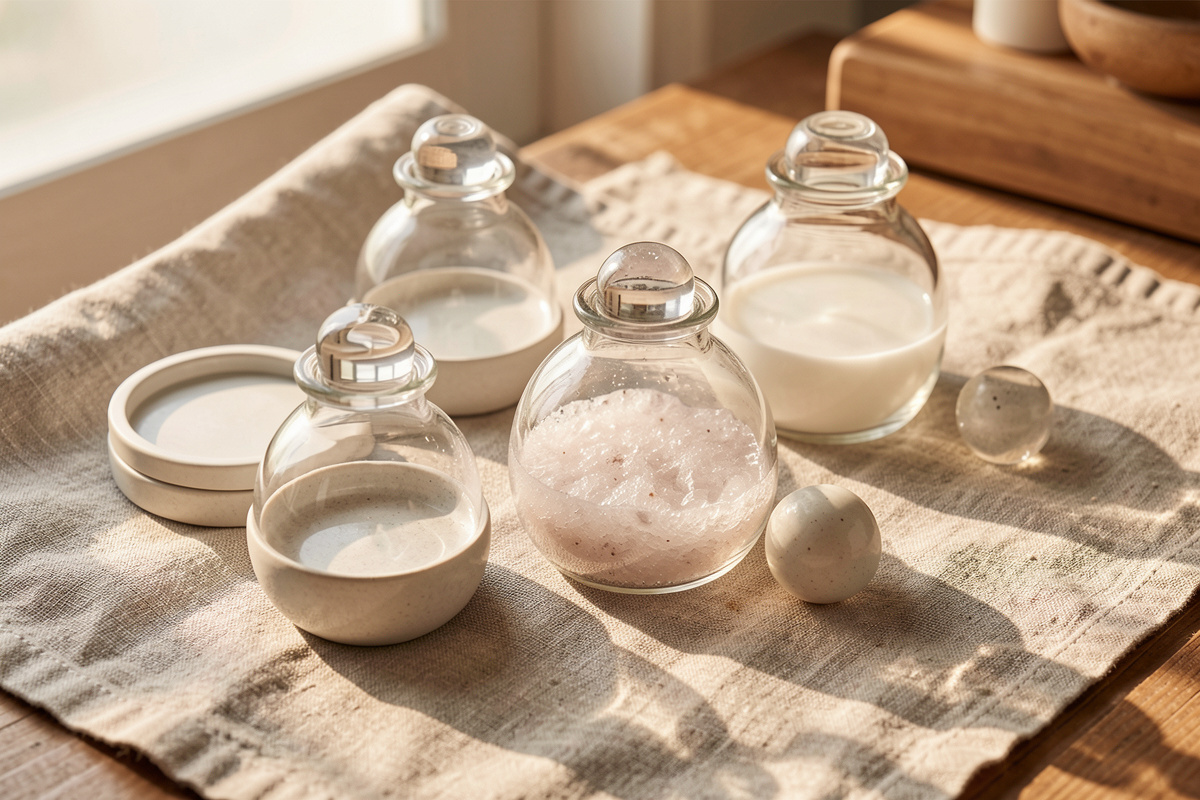
Clean glass fermentation weights like any glassware — hot water, a brush, and a citric-acid soak to clear the cloudy mineral haze they pick up — and treat ceramic follower stones like the crock’s unglazed clay: hot water, a brush, an acid soak for scale, and a complete dry-out, but never a long soap soak the porous stone will hold. Both spend the entire ferment submerged in brine, so they carry exactly what the crock carries.
Weights are the most overlooked piece of the whole fermentation kit, because they come out of a batch looking “clean enough.” They almost never are. A glass weight builds an invisible haze of hard-water minerals and brine salts; a ceramic follower stone absorbs smell and scale into its porous face and will hold moisture against your crock in storage if you put it away damp. I learned the storage part the hard way — I once set a still-damp stoneware follower back into a “clean” crock, closed the cupboard, and found a musty moisture ring around both a few weeks later. The weight had wicked water right into the clay. This guide covers both materials properly, and it fits inside the larger fermentation crock care and cleaning guide.
Why Do Fermentation Weights Need Their Own Cleaning?
Weights need dedicated cleaning because they are submerged in salty, acidic brine for the full length of every ferment — often three to six weeks — which is longer sustained contact than almost any other part of the vessel. They collect brine salts, vegetable residue, hard-water scale, and, on porous ceramic, smell. Skipping them means starting the next batch with a contaminated component.
Think about the physics of a weight’s job. It sits at the very top of the ferment, pressing the vegetables below the brine line to keep them anaerobic — which means it straddles the exact boundary where kahm yeast and surface mold like to form, and where the brine concentrates as it evaporates. That is a lot of exposure to exactly the residues you do not want carried forward. Glass handles it inertly but shows every mineral it picks up as haze. Ceramic and stoneware follower stones are porous on their unglazed faces and behave like a small piece of the crock itself: they absorb odor, take on scale, and must be dried thoroughly or they grow their own problems. A clean crock with a hazy, smelly weight dropped back into it is still a dirty vessel — which is why I clean the weights in the same session as the crock, every time, using the same promptness that keeps the interior clean in how to clean a stoneware fermentation crock without soap residue.
How Do You Clean Glass Fermentation Weights?
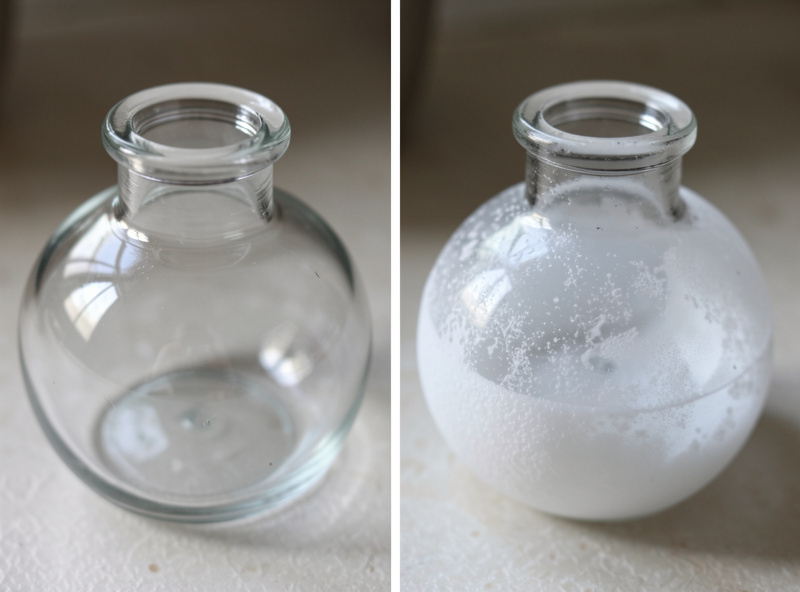
Wash glass weights in hot water with a brush right after a batch, and for the cloudy film they inevitably develop, soak them in a citric-acid or white-vinegar solution for fifteen to twenty minutes, then scrub and rinse. Glass is inert and non-porous, so the only real challenge is mineral haze — and acid dissolves that in minutes.
The satisfying thing about glass weights is that they truly come clean; there is nothing for residue to soak into. Straight out of a ferment, a hot-water scrub handles the brine film and any clinging vegetable matter. The haze is the part people misread — they assume a clouded glass weight is permanently etched or “just old,” when in fact it is a removable layer of calcium, magnesium, and salt deposited from the brine and any hard water. Drop it in a bowl of citric-acid solution, and within twenty minutes the haze dissolves and the glass rings clear again — there is a small, genuine pleasure in the clink of a stack of weights that have gone back to fully transparent. For heavier haze, extend the soak or make the solution stronger; citric acid is food-safe and rinses clean, so there is no downside to a longer contact time. A jar of food-grade citric acid is the single most useful thing you can keep for weights, moats, and any glass that clouds.
How Do You Clean Ceramic and Stoneware Follower Stones?
Clean ceramic and stoneware follower stones with hot water and a brush, use a citric-acid or vinegar soak for scale, and skip soap entirely — the porous unglazed face absorbs detergent and holds it, exactly like the crock’s clay. The non-negotiable extra step is drying them completely before storage, because a damp porous stone breeds smell and wicks moisture into whatever it touches.
A follower stone or ceramic weight is essentially a small piece of your crock, and it wants the same care. The unglazed surface that grips the vegetables is porous fired clay, so it takes on odor from pungent ferments and scale from hard water, and it must never get a soap soak that it will hold and release into the next batch. For a stone that has picked up a garlic or chili funk, use the same deodorizing approach as the rest of the soft-and-porous kit in removing stubborn smells from jars, lids, and crocks — a baking-soda soak, and sunlight if the smell lingers. One caution worth stating: cheap imported ceramic weights of unknown glaze should be treated with the same skepticism as an unknown crock, because acidic brine can pull lead from a bad glaze. The FDA has long warned about lead leaching from traditional and imported glazed ceramics, so if you cannot verify a weight is food-grade and lead-free, do not use it in an acidic ferment.
Glass vs Ceramic Weights: Care at a Glance
The two materials share a routine but differ in their weak points — glass shows haze and can chip, ceramic absorbs smell and must be dried hard. Here is how their care compares side by side, which is genuinely useful when you are deciding which to reach for or how to treat one that has been neglected.
| Care factor | Glass weights | Ceramic / stoneware stones |
| Routine clean | Hot water + brush | Hot water + brush |
| Main problem | Cloudy mineral haze | Absorbed smell + scale |
| Best fix | Citric-acid soak | Acid soak + baking-soda deodorize |
| Soap safe? | Yes (rinses clean) | No — porous face holds it |
| Drying | Air-dry, then store | Dry completely — critical |
| Damage to watch | Chips and cracks from clinking | Hairline cracks, glaze damage |
Neither is strictly better; I run glass weights in my Mason jars for the clarity that lets me see the ferment, and ceramic follower stones in the crocks where their weight and coverage earn their keep. The care difference is the takeaway: glass forgives everything except a hard knock, and ceramic forgives everything except being put away wet.
How Do You Remove Cloudy Mineral Haze from Glass Weights?
Remove haze by soaking the weights in a solution of about a tablespoon of citric acid per cup of warm water for fifteen to twenty minutes, then scrubbing lightly and rinsing. For stubborn haze, undiluted white vinegar works too, just more slowly. The haze is mineral scale, and only an acid dissolves it — scrubbing alone will not.
This is worth its own section because the cloudy-weight question is the most common one I hear, and the answer surprises people: your “ruined” weights are almost certainly fine. Hard water is the culprit — the harder your supply, the faster glass clouds, the same way the crock moat chalks and a kettle scales. If your tap runs hard, expect to descale weights every few batches; on soft water you might go a whole season. The feel is diagnostic: run a fingertip over a hazed weight and it has a faint chalky drag, versus the frictionless squeak of clean glass. After a citric-acid soak that drag is gone. For the same mineral problem in the crock’s moat channel, the descaling method is in crock moat mold and hard-water scale — it is the identical chemistry, just a different part.

How Do You Check a Weight for Hidden Cracks?
Check a weight by looking at it in good light for chips and lines, running a fingernail across any suspect mark, and — for glass — listening to its ring when tapped, since a cracked weight gives a dull thud instead of a clear tone. A chipped glass weight or a cracked ceramic stone should be retired, because damaged edges harbor residue and can fail under the follower.
Weights take more physical abuse than any other part of the kit. They clink against each other and the crock wall, get dropped in the sink, and bear the compressive load of a full ferment. A chip on a glass weight is a sharp edge and a residue trap; a hairline crack in a ceramic stone can widen until the stone breaks apart in the brine. So every cleaning is also an inspection: I hold each weight to the window, turn it, and check the edges, then tap a glass weight lightly and listen — a clean, ringing tone means it is sound, a dull note means a crack I cannot see. This is the same fingernail-and-look logic I apply to the crock glaze itself in cracked or crazed crock: when it is still safe to use, scaled down to a weight. A cracked weight is cheap to replace and expensive to ignore.
How Should You Store Fermentation Weights Between Batches?
Store weights bone-dry and separate from the crock — not stacked wet inside it — in a spot with airflow. Glass weights can nest together once fully dry; ceramic stones especially must be completely dry before storage, because a damp porous stone grows smell and wicks moisture into anything it touches. Wet storage is the one mistake that turns a clean weight into a musty one.
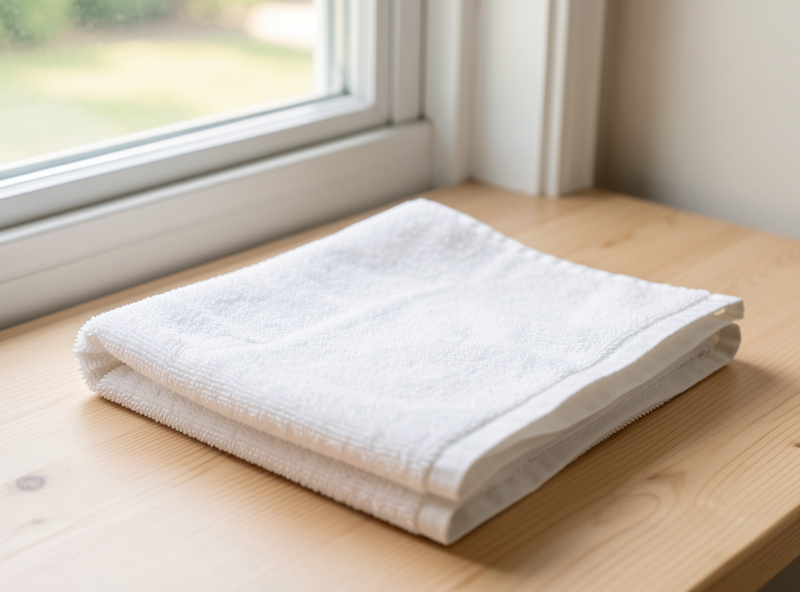
My storage rule for weights mirrors the rule for the crock: dry first, always. After cleaning I air-dry weights on a towel until there is not a trace of moisture, and only then do they go away. I keep them out of the crock during storage rather than sealed inside it, because a weight and a crock stored together trap what little humidity remains and share it — which is exactly how my damp-follower musty ring happened. Glass weights are forgiving once dry; ceramic stones need the extra patience because their porosity holds water you cannot see. The full between-batch routine for the crock and its whole kit is in storing a crock between batches so it stays fresh, and the weights are simply part of it — dried, inspected, and put away where air can reach them.
None of this adds real time. Cleaning weights is a two-minute job folded into cleaning the crock: hot-water scrub, a citric-acid soak when they haze, a look and a tap to check for cracks, and a full dry before they go on the shelf. Do it every batch and your weights stay clear, sound, and neutral — never the hidden reason a ferment tastes off or a stored crock smells musty. For safe-handling context across home fermentation equipment, the National Center for Home Food Preservation is the reference I trust.
As an Amazon Associate I earn from qualifying purchases.
Related Guides
- Fermentation Crock Care & Cleaning: The Complete Guide
- How to Clean a Stoneware Fermentation Crock Without Soap Residue
- Crock Moat Mold and Hard-Water Scale: Keeping the Seal Clean
- Cracked or Crazed Crock: When It Is Still Safe to Use

About Kenny Nyhus Fadil
A home fermenter documenting brines, bubbles, and the occasional moldy tragedy.
Keep Bubbling

Vegetables Floating Above the Brine: Risks and Fixes
How to Dechlorinate Water for Brewing and Fermenting