Jun Kombucha: The Green Tea and Honey Brew Explained

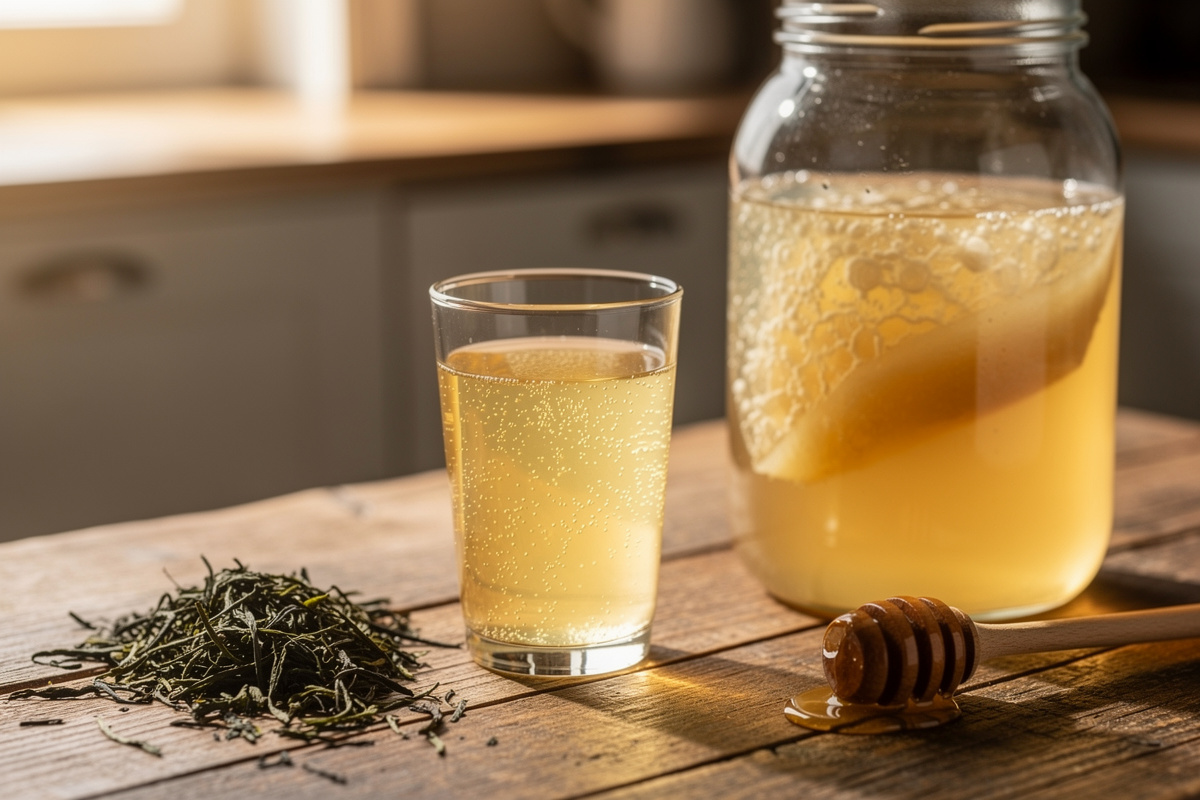
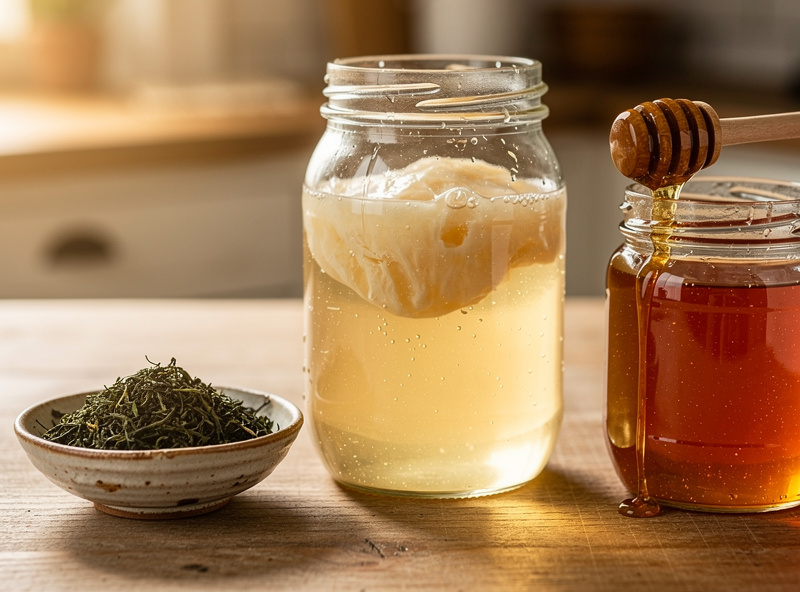
Jun is a kombucha-like fermented tea made with green tea and raw honey instead of black tea and cane sugar, using a dedicated jun culture. It ferments faster and at cooler temperatures than kombucha, producing a lighter, more delicate, champagne-like drink. Treat it as kombucha’s refined cousin — same two-stage process, gentler ingredients.
If you already brew kombucha, jun will feel immediately familiar and slightly addictive. It is the same SCOBY-driven, two-stage ferment, but swapping black tea and sugar for green tea and honey changes the whole character of the drink — lighter, floral, faster, and frankly more elegant in the glass. You will see jun called “the champagne of kombucha,” and for once the marketing line is roughly fair. There is also a romantic origin story attached to it, usually involving ancient Tibetan monks; that lineage is unverifiable folklore and I would not build any claims on it. What I can tell you is exactly how the chemistry and the process differ, and how to brew a clean, lively jun at home.
What Jun Actually Is
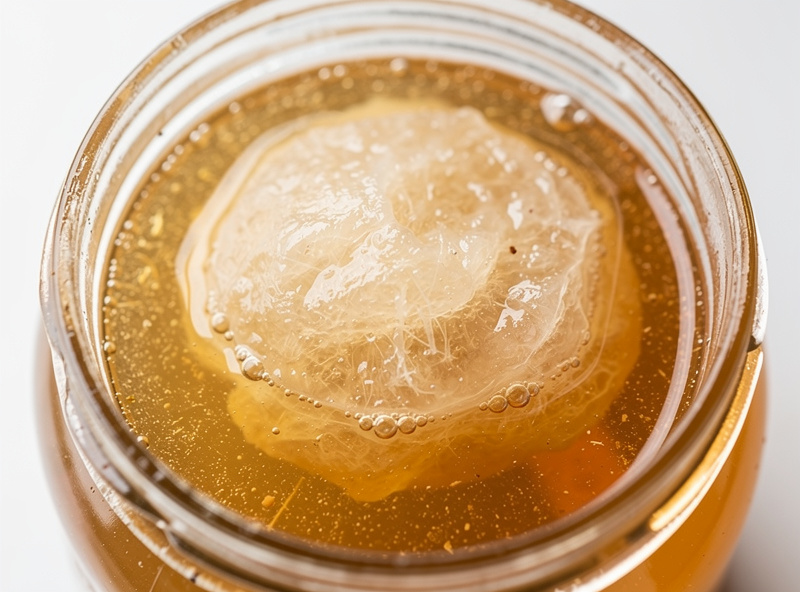
Jun is a fermented tea brewed with green tea and honey, fermented by a jun-specific SCOBY — a symbiotic culture of bacteria and yeast adapted to honey rather than refined sugar. The result is typically lighter and more effervescent than kombucha, finishing around 1–2% ABV with a delicate, honeyed, wine-like profile.
Functionally jun works exactly like kombucha: a SCOBY sits on sweet tea, the yeast ferments the sugars to a little alcohol and CO2, and the bacteria produce acids that drop the pH and preserve the brew. The difference is the inputs and the culture that has adapted to them. A jun culture handles honey comfortably, where a standard kombucha SCOBY is optimised for cane sugar. The honey and green tea also push the flavour somewhere kombucha cannot quite reach — floral, soft, and spritzy rather than malty and sharp. It is still a food-and-flavour ferment, not a health tonic; the appeal is the taste and the fizz, not any wellness claim.
Jun vs Kombucha: The Real Differences
The four differences that matter are tea, sweetener, culture, and temperature. Jun uses green tea and honey with a jun SCOBY and ferments cooler and faster — often three to seven days versus kombucha’s seven to fourteen. Everything downstream, including second fermentation and bottling, is identical to kombucha.
| Factor | Jun | Kombucha |
|---|---|---|
| Tea | Green tea | Usually black tea |
| Sweetener | Raw honey | White cane sugar |
| Culture | Jun SCOBY (honey-adapted) | Kombucha SCOBY |
| Temperature | Cooler (20–23°C) | Room (22–28°C) |
| F1 time | Faster (3–7 days) | 7–14 days |
| Flavor | Light, floral, champagne-like | Malty, cidery, sharp |
| Typical ABV | ~1–2% | ~0.5–1% |
Disclosure: FermentFoundry is reader-supported. As an Amazon Associate I earn from qualifying purchases made through links in this article, at no extra cost to you. I only point to gear I actually use or would buy for my own kitchen.
The Honey Question (and a Persistent Myth)
You will read that honey’s natural antimicrobials kill fermentation cultures. For a jun SCOBY, that is a myth — the culture is adapted to honey and ferments it happily. Use raw, unpasteurised honey for the best flavour; its wild yeasts and enzymes are part of what gives jun its character.
The myth comes from applying kombucha logic to jun. Honey does contain mild antimicrobial compounds and wild yeasts, and if you dumped honey into a culture that had never seen it, you might get an uneven first batch. But a true jun culture has lived on honey for generations of batches and is entirely at home with it. Raw honey is the right choice precisely because it is alive — pasteurised supermarket honey works but gives a flatter result. Dissolve the honey into the green tea once the tea has cooled to warm rather than hot; there is no need to boil honey, and keeping it gentle protects the delicate aromatics. A good raw, unfiltered honey is the single biggest flavour lever in jun, more than the tea even — it is worth buying a local one you actually like the taste of.
How to Brew Jun Step by Step
Brew jun like kombucha with two adjustments: steep green tea gently and dissolve honey into warm, not hot, liquid. Use roughly the same ratios — about 6 grams of green tea and 60 grams of honey per litre — add the jun SCOBY and jun starter liquid, and ferment cool for three to seven days until pleasantly tart.
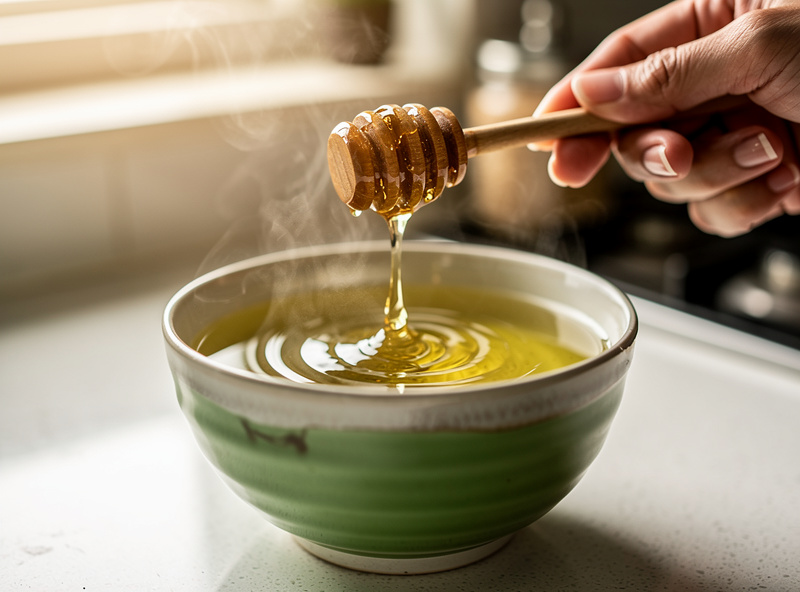
Steep the green tea below boiling — around 75–80°C — for two to three minutes so it does not turn bitter; scorched green tea makes a harsh jun. Let it cool to warm, stir in the honey until fully dissolved, then top to volume with cool water and confirm the whole thing is at room temperature before the culture goes in. Add your jun SCOBY and a generous slug of mature jun starter, cover with breathable cloth, and keep it somewhere a touch cooler than you would kombucha — jun genuinely prefers the low 20s Celsius and ferments fast there. Start tasting at day three. Because it moves quickly, jun is easy to over-ferment into vinegar if you forget it, so it rewards attention more than a slow black-tea kombucha does. When it hits that light, barely-sweet, tart balance, it is ready to bottle for second fermentation. A quality loose-leaf green tea makes a noticeably cleaner jun than dusty bags.
Getting a Jun Culture (and the Conversion Question)
The reliable way to brew jun is to start with a genuine jun SCOBY and jun starter liquid, not a kombucha culture. You can slowly adapt a kombucha SCOBY to honey and green tea over several batches, but results are inconsistent and the early batches are weak. A true jun culture brews well from the first batch.
People understandably ask whether they can just feed their kombucha SCOBY honey and call it jun. You can try, and over four or five gradual batches a kombucha culture will partially adapt — but you are asking a sugar-optimised culture to retool itself, and the transition batches are thin and unpredictable. If you want jun that tastes like jun, source a dedicated jun SCOBY culture with its own starter liquid. Once you have it, maintain it exactly as you would a kombucha culture, including keeping spares in a SCOBY hotel — though keep your jun hotel separate from your kombucha hotel, fed on honey and green tea, so the cultures do not blur. From there the second fermentation, flavouring, and carbonation are all identical to kombucha.
Frequently Asked Questions
What is jun kombucha?
Jun is a kombucha-like fermented tea brewed with green tea and raw honey instead of black tea and sugar, using a honey-adapted jun SCOBY. It ferments faster and cooler than kombucha and tastes lighter, floral, and champagne-like at around 1 to 2% ABV.
Can I make jun with a kombucha SCOBY?
You can slowly adapt a kombucha SCOBY to green tea and honey over several batches, but the early batches are thin and inconsistent. For jun that tastes right from the first batch, start with a genuine jun culture and its own starter liquid.
Does honey kill the jun culture?
No. That myth comes from kombucha. A jun SCOBY is adapted to honey and ferments it happily. Raw, unpasteurised honey is actually preferred because its wild yeasts and enzymes give jun its delicate character.
What temperature does jun ferment at?
Jun prefers cooler temperatures than kombucha, around 20 to 23 degrees Celsius, and ferments fast there — often three to seven days. Because it moves quickly, taste from day three to avoid over-fermenting it into vinegar.
Is jun stronger in alcohol than kombucha?
Slightly. Jun typically finishes around 1 to 2% ABV versus kombucha’s 0.5 to 1%, partly because honey ferments readily and jun is often bottled lively. It is still a low-alcohol drink, not a hard ferment.
How do you brew jun step by step?
Steep green tea gently below boiling, cool to warm, dissolve about 60 grams of honey per litre, top with cool water, and add a jun SCOBY and starter. Ferment cool for three to seven days, then bottle for second fermentation like kombucha.
Related Articles
- Kombucha Brewing: The Complete Home Guide from SCOBY to Bottle
- Best Tea for Kombucha: Black, Green, Oolong, and White
- SCOBY Hotel: How to Store, Feed, and Revive Kombucha Cultures
- How to Flavor Kombucha During Second Fermentation: 25 Ideas
- Why Is My Kombucha Not Fizzy? 6 Fixes for Flat Second Fermentation

About Kenny Nyhus Fadil
A home fermenter documenting brines, bubbles, and the occasional moldy tragedy.