Dutch Oven vs Cloche vs Open Bake for Sourdough

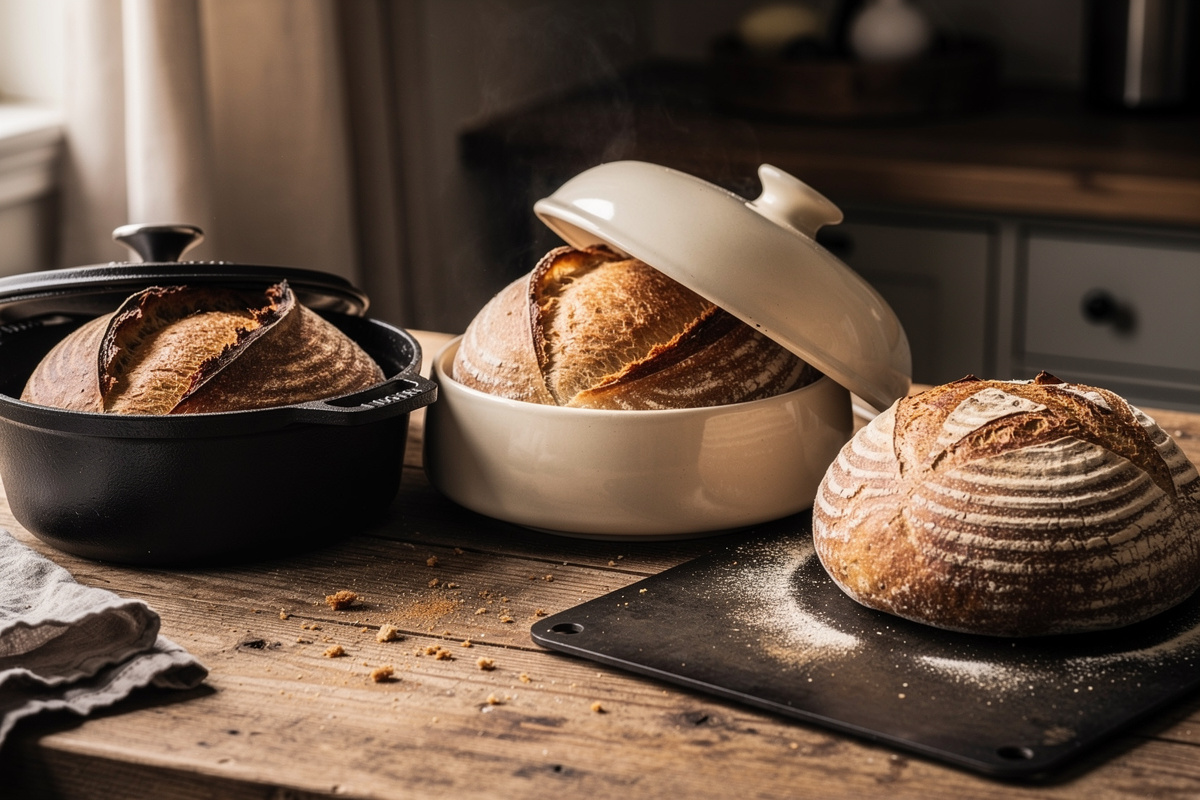
The single biggest jump in home sourdough crust comes from baking in a covered vessel that traps steam: a Dutch oven, a ceramic cloche, or a steam-injected open bake on a stone or steel. All three solve the same problem — keeping the dough surface moist long enough for full oven spring — and a Dutch oven is the cheapest, most reliable way to get there.
I bake my weekly boules in a preheated cast-iron combo cooker and have run cloches and open steam bakes alongside it enough to know exactly what each gives up. This guide compares the three methods on crust, oven spring, capacity, and cost, with the exact temperatures I use, building on the bake section of the complete sourdough guide. If you only buy one baking vessel, this is how to choose it.
Disclosure: FermentFoundry is reader-supported. As an Amazon Associate I earn from qualifying purchases made through links in this article, at no extra cost to you. I only point to gear I actually use or would buy for my own kitchen.
Why Steam Decides Your Crust
Steam in the first phase of the bake keeps the dough’s surface soft and elastic, letting the loaf expand fully (oven spring) before the crust sets, and it gelatinises the surface starches into the glossy, crackly, deeply-browned crust that defines artisan bread. Without steam the crust hardens in the first few minutes, locking the loaf small and pale.
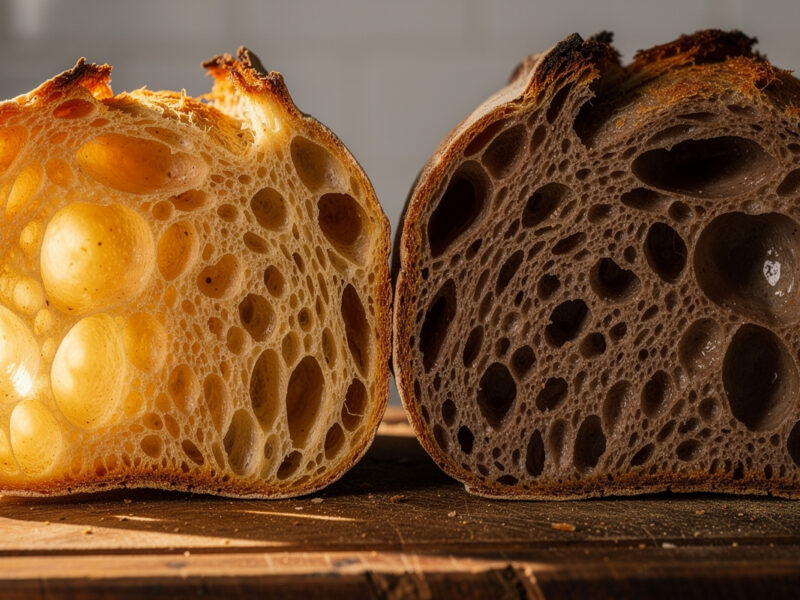
A covered vessel works because the dough releases its own moisture, which is trapped against the surface as steam for the lid-on phase — no water tray, no injection, no fuss. This is why a humble Dutch oven matches a professional steam-injected deck oven for the home baker: the loaf steams itself inside the lid. The technique pairs directly with the oven spring that realises open crumb — without steam, even a perfectly fermented dough cannot bloom.
The standard sequence is two phases: lid on for the steam-and-spring phase, then lid off to brown and crisp. My numbers, consistent across every method, are a hot preheat to 245-260 C, about 20 minutes covered, then 20-25 minutes uncovered at around 225 C until the crust is deep mahogany. The vessel changes; the two-phase logic does not.
The Dutch Oven: Cheapest and Most Reliable
An enamelled or bare cast-iron Dutch oven is the default home sourdough vessel because it preheats to a fierce heat, traps steam perfectly under its heavy lid, and conducts bottom heat that drives strong oven spring. It is the most forgiving and lowest-cost route to bakery-quality crust, which is why I recommend it to every beginner.
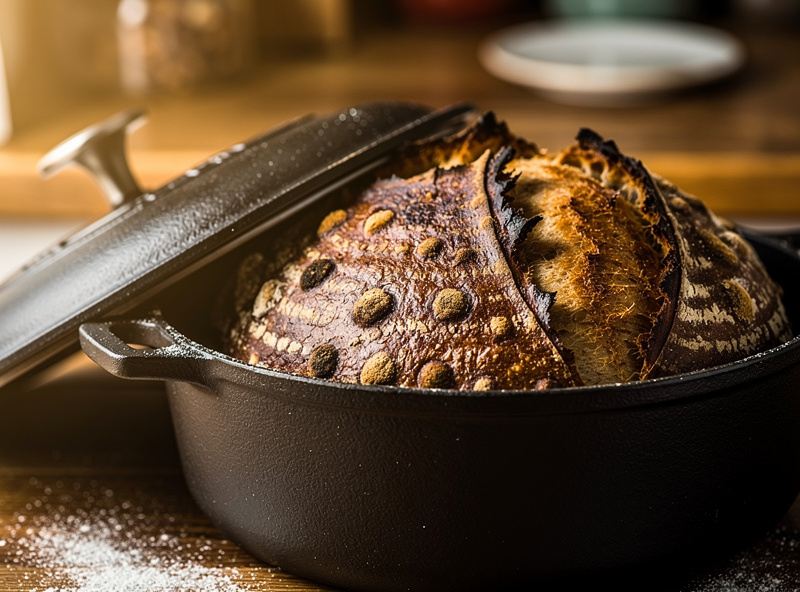
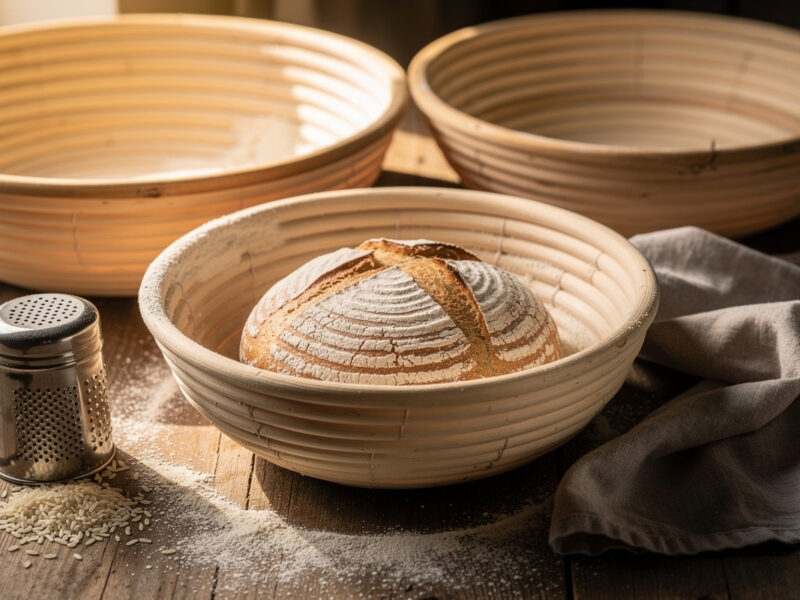
The one awkwardness is loading: lowering cold wet dough into a screaming-hot pot. The fix is a combo cooker — a cast-iron pan with a deep lid that inverts so you bake on the shallow part and cover with the deep part, making loading flat and safe. I use a cast-iron combo cooker for exactly this reason; it has been my standard for years. A round Dutch oven suits boules, an oval one batards, sized to match your banneton.
Preheat the empty pot for 30-45 minutes at 250 C so it is thoroughly saturated with heat, flip your cold-retarded loaf out onto parchment, score it, lower it in, and cover. The cold dough plus hot pot is a deliberate contrast that maximises spring. After the lid-off phase, the crust should be deep brown and sing (crackle) as it cools — the sign of a well-steamed bake.
The Cloche: Elegant and Even
A bread cloche is a ceramic or stoneware baking dome — a shallow base and a tall bell-shaped lid — that works on the same trapped-steam principle as a Dutch oven but with gentler, more even ceramic heat. It produces a beautifully even crust and is easier to load than a deep pot, at the cost of more fragility and a higher price.
Ceramic holds and radiates heat more softly than cast iron, so a cloche gives a slightly more even, less aggressively dark base — some bakers prefer it for that reason. The tall dome also gives high-rising loaves more headroom than a shallow Dutch oven. A bread baking cloche is the choice if you want the covered-bake results with easier loading and an attractive piece you can bring to the table.
The trade-offs are real: ceramic can crack from thermal shock if you mishandle the preheat-to-load transition, it is heavier and more fragile than enamelled iron, and it costs more for the same capacity. It also drives slightly less bottom-heat oven spring than cast iron. For most bakers the Dutch oven wins on value; the cloche wins on elegance and even baking.
Open Baking: Stone, Steel, and Injected Steam
Open baking means baking the loaf uncovered on a preheated baking stone or steel with steam introduced into the oven separately — the professional approach, and the only one that scales beyond one loaf at a time. It can produce excellent results but is the least forgiving method in a home oven because home ovens leak steam badly.
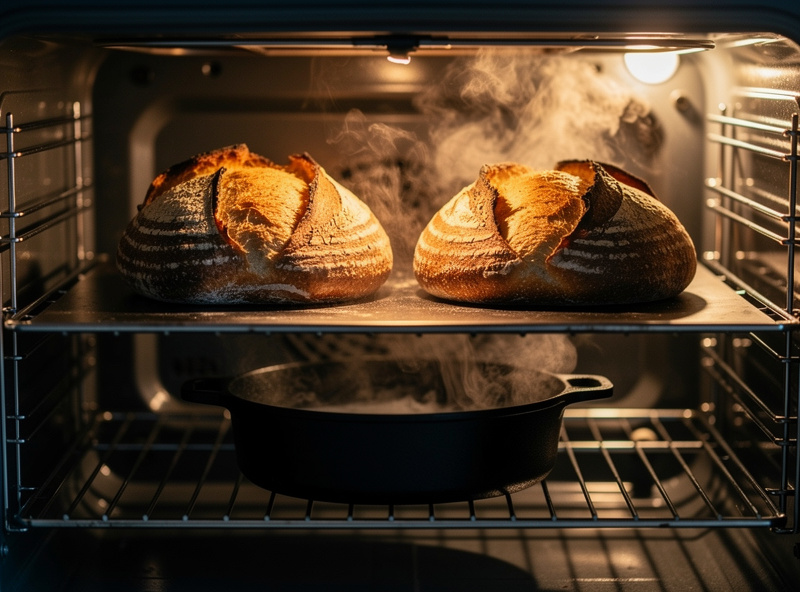
A thick baking steel stores and transfers enormous bottom heat, giving spring that rivals a Dutch oven, and lets you bake two or three loaves at once. The challenge is steam: you create it by preheating a cast-iron pan or lava rocks on a lower rack and pouring boiling water in at load time, or by misting, but a domestic oven vents that steam quickly. The window where the surface stays moist is shorter, so spring and crust gloss are harder to match.
Open baking is the right method once you are baking volume — multiple loaves for a market stall or a crowd — or once your technique is dialled in enough to manage the steam carefully. For a single weekly loaf, the covered vessel is simply easier and more consistent. I keep a steel for batch days and the combo cooker for everything else.
Dutch Oven vs Cloche vs Open Bake
Each method trades off cost, capacity, ease, and crust character. The table is how I weigh them for a given baker and a given loaf.
| Method | Steam Trapping | Oven Spring | Capacity | Ease | Best For |
|---|---|---|---|---|---|
| Dutch oven (combo cooker) | Excellent (self-steams) | Strong (cast-iron base heat) | One loaf | Easy with combo cooker | Beginners, single weekly loaf, best value |
| Enamelled Dutch oven | Excellent | Strong | One loaf | Loading is awkward (deep pot) | Multi-use pot that also bakes bread |
| Ceramic cloche | Excellent | Good (gentler ceramic heat) | One loaf, tall dome | Easy loading, fragile | Even crust, elegance, high-rising loaves |
| Baking steel + steam | Poor (oven vents steam) | Strong (steel base heat) | 2-3 loaves | Hardest (manage steam) | Batch baking, advanced bakers |
| Baking stone + steam | Poor | Moderate | 2-3 loaves | Hard | Budget open baking, pizza crossover |
The clear recommendation for almost everyone: start with a cast-iron combo cooker. It gives the best crust for the least money and the least fuss, loads safely, and lasts a lifetime. Move to a steel only when you genuinely need to bake several loaves at once, and choose a cloche if even baking and presentation matter more to you than absolute value.
Getting the Most From Any Vessel
Whatever vessel you choose, three habits separate a good bake from a great one: a long, thorough preheat, a cold-retarded loaf loaded straight from the fridge, and a confident deep score that lets the loaf bloom open. These matter more than which vessel you own.
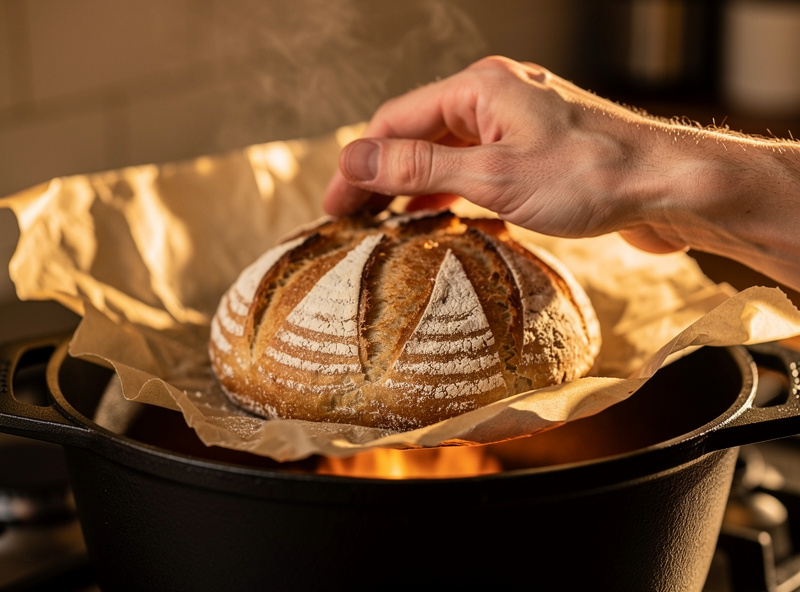
Preheat for 30-45 minutes so the iron or ceramic is fully heat-soaked, not just surface-hot — a half-heated vessel gives weak spring. Bake cold dough, because a chilled, firm loaf holds its shape and springs harder than a room-temperature one, which is the whole point of the overnight cold retard. And score decisively with a sharp blade; the score is what controls where the trapped gas escapes, and a timid cut gives a misshapen loaf. The scoring details are worth their own deep dive in the cluster’s scoring guide.
Finally, judge doneness by crust colour and sound, not just time: deep mahogany all over and a hollow tap on the base mean done, while pale means more lid-off time. The full supporting kit — vessels, baskets, lames, scales — is in my fermentation equipment guide, and the bake is the last step where all the earlier work in avoiding a dense loaf finally pays off. Steam it well and the crust rewards everything that came before.
Frequently Asked Questions
Do I need a Dutch oven to bake sourdough?
Not strictly, but a covered vessel that traps steam is the easiest route to a great crust, and a Dutch oven is the cheapest, most reliable one. Alternatives are a ceramic cloche or open baking on a stone or steel with separately injected steam. For a single home loaf, a cast-iron combo cooker gives bakery-quality results with the least fuss.
What is the difference between a Dutch oven and a cloche?
Both trap the dough’s own steam under a lid for oven spring and crust. A Dutch oven is cast iron, cheaper, and drives stronger bottom heat; a cloche is ceramic, gives gentler and more even heat with easier loading and a taller dome, but is more fragile and costs more. The Dutch oven wins on value, the cloche on elegance and even baking.
Can you bake sourdough without a covered vessel?
Yes, by open baking on a preheated stone or steel with steam created separately, such as a pan of boiling water on a lower rack. It lets you bake several loaves at once but is the least forgiving method, because home ovens vent steam quickly and the surface dries before full oven spring. Covered vessels are easier and more consistent for single loaves.
What temperature do you bake sourdough in a Dutch oven?
Preheat the empty pot for 30-45 minutes at around 250 C, then bake covered at 245-260 C for about 20 minutes for the steam and oven-spring phase. Remove the lid and bake a further 20-25 minutes at about 225 C until the crust is deep mahogany. Judge by colour and a hollow tap rather than time alone.
Why do you bake sourdough cold from the fridge?
A cold-retarded loaf is firm and holds its shape, so it springs harder and scores more cleanly than a room-temperature dough. The chilled surface also takes a sharper, more decisive score. Loading cold dough straight from the fridge into a screaming-hot vessel is a deliberate contrast that maximises oven spring.
Is a baking steel better than a Dutch oven for sourdough?
For a single loaf, no. A Dutch oven traps steam automatically and is more consistent, while a steel relies on you managing steam in a leaky home oven. A steel wins only when you need to bake two or three loaves at once, since it stores strong bottom heat and bakes multiple loaves a covered vessel cannot fit.
Related Articles on FermentFoundry
- Home Sourdough Bread: The Complete Starter-to-Loaf Guide
- Open Crumb Sourdough: The Technique That Works
- Sourdough Banneton Guide: Proofing Basket Basics
- Why Is My Sourdough Bread Dense? 10 Causes and Fixes
- Fermentation Equipment: The Complete Home Brewer Toolkit

About Kenny Nyhus Fadil
A home fermenter documenting brines, bubbles, and the occasional moldy tragedy.