Sourdough Banneton Guide: Proofing Basket Basics

A banneton is the flour-dusted proofing basket that holds a shaped sourdough loaf during its final rise and cold retard, supporting wet dough so it rises up instead of spreading flat and leaving the spiral or linen pattern on the crust. A cane or rattan basket sized to your dough is the single most useful shaping tool after a scale, and it transforms how a high-hydration loaf holds its shape.
I proof every 70-plus-percent loaf in a banneton and cold-retard it overnight, and the difference between a basket-proofed boule and one slumped in a bowl is dramatic — taller, rounder, easier to score. This guide covers which material to buy, how to season a new basket, the rice-flour trick that stops sticking for good, and how to size one to your loaf. It pairs with the shaping and cold-retard steps in the complete sourdough guide.
Disclosure: FermentFoundry is reader-supported. As an Amazon Associate I earn from qualifying purchases made through links in this article, at no extra cost to you. I only point to gear I actually use or would buy for my own kitchen.
What a Banneton Does and Why It Matters
A banneton (also called a brotform or proofing basket) supports the shaped dough during its final proof so that a slack, high-hydration loaf rises vertically and holds a domed shape rather than spreading into a flat puddle. The basket also wicks a little moisture from the dough surface, helping form the skin that takes a clean score, and imprints its spiral or ribbed pattern on the crust.
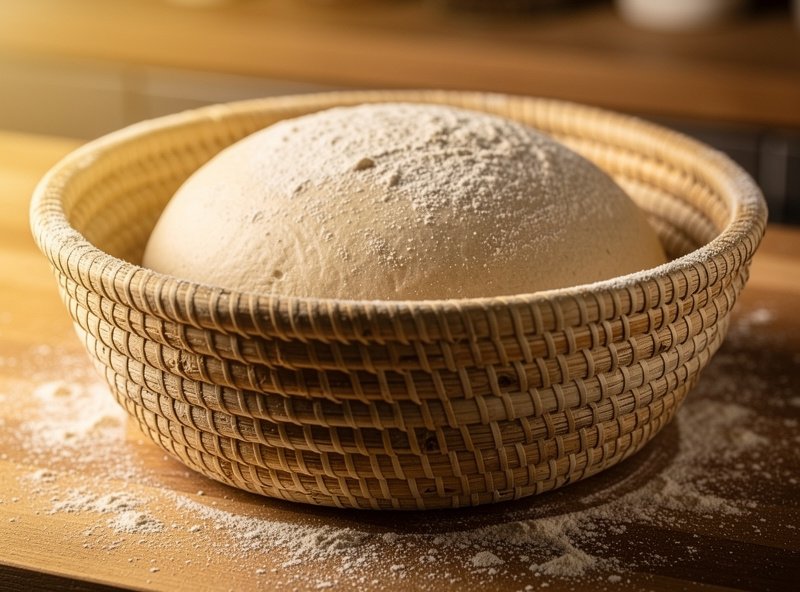
The wetter your dough, the more a banneton earns its place. At 65 percent hydration you can almost get away with a floured bowl; at 75 percent and above, dough without basket support spreads sideways and bakes flat. This is exactly why I treat the banneton as essential equipment for anyone working at the open-crumb hydrations covered in my hydration percentage guide — the basket is what makes those wet doughs manageable.
The cold retard is where the banneton does its quiet best work. Overnight in the fridge at 3-5 C, the dough firms in the basket’s shape while flavour acids develop, so it comes out the next morning taut, cold, and ready to flip, score, and bake. A floured basket and a fridge are the two cheapest upgrades that most improve a home loaf.
Banneton Materials: Cane, Wood Pulp, and Wood
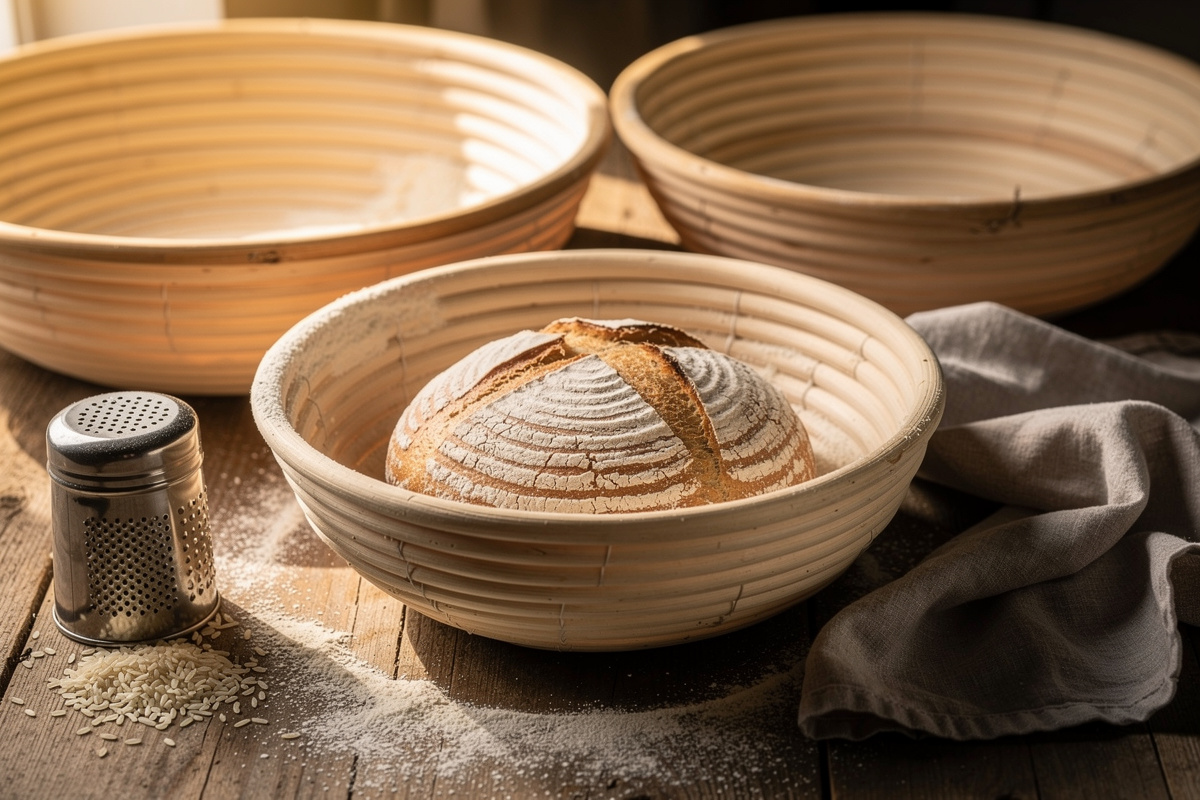
The three common banneton materials are natural cane or rattan, pressed wood pulp (sometimes called paper-pulp), and solid wooden spiral baskets, and they differ in the crust pattern they leave, how easily they release dough, and how they handle moisture. Cane rattan is the traditional and most popular choice for its classic spiral imprint and good moisture wicking.
Cane and rattan baskets give the iconic ringed crust and breathe well, but their open weave needs proper flouring or dough sticks in the grooves. Wood-pulp bannetons have a smoother surface that releases dough more reliably and is easier for beginners, at the cost of a less dramatic pattern. Solid wooden spiral forms are durable and elegant but heavier and pricier. For a first basket, a banneton proofing basket set in cane with a cloth liner included covers both the patterned and the foolproof options.
Most bannetons come with a removable linen or cotton liner. With the liner in, the loaf gets a smooth, lightly floured crust and almost never sticks — the safe choice for sticky doughs. With the liner out, the bare cane imprints the spiral pattern bakers prize. I keep both options open: liner in for high-hydration or enriched doughs, liner out for a standard 72 percent boule where I want the rings.
Seasoning and Flouring a New Banneton
A brand-new cane banneton must be seasoned before first use so dough does not stick: mist it lightly with water, rub flour into every groove of the weave, and let it dry completely, repeating once or twice over the first few bakes until a flour crust builds up in the cane. This seasoning layer is what makes long-term release reliable.
For everyday flouring, the single best trick is rice flour. Rice flour does not absorb moisture and turn gummy the way wheat flour does, so a banneton dusted with rice flour (or a 50/50 rice-and-wheat blend) releases even very wet dough cleanly. I keep a shaker of brown rice flour just for bannetons — it is the difference between a loaf that drops out in one piece and one that tears as it sticks. Dust generously into the grooves before every proof.
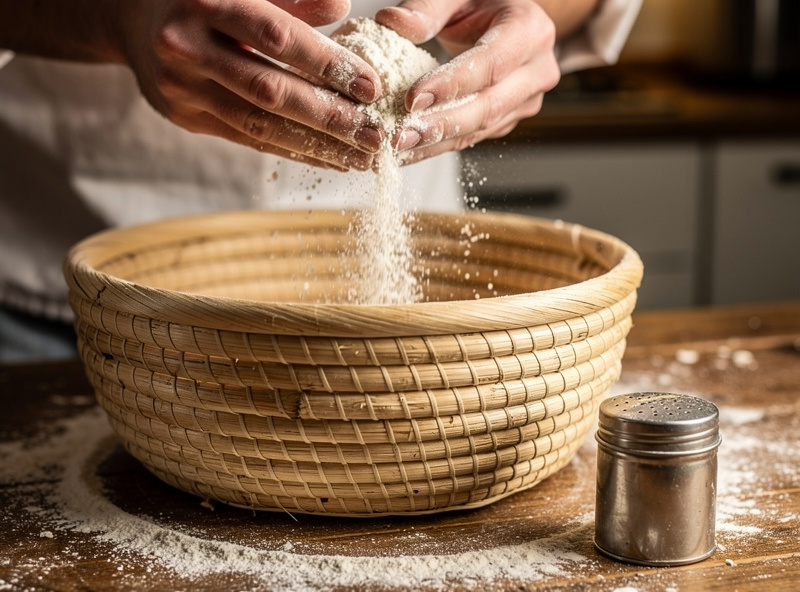
If dough still sticks despite seasoning and rice flour, the usual culprits are too little flour, an under-developed dough skin from weak shaping, or proofing too long so the dough over-relaxes and glues itself into the weave. Flour more, shape tighter, and watch your proof time — sticking is almost always one of those three, not a fault in the basket.
Sizing a Banneton to Your Dough
A banneton should be sized so the shaped dough fills it about two-thirds to three-quarters full, giving room for the final proof without the loaf overflowing or rattling around undersupported. The standard 9-inch round and 10-inch oval baskets each suit roughly 750-900 grams of dough — the size of a typical home boule or batard.
My two 800-gram boules go into 9-inch (23 cm) round bannetons, which is the most useful first size for home bakers. If you bake larger loaves or batards, add a 10-inch oval. Match the basket shape to your final shape: round bannetons for boules, long oval ones for batards. Buying a basket far too large leaves the dough unsupported and defeats the purpose, so size to the loaf you actually bake.
| Banneton Type | Crust Pattern | Dough Release | Best For | Notes |
|---|---|---|---|---|
| Cane / rattan (round) | Classic spiral rings | Good once seasoned | Standard boules, patterned crust | Needs proper flouring; breathes well |
| Cane / rattan (oval) | Ribbed lines | Good once seasoned | Batards and longer loaves | Pair with oval Dutch oven or open bake |
| Wood pulp | Smooth or faint ring | Excellent, forgiving | Beginners, very wet dough | Easiest release, less dramatic look |
| Wooden spiral form | Deep defined spiral | Good | Durability, gifting | Heavier and pricier |
| With linen liner | Smooth floured crust | Best, near non-stick | Enriched or sticky doughs | Liner washable; no pattern |
| DIY bowl + tea towel | None / cloth texture | Variable | Trying before buying | Heavily flour a linen-lined bowl |
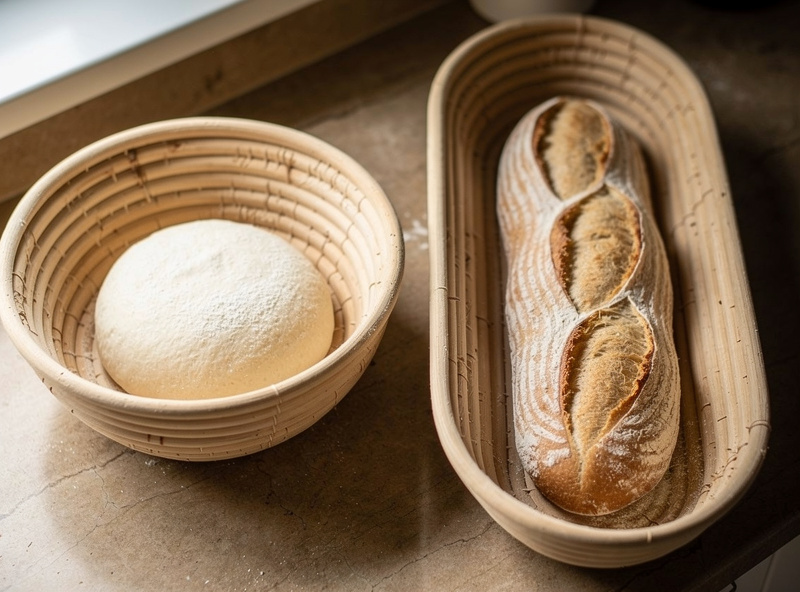
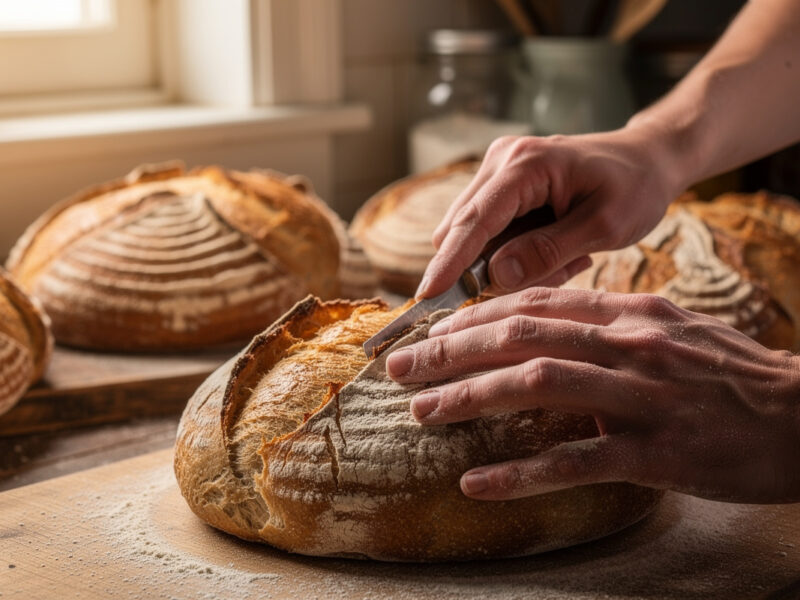
Getting the shaped dough into the basket cleanly is its own small skill — I use a stainless bench scraper to lift the tight-shaped loaf and lower it seam-side-up into the floured basket in one motion, which keeps the surface skin intact for a clean score later.
The no-cost way to try proofing in a basket before buying is a mixing bowl lined with a heavily floured linen or smooth cotton tea towel — it supports the dough and is how many bakers start. It works, but a purpose-made banneton releases more cleanly and imprints a far nicer crust, which is why almost everyone upgrades once they bake regularly.
Cleaning and Long-Term Care
Never wash a banneton with soap and water for routine cleaning — it is a dry tool. After each use, let any stuck dough dry completely, then knock it out and brush the basket clean with a dry brush; the seasoning layer you worked to build should stay intact. Soap and soaking ruin the flour seasoning and can warp or mold the cane.
For deeper cleaning when flour builds up too thickly or the basket smells musty, brush out the excess, then air it in a sunny spot or a barely-warm oven (around 50 C, turned off after warming) to dry thoroughly and discourage mold. Store bannetons in a dry, airy place, never sealed in plastic while damp — trapped moisture in cane is the only thing that genuinely kills a basket.
Treated this way a good cane banneton lasts for years and only gets better as the seasoning matures, much like the other long-lived tools in my kitchen. The full set of equipment that supports the whole sourdough and fermentation process — baskets, scales, scrapers, lames — is laid out in my fermentation equipment guide, and the banneton sits right alongside the starter you feed as core kit. Buy one good basket, season it well, keep it dry, and it becomes a permanent fixture.
Frequently Asked Questions
What is a banneton used for in sourdough?
A banneton is a flour-dusted proofing basket that holds a shaped loaf during its final rise and cold retard. It supports slack, high-hydration dough so it rises upward instead of spreading flat, wicks a little surface moisture to help form a skin that scores cleanly, and imprints its spiral or ribbed pattern on the crust.
How do I stop dough sticking to my banneton?
Season a new cane basket by misting and rubbing flour into the grooves until a crust builds up, then dust generously with rice flour before every proof. Rice flour does not turn gummy like wheat flour, so it releases even wet dough cleanly. If dough still sticks, you are using too little flour, shaping too loosely, or over-proofing.
What size banneton do I need?
Size the basket so shaped dough fills it two-thirds to three-quarters full. A 9-inch round or 10-inch oval banneton suits roughly 750-900 grams of dough, which covers a typical home boule or batard. Use round baskets for boules and oval ones for batards. A basket far too large leaves dough unsupported and defeats the purpose.
Do I need to season a new banneton?
Yes, a new cane or rattan banneton must be seasoned before first use. Lightly mist it with water, rub flour into every groove of the weave, and let it dry completely, repeating once or twice over the first few bakes. This builds a flour crust in the cane that makes long-term dough release reliable. Wood-pulp baskets need less seasoning.
Can I use a bowl instead of a banneton?
Yes, a mixing bowl lined with a heavily floured linen or smooth cotton tea towel works as a starter substitute and supports the dough during proofing. It is how many bakers begin. A purpose-made banneton releases more cleanly and imprints a much nicer crust pattern, so most people upgrade once they bake regularly, but a lined bowl proves the concept for free.
How do you clean a banneton?
Do not wash it with soap and water for routine cleaning. Let stuck dough dry completely, knock it out, and brush the basket clean with a dry brush, leaving the seasoning layer intact. For deeper cleaning, brush out excess flour and air it in a sunny spot or barely-warm oven to dry. Never store it damp in plastic, which causes mold.
Related Articles on FermentFoundry
- Home Sourdough Bread: The Complete Starter-to-Loaf Guide
- Sourdough Hydration: 65 vs 75 vs 85 Percent Guide
- Why Is My Sourdough Bread Dense? 10 Causes and Fixes
- Sourdough Starter Feeding Schedule: Counter and Fridge
- Fermentation Equipment: The Complete Home Brewer Toolkit

About Kenny Nyhus Fadil
A home fermenter documenting brines, bubbles, and the occasional moldy tragedy.