Sourdough Scoring Patterns: A Practical Guide

Scoring is the decisive cut you make in a sourdough loaf just before baking, and it does two jobs: functionally it controls where the loaf expands during oven spring so it blooms cleanly instead of bursting, and decoratively it turns the crust into a canvas. One confident slash at a shallow angle is all a loaf truly needs; everything beyond that is artistry.
I score every loaf with a single decisive cut for the ear, and reach for decorative patterns when I have the time and a clean cold loaf to work on. This guide covers the lame and grip, the angle that makes an ear, the depth that works, and the common patterns from a beginner’s single slash to a wheat stalk — building on the shaping and bake steps in the complete sourdough guide.
Disclosure: FermentFoundry is reader-supported. As an Amazon Associate I earn from qualifying purchases made through links in this article, at no extra cost to you. I only point to gear I actually use or would buy for my own kitchen.
Why Scoring Matters
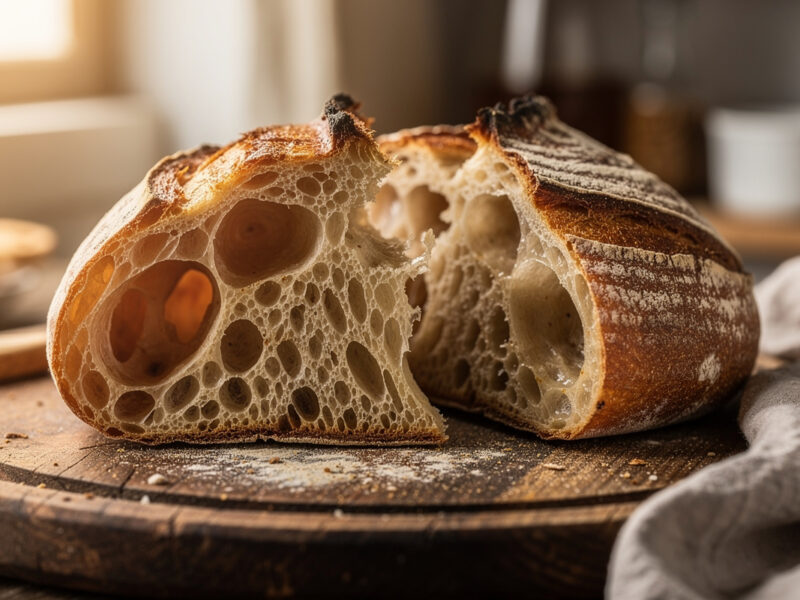
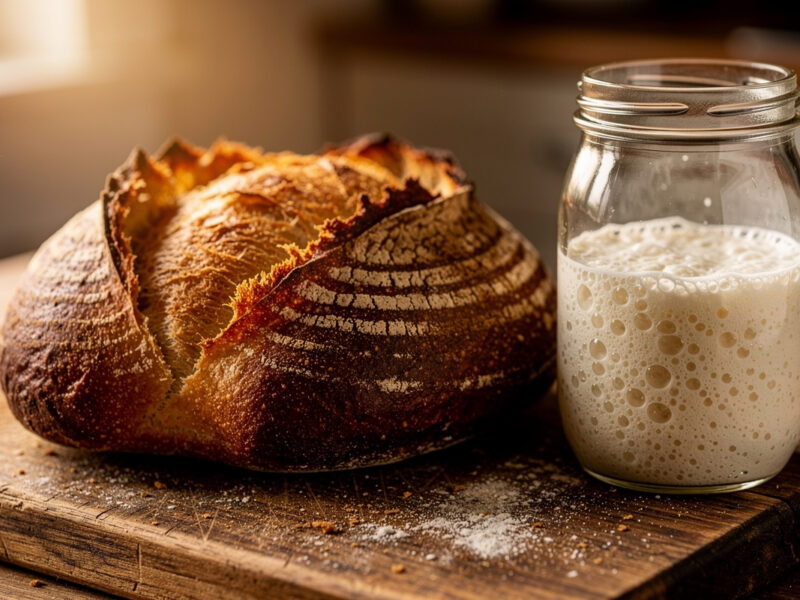
Scoring gives the expanding gases a deliberate escape route during the first minutes of baking, so the loaf opens along your cut rather than tearing randomly at a weak point in the crust. A well-placed score also creates the raised, crisp flap called the ear — the hallmark of a confidently baked loaf — and lets you control the loaf’s final shape.
An unscored loaf does not fail to rise, but it bursts unpredictably, often at the side or base, giving a misshapen result with a torn, ragged opening. The score is what channels that energy into a clean, intentional bloom. This is the final move in a chain of decisions — fermentation, shaping, the cold retard, and the steamy covered bake — and it only pays off if those earlier steps gave you a loaf with real oven spring to direct.
The single most important rule: score a cold loaf. A dough straight from its overnight fridge retard is firm and taut, so the blade glides and the cut holds its shape; a warm, slack loaf drags on the blade and the score closes up before it bakes. The cold retard in a floured banneton is what makes clean scoring possible.
The Lame, the Blade, and the Grip
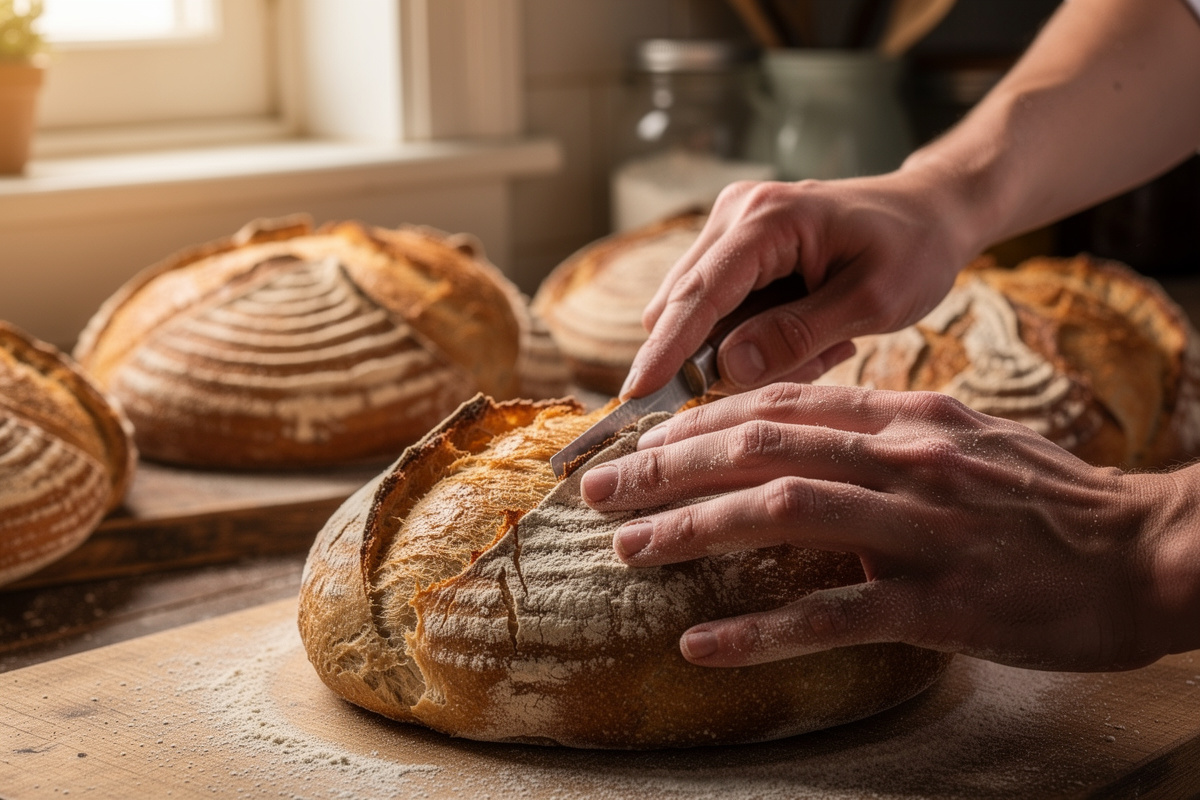
A lame (pronounced “lahm”) is the scoring tool of choice: a handle holding a razor blade, sharp enough to slice cleanly through a taut dough skin without dragging. A double-edge razor blade is far sharper than any kitchen knife and is what gives a clean-edged cut and a lifting ear, which no serrated bread knife can match.
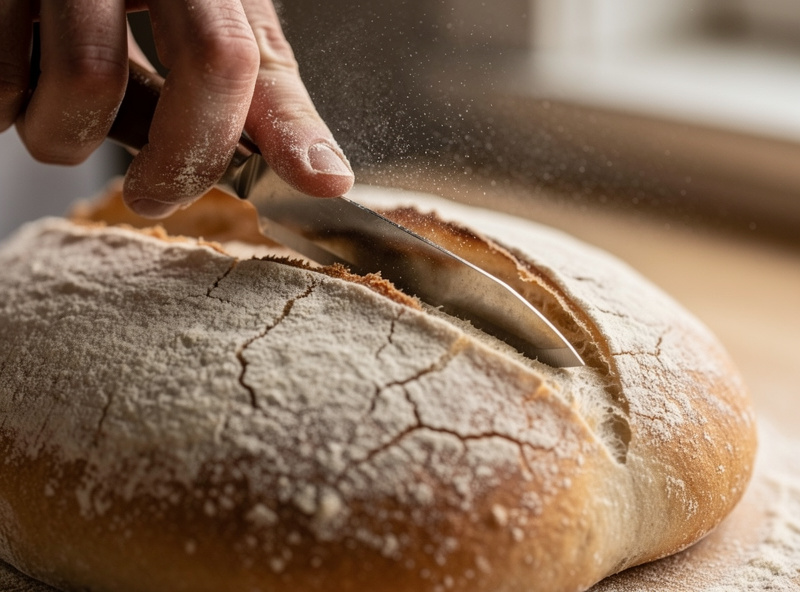
A purpose-made bread lame scoring tool holds the blade securely and lets you curve it for an ear or keep it flat for fine detail. The blade is consumable — it dulls after many loaves — so keep a pack of double-edge razor blades on hand and swap them often; a dull blade drags and tears, which is the most common scoring frustration. As the hub notes, a Gillette double-edge blade on a stick is the traditional improvised lame.
Grip and confidence matter as much as the tool. Hold the lame at a low angle, keep the dough lightly floured so the blade does not stick, and make the cut in one smooth, committed motion — hesitation drags and tears. Beginners almost always score too tentatively and too shallow; a decisive hand is the skill to build first, before any pattern.
Angle and Depth: The Two Variables That Matter
Two variables define every score: the angle of the blade and the depth of the cut. A shallow blade angle of about 30-45 degrees to the surface creates an undercut flap that lifts into an ear; a vertical 90-degree blade makes a clean-walled cut used for decorative detail. Depth of roughly 0.5-1.5 cm is right for most loaves.
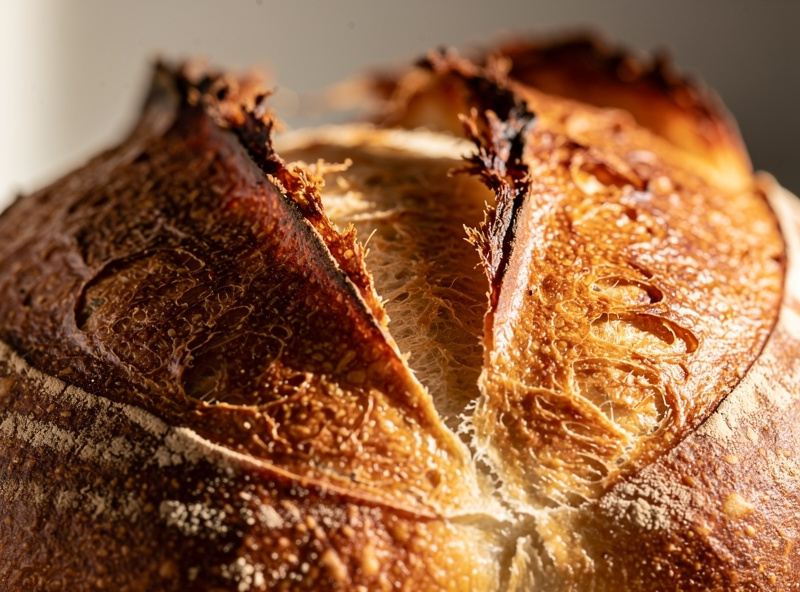
For the classic ear, hold the blade at a low angle and make one long off-centre slash down the length of the loaf — the angled cut creates a flap that peels up and crisps into the ear as the loaf springs. A vertical, shallower cut is what you use for the fine lines of decorative leaf and wheat patterns, where you want crisp detail rather than a lifting flap. Match the angle to the goal: low and deep for an ear, vertical and shallow for art.
Depth scales with proof: a slightly under-proofed loaf with lots of spring left can take a deeper score and will bloom dramatically, while an over-proofed loaf has little spring and a deep score can deflate it, so cut shallower. Reading that balance is judgement that comes with reps — the same dough-reading skill that governs the bulk window for open crumb. When a score closes up and bakes nearly invisible, the cause is usually a warm loaf, a dull blade, or over-proofing.
Patterns From Beginner to Advanced
Patterns range from the one-slash functional score every baker should master first, up through crosses and squares to intricate wheat stalks and leaves. Start functional and add decoration only once your single slash reliably gives a clean ear — decoration on top of a poor functional cut just looks busy.
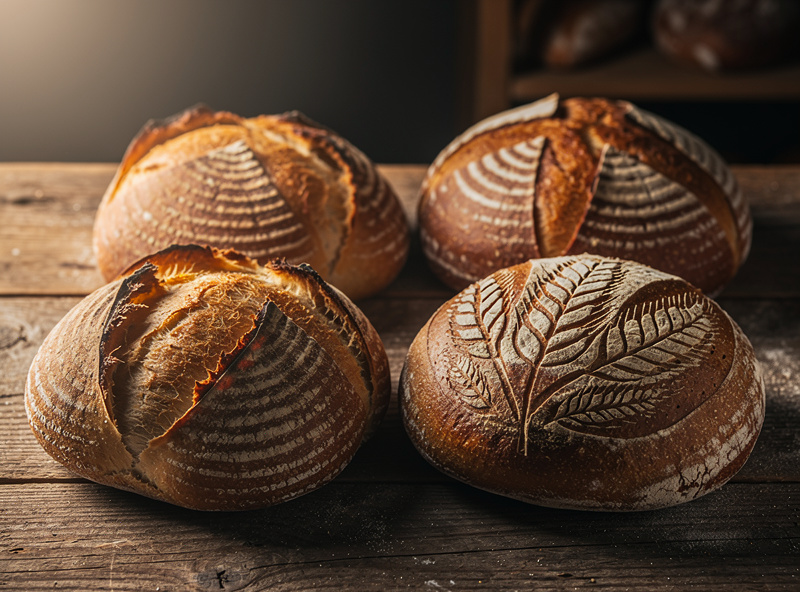
The single slash — one long off-centre curve — is the foundation and the most reliable producer of a dramatic ear, ideal for both boules and batards. A simple cross or square (two or four cuts) spreads the expansion evenly and suits round boules that you want to open up broadly rather than along one seam. These two cover ninety percent of practical baking; they are functional first and look clean.
Decorative patterns — the wheat stalk (a central stem with angled offshoots), leaf and vine designs, chevrons, and spirals — are made with many shallow vertical cuts and are pure surface art that does not drive the bloom. They photograph beautifully but demand a very cold, well-shaped loaf and a fresh blade. For genuinely intricate work, some bakers use sourdough scoring stencils with cocoa or flour dusting alongside the cuts. The table below ranks the common patterns by difficulty.
| Pattern | Difficulty | Blade Angle | Effect | Best Loaf Shape |
|---|---|---|---|---|
| Single slash | Beginner | Low (30-45°) for ear | Dramatic ear, directed bloom | Boule and batard |
| Cross / square | Beginner | Low to medium | Even all-round expansion | Round boule |
| Chevron / diagonal lines | Intermediate | Low | Patterned bloom along a seam | Batard |
| Wheat stalk | Advanced | Vertical (90°), shallow | Decorative, minimal bloom effect | Batard, oval |
| Leaf / vine | Advanced | Vertical, shallow | Pure surface art | Boule and batard |
| Spiral / coil | Advanced | Vertical, shallow | Decorative spiral | Round boule |
A practical progression: master the single slash and its ear, then the cross, then add one decorative element like a few wheat-stalk offshoots beside a functional slash. Combining one deep functional score (for the bloom) with shallow decorative cuts (for looks) is how experienced bakers get both a great ear and a pretty loaf on the same bread.
Troubleshooting Your Scores
Most scoring problems trace to three causes: a warm loaf, a dull blade, or wrong proof. A blade that drags and tears means the loaf is too warm or the blade is dull — chill the dough harder and swap the blade. A score that closes up and disappears in the bake means the dough was warm, under-floured, or over-proofed.
No ear forming usually means the angle was too vertical (go shallower, 30-45 degrees, to create the lifting flap) or the loaf was over-proofed with too little spring left to push the flap up. A loaf that bursts at the side despite scoring was scored too shallow to relieve the pressure — cut deeper and more decisively next time. Each of these is a single-variable fix, the same controlled approach that runs through every step from feeding the starter to the bake.
Above all, score with commitment on a cold, taut, freshly-floured loaf using a sharp blade, and most problems vanish. The full kit that supports clean scoring — lames, blades, baskets, and the cold-retard setup — is in my fermentation equipment guide, and a clean score is the satisfying final flourish on a loaf that earned its bloom through good fermentation and a hot, steamy bake. It is the one moment of the whole process that is pure craft.
Frequently Asked Questions
Why do you score sourdough bread?
Scoring gives the expanding gases a deliberate escape route during the first minutes of baking, so the loaf blooms cleanly along your cut instead of bursting randomly at a weak point. A well-placed angled score also creates the raised, crisp ear that marks a confidently baked loaf, and lets you control the loaf’s final shape.
What angle should I score sourdough at?
For the classic lifting ear, hold the blade at a low angle of about 30-45 degrees to the surface, which creates an undercut flap that peels up and crisps. For decorative detail like wheat stalks and leaves, hold the blade vertical at 90 degrees for clean-walled, shallow cuts. Match the angle to the goal: low for an ear, vertical for art.
How deep should you score sourdough?
About 0.5 to 1.5 centimetres for most loaves. Depth scales with proof: an under-proofed loaf with lots of spring can take a deeper score and bloom dramatically, while an over-proofed loaf has little spring, so cut shallower to avoid deflating it. A score too shallow lets the loaf burst at the side instead of blooming.
What can I use to score sourdough?
A lame, which is a handle holding a razor blade, is the tool of choice because a double-edge razor is far sharper than a kitchen knife and gives a clean cut and a lifting ear. The traditional improvised version is a double-edge razor blade mounted on a stick or skewer. A serrated bread knife cannot match it and tends to drag.
Why does my score close up when baking?
Usually because the dough was too warm, under-floured, or over-proofed. Score a cold loaf straight from its overnight fridge retard, when it is firm and taut so the cut holds. Use a sharp blade and a lightly floured surface, and avoid over-proofing, which leaves too little oven spring to keep the cut open as it bakes.
Do I need to score sourdough decoratively?
No. A single decisive functional slash is all a loaf needs to bloom cleanly and form an ear. Decorative patterns like wheat stalks and leaves are pure surface art that does not drive the bloom and demands a very cold, well-shaped loaf and a fresh blade. Master the functional single slash first, then add decoration if you enjoy it.
Related Articles on FermentFoundry
- Home Sourdough Bread: The Complete Starter-to-Loaf Guide
- Dutch Oven vs Cloche vs Open Bake for Sourdough
- Sourdough Banneton Guide: Proofing Basket Basics
- Open Crumb Sourdough: The Technique That Works
- Fermentation Equipment: The Complete Home Brewer Toolkit

About Kenny Nyhus Fadil
A home fermenter documenting brines, bubbles, and the occasional moldy tragedy.